
ID
10
Cancer Name
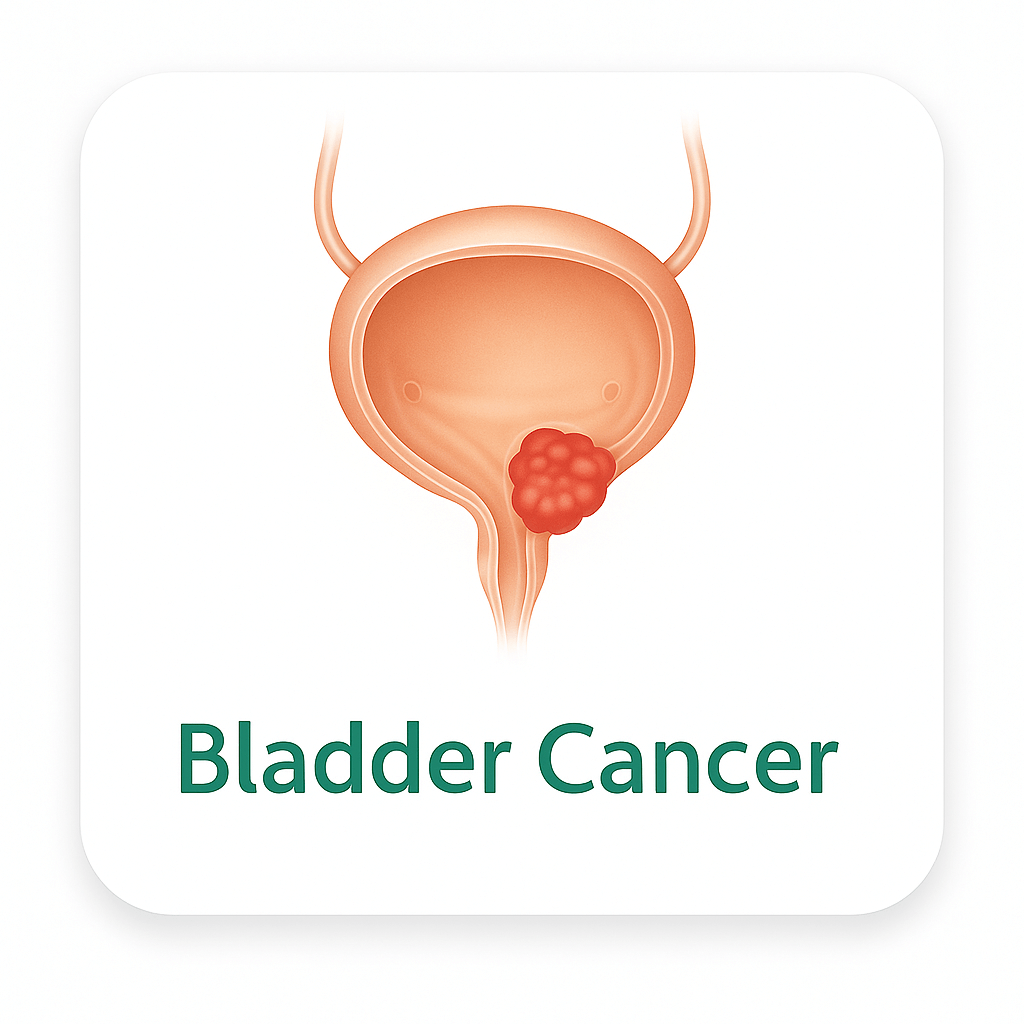
Bladder Cancer
Main Grouping
Urinary
Organ System
Urinary bladder,urothelium,genitourinary system
Cell Origin
Urothelial cells (transitional epithelial cells)
Pathways Affected
Bladder cancer is driven by dysregulation across two primary molecular carcinogenic pathways and multiple downstream signaling networks. The FGFR3 signaling pathway is the most frequently mutated oncogenic driver in bladder cancer, with activating mutations in FGFR3 found in approximately 60 to 70 percent of NMIBC cases and 15 percent of MIBC cases. FGFR3 mutations cause constitutive ligand-independent receptor dimerization and activation of downstream PI3K/AKT/mTOR and RAS/MAPK pathways, promoting cell proliferation and suppressing apoptosis. FGFR3 activation also induces epithelial-mesenchymal transition (EMT) and promotes tumor angiogenesis and immune evasion.
The PI3K/AKT/mTOR pathway is activated through PIK3CA mutation, PTEN loss, or downstream FGFR3 signaling and is present across both NMIBC and MIBC subtypes. PI3K/AKT activation in NMIBC frequently cooperates with FGFR3 mutations, while in MIBC it co-occurs with TP53/RB1 inactivation. Patients with complete PTEN loss have been reported to show 40 percent shorter overall survival compared to wild-type. The RAS/MAPK/ERK pathway is activated downstream of FGFR3 and through independent RAS mutations, controlling cell growth, differentiation, and apoptotic resistance.
The TP53 tumor suppressor pathway governs DNA damage response, cell cycle arrest, senescence, and apoptosis and is inactivated in approximately 50 to 60 percent of MIBC cases. RB1 inactivation disrupts cell cycle regulation and is frequently observed in the basal-like MIBC subtype. NF-kB signaling drives pro-inflammatory cytokine expression, anti-apoptotic signaling, and angiogenesis in bladder tumor cells. The Nrf2/ARE oxidative stress response pathway regulates antioxidant enzyme systems and phase II detoxification enzymes, with sulforaphane-mediated Nrf2 activation studied specifically in bladder tissue due to the high urinary excretion and bladder accumulation of sulforaphane metabolites. VEGF-mediated angiogenesis signaling supports tumor vascularization. Apoptosis pathway dysregulation through BCL-2 family proteins and caspase cascades allows tumor cell survival, and epigenetic alterations including chromatin remodeling and DNA methylation changes are documented features of bladder cancer progression.
Description
Bladder cancer is a common malignancy of the urinary system, ranking ninth in global cancer incidence with an estimated 573,278 new cases and 212,536 deaths in 2020 according to GLOBOCAN data. Approximately 90 percent of bladder cancers are urothelial carcinomas, also known as transitional cell carcinomas, arising from the transitional epithelium lining the bladder mucosa. Bladder cancers are classified clinically as non-muscle-invasive bladder cancer (NMIBC) and muscle-invasive bladder cancer (MIBC). Approximately 75 percent of bladder cancers are non-muscle-invasive at diagnosis and include Ta papillary tumors, T1 lamina propria-invasive tumors, and carcinoma in situ. NMIBC carries a high recurrence rate despite treatment, and a subset of cases progress to MIBC, which carries significantly higher mortality.
Two molecularly distinct carcinogenic pathways are recognized in bladder cancer. The low-grade papillary pathway is initiated by FGFR3 activating mutations, found in approximately 60 to 70 percent of NMIBC cases, which constitutively activate downstream PI3K/AKT/mTOR and RAS/MAPK signaling. The high-grade invasive pathway is characterized by TP53 mutation, found in approximately 50 to 60 percent of MIBC cases, and RB1 inactivation, which drive cell cycle dysregulation and genomic instability. PIK3CA mutations activating the PI3K/AKT pathway are found in approximately 20 percent of cases across both subtypes. Loss of chromosome 9q is among the earliest genomic events in bladder carcinogenesis and is observed across both pathways.
Tobacco smoking is the most established environmental risk factor for bladder cancer, contributing to carcinogen exposure through urinary excretion of aromatic amines and polycyclic aromatic hydrocarbons that accumulate in bladder urine. Occupational exposure to arylamines in dye, rubber, and chemical industries is also a documented risk factor. Bladder cancer disproportionately affects men, with a male to female incidence ratio of approximately 3 to 1.
A pooled analysis of 11 case-control studies from the BLEND consortium published in 2024 across 5,637 bladder cancer cases and 10,504 controls found that participants with the highest versus lowest fruit intake had an odds ratio of 0.79 for bladder cancer risk, with citrus fruits at OR 0.81, pome fruits at OR 0.76, and tropical fruits at OR 0.84. Sulforaphane from cruciferous vegetables is excreted in urine at 70 to 90 percent of the ingested dose with documented accumulation in bladder tissue, making it a compound of particular research interest for bladder cancer biology. The Health Professionals Follow-Up Study found that cruciferous vegetable intake was inversely associated with bladder cancer risk with a relative risk of 0.49 for the highest versus lowest intake category.
Plant-Based Description
Whole-food plant-based dietary patterns provide nutrients and phytochemicals studied in relation to oxidative stress, carcinogen detoxification, inflammation, DNA damage response, and cellular metabolism relevant to bladder cancer biology. Fruits provide vitamin C, polyphenols, anthocyanins, flavonoids, and carotenoids with antioxidant and anti-proliferative properties. Vegetables, particularly cruciferous vegetables, provide glucosinolates that are enzymatically converted to isothiocyanates including sulforaphane, which is excreted at high concentrations in urine and accumulates in bladder tissue. Legumes and whole grains provide fiber, folate, minerals, and fermentable carbohydrates. Nuts and seeds provide vitamin E, selenium, zinc, and plant-sourced ALA omega-3 fatty acids. Mushrooms provide beta-glucans with immune-modulatory activity. Herbs and spices including turmeric, green tea, garlic, and ginger provide concentrated phytochemicals studied in relation to FGFR3, PI3K/AKT, NF-kB, Nrf2, and apoptosis pathway biology in bladder cancer cell models.
Plant Chemistry Detail
Sulforaphane is an isothiocyanate derived from glucoraphanin in cruciferous vegetables including broccoli, Brussels sprouts, kale, cauliflower, and cabbage that is of particular relevance to bladder cancer because urinary excretion of sulforaphane metabolites ranges from 70 to 90 percent of the ingested dose with documented accumulation in bladder tissue. Sulforaphane targets multiple bladder cancer pathways including NF-kB inhibition, MAPK modulation, Nrf2/ARE phase II enzyme induction, cell cycle arrest, induction of apoptosis, and inhibition of angiogenesis. Epidemiological data from the Health Professionals Follow-Up Study found cruciferous vegetable intake inversely associated with bladder cancer risk at a relative risk of 0.49 for the highest versus lowest intake category.
Quercetin is a flavonol found in yellow onions, apples, kale, and capers that inhibits PI3K/AKT and NF-kB signaling and demonstrates pro-apoptotic activity in bladder cancer cell models. EGCG from green tea inhibits FGFR signaling, PI3K/AKT, and NF-kB pathways and has shown anti-proliferative activity in urothelial cancer cell lines. Curcumin from turmeric inhibits NF-kB, PI3K/AKT, and VEGF-mediated angiogenesis while inducing apoptosis via BCL-2 downregulation and caspase activation. Resveratrol from grapes and berries inhibits NF-kB, induces apoptosis, and reduces cell migration in bladder cancer models. Luteolin from spinach and parsley downregulates MAPK/PI3K pathways and demonstrates anti-proliferative activity in bladder tumor cell studies. Vitamin C, concentrated in citrus fruits, kiwi, strawberry, and red bell pepper, supports antioxidant defense and carcinogen detoxification in urothelial tissue. Beta-glucans from shiitake and maitake mushrooms modulate innate immune signaling relevant to the bladder tumor microenvironment.
Nutritional Focus
Nutritional focus in bladder cancer research includes cruciferous vegetables providing sulforaphane and glucosinolates as priority foods because sulforaphane is excreted at 70 to 90 percent of the ingested dose in urine with documented bladder tissue accumulation; allium vegetables providing quercetin and organosulfur compounds; citrus fruits, kiwi, and strawberry providing vitamin C; polyphenol-rich fruits including pomegranate, blueberry, grape, and raspberry; legumes and whole grains providing fiber, folate, and fermentable carbohydrates; nuts and seeds providing plant-sourced ALA omega-3 fatty acids, selenium, zinc, and vitamin E; mushrooms providing beta-glucans; and herbs and spices including green tea, turmeric, garlic, and ginger providing concentrated phytochemicals studied in relation to FGFR3, PI3K/AKT, NF-kB, Nrf2, and apoptosis pathway biology in bladder cancer.
Research Notes
Boot et al. (European Journal of Nutrition, 2024) pooled 11 case-control studies from the BLEND consortium comprising 5,637 bladder cancer cases and 10,504 controls and found that the highest versus lowest total fruit intake was associated with an odds ratio of 0.79 for bladder cancer risk, with citrus fruits at OR 0.81, pome fruits at OR 0.76, and tropical fruits at OR 0.84. Michaud et al. (Journal of the National Cancer Institute, 1999) examined 252 bladder cancer cases in the Health Professionals Follow-Up Study among 47,909 men and found cruciferous vegetable intake inversely associated with bladder cancer risk at a relative risk of 0.49 for the highest versus lowest intake category, with broccoli and cabbage showing the strongest individual associations.
Zuo et al. (Frontiers in Pharmacology, 2023) reviewed sulforaphane mechanisms in bladder cancer, documenting urinary excretion of 70 to 90 percent of the ingested dose with bladder tissue accumulation and anti-tumor activity through NF-kB inhibition, MAPK modulation, Nrf2/ARE induction, cell cycle arrest, apoptosis induction, and angiogenesis inhibition. Kamat et al. (Future Oncology, 2018) reviewed sulforaphane as a chemopreventive agent in bladder cancer, documenting epidemiological, in vitro, and preclinical evidence supporting systemic and urinary bioavailability and inhibition of bladder carcinogenesis through multiple mechanisms. Yu et al. (BMC Medicine, 2021) pooled individual-level data from 13 cohort studies comprising 3,203 bladder cancer cases among 555,685 participants in the BLEND study and found higher intakes of total and non-starchy vegetables were associated with reduced risk of bladder cancer in women.
Spark et al. (Journal of Nutrition, 2013) conducted a prospective analysis of 185,885 participants in the Multiethnic Cohort Study and found that in women, total fruit and vegetable intake in the highest versus lowest quartile was associated with a hazard ratio of 0.35 for bladder cancer risk. Molecular pathway research (Frontiers in Oncology, 2025) documented FGFR3 mutations in 60 to 70 percent of NMIBC, TP53 mutations in 50 to 60 percent of MIBC, and concurrent PI3K/AKT activation predicting reduced response to FGFR inhibitors in FGFR3-mutant tumors.
Notes Visibility
show
Key Foods
Broccoli,Brussels Sprouts,Kale,Cauliflower,Cabbage,Garlic,Yellow Onion,Spinach,Tomato,Carrot,Sweet Potato,Red Bell Pepper,Apple,Blueberry,Strawberry,Orange,Pomegranate,Kiwi,Watermelon,Lemon,Black Beans,Chickpeas,Green Lentils,Red Lentils,Soybeans,Brown Rice,Quinoa,Oats,Wild Rice,Sorghum,Walnut,Almond,Brazil Nut,Pumpkin Seeds,Flaxseed,Chia Seeds,Sesame Seeds,Hemp Seeds,Shiitake,Maitake,Cremini,Portobello,Oyster Mushroom,Green Tea,Turmeric,Garlic Powder,Ginger,Black Pepper,Parsley,Rosemary, Leek,Avocado,Artichoke,Radish,Tangerine, Red Onion
Linked Nutrients
vitamin-a,vitamin-c,vitamin-e,vitamin-d,vitamin-b6,folate,vitamin-k,selenium,zinc,magnesium,calcium,potassium,iron,sulforaphane,glucosinolates,quercetin,egcg,curcumin,resveratrol,anthocyanins,beta-glucans,lycopene,plant-ala-omega3,dietary-fiber
Last Updated
2025-10-13 09:16:53

