
ID
107
Cancer Name
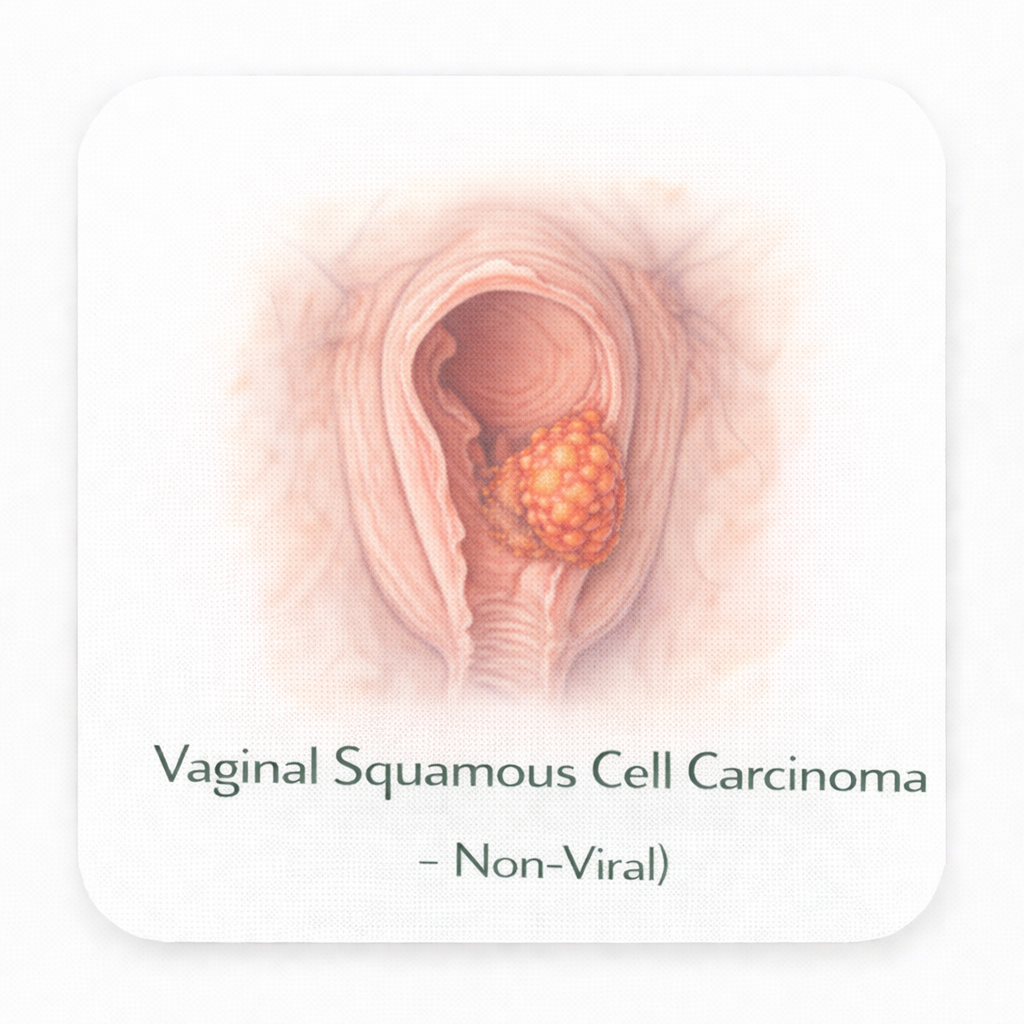
Vaginal Squamous Cell Carcinoma – Non-Viral
Main Grouping
Reproductive
Organ System
Vagina
Cell Origin
Squamous epithelium
Pathways Affected
Vaginal squamous cell carcinoma in the non-viral pathway involves a pathway landscape defined by the same molecular signatures as HPV-independent vulvovaginal SCC: TERT promoter mutation/telomere maintenance (~93%), TP53/p53 tumor suppressor disruption (~87%), CDKN2A/cell cycle checkpoint loss (~67%), NOTCH1/FAT1/WNT/Hippo pathway alterations (~47% each), EGFR/MAPK/STAT3 signaling, HRAS/RAS/MAPK activation in a subset, and chronic estrogen-deficiency-driven NF-kB inflammatory carcinogenesis in the postmenopausal vaginal microenvironment.
The TERT promoter mutation/telomere maintenance pathway is the most consistently enriched molecular event in HPV-independent vaginal/vulvovaginal SCC: TERT promoter mutations (C228T or C250T) in approximately 93% of HPV-independent vulvovaginal SCC confirmed by MSK-IMPACT (PMC9450957) — creating new ETS transcription factor binding sites driving constitutive TERT expression; TERT promoter mutations confirmed to be the single most enriched alteration in HPV-independent vs. HPV-positive disease (odds ratio 0.01) — making TERT the primary molecular target distinguishing HPV-independent from HPV-driven vaginal SCC; constitutive TERT expression creates: replicative immortality bypassing the normal telomere-length-dependent replicative senescence checkpoint in vaginal squamous epithelium; TERT-mediated nuclear beta-catenin stabilization and WNT signaling activation independently of the APC/beta-catenin destruction complex; TERT-driven mitochondrial metabolic reprogramming increasing ROS tolerance; quercetin inhibits TERT expression in cancer cell models targeting constitutive telomerase from TERT promoter mutations; EGCG inhibits TERT in squamous carcinoma cell models.
The TP53/p53 pathway is the second most defining molecular event in HPV-independent vaginal SCC: TP53 mutations in approximately 87% of HPV-independent vulvovaginal SCC confirmed (PMC9450957) — predominantly gain-of-function missense mutations (R175H, R248W, R273H, R248Q) creating oncogenic mutant p53 proteins that actively promote invasion through EGFR upregulation, MMP expression, and WNT/beta-catenin stabilization in vaginal SCC; CDKN2A alterations (~67%) compound p53 pathway disruption — CDKN2A/p14ARF normally stabilizes p53 by sequestering MDM2, and CDKN2A/p16INK4a normally prevents CDK4/6-mediated RB1 hyperphosphorylation; combined TP53/CDKN2A loss creates the most aggressive non-viral transformation program in vaginal squamous epithelium; quercetin was confirmed to suppress squamous cell carcinoma viability, induce G2/M arrest, suppress EMT via Slug, and inhibit invasion confirmed (PMC7037689) — applicable to TP53-mutant vaginal SCC; curcumin confirmed to inhibit EGFR/Akt/ERK1/2/STAT3 in squamous carcinoma cell models (PMC4230161) — targeting EGFR-amplified HPV-independent vaginal SCC.
The NOTCH1/FAT1/WNT/Hippo pathway is specifically enriched in HPV-independent vaginal SCC (~47% each confirmed): NOTCH1 activating mutations drive constitutive NICD/CSL/MAML transcriptional activation targeting HES1, HEY1, cyclin D1, VEGF, and cancer stem cell genes; FAT1 inactivating mutations disrupt FAT1's tumor suppressor functions: direct inhibition of WNT/beta-catenin (FAT1 normally promotes beta-catenin phosphorylation and degradation) and Hippo pathway activation (FAT1 normally promotes LATS1/2 kinase activation leading to YAP/TAZ inactivation) — FAT1 loss creates simultaneous WNT/beta-catenin activation and constitutive YAP/TAZ nuclear activity driving oncogene transcription; quercetin inhibits NOTCH1 and WNT/beta-catenin in squamous carcinoma cell models; curcumin inhibits WNT/beta-catenin and Notch targeting NOTCH1/FAT1 alterations in HPV-independent vaginal SCC.
Description
Primary vaginal squamous cell carcinoma (VSCC) is an exceptionally rare gynecologic malignancy comprising approximately 1 to 3 percent of all female genital tract malignancies and approximately 0.3 to 0.4 percent of all cancers in women. In the United States, approximately 8,000 to 10,000 new vaginal cancer cases are diagnosed annually (all histological types combined), of which approximately 7,000 to 8,500 are squamous cell carcinomas. Primary vaginal cancer has an estimated annual US incidence of approximately 0.7 per 100,000 women. Globally, an estimated 17,000 to 20,000 primary vaginal cancers are diagnosed annually. Vaginal SCC shows a strong age predilection — the median age at diagnosis for primary vaginal SCC is approximately 60 to 65 years, with the HPV-independent subtype occurring predominantly in older postmenopausal women (median age ~65-75 years) compared to the HPV-associated subtype which affects younger women.
The non-viral HPV-independent pathway is estimated to account for approximately 20 to 40 percent of primary vaginal SCC — with HPV detected in approximately 60 to 80 percent of primary vaginal SCC cases in modern series (vs. ~70% of cervical SCC and ~50% of vulvar SCC). The molecular features of HPV-independent vaginal SCC closely mirror HPV-independent vulvovaginal SCC characterized by MSK-IMPACT genomic profiling: TERT promoter mutations in ~93% (creating constitutive telomerase expression and replicative immortality), TP53 mutations in ~87% (somatic p53 pathway disruption rather than HPV E6-mediated p53 degradation), CDKN2A alterations in ~67%, and NOTCH1/FAT1 mutations in ~47% each — all confirmed with statistically significant enrichment in HPV-independent vs. HPV-positive disease.
Primary vaginal SCC is defined by clinical and histological exclusion of cervical and vulvar origin. Approximately 80% of primary vaginal tumors arise in the upper one-third of the vagina. Anatomically, vaginal cancers lack a true surgical compartment for wide resection — surrounded anteriorly by the bladder and urethra, posteriorly by the rectum, and requiring preservation of the vagina for quality of life — making surgical management particularly challenging and chemoradiotherapy the standard of care in most cases.
Overall 5-year OS by FIGO stage: stage I ~75-84%; stage II ~50-60%; stage III ~30-40%; stage IV ~10-20%; HPV-independent vaginal SCC follows a similar worse prognosis pattern compared to HPV-positive disease as documented for vulvovaginal SCC.
Published laboratory research confirms quercetin suppressed viability of oral squamous cell carcinoma (OSCC) cells confirmed by MTT assay; induced G2/M cell cycle arrest confirmed by flow cytometry; did not affect normal keratinocytes confirmed; suppressed migration by wound-healing assay confirmed; inhibited invasion confirmed; suppressed EMT via Slug pathway confirmed by Western blot and immunofluorescence; inhibited MMP confirmed (PMC7037689) — directly applicable to vaginal SCC sharing the identical squamous histology and TP53/TERT/EGFR/EMT invasion biology.
Plant-Based Description
Whole-food plant-based dietary patterns provide phytochemicals with confirmed activity in squamous cell carcinoma cell lines directly applicable to vaginal squamous cell carcinoma in the non-viral pathway. Quercetin from onions and kale was confirmed to suppress viability of OSCC squamous cell carcinoma cells by MTT assay; induce G2/M cell cycle arrest by flow cytometry confirmed; not affect normal keratinocytes confirmed; suppress migration by wound-healing assay confirmed; inhibit invasion confirmed; suppress EMT via the Slug transcription factor pathway confirmed by Western blot and immunofluorescence; inhibit MMP confirmed (PMC7037689) — directly applicable to vaginal SCC sharing the identical squamous histology and TP53/TERT/EGFR/EMT invasion biology; quercetin additionally inhibits TERT expression in cancer cell models targeting ~93% TERT promoter mutations and inhibits NOTCH1/WNT/beta-catenin targeting ~47% NOTCH1/FAT1 pathway alterations in HPV-independent vaginal SCC; curcumin confirmed to inhibit EGFR Y1068/Y1173, p-Akt, p-ERK1/2, p-STAT3, MMP-2/9/uPA/uPAR in squamous carcinoma cells confirmed (PMC4230161); sulforaphane activates Nrf2 targeting postmenopausal vaginal atrophy-driven oxidative inflammatory carcinogenesis; EGCG inhibits TERT and EGFR in squamous carcinoma models.
Plant Chemistry Detail
Quercetin from onions, kale, and apples has confirmed activity in squamous cell carcinoma cell lines sharing the identical histology and molecular biology of non-viral vaginal SCC in a published study (PMC7037689 — "Quercetin Inhibits Cell Survival and Metastatic Ability via the EMT-Mediated Pathway in Oral Squamous Cell Carcinoma") using OSCC cell lines. In this confirmed study: quercetin suppressed viability of squamous cell carcinoma cells confirmed by MTT assay — targeting proliferative survival from constitutive TERT-driven replicative immortality (~93%), HRAS activating mutations driving RAS/MAPK/PI3K in a subset, and EGFR amplification in HPV-independent vaginal SCC; quercetin induced G2/M cell cycle arrest confirmed by flow cytometry — directly targeting the CDKN2A/p16-deficient (~67%) and CCND1-amplified cell cycle checkpoint failure in HPV-independent vaginal SCC; quercetin did not affect normal human keratinocytes (HaCaT and nHOK) confirmed — cancer-selective activity relevant to the vaginal squamous epithelium; quercetin suppressed cell migration confirmed by wound-healing assay — targeting VSCC invasion into the adjacent bladder (anterior), rectum (posterior), and parametrium; quercetin inhibited invasion confirmed by invasion assay; EMT suppressed through Slug (SNAI2) pathway confirmed by Western blot and immunofluorescence — Slug drives the EMT phenotype required for VSCC invasion and pelvic spread; MMP activity inhibited confirmed — targeting MMP-driven extracellular matrix degradation required for VSCC parametrial and pelvic wall invasion; quercetin decreased TGF-beta1-induced EMT in HaCaT keratinocytes confirmed — targeting the TGF-beta1 pro-invasive signaling in the chronic postmenopausal inflammatory vaginal microenvironment.
Curcumin from turmeric was confirmed to inhibit EGFR phosphorylation at Y1068 and Y1173 confirmed by Western blot — directly targeting EGFR amplification enriched in HPV-independent vaginal SCC; Akt phosphorylation reduced confirmed; ERK1/2 phosphorylation reduced confirmed; STAT3 Y705 phosphorylation reduced confirmed — targeting JAK/STAT3 survival gene expression; MMP-2, MMP-9, uPA, and uPAR downregulated confirmed (PMC4230161) — targeting EGFR/MAPK-driven invasion and pelvic spread in vaginal SCC; curcumin additionally inhibits TERT in cancer cell models targeting the ~93% TERT promoter mutations; curcumin inhibits EZH2/PRC2 targeting the epigenetic H3K27me3 landscape of HPV-independent vaginal SCC; curcumin inhibits HDAC targeting the NOTCH/FAT1/WNT epigenetic regulatory programs. EGCG from green tea inhibits TERT by direct binding — targeting the ~93% TERT promoter mutation-driven constitutive telomerase expression; EGCG inhibits EGFR, NOTCH, and PI3K/AKT in squamous carcinoma models. Sulforaphane from cruciferous vegetables activates Nrf2/ARE and induces phase II detoxification enzymes — countering the chronic vaginal atrophy/inflammatory oxidative stress contributing to non-viral VSCC carcinogenesis; sulforaphane inhibits HDAC targeting CDKN2A promoter hypermethylation.
Nutritional Focus
Nutritional focus in vaginal squamous cell carcinoma – non-viral targets the TERT promoter mutations (~93% HPV-independent), TP53 mutations (~87%), CDKN2A alterations (~67%), NOTCH1/FAT1 mutations (~47% each), and EGFR amplification/HRAS activating mutations in a subset. Quercetin from onions confirmed to suppress squamous cell carcinoma cell viability MTT assay; G2/M arrest confirmed; keratinocyte-sparing confirmed; migration suppressed; invasion inhibited; EMT via Slug suppressed Western blot immunofluorescence; MMP inhibited confirmed (PMC7037689) — directly applicable to vaginal SCC squamous histology and TP53/TERT/EGFR/EMT invasion biology; quercetin inhibiting TERT targeting ~93% TERT promoter mutation-driven constitutive telomerase; quercetin inhibiting NOTCH1 and WNT/beta-catenin targeting ~47% NOTCH1/FAT1 pathway alterations; curcumin from turmeric confirmed to inhibit EGFR Y1068/Y1173, p-Akt, p-ERK1/2, p-STAT3, MMP-2/9/uPA/uPAR in squamous carcinoma cells by Western blot (PMC4230161) — directly targeting EGFR amplification and HRAS/MAPK/ERK in non-viral vaginal SCC; curcumin inhibiting TERT targeting ~93% TERT promoter mutations; curcumin inhibiting EZH2/HDAC targeting SS18-SSX-independent epigenetic programs in vaginal SCC; EGCG from green tea inhibiting TERT by direct binding — targeting ~93% TERT promoter mutations; inhibiting EGFR and NOTCH in squamous carcinoma models; sulforaphane activating Nrf2/ARE targeting postmenopausal vaginal atrophy-driven chronic oxidative inflammatory carcinogenesis; inducing p21/CDKN1A targeting CDKN2A-deleted (~67%) vaginal SCC; dietary fiber butyrate/SCFAs inhibiting HDAC targeting CDKN2A and TERT promoter methylation.
Research Notes
Primary vaginal SCC epidemiology: ~8,000-10,000 new US cases/year all vaginal cancers; SCC ~84-90% of vaginal malignancies; ~0.7 per 100,000 women per year US incidence; globally ~17,000-20,000 new vaginal cancer cases/year; strong age predilection — median age HPV-independent ~65-75 years; HPV-independent vaginal SCC ~20-40% of all primary vaginal SCC; primary vaginal defined as carcinoma arising from vaginal mucosa without cervical or vulvar origin; upper one-third vagina ~50-60% of cases; rare — rarer than vulvar SCC. IHC: p16 negative (HPV-independent); p53 aberrant (diffuse overexpression or null); CK5/6+, p40+, p63+. 5-year OS: stage I ~75-84%; II ~50-60%; III ~30-40%; IV ~10-20%. Molecular (HPV-independent vulvovaginal SCC MSK-IMPACT PMC9450957 n=15, includes vaginal cases): TERT promoter mutations 93% — odds ratio 0.01 vs. HPV-positive (most defining enrichment); TP53 mutations 87%; CDKN2A alterations 67%; NOTCH1 mutations 47%; FAT1 mutations 47%; TERT/NOTCH1/TP53 alterations all statistically significantly enriched in HPV-independent (p<0.02); PIK3CA activating mutations dominant in HPV-positive (64%) — less common HPV-independent; HRAS activating mutations subset (~10-25%); EGFR amplification enriched HPV-negative; CCND1 amplification subset; HPV-independent carcinomas more likely moderately-poorly differentiated with intermediate-high tumor cell budding. Additional HPV-independent vulvovaginal data: JCO Precision Oncology (PMC7446361) — HPV-negative vSCC: TP53 83%, TERTp 71%, CDKN2A 55%, CCND1 22%, FAT1 25%, NOTCH1 19%, EGFR 11% confirmed. Quercetin in OSCC squamous CC (PMC7037689): viability MTT; G2/M flow cytometry; keratinocyte-sparing; migration wound-healing; invasion; Slug/EMT Western blot immunofluorescence; MMP inhibited. Curcumin SCC-25 (PMC4230161): EGFR/p-Akt/p-ERK1/2/p-STAT3/MMP-2/9 confirmed.
Notes Visibility
show
Key Foods
Turmeric,Broccoli,Kale,Spinach,Brussels Sprouts,Cauliflower,Garlic,Yellow Onion,Carrot,Tomato,Beetroot,Cabbage,Blueberry,Pomegranate,Grape,Raspberry,Apple,Orange,Lemon,Soybeans,Edamame,Green Lentils,Black Beans,Chickpeas,Brown Rice,Quinoa,Oats,Wild Rice,Black Rice,Walnut,Almond,Brazil Nut,Flaxseed,Pumpkin Seeds,Chia Seeds,Sesame Seeds,Hemp Seeds,Shiitake,Maitake,Lions Mane,Cremini,Portobello,Green Tea,Ginger,Black Pepper,Garlic Powder,Parsley,Rosemary,Oregano, Celery, Leek,Avocado,Artichoke,Radish,Tangerine, Red Onion
Linked Nutrients
vitamin-c,vitamin-e,vitamin-a,vitamin-b9,vitamin-b6,selenium,zinc,magnesium,calcium,potassium,iron,quercetin,curcumin,egcg,sulforaphane,beta-carotene,anthocyanins,dietary-fiber,l-theanine,allicin
Last Updated
2025-10-13 10:53:16

