
ID
13
Cancer Name
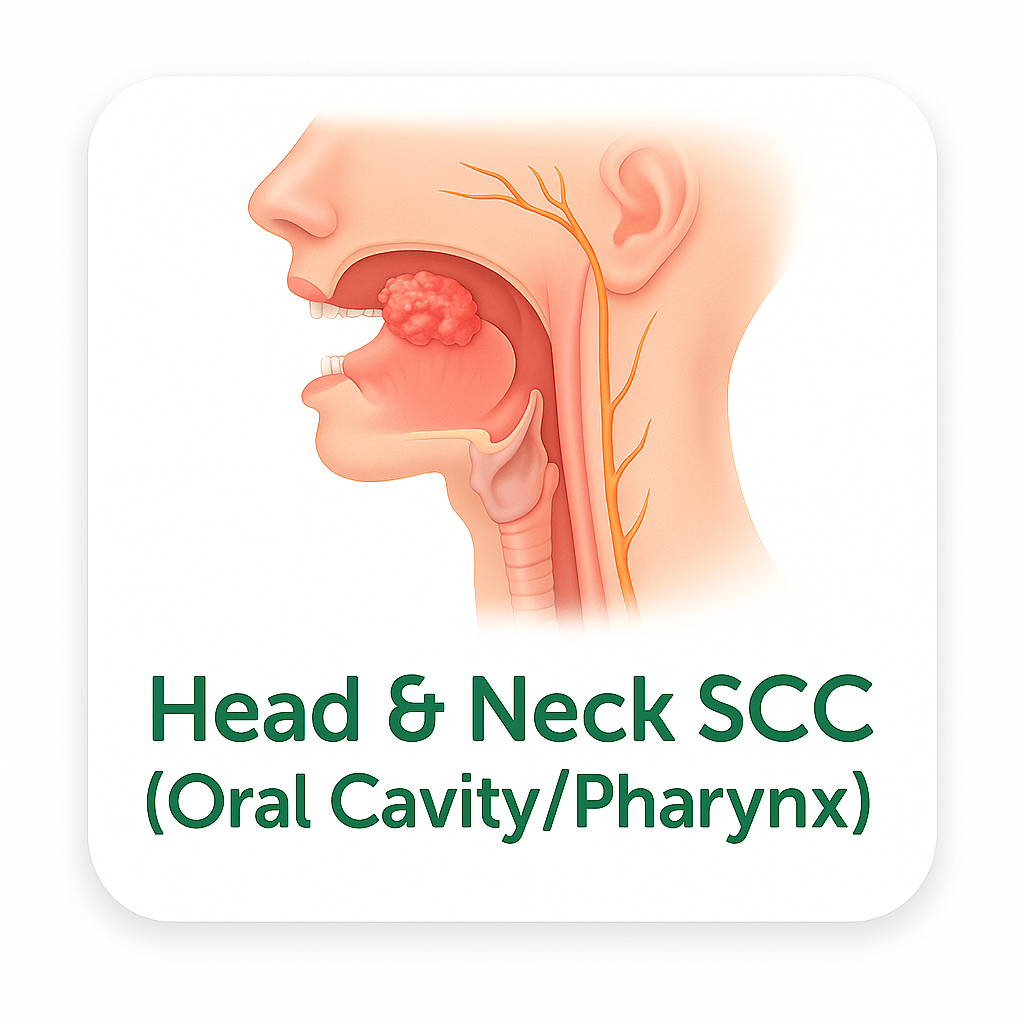
Head & Neck SCC (Oral Cavity/Pharynx)
Main Grouping
Respiratory/Digestive
Organ System
Oral cavity,pharynx,oropharynx,larynx,head and neck mucosal epithelium
Cell Origin
Squamous epithelium
Pathways Affected
HNSCC involves dysregulation across multiple interconnected molecular signaling pathways that differ in frequency between HPV-positive and HPV-negative subtypes. The EGFR signaling pathway is the most prevalently activated pathway in HNSCC, with EGFR overexpressed in 80 to 90 percent of tumors. EGFR activation drives downstream PI3K/AKT/mTOR and MAPK/ERK signaling cascades simultaneously, promoting tumor cell proliferation, survival, invasion, and angiogenesis. EGFR amplification occurs as a focal event in HPV-negative HNSCC and as a co-occurring event in HPV-positive tumors alongside PIK3CA mutation. HER2 and MET receptor tyrosine kinases are co-overexpressed in many HNSCCs and contribute to resistance to EGFR-targeted therapies through parallel downstream signaling.
The PI3K/AKT/mTOR pathway is altered in HNSCC through PIK3CA mutation at 14 percent frequency, PTEN inactivation, and 3q26/28 amplification containing TP63 and SOX2, with more than half of HPV-negative HNSCC showing EGFR or PI3K pathway activation. The p53 tumor suppressor pathway is inactivated by TP53 mutation in approximately 50 to 80 percent of HPV-negative tumors and by HPV E6 oncoprotein-mediated proteasomal degradation in HPV-positive tumors. Cell cycle checkpoints are disrupted through CDKN2A inactivation encoding p16 in up to 80 percent of HPV-negative cases, and through HPV E7 oncoprotein-mediated RB1 degradation in HPV-positive tumors.
NF-kB signaling drives pro-inflammatory cytokine expression, anti-apoptotic gene regulation, and COX-2 upregulation in HNSCC, with COX-2 overexpressed in malignant and premalignant HNC lesions and targeted by curcumin, sulforaphane, and caffeic acid phenethyl ester in cell model research. The JAK/STAT pathway contributes to immune evasion, cytokine-driven tumor growth, and stemness. The WNT/beta-catenin pathway and NOTCH signaling pathway are altered in HNSCC, with frequent NOTCH1 loss of function in HPV-negative tumors and TGFB/SMAD pathway disruption through SMAD4 deletion. VEGF-mediated angiogenesis supports tumor vascularization across HNSCC subtypes. The xenobiotic metabolism and DNA repair pathways are central to HPV-negative HNSCC carcinogenesis, with deficient repair of tobacco carcinogen-induced DNA adducts driving mutation accumulation. The apoptosis pathway is dysregulated through BCL-2 family proteins and is restored by EGCG, resveratrol, and curcumin in HNSCC cell models.
Description
Head and neck squamous cell carcinoma (HNSCC) is the sixth most frequent cancer type worldwide, with over 870,000 new cases and 440,000 deaths reported in 2020, with incidence predicted to rise to 1.08 million new cases annually by 2030. HNSCC encompasses malignancies arising from the mucosal epithelium of the oral cavity, pharynx, oropharynx, hypopharynx, and larynx. The two primary histological subsites covered in this entry are oral cavity cancer and pharyngeal cancer including oropharyngeal, hypopharyngeal, and nasopharyngeal sites.
HNSCC is biologically and molecularly heterogeneous, with two distinct carcinogenic pathways defined by etiology. HPV-negative HNSCC is primarily driven by tobacco-derived carcinogens including polycyclic aromatic hydrocarbons and nitrosamines, and chronic heavy alcohol consumption. These carcinogens generate reactive metabolites that form bulky DNA adducts leading to mutations in tumor suppressor genes TP53, found in approximately 50 to 80 percent of HPV-negative tumors, and CDKN2A encoding p16, inactivated in up to 80 percent of HPV-negative tumors. HPV-positive HNSCC, predominantly arising in the oropharynx including the base of tongue and palatine tonsils, is driven by high-risk HPV types 16 and 18, with HPV-16 responsible for the majority of cases. HPV E6 and E7 oncoproteins degrade TP53 and RB1 respectively through proteasomal mechanisms, leading to uncontrolled cell cycle progression and resistance to apoptosis without gene mutation.
EGFR is overexpressed in 80 to 90 percent of HNSCC tumors across both HPV-positive and HPV-negative subtypes, and its overexpression is associated with poor survival outcomes. PIK3CA is the only oncogene frequently mutated in HNSCC at a rate of 14 percent, and PI3K/AKT pathway alterations through PIK3CA mutation, PTEN inactivation, and amplification are found across both subtypes. Additional molecular alterations include FGFR1 amplification, HER2 overexpression, and MET overexpression contributing to resistance to EGFR-targeted therapies.
A case-control study published in PMC6657870 examining 847 HNSCC cases and 893 controls across three Brazilian states found that consumption of apples and pears was associated with reduced risks of oral cavity and laryngeal cancers; citrus fruits and fresh tomatoes with reduced oral cavity cancer risk; and broccoli, cabbage, and collard greens with reduced laryngeal and hypopharyngeal cancer risk. The INHANCE Consortium, comprising large international epidemiological case-control studies of head and neck cancer, documented strong inverse relationships between fruit and vegetable intake, particularly carotenoid-rich foods, and HNSCC risk in American and European study populations. Multiple HNSCC cell line studies have documented growth inhibition and apoptosis induction from grape seed proanthocyanidins, EGCG from green tea, and curcumin from turmeric through EGFR inhibition and cell cycle regulatory protein modulation.
Plant-Based Description
Whole-food plant-based dietary patterns provide nutrients and phytochemicals studied in relation to EGFR signaling, oxidative stress, carcinogen detoxification, NF-kB-driven inflammation, DNA damage response, and cellular metabolism relevant to HNSCC biology. The INHANCE Consortium documented strong inverse relationships between fruit and vegetable intake and HNSCC risk in large international epidemiological case-control studies. Fruits provide vitamin C, carotenoids, polyphenols, flavonoids, anthocyanins, and ellagic acid. Vegetables provide carotenoids including beta-carotene and lycopene, glucosinolates, isothiocyanates, organosulfur compounds, folate, and fiber. Legumes provide fiber, isoflavones, and plant protein. Whole grains provide fiber and fermentable carbohydrates. Nuts and seeds provide vitamin E, selenium, and plant-sourced ALA omega-3 fatty acids. Mushrooms provide beta-glucans and ergothioneine. Herbs and spices including green tea, turmeric, garlic, ginger, and rosemary provide concentrated phytochemicals studied in relation to EGFR, NF-kB, PI3K/AKT, COX-2, and apoptosis pathway biology in HNSCC cell models.
Plant Chemistry Detail
EGCG from green tea has been documented in human HNSCC cell line studies to reduce cell viability, induce apoptosis, inhibit EGFR and cell cycle regulatory proteins, and inhibit cell migration capacity across multiple HNSCC sub-site cell lines. A phase II randomized placebo-controlled double-blinded trial (NCT00064298, Wake Forest University) evaluated the effects of fruit and vegetable extracts on intermediate biomarkers including Ki-67 cell proliferation in head and neck cancer patients. Grape seed proanthocyanidins inhibited growth and induced apoptosis in human HNSCC cell lines through EGFR inhibition and cell cycle regulatory protein modulation in documented preclinical studies.
Curcumin from turmeric inhibits NF-kB, EGFR, PI3K/AKT, COX-2, and VEGF signaling in HNSCC cell models and is classified as a cancer-suppressing phytochemical through induction of apoptosis, inhibition of oncogene activity, and free radical scavenging. Sulforaphane from cruciferous vegetables including broccoli, Brussels sprouts, kale, and cauliflower activates Nrf2/ARE phase II detoxification enzyme induction relevant to xenobiotic carcinogen metabolism in tobacco-associated HNSCC, inhibits COX-2 expression, and induces apoptosis in HNC cell models. Quercetin from yellow onions, apples, kale, and broccoli inhibits PI3K/AKT, MAPK/ERK, and NF-kB signaling and induces apoptosis in HNSCC models. Beta-carotene and related carotenoids from carrot, sweet potato, spinach, and kale are inversely associated with HNSCC risk in INHANCE Consortium epidemiological data. Ellagic acid and resveratrol from pomegranate, grapes, and berries inhibit NF-kB, induce apoptosis, and restore p53 activity in HNC cell studies. Vitamin C from citrus fruits, kiwi, strawberry, and red bell pepper supports antioxidant defense and carcinogen detoxification relevant to tobacco-associated HNSCC carcinogenesis.
Nutritional Focus
utritional focus in HNSCC research includes carotenoid-rich vegetables such as carrot, sweet potato, kale, and spinach with inverse associations documented in INHANCE Consortium epidemiological data; vitamin C from citrus fruits, kiwi, strawberry, and red bell pepper supporting carcinogen detoxification and antioxidant defense; EGCG from green tea with documented HNSCC cell line activity through EGFR inhibition and apoptosis induction; curcumin from turmeric targeting NF-kB, EGFR, COX-2, and VEGF; sulforaphane from cruciferous vegetables activating Nrf2-mediated xenobiotic detoxification relevant to tobacco-associated HNSCC; quercetin from onions and apples targeting PI3K/AKT and MAPK/ERK; grape seed proanthocyanidins and resveratrol from grapes and berries; ellagic acid from pomegranate; beta-glucans from shiitake and maitake mushrooms; and folate from legumes and dark leafy greens relevant to one-carbon metabolism and DNA methylation in mucosal epithelial cells.
Research Notes
A case-control study (PMC6657870, Toporcov et al., 2019) examining 847 HNSCC cases and 893 controls across three Brazilian states found that consumption of apples and pears was associated with reduced risks of oral cavity and laryngeal cancers; citrus fruits and fresh tomatoes with reduced oral cavity cancer risk; broccoli, cabbage, and collard greens with reduced laryngeal and hypopharyngeal cancer risk; and carrots and fresh fruits with reduced hypopharyngeal cancer risk in multivariate analysis controlling for tobacco and alcohol use.
The INHANCE Consortium pooled international case-control studies and documented strong inverse relationships between fruit and vegetable intake, particularly carotenoid-rich foods, and HNSCC risk in American and European populations (PMC8838110, PMC8746385). Molecular pathway review (PMC9842704) documented EGFR overexpression in 80 to 90 percent of HNSCC tumors with overexpression associated with poor survival; PIK3CA mutation in 14 percent of HNSCC; and TP53 mutation in 50 to 80 percent of HPV-negative tumors. Sharma et al. (PMC6273026) documented EGCG, grape seed proanthocyanidins, and honokiol inhibiting cell viability, inducing apoptosis, inhibiting EGFR, and inhibiting cell migration in human HNSCC cell lines from multiple sub-sites in vitro and in vivo. Phytochemical pathway modulation review (PMC10409696, 2022) documented curcumin, caffeic acid phenethyl ester, sulforaphane, and ginger inhibiting COX-2 expression in HNC; EGCG and resveratrol upregulating p53 and inducing G1 phase arrest in HNC cell lines; and multiple phytochemicals targeting EGFR, PI3K/AKT, NF-kB, and apoptosis pathways across head and neck cancer cell models.
Notes Visibility
show
Key Foods
Broccoli,Kale,Spinach,Brussels Sprouts,Cauliflower,Carrot,Sweet Potato,Garlic,Yellow Onion,Tomato,Apple,Blueberry,Strawberry,Orange,Kiwi,Grape,Pomegranate,Raspberry,Green Lentils,Black Beans,Chickpeas,Soybeans,Edamame,Brown Rice,Quinoa,Oats,Wild Rice,Rye Berries,Sorghum,Walnut,Almond,Brazil Nut,Pumpkin Seeds,Flaxseed,Chia Seeds,Sesame Seeds,Hemp Seeds,Shiitake,Maitake,Cremini,Portobello,Oyster Mushroom,Green Tea,Turmeric,Garlic Powder,Ginger,Black Pepper,Parsley,Rosemary, Leek,Avocado,Artichoke,Radish,Tangerine, Red Onion
Linked Nutrients
vitamin-a,vitamin-c,vitamin-e,vitamin-d3,vitamin-b6,vitamin-b9,selenium,zinc,magnesium,calcium,potassium,iron,egcg,curcumin,quercetin,sulforaphane,resveratrol,ellagic-acid,beta-carotene,lycopene,anthocyanins,beta-glucans,plant-ala-omega3,dietary-fiber
Last Updated
2025-10-13 09:16:53

