
ID
14
Cancer Name
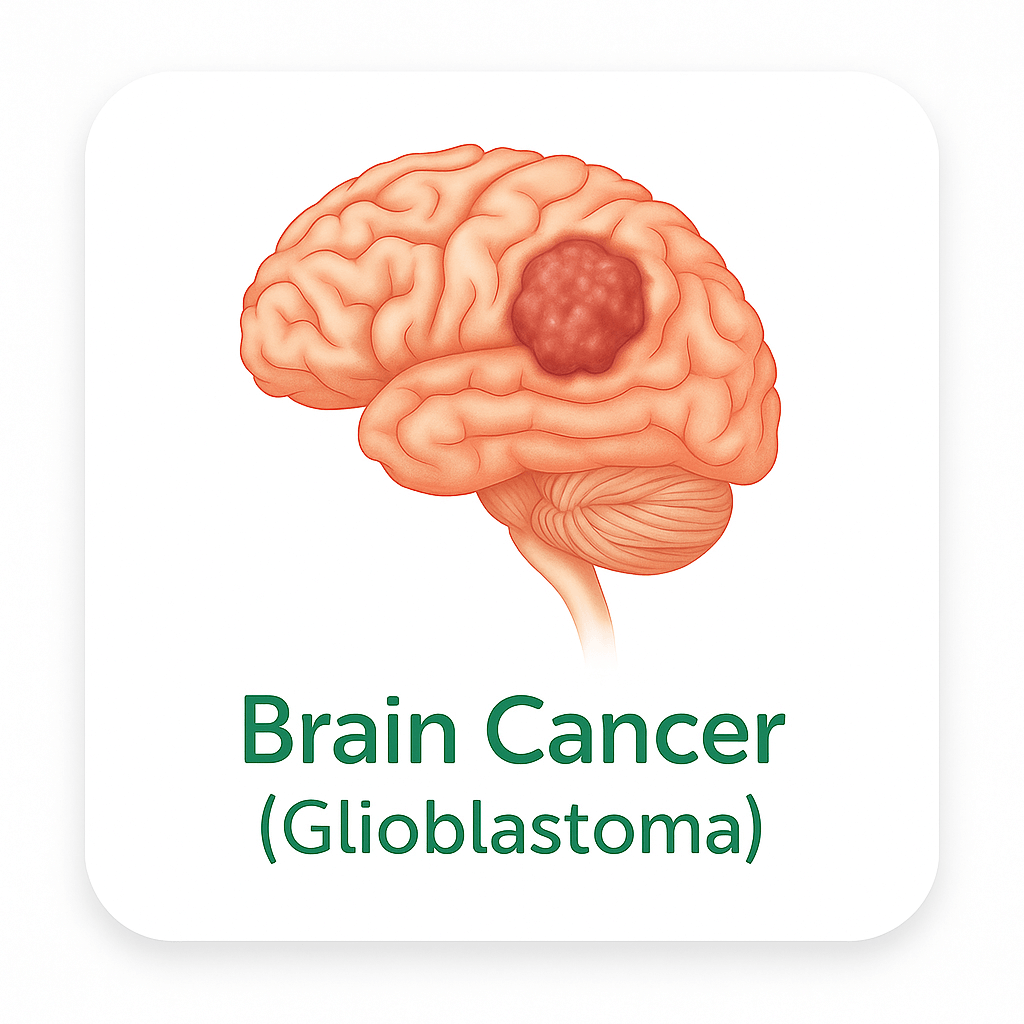
Brain Cancer (Glioblastoma)
Main Grouping
Nervous System
Organ System
Brain,central nervous system,cerebral hemispheres
Cell Origin
Glial cells (astrocytic)
Pathways Affected
GBM involves dysregulation across multiple interconnected molecular signaling pathways governing proliferation, survival, invasion, angiogenesis, metabolic reprogramming, and immune evasion. The EGFR signaling pathway is among the most prevalently altered in GBM, with EGFR amplification or the EGFRvIII deletion variant found in 40 to 60 percent of primary GBMs. EGFR activation drives constitutive downstream PI3K/AKT/mTOR and RAS/MAPK/ERK signaling cascades, promoting tumor cell proliferation, survival, invasion, and resistance to apoptosis. The PI3K/AKT/mTOR pathway is the most frequently dysregulated oncogenic pathway in GBM, with pathway activation through PTEN loss in approximately 86 percent of patients, PIK3CA activating mutations, and AKT amplification. mTORC1 downstream signaling promotes protein synthesis, cell growth, and the Warburg glycolytic metabolic switch in GBM cells. The p53 tumor suppressor pathway is inactivated through TP53 mutation in secondary GBM and through MDM2 amplification in primary GBM, disrupting DNA damage response, cell cycle arrest, and apoptosis. Cell cycle checkpoints are disrupted through CDKN2A/p16 deletion and CDK4/6 amplification, allowing uncontrolled G1/S transition and sustained proliferation.
The RAS/MAPK/ERK pathway is activated through RTK overexpression and NF1 loss, with NF1 deletion enriched in the mesenchymal GBM subtype. PDGFRA amplification and mutation drive the proneural GBM subtype through PI3K/AKT and MAPK activation. The JAK/STAT pathway, particularly STAT3 activation driven by IL-6 autocrine signaling, promotes tumor cell survival, stemness, and immune evasion in GBM, with IL-6 overexpression directly associated with poor patient survival. NF-kB signaling drives pro-inflammatory cytokine expression, anti-apoptotic gene regulation, and maintenance of GBM stem cell populations. The WNT/beta-catenin and NOTCH signaling pathways regulate GBM cancer stem cell self-renewal and are targeted by multiple plant phytochemicals in preclinical models. The hypoxia/HIF-1alpha response pathway drives VEGF-mediated tumor angiogenesis in the highly vascularized GBM microenvironment. Metabolic pathway dysregulation includes upregulation of glycolysis through HIF-1alpha and EGFR-driven Warburg effect, glutamine addiction through TCA cycle anaplerosis, and de novo lipogenesis through FASN upregulation. The apoptosis pathway is dysregulated through BCL-2 family proteins and is targeted by curcumin, resveratrol, quercetin, and EGCG in GBM cell models. The PD-1/PD-L1 immune checkpoint pathway mediates immune evasion in the GBM tumor microenvironment.
Description
Glioblastoma (GBM), classified as WHO Grade IV astrocytoma, is the most common and most lethal primary brain tumor in adults. Its frequency represents 12 to 15 percent of all intracranial tumors and 50 to 60 percent of all astrocytic tumors, with an annual incidence of approximately 5.26 per 100,000 population and approximately 17,000 new diagnoses per year in the United States. The five-year survival rate is only 5 percent, making GBM one of the most aggressive malignancies in oncology. The median survival from diagnosis is approximately 15 months with standard care.
GBM is genetically and transcriptionally heterogeneous, defined by three molecular subtypes based on transcriptional profiling: classical (enriched for EGFR amplification or mutation), proneural (enriched for PDGFRA amplification and CDKN2A deletion), and mesenchymal (enriched for NF1 and PTEN deletions). EGFR amplification or the truncated EGFRvIII variant is present in approximately 40 to 60 percent of primary GBMs. PTEN mutation or loss occurs in approximately 86 percent of GBM patients, with PTEN point mutations in 26 to 34 percent of primary GBM patients. The tumor suppressor CDKN2A encoding p16INK4a is deleted in a large proportion of primary GBMs. TERT promoter mutations are among the earliest driver events in IDH-wildtype GBM, preventing replicative senescence of neural stem cells and enabling acquisition of additional driver alterations.
The blood-brain barrier (BBB) presents a fundamental challenge to delivery of therapeutic and dietary compounds to GBM tumor tissue. The BBB is selectively permeable and excludes most large or polar molecules from brain parenchyma. However, several plant-derived phytochemicals including curcumin, resveratrol, EGCG, quercetin, and sulforaphane have been studied in GBM models and have demonstrated varying degrees of ability to cross or permeate the BBB in preclinical research. A dietary study on phytochemicals and glioma (PMC10296340) found that higher intakes of carotene, flavonoids, soy isoflavones, anthocyanins, and resveratrol were each linked to lower risk of glioma in a dose-response relationship analysis. GBM tumors are characterized by profound metabolic reprogramming including aerobic glycolysis (the Warburg effect), glutamine addiction, lipid biosynthesis upregulation, and extensive neovascularization driven by VEGF. GBM is also notable for a highly immunosuppressive tumor microenvironment involving glioma-associated macrophages and microglia, regulatory T cells, and PD-1/PD-L1-mediated immune checkpoint activation.
Plant-Based Description
Whole-food plant-based dietary patterns provide nutrients and phytochemicals studied in relation to GBM tumor biology including EGFR and PI3K/AKT/mTOR signaling inhibition, NF-kB and JAK/STAT3 inflammatory pathway suppression, apoptosis induction, anti-angiogenic activity, and metabolic reprogramming of aerobic glycolysis. A dietary dose-response analysis (PMC10296340) found that higher intakes of carotene, flavonoids, soy isoflavones, anthocyanins, and resveratrol were each associated with lower glioma risk. Fruits provide anthocyanins, resveratrol, ellagic acid, vitamin C, and polyphenols. Vegetables provide carotenoids, sulforaphane, glucosinolates, quercetin, and folate. Legumes provide isoflavones and fiber. Whole grains provide fiber and fermentable carbohydrates supporting gut-brain axis signaling. Nuts and seeds provide vitamin E, selenium, and plant-sourced ALA omega-3 fatty acids. Mushrooms provide beta-glucans and ergothioneine with immune-modulatory properties relevant to the GBM tumor microenvironment. Herbs and spices including turmeric, green tea, ginger, garlic, and rosemary provide concentrated phytochemicals documented in GBM cell line and preclinical research.
Plant Chemistry Detail
Curcumin from turmeric has the most extensive documented preclinical research in GBM among plant phytochemicals. Curcumin inhibits NF-kB, PI3K/AKT/mTOR, JAK/STAT3, and Wnt/beta-catenin signaling; induces apoptosis through BCL-2 family modulation and caspase activation; inhibits tumor invasion through MMP suppression; and has demonstrated sensitization of GBM cells to standard therapies in U87 GBM cell model studies including increased sensitivity to temozolomide. Resveratrol from grapes, blueberries, and mulberries inhibits PI3K/AKT, MAPK/ERK, NF-kB, and STAT3 signaling; induces autophagy and apoptosis; and has demonstrated blood-brain barrier permeability in preclinical studies. Molecular docking studies (PMC11665539) confirmed resveratrol binding to PIK3CA active site residues in GBM-associated protein networks.
Quercetin from yellow onions, kale, apples, and broccoli inhibits IL-6/STAT3 inflammatory signaling directly relevant to GBM tumor microenvironment biology, with IL-6 overexpression associated with poor GBM patient survival and persistent STAT3 activation documented in GBM cell lines. EGCG from green tea inhibits EGFR kinase activity, PI3K/AKT, and NF-kB pathways and demonstrates neuroprotective activity through the glutathione system and Bcl-2 system modulation in GBM-relevant neural models. Sulforaphane from cruciferous vegetables including broccoli, Brussels sprouts, kale, and cauliflower activates Nrf2/ARE antioxidant response, induces apoptosis, and inhibits GBM cancer stem cell self-renewal in preclinical models. Beta-glucans from shiitake and maitake mushrooms modulate innate immune signaling and microglia activity relevant to the GBM tumor microenvironment. Anthocyanins from blueberries, blackberries, and pomegranate reduce COX-2, p38, TNF-alpha, and NF-kB activity in microglial cell models. Genistein and daidzein from soybeans and edamame modulate PI3K/AKT signaling in GBM cell models.
Nutritional Focus
Nutritional focus in GBM research includes curcumin from turmeric as the most extensively studied single plant phytochemical in GBM preclinical models, targeting NF-kB, PI3K/AKT, JAK/STAT3, Wnt/beta-catenin, and apoptosis pathways; resveratrol from grapes and berries with documented PIK3CA binding and blood-brain barrier permeability data; quercetin from onions, apples, and kale targeting IL-6/STAT3 inflammatory signaling directly associated with poor GBM survival; EGCG from green tea inhibiting EGFR and NF-kB; sulforaphane from cruciferous vegetables activating Nrf2 and inhibiting GBM cancer stem cell self-renewal; anthocyanins from blueberries, blackberries, and pomegranate suppressing COX-2, TNF-alpha, and NF-kB in microglial models; soy isoflavones from edamame and soybeans; beta-glucans from shiitake and lions mane mushrooms modulating the GBM tumor microenvironment; vitamin E and selenium from nuts and seeds; folate from legumes and dark leafy greens supporting MGMT methylation-relevant one-carbon metabolism; and ALA omega-3 from flaxseed, chia, and walnuts.
Research Notes
A dietary dose-response analysis of phytochemicals and glioma (PMC10296340) found that higher intakes of carotene, flavonoids, soy isoflavones, anthocyanins, and resveratrol were each associated with lower risk of glioma in quantified dose-response relationship analysis. Molecular pathway review (PMC9406959) documented deregulation of EGFR, PDGFR, PI3K-PTEN-AKT-mTOR, CDK4/6, CDKN2A/B, p53, pRB, RAS/MAPK, and STAT3 pathways as the key signaling targets in GBM with evidence from two decades of GBM molecular profiling.
Smolinska et al. (PMC12250496, IJMS 2025) reviewed curcumin and resveratrol in glioma treatment, covering in vitro findings, animal model studies, and early clinical trial data on their mechanisms of action in glial tumor growth and progression including synergistic activity with standard therapies. Quercetin research (PMC5955138) documented that quercetin inhibits IL-6-driven STAT3 activation in GBM cell lines and that IL-6 overexpression in GBM is directly associated with poor patient survival, with STAT3 scavenging shown to repress GBM cell proliferation and stimulate apoptosis. Natural compounds review in GBM (PMC8150927) documented preclinical anti-GBM activity for flavonoids including EGCG, quercetin, resveratrol, naringin, rutin, and diosmin through multiple pathway targets. The genetic cell-of-origin review (PMC7859479) documented that IDH-wildtype GBM arises from neural stem cells in the SVZ harboring concordant driver mutations in TP53, PTEN, EGFR, PIK3CA, NF1, and RB1, with TERT promoter mutation as an early shared event enabling replicative senescence bypass.
Notes Visibility
show
Key Foods
Blueberry,Turmeric,Broccoli,Kale,Spinach,Brussels Sprouts,Cauliflower,Garlic,Yellow Onion,Carrot,Sweet Potato,Tomato,Apple,Pomegranate,Grape,Raspberry,Strawberry,Blackberry,Soybeans,Edamame,Green Lentils,Black Beans,Chickpeas,Brown Rice,Quinoa,Oats,Wild Rice,Rye Berries,Sorghum,Walnut,Almond,Brazil Nut,Pumpkin Seeds,Flaxseed,Chia Seeds,Sesame Seeds,Hemp Seeds,Shiitake,Maitake,Cremini,Portobello,Lions Mane,Green Tea,Ginger,Black Pepper,Parsley,Rosemary,Oregano,Garlic Powder, Leek,Avocado,Artichoke,Radish,Tangerine, Red Onion
Linked Nutrients
vitamin-c,vitamin-e,vitamin-d3,vitamin-b9,vitamin-b6,vitamin-a,selenium,zinc,magnesium,calcium,potassium,iron,curcumin,resveratrol,quercetin,egcg,sulforaphane,anthocyanins,genistein,beta-carotene,beta-glucans,plant-ala-omega3,dietary-fiber,l-theanine
Last Updated
2025-10-13 09:16:53

