
ID
15
Cancer Name
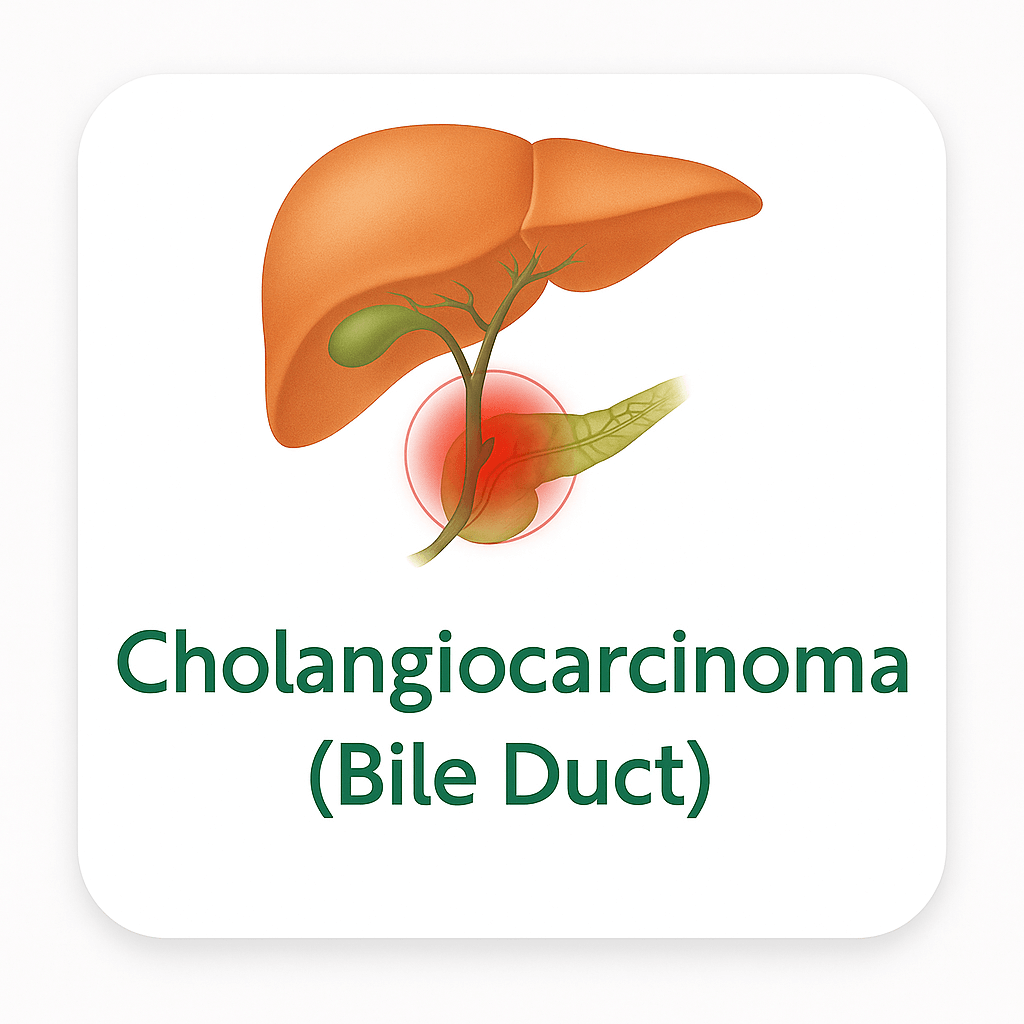
Cholangiocarcinoma (Bile Duct)
Main Grouping
Digestive
Organ System
Intra/extrahepatic bile ducts
Cell Origin
Cholangiocyte epithelium
Pathways Affected
CCA involves dysregulation across multiple interconnected molecular signaling pathways that vary by anatomical subtype and tumor driver mutation. The FGFR signaling pathway is a priority oncogenic target in iCCA, with FGFR2 fusions or rearrangements found in approximately 10 to 16 percent of iCCA cases, leading to constitutive ligand-independent FGFR2 dimerization and activation of downstream PI3K/AKT/mTOR and MAPK/ERK signaling cascades promoting cholangiocyte proliferation and survival. FGFR2 alterations are mutually exclusive with KRAS, TP53, IDH1, and IDH2 mutations, defining a distinct molecular subgroup.
The PI3K/AKT/mTOR pathway is activated across CCA subtypes through KRAS mutation, PIK3CA mutation, PTEN loss, and downstream FGFR and EGFR activation. EGFR signaling is activated in CCA through bile acid-mediated transactivation, direct EGFR overexpression, and KRAS-driven RAS/MAPK downstream signaling. IDH1 and IDH2 mutations, found in approximately 13 to 20 percent of iCCA, lead to accumulation of the oncometabolite 2-hydroxyglutarate (2-HG), which promotes epigenetic dysregulation through inhibition of TET methylcytosine dioxygenases and histone demethylases, driving aberrant DNA and histone methylation patterns.
NF-kB signaling is constitutively activated in CCA cells, drives pro-inflammatory cytokine expression, anti-apoptotic gene regulation including Bcl-2, survivin, and cIAP-1/2, and is directly inhibited by curcumin in documented CCA cell line research. The JAK/STAT pathway, particularly STAT3 activation driven by IL-6 and other pro-inflammatory cytokines, contributes to CCA cell survival, stemness, and immune evasion; STAT3 phosphorylation is inhibited by curcumin analog compounds in CCA models. The TGF-beta/SMAD pathway promotes tumor fibrosis, epithelial-mesenchymal transition, and immune suppression in the CCA stroma, with SMAD4 deletion found in approximately one-third of large bile duct iCCA. The WNT/beta-catenin pathway contributes to tumor cell proliferation and stemness. The NOTCH signaling pathway is involved in biliary lineage specification and is dysregulated in CCA. VEGF-mediated angiogenesis supports tumor vascularization. The apoptosis pathway is dysregulated through BCL-2 family proteins and caspase cascades and is directly restored by curcumin through multiple documented mechanisms in CCA cell studies. The DNA repair pathway is relevant through ARID1A chromatin remodeling gene mutations and mismatch repair deficiency in a subset of CCA tumors. The bile acid synthesis pathway is directly relevant to CCA carcinogenesis through chronic cholestasis-driven cholangiocyte injury. The Nrf2 antioxidant response pathway is relevant to redox balance in bile duct epithelial tissue.
Description
Cholangiocarcinoma (CCA) is the second most common primary hepatic malignancy after hepatocellular carcinoma and the most common malignancy of the biliary tract. Its global incidence is rising, particularly for the intrahepatic subtype, while perihilar and distal extrahepatic subtypes have shown declining incidence in most Western countries. CCA carries a poor prognosis due to its late presentation, highly invasive growth pattern, resistance to systemic therapies, and limited surgical resectability at diagnosis, with overall five-year survival rates of approximately 5 to 15 percent across all stages.
CCA originates from the malignant transformation of cholangiocytes and related biliary progenitor cells in an environment of chronic biliary inflammation, cholestasis, and cholangiocyte injury. The carcinogenic process is a multistep sequence driven by chronic inflammation of bile ducts with consequent cholangiocyte damage associated with obstruction of bile flow. Chronic cholestasis leads to overexposure of cholangiocytes to bile acids, which phosphorylate EGFR in cholangiocyte cell lines, leading to abnormal cell proliferation and cholangiocarcinogenesis. Primary sclerosing cholangitis (PSC) is the most recognized risk factor in Western countries. Chronic biliary inflammation drives activation of NF-kB, STAT3, and TGF-beta/SMAD signaling, promoting cholangiocyte survival, proliferation, fibrosis, and eventual malignant transformation.
The molecular landscape of CCA is heterogeneous and anatomical subtype-dependent. FGFR2 fusions or rearrangements occur in approximately 10 to 16 percent of iCCA cases, restricted to the small bile duct subtype. IDH1 mutations occur in approximately 13 percent of iCCA. KRAS mutations are present in approximately 25 percent of iCCA, predominantly in large bile duct tumors. TP53 mutations are found in large bile duct iCCA and extrahepatic CCA. ARID1A chromatin remodeling gene mutations occur in approximately 10 percent of CCA. HER2/ERBB2 amplification or overexpression is found in approximately 5 to 7 percent of extrahepatic CCA. BAP1 loss is found in the small bile duct iCCA subtype.
A quantitative proteomic study in an inflammation-induced hamster CCA model (PMC6237386) found that curcumin dietary supplementation modulated protein changes in CCA progression, providing preclinical data on curcumin anti-CCA activity through anti-inflammatory and anti-cancer protein-modulatory mechanisms. A documented study using three CCA cell lines (KKU100, KKU-M156, and KKU-M213) found that curcumin inhibited proliferation and induced apoptosis through abolition of constitutively active NF-kB, downregulation of anti-apoptotic proteins including Bcl-2, Bcl-xL, survivin, c-FLIP, cIAP-1, and cIAP-2, and modulation of multiple cell signaling pathways, confirming curcumin as one of the most studied plant phytochemicals in CCA cell biology.
Plant-Based Description
Whole-food plant-based dietary patterns provide nutrients and phytochemicals studied in relation to NF-kB-driven biliary inflammation, FGFR and PI3K/AKT pathway modulation, apoptosis induction, epigenetic regulation through HDAC and DNMT inhibition, and cholestasis-associated oxidative stress relevant to CCA biology. Fruits provide vitamin C, polyphenols, flavonoids, anthocyanins, and ellagic acid with antioxidant and anti-inflammatory properties. Vegetables provide carotenoids, glucosinolates, sulforaphane, quercetin, kaempferol, and fiber. Legumes provide isoflavones, fiber, and plant protein. Whole grains provide fiber and fermentable carbohydrates supporting gut microbiome signaling relevant to bile acid metabolism and enterohepatic circulation. Nuts and seeds provide vitamin E, selenium, zinc, and plant-sourced ALA omega-3 fatty acids. Mushrooms provide beta-glucans with immune-modulatory properties. Herbs and spices including turmeric, green tea, ginger, garlic, and rosemary provide concentrated phytochemicals with documented activity in CCA cell models and biliary cancer biology.
Plant Chemistry Detail
Curcumin from turmeric has the most extensively documented research in CCA biology of any single plant phytochemical. A research study using three CCA cell lines (KKU100, KKU-M156, and KKU-M213) published in PMC3165121 found that curcumin inhibited proliferation and induced apoptosis through caspase activation, PARP cleavage, and colony formation inhibition; abolished constitutively active NF-kB through DNA binding and nuclear translocation inhibition; and downregulated Bcl-2, Bcl-xL, survivin, c-FLIP, cIAP-1, and cIAP-2. A quantitative proteomic study (PMC6237386) in an inflammation-induced CCA hamster model found curcumin dietary supplementation modulated protein changes associated with CCA progression, supporting its anti-inflammatory and anti-cancer protein-modulatory mechanisms.
Quercetin from yellow onions, kale, apples, and broccoli inhibits PI3K/AKT, NF-kB, and Wnt/beta-catenin signaling and synergizes with curcumin to downregulate Wnt/beta-catenin proteins including DVL2, beta-catenin, cyclin D1, and COX-2 and to induce apoptosis through BCL-2 downregulation and caspase 3/7 activation through PARP cleavage. EGCG from green tea inhibits EGFR kinase activity, PI3K/AKT, and NF-kB pathways in biliary cancer-relevant cell models. Sulforaphane from cruciferous vegetables including broccoli, Brussels sprouts, kale, and cauliflower activates Nrf2/ARE antioxidant response and induces apoptosis. Resveratrol from grapes and berries inhibits NF-kB, PI3K/AKT, and STAT3 signaling while inducing apoptosis in hepatobiliary cancer cell models. Ellagic acid from pomegranate and berries inhibits PI3K/AKT and Wnt/beta-catenin pathways. Beta-glucans from shiitake and maitake mushrooms modulate innate immune signaling relevant to the CCA tumor microenvironment. Dietary fiber from legumes and whole grains modulates bile acid metabolism through enterohepatic circulation and gut microbiome activity directly relevant to biliary epithelial carcinogen exposure.
Nutritional Focus
Nutritional focus in CCA research is led by curcumin from turmeric, which is the most extensively documented plant phytochemical in CCA cell biology, with published studies demonstrating abolition of constitutively active NF-kB, downregulation of Bcl-2, survivin, and cIAP-1/2, and apoptosis induction through caspase activation across multiple CCA cell lines, and dietary supplementation modulating protein changes in inflammation-induced CCA animal models. Additional priorities include quercetin from onions, apples, and kale targeting NF-kB, PI3K/AKT, and Wnt/beta-catenin; EGCG from green tea targeting EGFR and STAT3; sulforaphane from cruciferous vegetables activating Nrf2 antioxidant response; resveratrol from grapes and berries inhibiting STAT3 and NF-kB; dietary fiber from legumes and whole grains modulating bile acid enterohepatic circulation; glycine and taurine precursor amino acids from plant foods supporting bile acid conjugation; and folate from dark leafy greens and legumes supporting methionine cycle integrity relevant to IDH-mutation-driven epigenetic dysregulation in CCA.
Research Notes
Suphim et al. (PMC6237386) used quantitative proteomic analysis to investigate the effects of curcumin dietary supplementation on protein changes in an Opisthorchis viverrini-induced CCA hamster model and found that curcumin modulated multiple proteins associated with the CCA carcinogenic process, supporting its anti-inflammatory and anti-cancer protein-modulatory mechanisms in a biologically relevant inflammation-induced CCA model. Prakobwong et al. (PMC3165121) studied three CCA cell lines and found curcumin inhibited proliferation, induced apoptosis through caspase activation and PARP cleavage, abolished constitutively active NF-kB, and downregulated Bcl-2, Bcl-xL, survivin, c-FLIP, cIAP-1, and cIAP-2, confirming multiple simultaneous pathway targeting.
Molecular pathway review (PMC12608419, PMC9989414) documented FGFR2 fusions in 10 to 16 percent of iCCA restricted to the small bile duct subtype; IDH1 mutations in approximately 13 percent of iCCA; KRAS mutations in approximately 25 percent of iCCA; TP53 and SMAD4 alterations in large bile duct and extrahepatic CCA; and HER2/ERBB2 amplification in 5 to 7 percent of extrahepatic CCA. Proteogenomic characterization (PMC9989414) of 262 iCCA patients identified 16 frequently altered driver genes including TP53, KRAS, FGFR2, IDH1, IDH2, ARID1A with distinct pathway activation profiles based on driver mutation. Cholangiocarcinoma molecular pathogenesis review (PMC6394015) documented that bile acid-driven EGFR transactivation in cholangiocytes promotes abnormal cell proliferation and cholangiocarcinogenesis as a direct mechanistic link between chronic cholestasis and tumor initiation.
Notes Visibility
show
Key Foods
Turmeric,Broccoli,Kale,Spinach,Brussels Sprouts,Cauliflower,Garlic,Yellow Onion,Carrot,Sweet Potato,Tomato,Apple,Blueberry,Pomegranate,Grape,Raspberry,Strawberry,Blackberry,Soybeans,Edamame,Green Lentils,Black Beans,Chickpeas,Brown Rice,Quinoa,Oats,Wild Rice,Rye Berries,Sorghum,Walnut,Almond,Brazil Nut,Pumpkin Seeds,Flaxseed,Chia Seeds,Sesame Seeds,Hemp Seeds,Shiitake,Maitake,Cremini,Portobello,Lions Mane,Green Tea,Ginger,Black Pepper,Parsley,Rosemary,Oregano,Garlic Powder, Leek,Avocado,Artichoke,Radish,Tangerine, Red Onion
Linked Nutrients
vitamin-c,vitamin-e,vitamin-d3,vitamin-b9,vitamin-b6,vitamin-a,selenium,zinc,magnesium,calcium,potassium,iron,curcumin,quercetin,egcg,sulforaphane,resveratrol,ellagic-acid,beta-carotene,anthocyanins,beta-glucans,plant-ala-omega3,dietary-fiber,glycine
Last Updated
2025-10-13 09:16:53

