
ID
16
Cancer Name
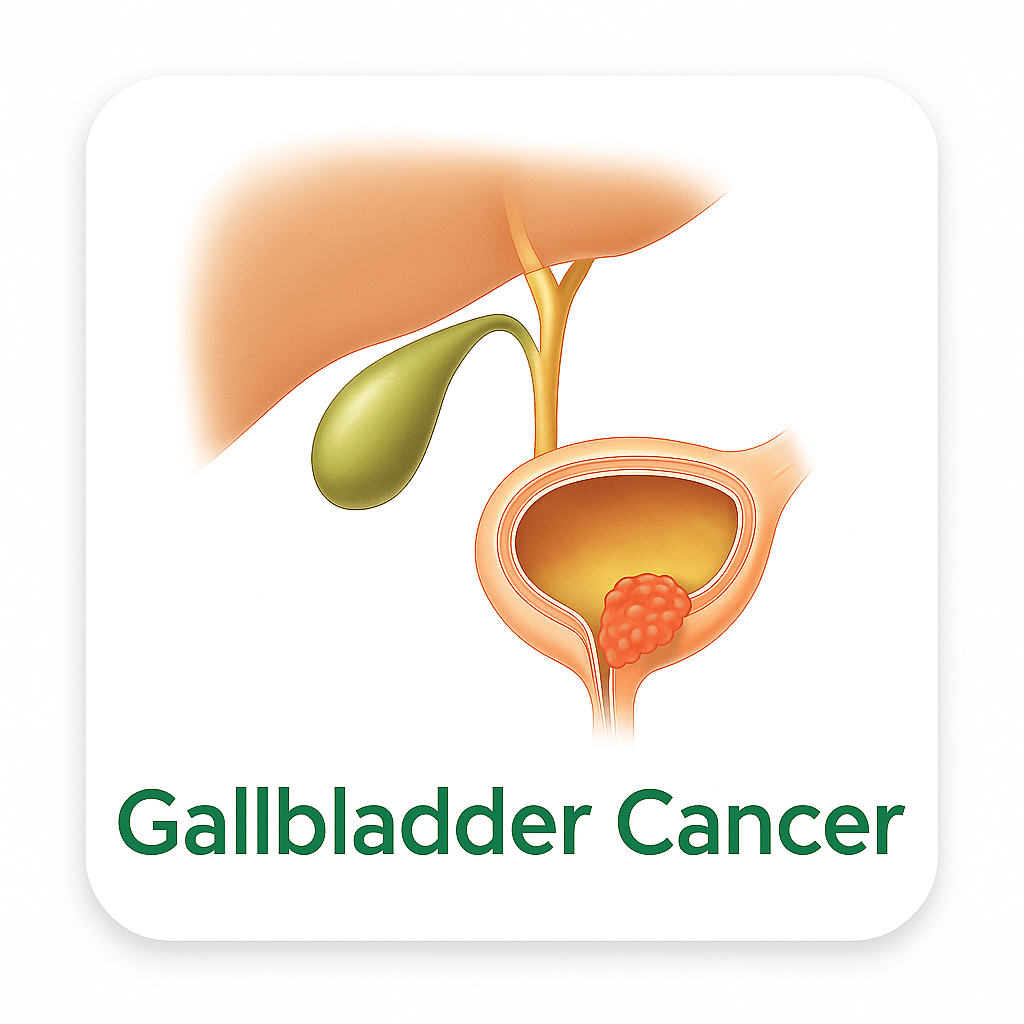
Gallbladder Cancer
Main Grouping
Digestive
Organ System
Gallbladder,biliary tract,hepatobiliary system
Cell Origin
Epithelial cells of the gallbladder mucosa lining
Pathways Affected
GBC involves dysregulation across multiple interconnected molecular signaling pathways identified through comprehensive genomic characterization studies. The p53 tumor suppressor pathway is the most frequently altered in GBC, with TP53 mutation or MDM2 amplification found in approximately 74 percent of samples and TP53 mutation alone in 63 percent of tumors across primary and metastatic GBC; TP53 regulates apoptosis, cell cycle arrest, DNA damage response, immune response modulation, and autophagy, and all TP53 mutations identified in whole exome sequencing studies were related to loss of function. The cell cycle checkpoint pathway is disrupted through CDKN2A/p16 deletion or mutation in approximately 21 percent of cases and RB1 inactivation, allowing uncontrolled G1/S transition and sustained proliferation.
The RTK-RAS pathway is altered in approximately 46 percent of GBC through ERBB2 (HER2) amplification or mutation in 15 percent and KRAS mutations in 11 percent of tumors; ERBB2 alterations drive constitutive downstream PI3K/AKT/mTOR and MAPK/ERK signaling. The PI3K/AKT/mTOR pathway is activated through PIK3CA mutations and PTEN loss, with mouse model research demonstrating that PI3K/AKT deregulation is sufficient as a causal mechanism for gallbladder epithelial neoplastic transformation. The epigenetic regulatory pathway is disrupted through ARID1A and ARID2 chromatin remodeling gene mutations in approximately 40 percent of GBC, driving aberrant gene expression through altered chromatin accessibility. The TGF-beta/SMAD pathway is altered through SMAD4 deletion in approximately 28 percent of GBC and is independently associated with reduced survival in metastatic disease. The WNT/beta-catenin pathway is activated through CTNNB1 mutations and AXIN1 mutations, with combined KRAS and Wnt/beta-catenin pathway activation documented to induce GBC precursor lesions in experimental models. The NOTCH signaling pathway is altered in approximately 9 percent of GBC and in a higher proportion of squamous differentiation tumors. NF-kB signaling drives chronic inflammatory cytokine expression relevant to gallstone-associated biliary inflammation and gallbladder carcinogenesis. VEGF-mediated angiogenesis supports tumor vascularization. The apoptosis pathway is dysregulated through BCL-2 family proteins and is targeted by curcumin and other plant phytochemicals in hepatobiliary cancer cell models. The bile acid synthesis and cholesterol mevalonate pathways are directly relevant to gallstone formation as the primary carcinogenic risk factor in GBC through chronic biliary inflammation.
Description
Gallbladder cancer (GBC) is an aggressive malignancy of the biliary tract characterized by poor prognosis due to subtle early symptoms leading to diagnosis at advanced stages, limited surgical resectability at presentation, and resistance to systemic therapies. According to GLOBOCAN 2022 data, approximately 122,491 new cases of gallbladder cancer were reported globally that year, ranking it 23rd among cancers in men and 20th in women worldwide and 6th among gastrointestinal cancers for cancer-related mortality. GBC is particularly prevalent in South America, North India, East Asia, and Eastern Europe, with marked geographic and ethnic variation in incidence rates.
Gallstones are the most established risk factor for GBC, present in 70 to 90 percent of GBC patients. Chronic gallbladder inflammation from gallstones, porcelain gallbladder, anomalous pancreaticobiliary junction, chronic Salmonella infection, and exposure to heavy metals and environmental carcinogens are documented risk factors. GBC predominantly affects women, with a female to male ratio of approximately 2 to 3 to 1, and incidence increases significantly with age. The association between gallstone disease and GBC risk has generated research interest in dietary factors that modulate bile acid composition, bile acid metabolism, cholesterol gallstone formation, and biliary inflammatory pathways.
The molecular landscape of GBC is defined by alterations in key cancer driver genes across multiple pathways. TP53 mutations or MDM2 amplification affect approximately 74 percent of GBC samples with TP53 mutation alone found in 63 percent. CDKN2A (p16) alterations occur in approximately 21 percent of tumors. RTK-RAS pathway alterations including ERBB2 and KRAS mutations are found in approximately 46 percent of tumors combined. Epigenetic regulator gene alterations including ARID1A and ARID2 mutations are found in approximately 40 percent. TGF-beta pathway alterations particularly SMAD4 mutations are present in approximately 28 percent. PIK3CA activating mutations and PTEN loss activating the PI3K/AKT/mTOR pathway are documented in GBC, and PTEN/PI3K deregulation has been shown sufficient to transform gallbladder epithelial cells and trigger fully penetrant gallbladder tumors in mouse models. Clinically actionable alterations including NTRK1 fusions and oncogenic variants in ERBB2, PIK3CA, and BRCA1/2 are identified in approximately 35 percent of GBC patients.
A case-control study (PMID 39901128, published 2025) found evidence of a negative relationship between the dietary phytochemical index and risk of gallstones after accounting for potential confounding variables, with higher phytochemical-rich food consumption associated with lower gallstone risk, providing epidemiological data linking plant-based dietary patterns to the primary risk factor pathway for GBC. A population-based case-control study in China found that drinking tea was associated with reduced risk of both gallstone disease and gallbladder cancer.
Plant-Based Description
Whole-food plant-based dietary patterns provide nutrients and phytochemicals studied in relation to gallstone formation risk, NF-kB-driven biliary inflammation, PI3K/AKT pathway modulation, TP53-related apoptosis restoration, epigenetic HDAC and DNMT inhibition, and bile acid metabolism relevant to GBC biology. A case-control study found a significant negative relationship between dietary phytochemical index scores and gallstone risk, the primary carcinogenic risk factor for GBC. A population-based case-control study in China found tea consumption associated with reduced risk of both gallstone disease and gallbladder cancer. Fruits provide vitamin C, polyphenols, flavonoids, anthocyanins, and ellagic acid. Vegetables provide carotenoids, glucosinolates, organosulfur compounds, quercetin, and fiber that modulates bile acid enterohepatic circulation. Legumes and whole grains provide soluble fiber supporting bile acid reabsorption and cholesterol metabolism. Nuts, seeds, and herbs and spices provide concentrated phytochemicals with documented activity in hepatobiliary and gallbladder cancer biology.
Plant Chemistry Detail
Curcumin from turmeric has documented activity in gallbladder and biliary cancer cell models through NF-kB inhibition, PI3K/AKT pathway suppression, COX-2 downregulation, BCL-2 family modulation, and apoptosis induction. Research by Morita et al. demonstrated that curcumin inhibited proliferation and induced apoptosis in gallbladder carcinoma cell lines through downregulation of Bcl-2 and Bcl-xL, caspase activation, and PARP cleavage, with dose-dependent antiproliferative effects confirmed across multiple GBC cell lines. Curcumin additionally modulates cholesterol and lipid metabolism in the context of gallbladder function and may reduce gallstone formation risk through effects on bile composition.
EGCG from green tea demonstrated gallstone-preventing effects in a mouse model of gallstone disease through anti-inflammatory activity (Shan 2008), and a population-based case-control study in China found that tea consumption was associated with reduced risks of both gallstone disease and gallbladder cancer. Quercetin from yellow onions, kale, and apples inhibits PI3K/AKT, WNT/beta-catenin, and NF-kB signaling and induces apoptosis in gastrointestinal cancer models. Sulforaphane from cruciferous vegetables including broccoli, Brussels sprouts, kale, and cauliflower activates Nrf2/ARE antioxidant response, inhibits HDAC epigenetic enzyme activity, and induces apoptosis. Dietary fiber from legumes, whole grains, and vegetables modulates bile acid composition through enterohepatic circulation and supports the gut microbiome's role in secondary bile acid production relevant to gallstone formation and biliary carcinogen exposure. Ellagic acid from pomegranate and berries inhibits PI3K/AKT and Wnt/beta-catenin pathways. Beta-glucans from shiitake and maitake mushrooms modulate innate immune signaling in the tumor microenvironment. Resveratrol from grapes and berries inhibits NF-kB, PI3K/AKT, and Wnt/beta-catenin signaling.
Nutritional Focus
Nutritional focus in GBC research includes curcumin from turmeric with documented antiproliferative and apoptotic activity in gallbladder carcinoma cell lines through BCL-2 downregulation and caspase activation alongside cholesterol and lipid metabolism modulation relevant to gallstone formation; EGCG from green tea with gallstone-preventing effects in animal models and epidemiological association with reduced gallstone and gallbladder cancer risk from a Chinese population-based case-control study; dietary fiber from legumes, whole grains, and vegetables modulating bile acid enterohepatic circulation and cholesterol metabolism relevant to cholesterol gallstone formation as the primary GBC risk factor; quercetin from onions and apples targeting PI3K/AKT and Wnt/beta-catenin pathways; sulforaphane from cruciferous vegetables activating Nrf2 antioxidant response; resveratrol from grapes and berries inhibiting NF-kB and Wnt/beta-catenin; the dietary phytochemical index with a significant inverse relationship to gallstone risk confirmed in a 2025 case-control study; and folate from legumes and dark leafy greens supporting one-carbon methylation chemistry relevant to epigenetic regulation of ARID1A-mutant GBC.
Research Notes
Comprehensive molecular characterization (PMC9772093) of 244 GBC samples from 233 patients found the most common oncogenic alterations in the cell cycle pathway (TP53 63% and CDKN2A 21%) and RTK-RAS pathway (ERBB2 15% and KRAS 11%); the most commonly altered canonical pathways included TP53 pathway at 74 percent, cell cycle at 46 percent, RTK-RAS at 46 percent, epigenetic at 40 percent, TGF-beta at 28 percent, and NOTCH at 9 percent; actionable alterations were identified in 35 percent of patients. Whole exome sequencing of GBC (PMC11573093) identified the major role of eight driver genes including TP53, SMAD4, ERBB3, KRAS, ARID1A, PIK3CA, RB1, and AXIN1, with genes enriched in RTK-RAS, WNT, and TP53 oncogenic signaling pathways.
A case-control study (PMID 39901128, 2025) found evidence of a significant negative relationship between the dietary phytochemical index and risk of gallstones after accounting for confounding variables. A population-based case-control study in China (Zhang 2006) found that tea consumption was associated with reduced risks of gallstone disease and gallbladder cancer. Mouse model research (PMC4011591) demonstrated that PI3K/AKT signaling deregulation through PTEN loss is sufficient to transform gallbladder epithelial cells and trigger fully penetrant highly proliferative gallbladder tumors, establishing PI3K/AKT deregulation as both an early event in gallbladder neoplastic transformation and a main mechanism of tumor growth. Spatial transcriptomics profiling of GBC (2024 preprint) confirmed that KRAS and TP53 mutations are found in BilIN precursor lesions with progressive TP53 overexpression during the evolution from low-grade BilIN to invasive GBC. Epidemiological data ranks GBC as the 6th most common cause of gastrointestinal cancer mortality globally based on GLOBOCAN 2022 data.
Notes Visibility
show
Key Foods
Turmeric,Broccoli,Kale,Spinach,Brussels Sprouts,Cauliflower,Garlic,Yellow Onion,Carrot,Sweet Potato,Tomato,Apple,Blueberry,Pomegranate,Grape,Raspberry,Strawberry,Blackberry,Soybeans,Edamame,Green Lentils,Black Beans,Chickpeas,Brown Rice,Quinoa,Oats,Wild Rice,Rye Berries,Sorghum,Walnut,Almond,Brazil Nut,Pumpkin Seeds,Flaxseed,Chia Seeds,Sesame Seeds,Hemp Seeds,Shiitake,Maitake,Cremini,Portobello,Lions Mane,Green Tea,Ginger,Black Pepper,Parsley,Rosemary,Oregano,Garlic Powder, Leek,Avocado,Artichoke,Radish,Tangerine, Red Onion
Linked Nutrients
vitamin-c,vitamin-e,vitamin-d3,vitamin-b9,vitamin-b6,vitamin-a,selenium,zinc,magnesium,calcium,potassium,iron,curcumin,quercetin,egcg,sulforaphane,resveratrol,ellagic-acid,beta-carotene,anthocyanins,beta-glucans,plant-ala-omega3,dietary-fiber,glycine
Last Updated
2025-10-13 09:16:53

