
ID
17
Cancer Name
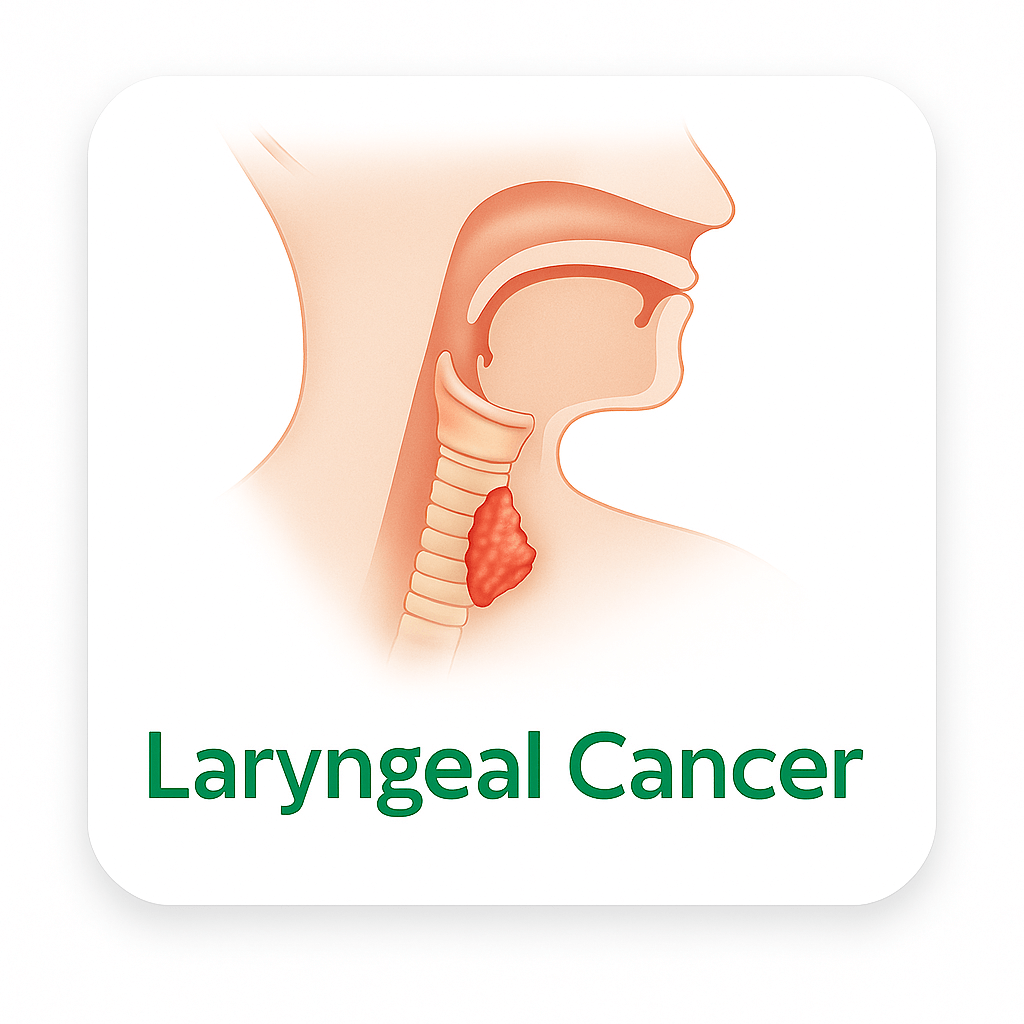
Laryngeal Cancer
Main Grouping
Respiratory
Organ System
Larynx,upper aerodigestive tract,head and neck mucosal epithelium
Cell Origin
Squamous epithelium
Pathways Affected
Laryngeal cancer involves dysregulation across multiple interconnected molecular signaling pathways consistent with the broader HNSCC molecular landscape. The p53 tumor suppressor pathway is the most prevalently altered pathway in LSCC, with TP53 mutation found in approximately 83 percent of LSCC tumors in next-generation sequencing studies; TP53 inactivation disrupts DNA damage response, cell cycle arrest, senescence, and apoptosis and is a central event in tobacco carcinogen-driven laryngeal carcinogenesis. The PI3K/AKT/mTOR pathway is activated through PIK3CA mutations found in approximately 30 percent of LSCC, through PTEN loss, and through EGFR-driven downstream activation, promoting cell survival, protein synthesis, and proliferation with stronger pathway enrichment documented in LSCC compared to other HNSCC subsites.
The EGFR signaling pathway is overexpressed in a large proportion of HNSCC including LSCC, with EGFR amplification observed in 8 of 12 laryngeal SCC cell lines in the UM-SCC panel study; EGFR activates downstream PI3K/AKT/mTOR and RAS/MAPK/ERK signaling cascades simultaneously. The RAS/MAPK/ERK pathway is activated through RTK overexpression and downstream KRAS and BRAF alterations, controlling cell proliferation, differentiation, and survival. Cell cycle checkpoints are disrupted through CDKN2A/p16 inactivation in approximately 20 percent of LSCC and through CDK4/6-cyclin D1 amplification, with cyclin D1 amplification documented as a key oncogenic event in LSCC. The NOTCH signaling pathway is altered in approximately 10 percent of LSCC and plays a role in squamous cell differentiation and cancer stemness.
NF-kB signaling drives pro-inflammatory cytokine expression, anti-apoptotic gene regulation, and is activated by tobacco carcinogens and chronic inflammation in laryngeal mucosal tissue; epidemiological data link a pro-inflammatory dietary pattern to elevated laryngeal cancer risk. The JAK/STAT pathway contributes to immune evasion and cytokine-driven tumor growth. The Nrf2/ARE oxidative stress response pathway regulates antioxidant and phase II detoxification enzymes in laryngeal epithelial tissue; deficient carcinogen detoxification through xenobiotic metabolism contributes to tobacco carcinogen-induced DNA damage accumulation. The WNT/beta-catenin pathway contributes to laryngeal tumor cell stemness and invasion. VEGF-mediated angiogenesis signaling supports laryngeal tumor vascularization. The apoptosis pathway is dysregulated through BCL-2 family proteins and caspase cascade disruption and is restored by multiple plant phytochemicals in HNSCC and laryngeal cancer cell models.
Description
Laryngeal cancer is the eleventh most common malignancy worldwide and one of the most common types of head and neck cancer. Laryngeal squamous cell carcinoma (LSCC) accounts for 85 to 95 percent of all laryngeal carcinoma cases. According to global cancer statistics, head and neck cancers including laryngeal cancer collectively account for over 650,000 new cases and 330,000 deaths worldwide annually. The five-year survival rate for laryngeal cancer ranges from approximately 40 to 60 percent depending on stage, subsite, and treatment approach.
Laryngeal cancer is anatomically divided into three subsites: glottic (65 percent of cases, arising from the true vocal cords), supraglottic (approximately 30 percent of cases, arising from the epiglottis, aryepiglottic folds, and false vocal cords), and subglottic (rare, approximately 5 percent of cases). Tobacco smoking is the dominant risk factor for laryngeal cancer, accounting for the majority of attributable risk. Chronic heavy alcohol consumption independently increases laryngeal cancer risk and acts synergistically with tobacco. Tobacco-derived carcinogens including polycyclic aromatic hydrocarbons and nitrosamines generate reactive metabolites that form DNA adducts in laryngeal mucosal cells, with inadequate repair driving mutation accumulation in key tumor suppressor genes including TP53.
Molecular characterization studies using next-generation sequencing have identified TP53 as the most frequently mutated gene in LSCC, found in approximately 83 percent of tumors in a comparative genomic study. PIK3CA mutations were observed in approximately 30 percent of LSCC cases, higher than in oral squamous cell carcinoma (16 percent). CDKN2A alterations were found in approximately 20 percent of LSCC. EGFR amplification is found in the majority of LSCC cell lines consistent with the broader HNSCC pattern. Pathway enrichment analysis showed stronger enrichment for p53 signaling and PI3K-Akt signaling in LSCC compared to oral SCC, with pathway enrichment scores of 3.42 for LSCC.
Epidemiological evidence documents consistent inverse relationships between fruit and vegetable intake and laryngeal cancer risk. A pooled analysis in the International Head and Neck Cancer Epidemiology (INHANCE) Consortium comparing highest versus lowest quintile of total carotenoid intake found a 39 percent risk reduction for laryngeal cancer (95% CI 24 to 50 percent). An Italian case-control study of 527 laryngeal cancer patients found highly significant inverse associations for vegetable diversity (OR 0.41, 95% CI 0.28 to 0.59) and fruit diversity (OR 0.40, 95% CI 0.27 to 0.59) when comparing highest versus lowest intake quartiles. Low intake of vitamin C, beta-carotene, and vitamin E were reported consistently associated with higher laryngeal cancer risk across multiple epidemiological studies. An Italian case-control study documented that a pro-inflammatory diet measured by the Dietary Inflammatory Index was strongly associated with increased laryngeal cancer risk, while protective effects were found for flavanones, flavonols, fiber, and antioxidant micronutrients with anti-inflammatory properties.
Plant-Based Description
Whole-food plant-based dietary patterns provide nutrients and phytochemicals studied in relation to oxidative stress, carcinogen detoxification, NF-kB-driven inflammation, EGFR and PI3K/AKT pathway modulation, and DNA damage response relevant to laryngeal cancer biology. Consistent epidemiological evidence documents inverse relationships between fruit and vegetable intake and laryngeal cancer risk, with an INHANCE Consortium pooled analysis finding 39 percent risk reduction for the highest versus lowest quintile of total carotenoid intake and an Italian case-control study finding odds ratios of 0.40 to 0.41 for high fruit and vegetable diversity. Low intake of vitamin C, beta-carotene, and vitamin E are consistently reported as associated with higher laryngeal cancer risk across multiple studies. Fruits provide vitamin C, carotenoids, polyphenols, flavonoids, and anthocyanins. Vegetables provide carotenoids, glucosinolates, organosulfur compounds, quercetin, and fiber. Legumes provide fiber, isoflavones, and plant protein. Whole grains provide fiber and fermentable carbohydrates. Nuts and seeds provide vitamin E, selenium, and plant-sourced ALA omega-3 fatty acids. Mushrooms provide beta-glucans. Herbs and spices including green tea, turmeric, garlic, and rosemary provide concentrated phytochemicals studied in EGFR, NF-kB, PI3K/AKT, and apoptosis pathway biology in HNSCC and laryngeal cancer models.
Plant Chemistry Detail
Carotenoids including beta-carotene, beta-cryptoxanthin, lycopene, and lutein plus zeaxanthin from carrot, sweet potato, tomato, kale, spinach, and citrus fruits are the plant compounds with the strongest direct epidemiological evidence in laryngeal cancer. A pooled analysis in the INHANCE Consortium found that intakes of beta-carotene equivalents, beta-cryptoxanthin, lycopene, and lutein plus zeaxanthin were each associated with at least 17 percent reduction in laryngeal cancer risk, with total carotenoid intake associated with a 39 percent risk reduction comparing highest versus lowest quintiles. Vitamin C from citrus fruits, kiwi, strawberry, and red bell pepper supports antioxidant defense and carcinogen detoxification and was identified in INHANCE pooled analyses as protective against laryngeal cancer.
Quercetin from yellow onions, apples, kale, and broccoli inhibits PI3K/AKT, NF-kB, and MAPK/ERK signaling and induces apoptosis in HNSCC cell models; INHANCE analyses documented protective effects of flavanones and flavonols on laryngeal cancer risk. EGCG from green tea inhibits EGFR kinase activity, PI3K/AKT, and NF-kB pathways and demonstrates anti-proliferative activity in HNSCC and laryngeal cancer cell models. Sulforaphane from cruciferous vegetables activates Nrf2/ARE phase II detoxification enzyme induction directly relevant to xenobiotic carcinogen metabolism from tobacco exposure, inhibits NF-kB, and induces apoptosis. Curcumin from turmeric inhibits NF-kB, EGFR, PI3K/AKT, and Wnt/beta-catenin pathways. Dietary fiber from legumes, whole grains, and vegetables was identified as protective against laryngeal cancer in the INHANCE Italian case-control analysis. Beta-glucans from shiitake and maitake mushrooms modulate innate immune signaling relevant to the laryngeal tumor microenvironment.
Nutritional Focus
Nutritional focus in laryngeal cancer research is led by carotenoids from fruits and vegetables, with an INHANCE Consortium pooled analysis finding 39 percent risk reduction for laryngeal cancer comparing highest versus lowest quintile of total carotenoid intake, with beta-carotene equivalents, beta-cryptoxanthin, lycopene, and lutein plus zeaxanthin each independently associated with at least 17 percent risk reduction. Vitamin C from citrus fruits, kiwi, and red bell pepper was identified as protective against laryngeal cancer in INHANCE pooled analyses. Vitamin E from nuts and seeds is consistently reported as inversely associated with laryngeal cancer risk. Dietary fiber from legumes, whole grains, and vegetables showed protective associations in Italian case-control analyses. Quercetin and flavanones from fruits and vegetables and EGCG from green tea target EGFR, PI3K/AKT, and NF-kB pathways. Sulforaphane from cruciferous vegetables activates Nrf2-mediated xenobiotic detoxification of tobacco carcinogens. Curcumin from turmeric targets NF-kB and EGFR. Food and dietary diversity, specifically vegetable diversity and fruit diversity, showed the strongest inverse associations with laryngeal cancer risk in an Italian and Swiss case-control study of 527 patients.
Research Notes
A pooled analysis in the INHANCE Consortium (European Journal of Epidemiology, 2015) found that comparing highest versus lowest quintile of total carotenoid intake, the risk reduction for laryngeal cancer was 39 percent (95% CI 24 to 50 percent); intakes of beta-carotene equivalents, beta-cryptoxanthin, lycopene, and lutein plus zeaxanthin were each associated with at least 17 percent risk reduction for laryngeal cancer. A diet diversity case-control study of 527 laryngeal cancer cases and 1297 controls from Italy and Switzerland found highly significant inverse associations for vegetable diversity (OR 0.41, 95% CI 0.28 to 0.59) and fruit diversity (OR 0.40, 95% CI 0.27 to 0.59) when comparing highest versus lowest intake quartiles, with results consistent across strata of age, alcohol, and tobacco.
An Italian case-control study (PMC4958599) using the Dietary Inflammatory Index found that a pro-inflammatory diet was strongly associated with increased risk of laryngeal cancer, while dietary patterns rich in flavanones, flavonols, fiber, and antioxidant micronutrients with anti-inflammatory properties showed protective associations. A pooled analysis in the INHANCE Consortium (PMID 22123733) identified an antioxidant vitamins and fiber dietary pattern inversely related to oral and pharyngeal cancer with OR 0.57, and found that diets rich in animal products and cereals were positively associated with laryngeal cancer at OR 1.54. Molecular characterization study (PMC12449543) of 60 HNSCC patients using NGS found TP53 mutations in 83.3 percent of LSCC, PIK3CA mutations in 30 percent of LSCC, and stronger pathway enrichment score of 3.42 for p53 and PI3K-Akt pathways in LSCC compared to oral SCC. The UM-SCC laryngeal SCC cell line panel study (PMC6692232) documented EGFR amplification in 8 of 12 cell lines and PIK3CA amplification in 5 of 12, consistent with the broader HNSCC molecular landscape.
Notes Visibility
show
Key Foods
roccoli,Kale,Spinach,Brussels Sprouts,Cauliflower,Carrot,Sweet Potato,Garlic,Yellow Onion,Tomato,Apple,Blueberry,Strawberry,Orange,Kiwi,Grape,Pomegranate,Raspberry,Soybeans,Edamame,Green Lentils,Black Beans,Chickpeas,Brown Rice,Quinoa,Oats,Wild Rice,Rye Berries,Sorghum,Walnut,Almond,Brazil Nut,Pumpkin Seeds,Flaxseed,Chia Seeds,Sesame Seeds,Hemp Seeds,Shiitake,Maitake,Cremini,Portobello,Lions Mane,Green Tea,Turmeric,Garlic Powder,Ginger,Black Pepper,Parsley,Rosemary, Leek,Avocado,Artichoke,Radish,Tangerine, Red Onion
Linked Nutrients
vitamin-c,vitamin-e,vitamin-a,vitamin-d3,vitamin-b9,vitamin-b6,selenium,zinc,magnesium,calcium,potassium,iron,beta-carotene,lycopene,beta-cryptoxanthin,lutein,quercetin,egcg,curcumin,sulforaphane,anthocyanins,beta-glucans,plant-ala-omega3,dietary-fiber
Last Updated
2025-10-13 09:16:53

