
ID
19
Cancer Name
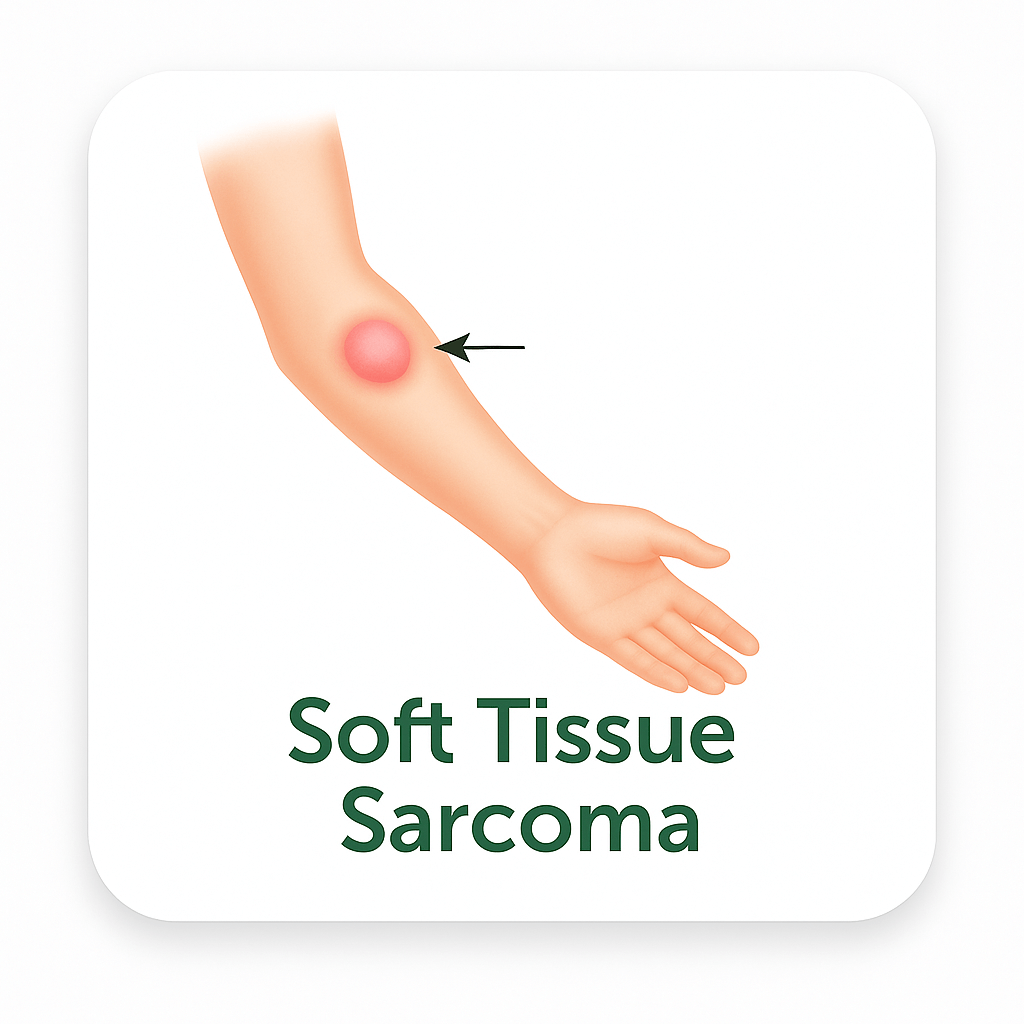
Soft Tissue Sarcoma
Main Grouping
Musculoskeletal
Organ System
Soft tissues including fat (adipose), muscle (skeletal and smooth), fibrous connective tissue, peripheral nerves, blood vessels, and synovial tissue.
Cell Origin
Mesenchymal cells
Pathways Affected
STS involve dysregulation across multiple molecular signaling pathways that vary by histological subtype, with the defining feature of the dominant 80 percent category being complex genomic instability driven by cell cycle dysregulation and tumor suppressor inactivation. The p53 tumor suppressor pathway is disrupted through TP53 mutations across multiple STS subtypes, with mouse models demonstrating that PTEN and p53 inactivation cooperate to drive liposarcoma formation across multiple subtypes; MDM2 amplification at 12q13-15 provides an alternative mechanism of p53 functional inactivation in well-differentiated and dedifferentiated liposarcoma, with MDM2 promoting p53 degradation while also having p53-independent functions controlling proliferation and apoptosis.
The cell cycle checkpoint pathway is disrupted through CDK4 amplification co-localized with MDM2 at 12q13-15 in liposarcoma, driving CDK4/6-cyclin D1-mediated phosphorylation of RB1 and uncontrolled G1/S phase transition; RB1 inactivation through mutation, deletion, or MDM2-mediated suppression is a recurring event in multiple STS subtypes. The PI3K/AKT/mTOR pathway is activated through PIK3CA mutations associated with poor clinical outcome, through PTEN loss (demonstrated in liposarcoma mouse models), and through upstream RTK activation. The RAS/MAPK/ERK pathway contributes to proliferative and survival signaling, with NF1 tumor suppressor loss enabling RAS hyperactivation in several STS subtypes. The TGF-beta/SMAD pathway is relevant to mesenchymal cell lineage specification, connective tissue matrix biology, and tumor microenvironment regulation in STS. The WNT/beta-catenin pathway contributes to MSC stemness and sarcoma self-renewal in tumor-initiating cell populations. The NOTCH signaling pathway is dysregulated in multiple STS subtypes and plays a role in mesenchymal stem cell differentiation and sarcoma progenitor maintenance. Angiogenesis through VEGF signaling is a therapeutic target in STS, with LIN28B overexpression in MSC models producing increased angiogenesis. The hypoxia/HIF-1alpha response pathway is active in soft tissue sarcomas growing in hypoxic microenvironments. The apoptosis pathway is dysregulated through BCL-2 family protein alterations and caspase cascade disruption across STS subtypes and is modulated by curcumin, quercetin, EGCG, and resveratrol in cancer stem cell and mesenchymal cancer cell models. EMT signaling and cancer stem cell pathways including WNT, Notch, Hedgehog, PI3K/AKT/mTOR, STAT3, and NF-kB are active in STS tumor-initiating subpopulations.
Description
Soft tissue sarcomas (STS) are a rare, complex, and heterogeneous group of malignant mesenchymal neoplasms with over 150 different histological subtypes. STS collectively account for less than 1 percent of all adult solid malignancies. Despite their rarity, their clinical management is highly challenging due to their histological and molecular heterogeneity, the modest efficacy of conventional therapies for advanced disease, and the complexity of subtype-specific tumorigenesis. STS can arise anywhere in the body, with most originating in the extremities at approximately 59 percent, the trunk at approximately 19 percent, and the retroperitoneum at approximately 15 percent.
STS arise from mesenchymal stromal and stem cells (MSCs), which are multipotent precursor cells with the capacity for differentiation into adipocytes, osteoblasts, chondrocytes, myocytes, and fibroblasts. Research has demonstrated that at least two oncogenic hits are required to transform human MSCs into sarcomas in vivo, with experimental models showing MDM2 and CDK4 overexpression in MSCs required to be combined with additional oncogenic events including c-Myc stabilization, RB1 inactivation, and H-RASV12 overexpression to produce dedifferentiated liposarcoma tumors in vivo. A single oncogene overexpression of LIN28B in human bone marrow MSCs produced fibromyxoid sarcoma-like tumors in vivo with increased angiogenesis.
STS can be divided into two genomic categories. The first and larger category comprising approximately 80 percent consists of tumors with complex karyotypes characterized by numerous gene rearrangements and chromosomal gains or losses involving cell cycle-related genes including TP53, MDM2, RB1, and CDK4; this category includes leiomyosarcoma, undifferentiated pleomorphic sarcoma, dedifferentiated liposarcoma, and angiosarcoma. The second category comprising approximately 20 percent consists of tumors with specific genetic alterations including gene translocations and activating point mutations; this category includes synovial sarcoma harboring the SS18-SSX gene fusion and myxoid liposarcoma with DDIT3-FUS or DDIT3-EWSR1 translocations.
For liposarcoma, the most common adult STS subtype, MDM2 and CDK4 gene amplification at the 12q13-15 chromosomal locus is the defining molecular event in well-differentiated and dedifferentiated liposarcoma. Mouse models with conditional inactivation of PTEN and p53 demonstrated that deletion of these two tumor suppressors cooperates in the formation of multiple liposarcoma subtypes from well-differentiated to pleomorphic LPS, with tumor progression further characterized by D cyclin and CDK4/6 expression. PIK3CA mutations are associated with poor clinical outcome across STS subtypes. NF1 tumor suppressor mutations or deletions are found in several sarcoma subtypes. The histological grade of STS assigned according to the FNCLCC grading system remains the most important prognostic factor.
Plant-Based Description
Whole-food plant-based dietary patterns provide nutrients and phytochemicals studied in relation to cell cycle dysregulation, NF-kB-driven inflammation, PI3K/AKT/mTOR pathway modulation, cancer stem cell pathway inhibition, apoptosis induction, and oxidative stress relevant to STS biology. While direct STS-specific dietary epidemiology is limited due to the extreme rarity of STS, the core molecular pathways active in STS including PI3K/AKT/mTOR, NF-kB, Wnt/beta-catenin, NOTCH, and apoptosis pathways are well-documented targets of plant phytochemicals in mesenchymal and cancer stem cell models. Curcumin, quercetin, EGCG, sulforaphane, resveratrol, and genistein have been documented across multiple studies to inhibit proliferation, suppress cancer stem cell self-renewal, reduce sphere-forming capacity, diminish ALDH-positive and CD44-positive cancer stem cell fractions, and induce apoptosis in mesenchymal cancer and sarcoma-relevant cell models. Fruits, vegetables, legumes, whole grains, nuts, seeds, mushrooms, and herbs provide synergistic phytochemical combinations that target multiple oncogenic pathways simultaneously.
Plant Chemistry Detail
Curcumin from turmeric has the broadest documentation of anti-cancer stem cell activity across multiple pathways active in STS, inhibiting Wnt/beta-catenin, Notch, Hedgehog, PI3K/AKT/mTOR, STAT3, and NF-kB simultaneously in CSC models; curcumin has been documented to suppress CSC self-renewal, inhibit sphere formation, reduce ALDH-positive tumor-initiating cell fractions, and reverse EMT features that parallel the mesenchymal phenotype of STS. EGCG from green tea inhibits PI3K/AKT, NF-kB, and Wnt/beta-catenin signaling, and has been repeatedly documented to inhibit CSC proliferation and sphere formation and to enhance chemosensitivity in multiple cancer models sharing pathways with STS.
Quercetin from onions, apples, and kale inhibits PI3K/AKT, NF-kB, and Wnt/beta-catenin pathways, sensitizes cancer cells to cytotoxic mechanisms through HIF-alpha, survivin, and MRP modulation, and induces apoptosis through BCL-2 downregulation and caspase 3/7 activation. Sulforaphane from cruciferous vegetables activates Nrf2/ARE antioxidant response, inhibits NF-kB, and targets CSC-maintaining pathways including Hedgehog and Wnt/beta-catenin signaling relevant to STS tumor-initiating populations. Resveratrol from grapes and berries impairs CSC survival and reduces metastatic traits via Wnt, Notch, and STAT3 signaling axes and has been documented to suppress murine tumor growth; TCGA molecular analysis found that resveratrol targets MDM2 and CDK4 expression pathways active in liposarcoma. Genistein from soybeans inhibits Hedgehog and STAT signaling in CSC models and targets PI3K/AKT signaling relevant to STS. Ellagic acid from pomegranate and berries inhibits PI3K/AKT and Wnt/beta-catenin. Beta-glucans from shiitake and maitake mushrooms modulate innate immune signaling relevant to the STS tumor microenvironment.
Nutritional Focus
Nutritional focus in STS research centers on plant phytochemicals with documented activity in mesenchymal cancer and cancer stem cell models that share the primary molecular pathways active in STS. Curcumin from turmeric has the broadest documentation of simultaneous inhibition of Wnt/beta-catenin, Notch, Hedgehog, PI3K/AKT/mTOR, STAT3, and NF-kB pathways in CSC models relevant to STS; EGCG from green tea and quercetin from onions and apples have been documented to inhibit CSC proliferation and sphere formation and to target PI3K/AKT and NF-kB pathways; sulforaphane from cruciferous vegetables activates Nrf2 antioxidant response and targets CSC-maintaining pathways; resveratrol from grapes and berries impairs CSC survival through Wnt, Notch, and STAT3 signaling; genistein from soybeans targets Hedgehog and STAT3 signaling in CSC contexts; dietary fiber from legumes and whole grains supports gut microbiome-mediated short-chain fatty acid signaling with epigenetic relevance to CDK4 and MDM2 gene expression regulation. Brazil nuts and pumpkin seeds provide selenium for glutathione peroxidase activity and zinc for immune signaling and zinc-dependent DNA repair enzyme function relevant to the genomic instability of complex-karyotype STS.
Research Notes
Molecular pathways review (PMC10046114, Kim and Bui, Stanford 2023) documented STS as rare mesenchymal neoplasms with over 150 subtypes, with the most common being undifferentiated pleomorphic sarcoma at 28 percent, liposarcoma at 15 percent, leiomyosarcoma at 12 percent, and synovial sarcoma at 10 percent; the review covered oncogenic pathway alterations in cell cycle regulation, angiogenesis, and NOTCH signaling across STS subtypes. MSC cell of origin review (PMC8241855) documented mounting evidence that STS originate from mesenchymal stromal and stem cells (MSCs) and that at least two oncogenic hits are required to transform human MSCs into sarcomas, with MDM2 and CDK4 overexpression combined with c-Myc stabilization, RB1 inactivation, and H-RASV12 producing dedifferentiated liposarcoma in vivo from MSCs.
STS genomic characterization (PMC11668776, Frontiers in Oncology 2024) documented the genomic division into approximately 80 percent complex karyotype tumors with TP53, MDM2, RB1, and CDK4 alterations and approximately 20 percent tumors with specific genetic alterations including translocations. Liposarcoma mouse model study (PMC4648325) demonstrated that conditional PTEN and p53 deletion cooperate to form multiple LPS subtypes with tumor progression characterized by D cyclin and CDK4/6 expression. Cancer stem cell phytochemical review (MDPI Biomedicines 2026) documented curcumin, sulforaphane, resveratrol, EGCG, genistein, and quercetin as compounds that suppress CSC self-renewal, reduce sphere-forming capacity, diminish ALDH-positive and CD44-positive fractions, reverse EMT features, and inhibit Wnt/beta-catenin, Notch, Hedgehog, PI3K/AKT/mTOR, STAT3, and NF-kB pathways simultaneously across multiple mesenchymal and cancer cell models.
Notes Visibility
show
Key Foods
Turmeric,Broccoli,Kale,Spinach,Brussels Sprouts,Cauliflower,Garlic,Yellow Onion,Carrot,Sweet Potato,Tomato,Apple,Blueberry,Pomegranate,Grape,Raspberry,Strawberry,Blackberry,Soybeans,Edamame,Green Lentils,Black Beans,Chickpeas,Brown Rice,Quinoa,Oats,Wild Rice,Rye Berries,Sorghum,Walnut,Almond,Brazil Nut,Pumpkin Seeds,Flaxseed,Chia Seeds,Sesame Seeds,Hemp Seeds,Shiitake,Maitake,Cremini,Portobello,Lions Mane,Green Tea,Ginger,Black Pepper,Parsley,Rosemary,Oregano,Garlic Powder, Leek,Avocado,Artichoke,Radish,Tangerine, Red Onion
Linked Nutrients
vitamin-c,vitamin-e,vitamin-d3,vitamin-b9,vitamin-b6,vitamin-a,selenium,zinc,magnesium,calcium,potassium,iron,curcumin,quercetin,egcg,sulforaphane,resveratrol,ellagic-acid,genistein,beta-carotene,anthocyanins,beta-glucans,plant-ala-omega3,dietary-fiber
Last Updated
2025-10-13 09:16:53

