ID
22
Cancer Name
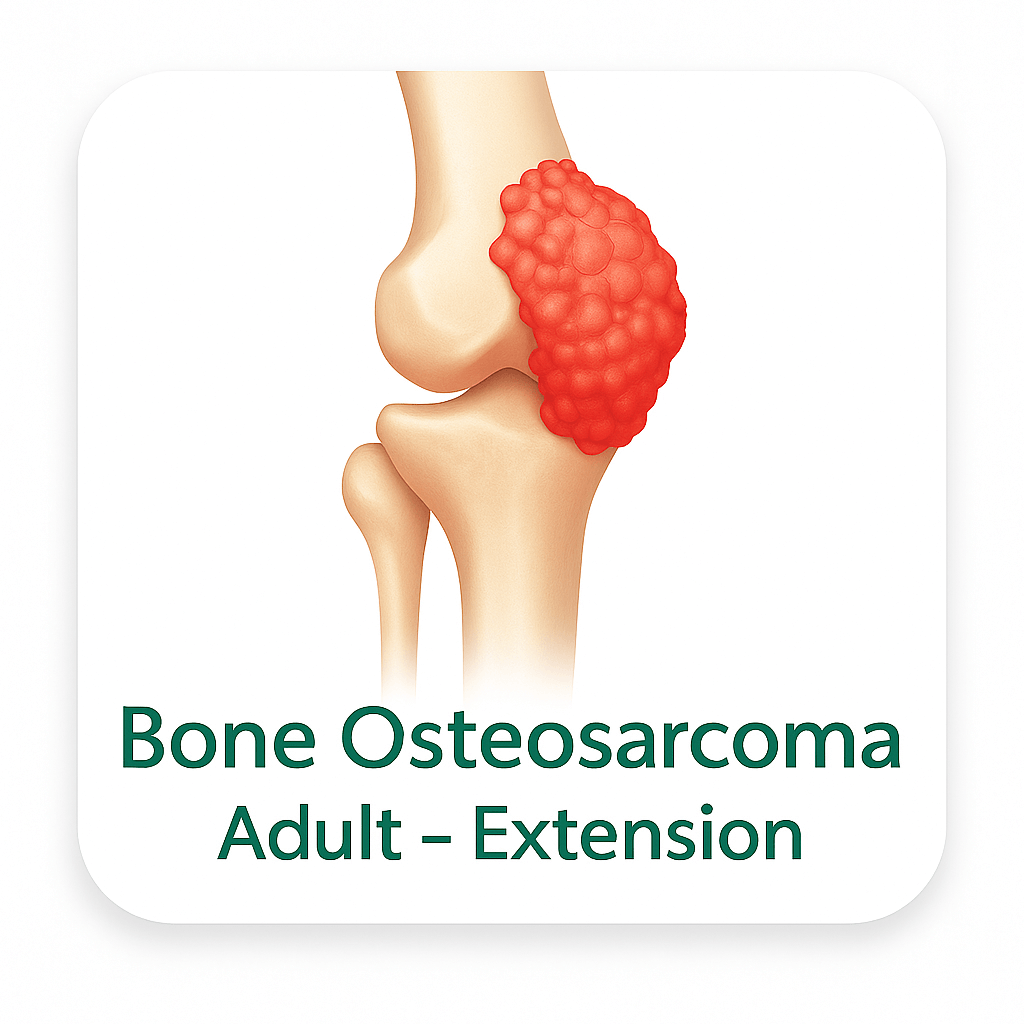
Bone Cancer (Osteosarcoma)
Main Grouping
Musculoskeletal
Organ System
Bone,skeletal system
Cell Origin
Osteoblasts, Mesenchymal stromal and stem cells (MSCs)
Pathways Affected
Osteosarcoma involves dysregulation of multiple interconnected molecular signaling pathways across the background of extreme chromosomal instability. The p53 tumor suppressor pathway is inactivated in approximately 74 percent of OS through TP53 mutations as the key initiating event driving chromosomal instability; TP53 loss activates the alternative lengthening of telomeres (ALT) pathway, triggers catastrophic genome rearrangements, and is closely associated with chemotherapy resistance. The RB1 cell cycle pathway is inactivated through RB1 mutations in pediatric OS and through CDK4 amplification at 12q13-15 alongside MDM2 amplification, with RB1 deficiency directly relevant to cell cycle checkpoint loss driving uncontrolled osteoblast progenitor proliferation.
The PI3K/AKT/mTOR pathway is activated through PTEN loss, which has been functionally validated as a protumorigenic OS driver in forward genetic screens, and through upstream PI3K pathway activating mutations with enrichment of PI3K-AKT-mTOR cascade genes among OS driver candidates; RANKL-RANK binding activates PI3K/AKT/mTOR among other downstream cascades directly relevant to OS osteoclast-osteoblast signaling biology. The RAS/MAPK/ERK pathway is activated through c-Myc amplification driving MEK-ERK pathway activation and through RTK activation; miRNAs miR-21, miR-34a, miR-143, miR-148a, miR-195a, miR-199a-3p, and miR-382 are documented to regulate MAPK and PI3K/AKT signaling pathway activity in osteosarcoma. The WNT/beta-catenin pathway is downregulated in osteosarcoma compared to normal osteoblasts, with several upstream WNT pathway components downregulated, and Axin and GSK3-beta showing decreased expression suggesting WNT signaling bypass; APC and WIF1 driver mutations additionally affect WNT pathway regulation. The NOTCH signaling pathway is altered through NOTCH1 driver mutations in a subset of OS. The RANKL/RANK/OPG pathway is directly relevant to osteosarcoma bone microenvironment biology, with RANKL promoting osteoclastogenesis, metastasis, and cell mobility in OS through NF-kB, PI3K/AKT, and MAPK downstream activation. The NF-kB pathway is activated through RANKL-RANK signaling and drives pro-inflammatory cytokine production and OS cell survival and metastasis. The TGF-beta/SMAD pathway regulates bone matrix production and EMT-like mesenchymal plasticity in OS. VEGF-mediated angiogenesis supports tumor vascularization. The apoptosis pathway is disrupted through BCL-2 family alterations and is targeted by curcumin through ROS-dependent mechanisms in MG-63 OS cells.
Description
Osteosarcoma (OS) is the most frequent primary bone cancer in children and adolescents and the third most frequent primary bone cancer in adults. Primary bone cancers collectively are responsible for 3 to 5 percent of pediatric cancers and nearly 0.2 percent of all malignant neoplasms. The incidence of OS is approximately 6 per million children and 2 per million adults annually. Osteosarcoma is a highly aggressive primary malignant bone tumor with poor survival in approximately 40 percent of patients; approximately 20 percent of OS patients have metastasis at diagnosis, and only 27 percent of patients with metastatic OS survive longer than 5 years. Osteosarcoma most commonly arises in the metaphyses of long bones during periods of rapid skeletal growth, with the distal femur, proximal tibia, and proximal humerus being the most common primary sites.
Osteosarcoma arises from mesenchymal cells forming bone through the malignant transformation of osteoblast progenitor cells and MSCs. Numerous inherited germline mutations are responsible for syndromes predisposing to osteosarcoma including Li-Fraumeni syndrome (TP53 germline mutations), retinoblastoma syndrome (RB1 germline mutations), Werner syndrome, Bloom syndrome, and Diamond-Blackfan anemia. Sporadic osteosarcoma is characterized by extreme chromosomal instability with aneuploidy and complex structural rearrangements, making it one of the most genomically complex solid tumors.
TP53 mutation is present in approximately 74 percent of OS cases and constitutes the key initiating event that drives genomic instability; loss of TP53 function activates the alternative lengthening of telomeres (ALT) pathway, leading to telomere dysfunction, chromosomal fusion, and catastrophic genome rearrangements. RB1 inactivation through mutation or deletion is frequent in pediatric OS. MDM2 amplification and CDK4 amplification at chromosome 12q13-15 are found in a subset of OS. ATRX mutations are documented in OS. c-Myc amplification promotes cell invasion by activating MEK-ERK pathways and is mutated in more than 10 percent of OS cases. Additional driver mutations have been documented in NOTCH1, FOS, NF2, WIF1, BRCA2, APC, PTCH1, and PRKAR1A genes. PTEN loss activating PI3K/AKT/mTOR has been functionally validated as a protumorigenic OS driver.
Curcumin from turmeric is the most extensively researched plant phytochemical in osteosarcoma cell biology, with published research documenting apoptosis induction in MG-63 osteosarcoma cells through excessive reactive oxygen species (ROS) generation with elevated NRF2 nuclear translocation, with NAC reversal confirming ROS-dependent cell death mechanism; curcumin additionally has a documented dual impact of suppressing osteosarcoma development while repairing bone abnormalities caused by tumor invasion. Quercetin has been documented to modulate miR-217 in osteosarcoma cells, enhancing cisplatin sensitivity through K-Ras pathway interference.
Plant-Based Description
Whole-food plant-based dietary patterns provide nutrients and phytochemicals studied in relation to TP53-associated oxidative stress, PI3K/AKT/mTOR pathway modulation, RANKL/NF-kB inflammatory signaling, Wnt/beta-catenin pathway regulation, apoptosis induction, and bone matrix biology relevant to osteosarcoma. Curcumin from turmeric has the most extensively documented research in OS cell biology, with published studies documenting ROS-dependent apoptosis induction in MG-63 osteosarcoma cells through NRF2 nuclear translocation and a dual role of suppressing OS development while repairing bone defects. Quercetin from onions and apples modulates miR-217 in osteosarcoma cells enhancing K-Ras pathway sensitivity. Fruits provide vitamin C, carotenoids, polyphenols, and anthocyanins. Vegetables provide sulforaphane, quercetin, carotenoids, and calcium for bone mineral matrix. Legumes and whole grains provide plant protein, fiber, and magnesium. Nuts and seeds provide vitamin E, selenium, and plant-source ALA omega-3 fatty acids. Mushrooms provide beta-glucans with immune-modulatory properties. Herbs and spices including green tea, turmeric, ginger, garlic, and rosemary provide concentrated phytochemicals studied in PI3K/AKT, NF-kB, Wnt, and apoptosis pathways documented in OS cell models.
Plant Chemistry Detail
Curcumin from turmeric is the most extensively studied plant phytochemical in osteosarcoma cell biology with the broadest range of documented mechanisms. A research study published in PMC10418684 found that curcumin significantly decreased viability of MG-63 osteosarcoma cells at 10 and 20 micromolar concentrations (p<0.001), with elevated NRF2 nuclear translocation and increased intracellular ROS; NAC (N-acetyl cysteine) reversal confirmed the ROS-dependent apoptosis mechanism, establishing that curcumin suppresses OS cells through excessive reactive oxygen species generation. A systematic review (PMC8523229) documented curcumin's multifaceted therapeutic mechanisms in OS including inducing cell apoptosis, suppressing inflammation, inhibiting metastasis and angiogenesis, and healing bone defects caused by tumor invasion. Curcumin inhibits RANKL-induced NF-kB, PI3K/AKT/mTOR, and MAPK signaling in the OS bone microenvironment, and modulates the Wnt/beta-catenin pathway dysregulated in OS compared to normal osteoblasts.
Quercetin from yellow onions, apples, kale, and broccoli has been documented to modulate miR-217 in osteosarcoma cells, with miR-217 modulation enhancing cisplatin sensitivity through K-Ras pathway interference, establishing quercetin's role in OS microRNA-pathway crosstalk. EGCG from green tea inhibits PI3K/AKT, NF-kB, and Wnt/beta-catenin signaling in bone-relevant cancer cell models and has been documented in bone-relevant inflammatory models. Resveratrol from grapes and berries induces apoptosis through multiple mechanisms including p53-dependent and p53-independent pathways (relevant to the approximately 26 percent of OS without TP53 mutation), Bax protein oligomerization, oxidative stress, and p38 MAPK activation with survivin downregulation. Sulforaphane from cruciferous vegetables activates Nrf2/ARE and inhibits NF-kB, with NF-kB inhibition directly relevant to RANKL-driven NF-kB signaling in OS. Ellagic acid from pomegranate inhibits PI3K/AKT and Wnt/beta-catenin. Beta-glucans from shiitake and maitake mushrooms modulate innate immune signaling relevant to the OS tumor microenvironment. Calcium from leafy green vegetables and legumes supports bone mineral matrix integrity through hydroxyapatite formation directly relevant to the bone tissue of OS origin.
Nutritional Focus
Nutritional focus in osteosarcoma research is led by curcumin from turmeric, with published ROS-dependent apoptosis induction documented in MG-63 osteosarcoma cells at 10 and 20 micromolar concentrations with NAC rescue confirming the mechanism, alongside documented dual capacity to suppress OS development and repair bone abnormalities caused by tumor invasion through NF-kB, PI3K/AKT/mTOR, and MAPK pathway inhibition; quercetin from onions and apples with documented miR-217 modulation in osteosarcoma cells enhancing K-Ras pathway sensitivity; EGCG from green tea targeting PI3K/AKT and NF-kB relevant to RANKL-driven OS bone microenvironment signaling; resveratrol from grapes inducing p53-dependent and p53-independent apoptosis through Bax oligomerization, oxidative stress, and p38 MAPK with survivin downregulation; sulforaphane from cruciferous vegetables activating Nrf2 and inhibiting NF-kB relevant to RANKL-NF-kB signaling; calcium from leafy greens and legumes for bone mineral matrix hydroxyapatite formation; vitamin D3 from plant sources supporting calcium absorption and bone remodeling; and vitamin K1 from leafy greens supporting osteocalcin carboxylation and bone matrix mineralization in osteoblast-lineage tissue directly relevant to OS bone biology.
Research Notes
Osteosarcoma molecular biology review (PMC7463657) documented TP53 as the most frequently altered gene in OS, c-Myc mutated in more than 10 percent of OS promoting cell invasion through MEK-ERK pathways, frequent RB1 alterations in pediatric OS, and driver mutations in NOTCH1, FOS, NF2, WIF1, BRCA2, APC, PTCH1, and PRKAR1A; miRNAs miR-21, miR-34a, miR-143, miR-148a, miR-195a, miR-199a-3p, and miR-382 regulate MAPK and PI3K/AKT signaling in OS. Osteosarcoma signaling mechanisms review (PMC10379831) documented inactivation of TP53, RB, and ATRX and hyperactivation of MYC and MDM2, with alterations in PI3K/AKT/mTOR, JAK/STAT, Wnt/beta-catenin, NOTCH, Hedgehog/Gli, TGF-beta, RTKs, RANK/RANKL, and NF-kB signaling pathways in OS development and metastasis. Systematic molecular pathological review (PMC12864143) documented TP53 mutation in approximately 74 percent of OS as the key initiating event driving the ALT pathway and chromosomal instability, with CDK4/MCL1 amplification and EZH2-RB1 axis as additional key mechanisms.
Curcumin ROS-dependent apoptosis study in MG-63 osteosarcoma cells (PMC10418684) documented significant viability decrease at 10 and 20 micromolar curcumin (p<0.001) with elevated NRF2 nuclear translocation and increased intracellular ROS; NAC reversal confirmed ROS-dependent cell death mechanism. Curcumin therapeutic mechanisms review in OS (PMC8523229) documented curcumin's multifaceted anti-OS effects including apoptosis induction, inflammation suppression, metastasis inhibition, angiogenesis inhibition, and documented capacity to heal bone defects caused by OS tumor invasion. Quercetin microRNA modulation study documented miR-217 modulation in osteosarcoma cells enhancing cisplatin sensitivity through K-Ras pathway interference (PMC6983040). Gene expression profiling study (PMC2788255) of 25 high-grade osteosarcoma biopsies versus MSCs and osteoblasts identified cell cycle regulation and DNA replication as the most significantly altered pathways, with Wnt signaling downregulation in OS compared to normal osteoblasts.
Notes Visibility
Key Foods
Turmeric,Broccoli,Kale,Spinach,Brussels Sprouts,Cauliflower,Garlic,Yellow Onion,Carrot,Sweet Potato,Tomato,Apple,Blueberry,Pomegranate,Grape,Raspberry,Strawberry,Blackberry,Soybeans,Edamame,Green Lentils,Black Beans,Chickpeas,Brown Rice,Quinoa,Oats,Wild Rice,Rye Berries,Sorghum,Walnut,Almond,Brazil Nut,Pumpkin Seeds,Flaxseed,Chia Seeds,Sesame Seeds,Hemp Seeds,Shiitake,Maitake,Cremini,Portobello,Lions Mane,Green Tea,Ginger,Black Pepper,Parsley,Rosemary,Oregano,Garlic Powder, Leek,Avocado,Artichoke,Radish,Tangerine, Red Onion
Linked Nutrients
vitamin-c,vitamin-e,vitamin-d3,vitamin-b9,vitamin-b6,vitamin-a,selenium,zinc,magnesium,calcium,potassium,iron,phosphorus,curcumin,quercetin,egcg,resveratrol,sulforaphane,ellagic-acid,beta-carotene,anthocyanins,beta-glucans,plant-ala-omega3,dietary-fiber
Last Updated
2025-10-13 09:43:24