
ID
27
Cancer Name
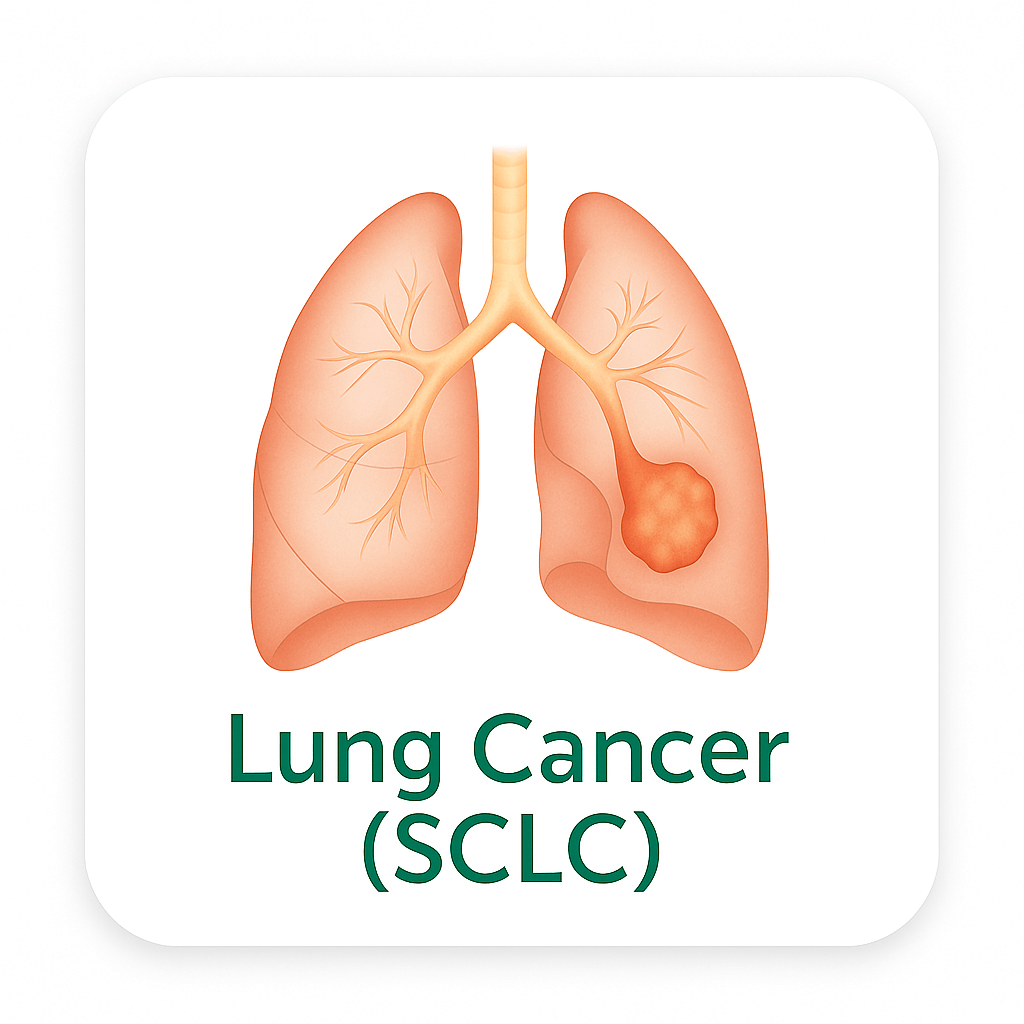
Lung Cancer (SCLC)
Main Grouping
Respiratory
Organ System
Lungs
Cell Origin
Neuroendocrine small cells
Pathways Affected
Small cell lung cancer involves constitutive disruption of the cell cycle through near-universal TP53 and RB1 biallelic inactivation as the founding genomic events, combined with MYC family amplification driving transcriptional activation and neuroendocrine signaling pathways. The p53 tumor suppressor pathway is inactivated through biallelic TP53 mutation and deletion in over 90 percent of SCLC, completely eliminating the primary DNA damage checkpoint and apoptosis induction response in neuroendocrine progenitor cells; loss of p53 function enables SCLC cells to tolerate the extreme replication stress generated by MYC-driven proliferation. The cell cycle checkpoint pathway is additionally inactivated through biallelic RB1 mutation and deletion in over 90 percent of SCLC, eliminating the G1/S checkpoint brake and enabling unconstrained cell cycle progression; RB1 loss also derepresses E2F transcription factors driving DNA replication and mitosis gene programs in SCLC cells.
The MYC/Notch/ASCL1/NEUROD1 transcription factor network is the central oncogenic axis in SCLC; ASCL1 is the master neuroendocrine transcription factor in SCLC-A driving DLL3/Notch signaling, neuroendocrine gene programs, and autocrine neuroendocrine survival signaling; NEUROD1 drives SCLC-N biology in association with MYC amplification; MYC amplification drives global transcriptional amplification and extreme proliferative capacity and is associated with the most aggressive SCLC phenotype. The PI3K/AKT/mTOR pathway is activated in SCLC through PTEN loss and upstream receptor tyrosine kinase signaling; mTOR drives protein synthesis supporting the high metabolic demands of rapidly dividing SCLC cells. The MAPK/ERK pathway is activated through FGFR1 amplification in approximately 6 percent of SCLC and through other upstream RTK activating signals relevant to autocrine neuroendocrine growth factor signaling. The VEGF angiogenesis pathway is highly active in SCLC due to the rapid tumor growth and high metabolic demands; VEGF expression is elevated in SCLC tumors and is targeted by anti-angiogenic approaches. The Notch signaling pathway is relevant to both neuroendocrine differentiation maintenance in SCLC-A through DLL3-mediated Notch suppression and as a potential lineage plasticity driver; DLL3 is overexpressed in SCLC-A and inhibits Notch signaling in a cell-autonomous manner. The NF-kB pathway is activated in SCLC driving anti-apoptotic gene expression and cytokine production relevant to neuroendocrine tumor microenvironment crosstalk. The Nrf2 antioxidant response pathway is relevant to carcinogen detoxification and oxidative stress induced by tobacco carcinogen exposure in the bronchial neuroendocrine cells that are the SCLC cell of origin. The epigenetic regulatory pathway including CREBBP/EP300 chromatin remodeling gene mutations (approximately 13-17% of SCLC) directly disrupts histone acetyltransferase activity; dietary phytochemicals including EGCG, quercetin, and curcumin have documented HDAC inhibitor activity targeting these epigenetic mechanisms in lung cancer cell models. The hypoxia/HIF-1alpha response pathway is activated in SCLC due to rapid tumor growth and poor vascularization relative to growth rate, driving VEGF production and glycolytic metabolic reprogramming.
Description
Small cell lung cancer (SCLC) is a high-grade malignant neoplasm that accounts for approximately 13 to 15 percent of all lung cancer diagnoses, representing the most lethal subtype of lung cancer with a 5-year overall survival rate of only 5 to 7 percent across all stages. Approximately 30,000 to 35,000 new cases of SCLC are diagnosed annually in the United States. SCLC is characterized by rapid doubling time, early widespread metastasis, and initial high sensitivity to cytotoxic treatment followed by nearly universal rapid development of resistance and relapse.
SCLC is staged using a simplified two-stage system: limited stage disease (LD-SCLC), defined as tumor confined to one hemithorax within a tolerable radiation field, accounts for approximately 30 to 40 percent of newly diagnosed patients and has a median overall survival of 15 to 20 months with treatment; extensive stage disease (ES-SCLC), defined as disease spread beyond one hemithorax or presence of malignant pleural effusion, accounts for approximately 60 to 70 percent of patients and has a median overall survival of only 8 to 13 months. More than 90 percent of SCLC patients have a history of heavy tobacco consumption; SCLC in never-smokers is rare, accounting for less than 5 percent of cases.
The genomic landscape of SCLC is defined by near-universal biallelic inactivation of TP53 through mutation and loss of heterozygosity (over 90 percent of cases) and biallelic inactivation of RB1 through mutation, deletion, or loss of heterozygosity (over 90 percent of cases). This dual loss of the two master cell cycle checkpoint tumor suppressors eliminates the primary brakes on neuroendocrine progenitor cell proliferation. The MYC family plays a central role in SCLC biology, with MYCL1 amplification in approximately 8 to 15 percent, MYCN amplification in approximately 5 percent, and MYC (c-Myc) amplification in approximately 8 percent of cases; MYC amplification defines the SCLC-N subtype with the most aggressive phenotype. The FGFR1 amplification is found in approximately 6 percent of SCLC. SOX2 amplification is found in approximately 27 percent. PTEN loss occurs in approximately 4 to 8 percent. CREBBP and EP300 chromatin remodeling gene mutations are documented in approximately 13 to 17 percent of SCLC.
The four transcription factor-defined SCLC subtypes have distinct biology: SCLC-A (ASCL1-dominant) shows classic neuroendocrine features and DLL3 surface expression; SCLC-N (NEUROD1-dominant) is associated with MYC amplification and non-neuroendocrine gene expression; SCLC-P (POU2F3-dominant) shows a tuft cell-like phenotype with low neuroendocrine marker expression; SCLC-I (YAP1-dominant) shows inflammatory tumor microenvironment features. SCLC tumors produce and secrete multiple neuropeptides including gastrin-releasing peptide (GRP), somatostatin, and ACTH; paraneoplastic syndromes occur in approximately 10 to 15 percent of SCLC patients including SIADH and Cushing syndrome from ectopic hormone production.
Dietary carotenoids and vegetable intake have been examined in lung cancer epidemiology including SCLC. The INHANCE Consortium pooled analysis across multiple study centers found significant inverse associations between carotenoid-rich vegetable consumption and lung cancer risk reduction across histological subtypes. A systematic review and meta-analysis documented that total carotenoid intake was associated with a 39 percent risk reduction for highest versus lowest quintile (RR 0.61, 95% CI 0.51-0.73) for lung cancer. Dietary sulforaphane, quercetin, and curcumin have documented anti-neuroendocrine tumor cell activity in neuroendocrine carcinoma cell models relevant to SCLC.
Plant-Based Description
Whole-food plant-based dietary patterns provide nutrients and phytochemicals studied in relation to lung cancer including SCLC, with the primary epidemiological evidence focusing on carotenoids, vegetables, and fruits. A systematic review and meta-analysis documented that total carotenoid intake was associated with a 39 percent risk reduction (RR 0.61, 95% CI 0.51-0.73) for lung cancer, with significant inverse associations for beta-carotene, alpha-carotene, lycopene, lutein, zeaxanthin, and beta-cryptoxanthin. Dietary sulforaphane from cruciferous vegetables activates Nrf2 antioxidant response relevant to tobacco carcinogen detoxification in bronchial epithelial cells, the primary carcinogen exposure site for SCLC development. Quercetin targets the PI3K/AKT pathway and NF-kB relevant to SCLC survival signaling. Curcumin targets NF-kB and PI3K/AKT with documented apoptosis induction in lung cancer cell models. EGCG from green tea inhibits PI3K/AKT, MAPK/ERK, and NF-kB. Beta-glucans from shiitake and maitake mushrooms modulate innate immune signaling relevant to the SCLC tumor microenvironment. Legumes and whole grains provide folate supporting DNA repair chemistry relevant to the massive DNA damage accumulation in SCLC cells driven by TP53/RB1 loss. Fruits and vegetables provide antioxidants neutralizing tobacco carcinogen-induced reactive oxygen species in bronchial neuroendocrine cells.
Plant Chemistry Detail
Carotenoids from plant foods represent the most extensively documented dietary phytochemical category in lung cancer epidemiology. A systematic review and meta-analysis documented that total carotenoid intake was associated with a 39 percent risk reduction (RR 0.61, 95% CI 0.51-0.73) for lung cancer, with statistically significant inverse associations for beta-carotene (RR 0.74), alpha-carotene (RR 0.74), lycopene (RR 0.78), lutein/zeaxanthin (RR 0.82), and beta-cryptoxanthin (RR 0.76) from food sources. These carotenoids are found in carrot, sweet potato, kale, spinach, tomato, butternut squash, pumpkin, orange, mango, and papaya. The protective associations were documented specifically for food-derived carotenoids (not isolated supplements) across multiple prospective cohort study designs.
Sulforaphane from broccoli, Brussels sprouts, kale, and cauliflower activates the Nrf2/ARE antioxidant response pathway, driving expression of Phase II detoxification enzymes including glutathione-S-transferases, NQO1, and heme oxygenase-1 that conjugate and detoxify tobacco carcinogens including polycyclic aromatic hydrocarbons and tobacco-specific nitrosamines; Nrf2 activation in bronchial epithelial cells is directly relevant to the primary carcinogen exposure site for SCLC development from pulmonary neuroendocrine cells; sulforaphane also inhibits HDAC activity relevant to the CREBBP/EP300 chromatin remodeling gene mutations in 13 to 17 percent of SCLC. Quercetin from yellow onions, kale, and apples inhibits PI3K/AKT and NF-kB signaling both activated in SCLC, induces G1 cell cycle arrest and apoptosis in lung cancer cell models, and inhibits FGFR signaling relevant to the FGFR1 amplification in approximately 6 percent of SCLC. Curcumin from turmeric targets NF-kB, PI3K/AKT, and MAPK/ERK pathways in lung cancer cell models and induces apoptosis through BCL-2 family protein downregulation relevant to the anti-apoptotic programming of SCLC cells driven by TP53 loss. EGCG from green tea inhibits PI3K/AKT and NF-kB and additionally suppresses MYC expression through multiple transcriptional mechanisms, directly relevant to the MYC family amplification that is a key oncogenic driver in SCLC. Resveratrol from grapes inhibits NF-kB, PI3K/AKT, and downregulates MYC, with documented pro-apoptotic activity in SCLC-relevant lung cancer cell models. Beta-glucans from shiitake and maitake mushrooms activate dectin-1/TLR innate immune signaling, modulating macrophage activity in the tumor microenvironment particularly relevant to SCLC which has relatively low T cell infiltration but significant innate immune cell populations in the SCLC-I subtype.
Nutritional Focus
Nutritional focus in SCLC and lung cancer research is led by dietary carotenoids, with a systematic review and meta-analysis documenting that total carotenoid intake was associated with a 39 percent risk reduction (RR 0.61, 95% CI 0.51-0.73) for lung cancer with significant individual associations for beta-carotene (RR 0.74), alpha-carotene (RR 0.74), lycopene (RR 0.78), lutein/zeaxanthin (RR 0.82), and beta-cryptoxanthin (RR 0.76) from food sources in prospective cohort studies; sulforaphane from broccoli and other cruciferous vegetables activating Nrf2/ARE and driving Phase II detoxification enzyme expression that conjugates and detoxifies tobacco carcinogens in bronchial epithelial cells, the SCLC primary carcinogen exposure site, and additionally inhibiting HDAC activity relevant to CREBBP/EP300 mutations in 13 to 17 percent of SCLC; quercetin from onions, apples, and kale inhibiting PI3K/AKT, NF-kB, and FGFR signaling documented in SCLC biology; curcumin from turmeric targeting NF-kB, PI3K/AKT, and MAPK/ERK with documented apoptosis induction in lung cancer models; EGCG from green tea suppressing MYC expression and inhibiting PI3K/AKT and NF-kB relevant to MYC-amplified SCLC-N subtype biology; and folate from leafy greens and legumes supporting DNA repair chemistry relevant to the extreme genomic instability driven by TP53/RB1 dual inactivation in over 90 percent of SCLC.
Research Notes
SCLC genomic landscape: near-universal biallelic TP53 inactivation (>90%) and RB1 inactivation (>90%) as founding events; MYCL1 amplification (8-15%), MYCN (~5%), MYC (~8%) with MYC defining the most aggressive SCLC-N subtype; FGFR1 amplification (~6%); SOX2 amplification (~27%); PTEN loss (4-8%); CREBBP/EP300 mutations (13-17%); four molecular subtypes: SCLC-A (ASCL1, ~70%), SCLC-N (NEUROD1/MYC, ~11%), SCLC-P (POU2F3, ~8%), SCLC-I (YAP1, ~11%); DLL3 overexpression in SCLC-A. SCLC epidemiology: 13-15% of all lung cancers; 5-year survival 5-7%; >90% of cases associated with heavy tobacco use; LD-SCLC (~30-40%) median OS 15-20 months; ES-SCLC (~60-70%) median OS 8-13 months. SCLC paraneoplastic syndromes: SIADH, Cushing (ectopic ACTH), Lambert-Eaton myasthenic syndrome in approximately 10-15% of patients.
Carotenoid meta-analysis lung cancer: systematic review and meta-analysis documented total carotenoid intake associated with 39% lung cancer risk reduction (RR 0.61, 95% CI 0.51-0.73), with significant associations for beta-carotene (RR 0.74), alpha-carotene (RR 0.74), lycopene (RR 0.78), lutein/zeaxanthin (RR 0.82), beta-cryptoxanthin (RR 0.76) from food sources; associations specific to dietary food-source carotenoids in prospective cohort studies. Sulforaphane lung cancer Nrf2 activation documented to drive Phase II detoxification enzyme induction in bronchial epithelial cells, including glutathione-S-transferases and NQO1 that detoxify tobacco carcinogens including polycyclic aromatic hydrocarbons and tobacco-specific nitrosamines. INHANCE Consortium pooled analysis: significant inverse associations between carotenoid-rich vegetable consumption and lung cancer risk reduction across histological subtypes.
Notes Visibility
show
Key Foods
Broccoli,Kale,Spinach,Brussels Sprouts,Cauliflower,Carrot,Sweet Potato,Tomato,Butternut Squash,Pumpkin,Garlic,Yellow Onion,Apple,Blueberry,Pomegranate,Grape,Raspberry,Strawberry,Blackberry,Orange,Mango,Papaya,Soybeans,Edamame,Green Lentils,Black Beans,Chickpeas,Brown Rice,Quinoa,Oats,Wild Rice,Rye Berries,Sorghum,Walnut,Almond,Brazil Nut,Pumpkin Seeds,Flaxseed,Chia Seeds,Sesame Seeds,Hemp Seeds,Shiitake,Maitake,Cremini,Portobello,Lions Mane,Green Tea,Turmeric,Ginger,Black Pepper,Garlic Powder,Parsley,Rosemary,Oregano, Leek,Avocado,Artichoke,Radish,Tangerine, Red Onion
Linked Nutrients
vitamin-c,vitamin-e,vitamin-d3,vitamin-b9,vitamin-b6,vitamin-a,selenium,zinc,magnesium,calcium,potassium,iron,sulforaphane,quercetin,curcumin,egcg,resveratrol,beta-carotene,lycopene,anthocyanins,beta-glucans,plant-ala-omega3,dietary-fiber
Last Updated
2025-10-13 09:48:09

