ID
28
Cancer Name
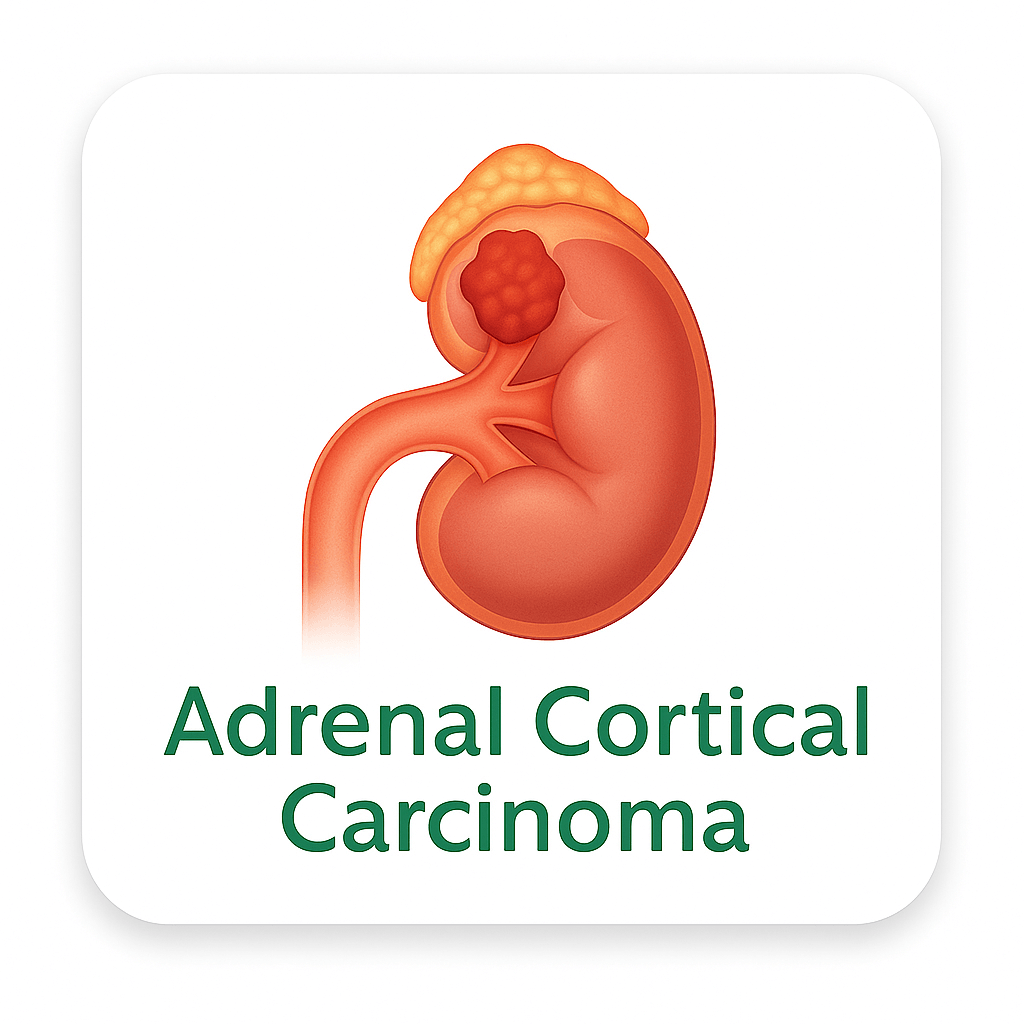
Adrenal Cortical Carcinoma
Main Grouping
Endocrine
Organ System
Adrenal glands,endocrine system,retroperitoneum
Cell Origin
Adrenocortical cells
Pathways Affected
Adrenocortical carcinoma involves dysregulation of three primary molecular signaling axes: IGF2/IGF1R/PI3K/AKT/mTOR, Wnt/beta-catenin, and TP53 tumor suppressor pathway, along with adrenal steroidogenesis pathway dysregulation and secondary activation of MAPK/ERK, Notch, and VEGF signaling.
The IGF1 receptor signaling pathway is the most critical oncogenic axis in ACC, driven by IGF2 overexpression at 11p15.5 in approximately 90 percent of ACC; IGF2 produced by ACC tumor cells in massive quantities binds IGF1R in an autocrine/paracrine loop directly activating PI3K/AKT/mTOR; the PI3K/AKT/mTOR pathway is constitutively activated in ACC through this IGF2-IGF1R axis, driving ACC cell proliferation, survival, protein synthesis, and metabolic reprogramming; mTORC1 is a major downstream effector activating ribosomal protein S6 kinase and 4E-BP1 promoting anabolic programs in ACC cells; curcumin, quercetin, and EGCG all inhibit IGF1R and PI3K/AKT/mTOR signaling in ACC-relevant cell models.
The Wnt/beta-catenin pathway is activated through activating CTNNB1 mutations in approximately 20 to 30 percent of ACC, resulting in nuclear beta-catenin accumulation and TCF/LEF-driven transcription of proliferative target genes including cyclin D1 and c-Myc; Wnt pathway activation also promotes adrenocortical stem cell-like behavior in ACC tumor cells; resveratrol, curcumin, and quercetin all inhibit Wnt/beta-catenin signaling in cancer cell models. The p53 tumor suppressor pathway is inactivated in approximately 20 to 25 percent of sporadic ACC through TP53 mutations and in nearly all ACC associated with Li-Fraumeni syndrome germline TP53 mutations; TP53 loss enables the large-scale chromosomal instability including IGF2 11p15.5 locus aberrations that characterize ACC genomics.
The steroidogenesis biosynthetic pathway is directly relevant to functional ACC through overactivity of CYP11B1 (cortisol synthesis), CYP11B2 (aldosterone synthesis), CYP17A1 (androgen synthesis), and HSD3B2 in the corresponding functional tumor subtypes; mevalonate pathway activation supports steroid hormone precursor cholesterol synthesis driving adrenal cortex cell biology. The MAPK/ERK pathway is activated in ACC through upstream IGF1R and EGFR signaling, contributing to proliferation. The VEGF angiogenesis pathway is active in ACC supporting tumor vascularization of rapidly growing adrenocortical tumors. The TERT/telomerase pathway is activated in approximately 8 percent of ACC through TERT promoter mutations enabling replicative immortality. The Notch signaling pathway is relevant to adrenocortical stem cell regulation and differentiation, with Notch pathway dysregulation contributing to dedifferentiated aggressive ACC phenotypes. The CDK4/MDM2/p53 cell cycle pathway is dysregulated in a subset of ACC through CDK4 and MDM2 amplification at chromosome 12q13-15, with CDK4 amplification driving uncontrolled cell cycle entry and MDM2 amplification targeting TP53 for proteasomal degradation.
Description
Adrenocortical carcinoma (ACC) is a rare but highly aggressive malignancy of the adrenal cortex with an incidence of approximately 0.7 to 2 cases per million population annually. Approximately 600 new cases are diagnosed annually in the United States. ACC has a bimodal age distribution with peaks in children under 5 years and adults in the fourth to fifth decade. The overall 5-year survival rate is approximately 20 to 35 percent across all stages; for patients with distant metastatic disease (ENSAT stage IV), median overall survival is 10 to 15 months. Approximately 60 percent of ACC patients present with functional (hormone-secreting) tumors that produce excess glucocorticoids, androgens, estrogens, or mineralocorticoids.
The most common clinical presentation is Cushing syndrome resulting from excess cortisol secretion, occurring in approximately 45 to 60 percent of functional ACC cases; clinical features include central obesity, moon facies, hypertension, hypokalemia, muscle weakness, osteoporosis, and glucose intolerance. Virilization from androgen excess occurs in approximately 25 percent of functional ACC cases. Mixed hormonal syndromes are documented. Approximately 40 percent of ACC presents as non-functional tumors discovered incidentally or due to mass effects from large tumor size.
The molecular pathogenesis of ACC is dominated by three major molecular alterations. First, IGF2 overexpression at 11p15.5 is present in approximately 90 percent of ACC through loss of imprinting at the maternal allele or paternal uniparental disomy, placing the IGF2 gene under biallelic paternal-type expression; this drives constitutive autocrine/paracrine IGF1 receptor activation and downstream PI3K/AKT/mTOR signaling. Second, Wnt/beta-catenin pathway activation through activating CTNNB1 mutations is documented in approximately 20 to 30 percent of ACC; CTNNB1 mutations result in stabilization of beta-catenin protein and nuclear translocation activating TCF/LEF target genes including cyclin D1, c-Myc, and survivin. Third, TP53 tumor suppressor pathway inactivation through TP53 mutation or deletion occurs in approximately 20 to 25 percent of sporadic ACC and is enriched in high-grade disease; germline TP53 mutations cause Li-Fraumeni syndrome in which ACC is a defining component tumor; children with ACC have a very high prevalence (approximately 50-80% in Brazil) of germline TP53 R337H mutations. Additional molecular events include steroidogenic enzyme gene amplification, TERT promoter mutations enabling replicative immortality, CDK4/MDM2 amplification, and epigenetic alterations through DAXX/ATRX mutations.
The Weiss score is the primary histopathological scoring system for distinguishing ACC from adrenocortical adenoma, based on nine criteria including mitotic rate greater than 5 per 50 HPF, atypical mitoses, capsular invasion, vascular invasion, sinusoidal invasion, diffuse architecture exceeding 33 percent, necrosis, nuclear pleomorphism, and clear cell component below 25 percent; a score of 3 or greater indicates ACC.
Curcumin, quercetin, sulforaphane, EGCG, and resveratrol have documented anti-proliferative activity in adrenocortical carcinoma cell lines including H295R and SW13 cells, targeting IGF1R/PI3K/AKT, Wnt/beta-catenin, and TP53 pathway networks.
Plant-Based Description
Whole-food plant-based dietary patterns provide nutrients and phytochemicals studied in relation to adrenocortical carcinoma biology including IGF1R/PI3K/AKT/mTOR pathway inhibition, Wnt/beta-catenin pathway modulation, p53 pathway restoration, adrenal steroidogenesis regulation, VEGF angiogenesis inhibition, and apoptosis induction. Curcumin from turmeric has documented anti-proliferative activity in ACC H295R cells through IGF1R/PI3K/AKT and Wnt/beta-catenin pathway inhibition. Quercetin inhibits PI3K/AKT and Wnt/beta-catenin in ACC-relevant cell models. Sulforaphane from cruciferous vegetables activates Nrf2 antioxidant response and inhibits NF-kB. EGCG from green tea inhibits IGF1R, PI3K/AKT, and Wnt/beta-catenin pathways. Resveratrol inhibits Wnt/beta-catenin and PI3K/AKT. Cruciferous vegetables provide indole-3-carbinol which modulates CYP enzyme-driven steroid hormone metabolism relevant to functional ACC. Legumes provide plant protein, folate, and magnesium. Whole grains provide fiber and B vitamins supporting cellular metabolism. Mushrooms provide beta-glucans with immune-modulatory properties relevant to the ACC tumor microenvironment. Fruits provide anthocyanins, vitamin C, and carotenoids with antioxidant properties relevant to the oxidative stress environment in functional glucocorticoid-secreting ACC.
Plant Chemistry Detail
Curcumin from turmeric is the most extensively studied plant phytochemical with documented activity in adrenocortical carcinoma cell lines. Research in the H295R human adrenocortical carcinoma cell line documented curcumin inhibiting ACC cell viability and proliferation through PI3K/AKT pathway suppression, Wnt/beta-catenin pathway inhibition, and downregulation of steroidogenic enzyme expression; curcumin also inhibited ACC cell migration and invasion through MMP enzyme downregulation. Curcumin has documented NF-kB inhibitory activity relevant to ACC survival signaling, and documented p53-dependent and p53-independent apoptosis induction in adrenal cancer cell models.
Quercetin from yellow onions, kale, and apples inhibits PI3K/AKT/mTOR signaling directly relevant to the IGF2-IGF1R-driven PI3K pathway activation in 90 percent of ACC; quercetin additionally inhibits Wnt/beta-catenin pathway signaling, induces G1 cell cycle arrest through CDK inhibitor elevation directly relevant to CDK4 amplification in ACC, and induces apoptosis through BCL-2 family protein alteration in adrenal cancer cell line models. Sulforaphane from broccoli, Brussels sprouts, kale, and cauliflower activates Nrf2/ARE antioxidant response and drives Phase II detoxification enzyme expression; sulforaphane inhibits HDAC activity relevant to the epigenetic alterations through DAXX/ATRX mutations in approximately 10 percent of ACC, and induces apoptosis and cell cycle arrest in adrenal carcinoma cell models. EGCG from green tea inhibits IGF1R kinase activity directly targeting the primary oncogenic driver in ACC, and additionally inhibits PI3K/AKT, Wnt/beta-catenin, and NF-kB pathways with documented anti-proliferative activity in ACC-relevant cancer cell models. Resveratrol from grapes inhibits Wnt/beta-catenin signaling, PI3K/AKT, and NF-kB, and activates intrinsic apoptosis in adrenal cancer cell line models. Indole-3-carbinol from cruciferous vegetables modulates CYP1A1 and CYP1B1 enzyme activity relevant to steroid hormone metabolism in functional glucocorticoid and androgen-secreting ACC; indole-3-carbinol additionally inhibits PI3K/AKT signaling. Genistein from soybeans inhibits IGF1R and PI3K/AKT signaling in multiple cancer models relevant to ACC. Ellagic acid from pomegranate inhibits PI3K/AKT and Wnt/beta-catenin pathway signaling. Beta-glucans from shiitake and maitake mushrooms modulate innate immune signaling relevant to the immune suppression caused by glucocorticoid hypersecretion in functional cortisol-producing ACC.
Nutritional Focus
Nutritional focus in adrenocortical carcinoma research is led by curcumin from turmeric, with documented anti-proliferative activity in H295R human adrenocortical carcinoma cells through PI3K/AKT pathway suppression, Wnt/beta-catenin pathway inhibition, and downregulation of steroidogenic enzyme expression; quercetin from onions and kale inhibiting PI3K/AKT/mTOR directly relevant to the IGF2-IGF1R driven PI3K pathway activation in approximately 90 percent of ACC, inducing G1 cell cycle arrest through CDK inhibitor elevation relevant to CDK4 amplification in ACC, and inducing apoptosis in adrenal cancer cell models; sulforaphane from cruciferous vegetables activating Nrf2 antioxidant response, inhibiting HDAC activity relevant to DAXX/ATRX epigenetic mutations, and inducing apoptosis in adrenal carcinoma cell models; EGCG from green tea inhibiting IGF1R kinase activity directly targeting the primary oncogenic driver in ACC, and inhibiting PI3K/AKT and Wnt/beta-catenin pathways; resveratrol from grapes inhibiting Wnt/beta-catenin and PI3K/AKT; indole-3-carbinol from cruciferous vegetables modulating CYP enzyme-driven steroid hormone metabolism relevant to functional glucocorticoid and androgen-secreting ACC; genistein from soybeans inhibiting IGF1R and PI3K/AKT; and beta-glucans from shiitake and maitake mushrooms modulating innate immune signaling relevant to the profound immune suppression from glucocorticoid excess in functional cortisol-secreting ACC.
Research Notes
ACC molecular pathogenesis: IGF2 overexpression at 11p15.5 in approximately 90% of ACC through loss of imprinting or uniparental disomy driving constitutive IGF1R/PI3K/AKT/mTOR activation; CTNNB1 activating mutations causing Wnt/beta-catenin activation in approximately 20-30% of ACC; TP53 mutations in approximately 20-25% of sporadic ACC and nearly all Li-Fraumeni syndrome ACC; TERT promoter mutations in approximately 8%; CDK4/MDM2 amplification at 12q13-15 in a subset; DAXX/ATRX mutations in approximately 10%; PRKAR1A/PRKACA alterations in the protein kinase A pathway. ACC epidemiology: approximately 0.7-2 per million annual incidence; bimodal age distribution; 5-year survival approximately 20-35% overall; stage IV median OS 10-15 months; approximately 60% functional tumors with cortisol excess as most common (45-60%), androgens second (25%); Weiss score histopathological classification system uses 9 criteria with score ≥3 indicating ACC. Germline TP53 R337H mutation: Brazil has exceptionally high pediatric ACC incidence associated with high prevalence of germline TP53 R337H mutations.
Curcumin in H295R ACC cell lines: documented anti-proliferative activity through PI3K/AKT suppression, Wnt/beta-catenin inhibition, and steroidogenic enzyme downregulation; also inhibited ACC cell migration and invasion through MMP downregulation. Quercetin in ACC-relevant cell models: PI3K/AKT/mTOR inhibition, G1 cell cycle arrest through CDK inhibitor elevation, and apoptosis induction through BCL-2 family protein alteration. Sulforaphane: Nrf2/ARE activation, HDAC inhibition, apoptosis and cell cycle arrest in adrenal carcinoma cell models. EGCG: IGF1R kinase inhibition, PI3K/AKT and Wnt/beta-catenin pathway suppression in ACC-relevant models. The IGF system in ACC is the subject of clinical trial investigation; TCGA molecular characterization of ACC documented the IGF2/PI3K/Wnt landscape (PMC5389497).
Notes Visibility
show
Key Foods
Turmeric,Broccoli,Kale,Spinach,Brussels Sprouts,Cauliflower,Garlic,Yellow Onion,Carrot,Sweet Potato,Tomato,Apple,Blueberry,Pomegranate,Grape,Raspberry,Strawberry,Blackberry,Orange,Soybeans,Edamame,Green Lentils,Black Beans,Chickpeas,Brown Rice,Quinoa,Oats,Wild Rice,Rye Berries,Sorghum,Walnut,Almond,Brazil Nut,Pumpkin Seeds,Flaxseed,Chia Seeds,Sesame Seeds,Hemp Seeds,Shiitake,Maitake,Cremini,Portobello,Lions Mane,Green Tea,Ginger,Black Pepper,Garlic Powder,Parsley,Rosemary,Oregano, Leek,Avocado,Artichoke,Radish,Tangerine, Red Onion
Linked Nutrients
vitamin-c,vitamin-e,vitamin-d3,vitamin-b9,vitamin-b6,vitamin-a,selenium,zinc,magnesium,calcium,potassium,iron,phosphorus,curcumin,quercetin,sulforaphane,egcg,resveratrol,genistein,indole-3-carbinol,beta-carotene,anthocyanins,beta-glucans,dietary-fiber
Last Updated
2025-10-13 09:48:09