
ID
29
Cancer Name
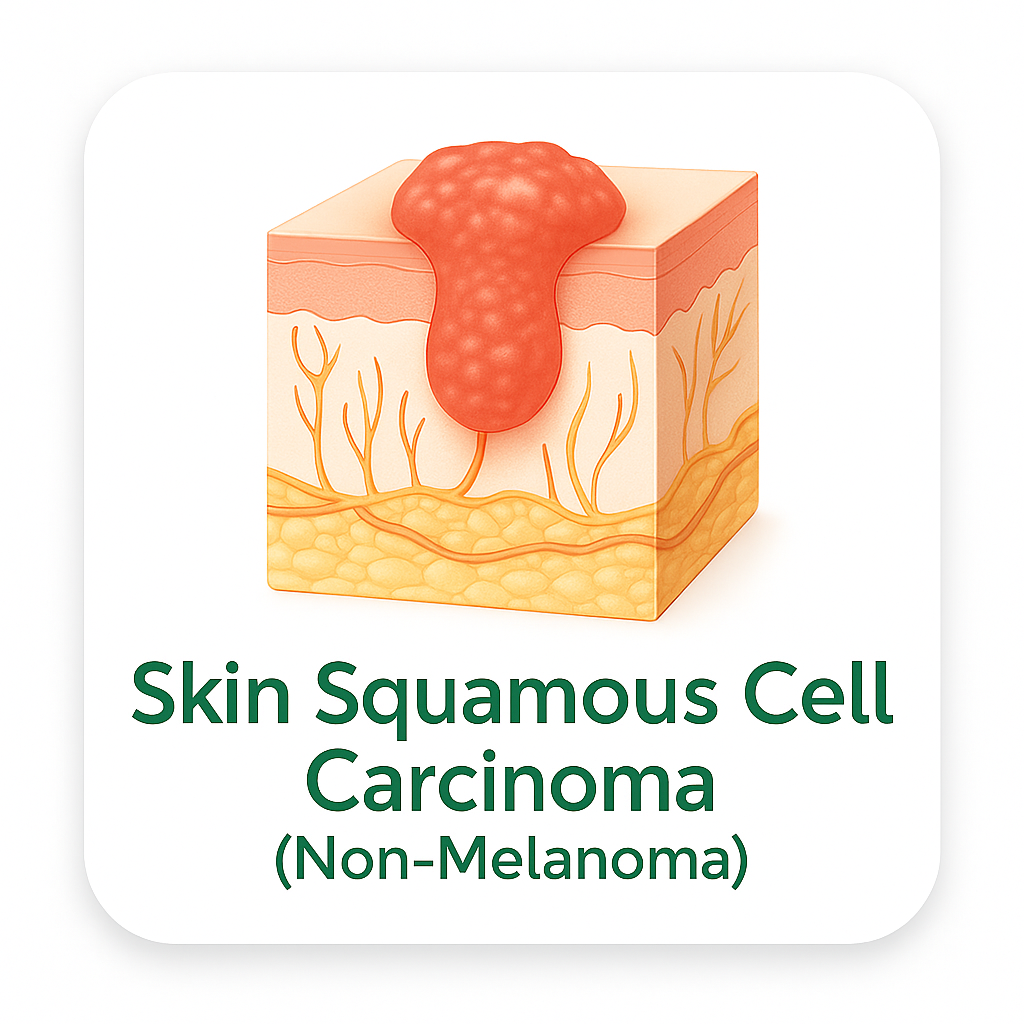
Skin Squamous Cell Carcinoma (Non-Melanoma)
Main Grouping
Integumentary
Organ System
Skin
Cell Origin
Squamous keratinocytes
Pathways Affected
Cutaneous squamous cell carcinoma involves UV radiation-driven disruption of multiple keratinocyte regulatory pathways with TP53 tumor suppressor inactivation and UV DNA repair pathway failure as the founding molecular events. The p53 tumor suppressor pathway is inactivated in 54 to 95 percent of cSCC through UV-induced C-to-T transition mutations creating stop codons or missense mutations that abrogate p53 DNA damage sensing, apoptosis induction, and cell cycle checkpoint enforcement; loss of p53 function is the central enabling event for clonal expansion of UV-damaged keratinocytes progressing from actinic keratosis through invasive cSCC; p53 restoration is a target of dietary phytochemicals including EGCG, quercetin, and curcumin in keratinocyte and cSCC cell models.
The UV DNA repair pathway, specifically nucleotide excision repair (NER), is the primary mechanism for removing UV-induced cyclobutane pyrimidine dimers (CPDs) and 6-4 photoproducts from keratinocyte DNA; NER failure allows UV DNA lesions to persist through DNA replication, generating the characteristic UV mutation signature (C-to-T transitions) that drives cSCC carcinogenesis; EGCG from green tea has documented NER enhancement activity through upregulation of NER genes XPA, XPC, DDB1, and DDB2 with IL-12-mediated mechanism, directly relevant to cSCC prevention. The cell cycle checkpoint pathway is disrupted through CDKN2A loss releasing CDK4/6 activity and enabling uncontrolled cell cycle S-phase entry in UV-damaged keratinocytes; CDKN2A encodes both p16INK4a (CDK4/6 inhibitor) and p14ARF (MDM2 inhibitor stabilizing p53), so its loss simultaneously disrupts the RB and p53 pathways. The EGFR/MAPK/ERK pathway is activated through EGFR overexpression in approximately 80 percent of cSCC, driving keratinocyte proliferation, survival, and invasion; RAS family mutations in approximately 13 percent of cSCC constitutively activate MAPK/ERK downstream of EGFR; quercetin and EGCG both inhibit EGFR and downstream MAPK/ERK in cSCC-relevant cell models.
The PI3K/AKT/mTOR pathway is activated through PIK3CA activating mutations, EGFR overexpression-driven downstream signaling, and PTEN loss in a subset of cSCC; PI3K/AKT drives keratinocyte survival and proliferation with mTORC1 promoting anabolic metabolism in rapidly proliferating cSCC cells. The NOTCH signaling pathway acts as a tumor suppressor in keratinocytes through promotion of terminal differentiation; NOTCH1 and NOTCH2 loss-of-function mutations are present in the majority of cSCC, disrupting keratinocyte differentiation programs and enabling the poorly differentiated phenotypes characteristic of high-grade cSCC. The NF-kB signaling pathway is activated in cSCC by UV radiation-induced inflammatory signals and by the chronic inflammatory tumor microenvironment of actinic field cancerization; NF-kB drives anti-apoptotic gene expression, VEGF production, and MMP-driven invasion in cSCC. The Nrf2 antioxidant response pathway is directly relevant to cSCC through protection of keratinocytes from UV-induced reactive oxygen species and oxidative DNA damage; sulforaphane from cruciferous vegetables activates Nrf2/ARE in keratinocytes, driving expression of Phase II detoxification enzymes that reduce UV-induced oxidative DNA damage relevant to cSCC prevention. The TGF-beta/SMAD pathway promotes EMT in advanced cSCC enabling invasion and metastasis; TGF-beta signaling is a key driver of the desmoplastic stromal reaction in invasive cSCC. The VEGF angiogenesis pathway is active in cSCC supporting tumor vascularization required for tumor growth beyond 1-2 mm thickness.
Description
Skin Squamous Cell Carcinoma (SCC) is a common form of non-melanoma skin cancer that develops from squamous cells, the flat cells that make up much of the epidermis, the outermost layer of the skin. SCC most often appears on areas of the body that receive significant ultraviolet (UV) radiation exposure, including the face, ears, scalp, neck, forearms, and hands. Although it is generally less aggressive than melanoma, untreated SCC can grow into deeper tissues, damage surrounding structures, and in some cases spread to nearby lymph nodes or distant organs.
The development of SCC is strongly associated with cumulative UV radiation exposure from sunlight or artificial tanning devices. UV radiation can damage cellular DNA, leading to mutations that affect normal cell-cycle regulation and cellular repair mechanisms. Over time, repeated DNA damage may overwhelm the body’s protective systems, allowing abnormal cells to survive, multiply, and accumulate additional mutations. Chronic inflammation, immune suppression, exposure to environmental toxins, previous radiation exposure, and certain genetic conditions may further increase the risk of developing SCC.
At the cellular level, SCC is characterized by uncontrolled growth of keratin-producing squamous cells. These cells normally serve as a protective barrier against environmental injury, pathogens, and moisture loss. When normal growth regulation becomes disrupted, damaged cells may evade apoptosis, the natural process of programmed cell death, and continue dividing despite genetic abnormalities. Alterations involving tumor suppressor pathways, oxidative stress responses, DNA repair systems, and inflammatory signaling pathways are commonly observed in SCC development.
Nutritional and lifestyle factors that support cellular protection may help promote normal skin health and strengthen the body’s natural defense systems. Diets rich in colorful fruits, vegetables, legumes, whole grains, herbs, and spices provide a wide range of antioxidants, polyphenols, carotenoids, flavonoids, vitamins, minerals, and other bioactive compounds that help combat oxidative stress generated by UV exposure. These compounds may support normal DNA repair processes, healthy immune surveillance, balanced inflammatory responses, and protection against free radical damage.
Foods rich in vitamin C, carotenoids, polyphenols, and sulfur-containing phytochemicals have been studied for their ability to support healthy skin structure and cellular resilience. Cruciferous vegetables, berries, citrus fruits, leafy greens, tomatoes, garlic, onions, green tea, mushrooms, legumes, and whole grains contribute nutrients and phytochemicals associated with antioxidant defense, detoxification pathways, and maintenance of normal cellular function. Adequate hydration, regular consumption of whole plant foods, and avoidance of processed foods may further support overall skin health.
Protective lifestyle practices remain essential. Limiting excessive UV exposure, wearing protective clothing, using broad-spectrum sun protection, avoiding tanning beds, and maintaining a nutrient-dense whole-food plant-based dietary pattern can help support healthy skin cells and reduce cumulative environmental stress on the body’s protective systems. Continued research is exploring how nutrition, phytochemicals, immune regulation, and cellular signaling pathways interact to influence the development and progression of Skin Squamous Cell Carcinoma.
Plant-Based Description
Whole-food plant-based dietary patterns provide nutrients and phytochemicals with documented activity relevant to cutaneous squamous cell carcinoma through UV DNA repair enhancement, Nrf2 antioxidant activation, p53 pathway support, EGFR and PI3K/AKT inhibition, NF-kB suppression, and apoptosis induction in UV-damaged and malignant keratinocytes. EGCG from green tea has the most directly documented mechanistic activity in cSCC prevention research through enhancement of nucleotide excision repair (NER) genes XPA, XPC, DDB1, and DDB2, rapid repair of UV-induced cyclobutane pyrimidine dimers, prevention of UV-induced immunosuppression, and inhibition of UV-induced tumor development in photocarcinogenesis animal models. Quercetin from yellow onions, kale, and apples inhibits EGFR and downstream MAPK/ERK and PI3K/AKT pathways directly relevant to the EGFR overexpression in approximately 80 percent of cSCC, and induces apoptosis in cSCC cell line models. Sulforaphane from cruciferous vegetables activates Nrf2/ARE, driving Phase II detoxification enzyme expression in keratinocytes that reduces UV-induced oxidative damage. Curcumin from turmeric inhibits NF-kB and PI3K/AKT in cSCC cell models. Resveratrol from grapes inhibits NF-kB and PI3K/AKT and supports p53 pathway function. Carotenoids from orange, yellow, and dark green vegetables provide antioxidant protection relevant to UV-induced reactive oxygen species in keratinocytes. Dietary folate from leafy greens and legumes supports DNA repair chemistry through one-carbon metabolism directly relevant to the DNA repair deficiency driving cSCC progression. Vitamin C from fruits supports collagen biosynthesis relevant to dermal barrier integrity and skin wound healing biology relevant to cSCC field cancerization.
Plant Chemistry Detail
EGCG from green tea is the most extensively documented plant phytochemical in cSCC and non-melanoma skin cancer photocarcinogenesis research. A study published in Cancer Prevention Research (PMC2818090, PMID 20103727) documented that green tea polyphenols (GTPs) in drinking water prevented UV-induced immunosuppression through rapid repair of UV-induced DNA damage in mouse skin and enhancement of nucleotide excision repair (NER) genes XPA, XPC, RPA1, DDB2, and DDB1; GTPs treatment reduced UV-induced cyclobutane pyrimidine dimer (CPD)-positive cells by 59 percent (p<0.001), reduced migration of CPD-positive cells from skin to draining lymph nodes, and restored contact hypersensitivity responses suppressed by UV radiation by 58 to 62 percent (p<0.001); the study confirmed this DNA repair mechanism was NER-dependent through experiments in XPA-deficient fibroblasts showing loss of the GTP repair effect in the absence of NER enzymes; this mechanistic NER enhancement by EGCG directly addresses the primary DNA repair failure driving UV-induced C-to-T mutation accumulation in cSCC development from actinic keratoses.
Quercetin from yellow onions, kale, and apples inhibits EGFR receptor tyrosine kinase activity directly relevant to the EGFR overexpression present in approximately 80 percent of cSCC, and additionally inhibits downstream MAPK/ERK and PI3K/AKT signaling; quercetin induces apoptosis in human cSCC cell lines through intrinsic mitochondrial pathway activation including cytochrome c release and caspase activation, and induces G1 cell cycle arrest through CDK inhibitor elevation relevant to the cell cycle dysregulation driven by CDKN2A loss in cSCC. Sulforaphane from broccoli, Brussels sprouts, kale, and cauliflower activates the Nrf2/ARE antioxidant response pathway in keratinocytes, driving expression of Phase II detoxification enzymes including glutathione-S-transferases, NQO1, and heme oxygenase-1 that neutralize UV-induced reactive oxygen species and reduce oxidative DNA damage; sulforaphane also inhibits NF-kB in keratinocyte models relevant to the chronic UV-induced inflammatory signaling driving cSCC field cancerization. Curcumin from turmeric inhibits NF-kB, PI3K/AKT, and MAPK/ERK in cSCC-relevant cell models, and has documented p53 pathway restoration activity relevant to the TP53 mutations present in 54 to 95 percent of cSCC. Resveratrol from grapes inhibits NF-kB and PI3K/AKT, supports wild-type p53 function, inhibits VEGF angiogenesis signaling, and has documented anti-proliferative activity in cSCC cell line models. Ellagic acid from pomegranate inhibits PI3K/AKT and MAPK/ERK and has documented UV photoprotective activity in keratinocyte cell models. Beta-carotene from carrot, sweet potato, and kale provides antioxidant protection and retinoic acid precursor activity relevant to keratinocyte differentiation pathways disrupted in cSCC through NOTCH loss-of-function mutations; dietary carotenoids have documented inverse associations with actinic keratosis prevalence in epidemiological studies.
Nutritional Focus
Nutritional focus in cutaneous squamous cell carcinoma research is led by EGCG from green tea, with the most directly documented mechanistic evidence in cSCC and photocarcinogenesis research; a study published in Cancer Prevention Research (PMC2818090) confirmed that green tea polyphenols in drinking water prevented UV-induced immunosuppression through rapid repair of UV-induced cyclobutane pyrimidine dimers via nucleotide excision repair gene enhancement (XPA, XPC, DDB1, DDB2), reducing CPD-positive skin cells by 59 percent (p<0.001) and restoring UV-suppressed contact hypersensitivity responses by 58 to 62 percent, directly targeting the UV DNA damage that drives cSCC carcinogenesis from actinic keratosis through invasive disease; sulforaphane from broccoli and cruciferous vegetables activating Nrf2/ARE in keratinocytes and driving Phase II detoxification enzyme expression that neutralizes UV-induced reactive oxygen species reducing oxidative DNA damage; quercetin from yellow onions and kale inhibiting EGFR overexpressed in approximately 80 percent of cSCC and downstream MAPK/ERK and PI3K/AKT pathways while inducing apoptosis in cSCC cell line models; curcumin from turmeric inhibiting NF-kB and PI3K/AKT with p53 pathway restoration activity relevant to the TP53 mutations in 54 to 95 percent of cSCC; resveratrol from grapes supporting p53 function and inhibiting NF-kB and VEGF angiogenesis; ellagic acid from pomegranate inhibiting PI3K/AKT with UV photoprotective activity in keratinocyte models; dietary carotenoids from carrot, sweet potato, and kale providing antioxidant protection against UV-induced reactive oxygen species; and folate from leafy greens and legumes supporting one-carbon metabolism and DNA repair chemistry directly relevant to the NER repair pathway deficiency driving UV mutation accumulation in cSCC.
Research Notes
cSCC epidemiology: approximately 1.0-1.8 million new cases annually in the United States; second most common cancer overall; approximately 15,000 deaths per year; incidence rising 2-3% annually; solid organ transplant recipients have 65-250 times higher cSCC incidence; overall metastasis rate approximately 4%; metastatic cSCC 5-year disease-specific survival approximately 26-34%. cSCC genomic landscape: TP53 mutations in 54-95% of cases as earliest event in actinic keratosis; NOTCH1/NOTCH2 loss-of-function mutations in majority of cSCC; CDKN2A loss in approximately 15-50%; EGFR overexpression in approximately 80%; RAS mutations in approximately 13%; TERT promoter mutations in approximately 50%; PIK3CA mutations documented; total mutational burden among highest of any human cancer (50-100 mutations/megabase) driven by UV-specific C-to-T and CC-to-TT dipyrimidine transitions. UV carcinogenesis mechanism: UVB creates CPDs and 6-4 photoproducts repaired by NER; failure of NER repair allows UV mutations to fix during DNA replication; EGCG enhances NER through XPA, XPC, DDB1, DDB2 upregulation documented in PMC2818090. High-risk cSCC features: diameter >2cm, depth >2mm or Clark IV-V, poor differentiation, perineural invasion, lymphovascular invasion, ear/lip location, immunosuppression. Actinic keratosis field cancerization concept: clonal expansion of UV-mutated keratinocyte patches in chronically sun-exposed skin represents precancerous field from which multiple cSCCs can develop.
Notes Visibility
show
Key Foods
Broccoli,Kale,Spinach,Brussels Sprouts,Cauliflower,Carrot,Sweet Potato,Tomato,Butternut Squash,Garlic,Yellow Onion,Apple,Blueberry,Pomegranate,Grape,Raspberry,Strawberry,Blackberry,Orange,Soybeans,Edamame,Green Lentils,Black Beans,Chickpeas,Brown Rice,Quinoa,Oats,Wild Rice,Rye Berries,Sorghum,Walnut,Almond,Brazil Nut,Pumpkin Seeds,Flaxseed,Chia Seeds,Sesame Seeds,Hemp Seeds,Shiitake,Maitake,Cremini,Portobello,Lions Mane,Green Tea,Turmeric,Ginger,Black Pepper,Garlic Powder,Parsley,Rosemary,Oregano, Leek,Avocado,Artichoke,Radish,Tangerine, Red Onion
Linked Nutrients
vitamin-c,vitamin-e,vitamin-d3,vitamin-b9,vitamin-b6,vitamin-a,selenium,zinc,magnesium,calcium,potassium,iron,egcg,quercetin,sulforaphane,curcumin,resveratrol,ellagic-acid,beta-carotene,anthocyanins,beta-glucans,dietary-fiber,plant-ala-omega3
Last Updated
2025-10-13 09:48:09

