
ID
30
Cancer Name
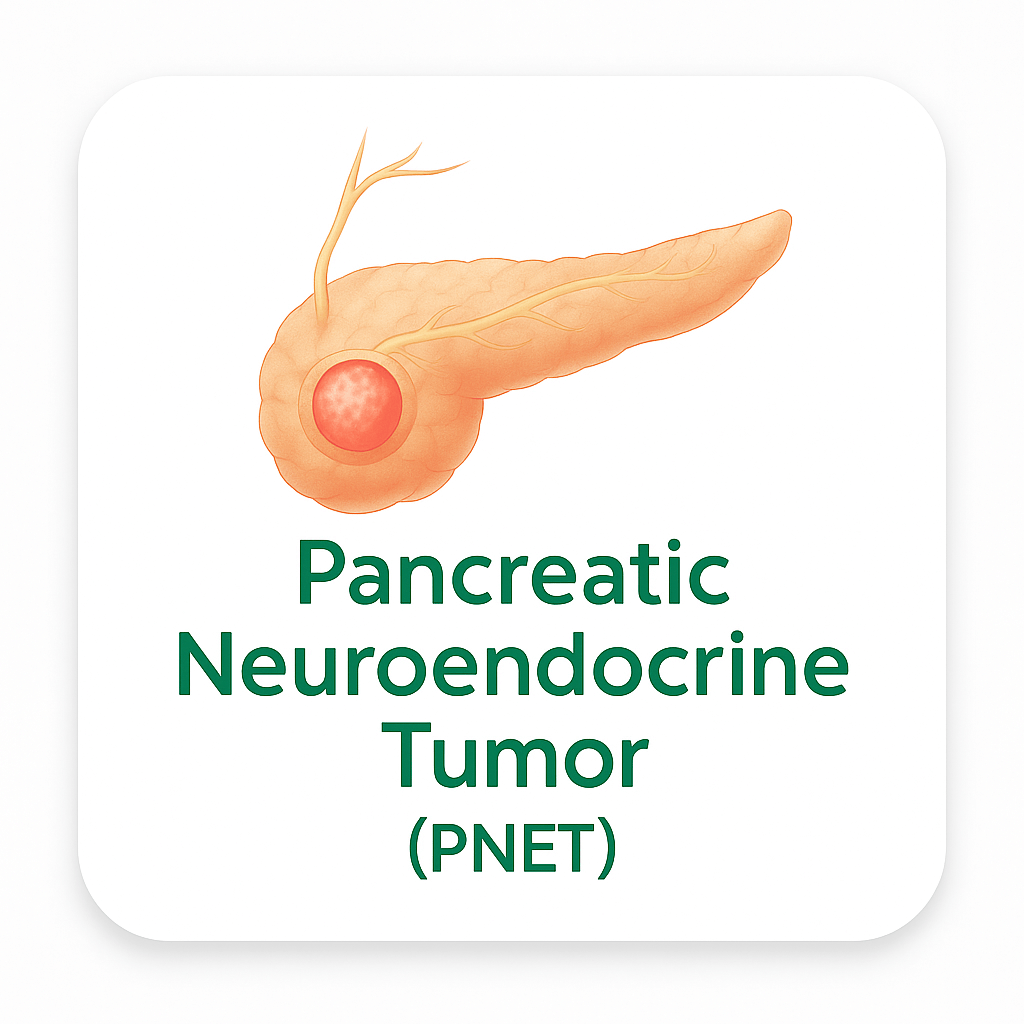
Pancreatic Neuroendocrine Tumor (PNET)
Main Grouping
Endocrine
Organ System
Pancreas
Cell Origin
Neuroendocrine cells
Pathways Affected
Pancreatic neuroendocrine tumors involve three dominant molecular signaling axes with distinct biology from pancreatic ductal adenocarcinoma: MEN1/menin chromatin regulatory pathway loss, DAXX/ATRX-driven alternative lengthening of telomeres, and PI3K/AKT/mTOR pathway constitutive activation through TSC1, TSC2, or PTEN inactivation, along with somatostatin receptor signaling, VEGF angiogenesis, and neuroendocrine hormone secretory pathway dysregulation.
The PI3K/AKT/mTOR pathway is the most critical and therapeutically actionable oncogenic axis in PNETs; TSC1 and TSC2 (tuberous sclerosis complex proteins) normally act as a GTPase-activating protein complex that suppresses mTORC1 by promoting conversion of Rheb-GTP to Rheb-GDP; TSC1/TSC2 mutations or PTEN loss in approximately 15 percent of sporadic PNETs leads to constitutive mTORC1 activation; mTORC1 drives ribosomal biogenesis, protein synthesis, and metabolic reprogramming in PNET cells; quercetin, curcumin, EGCG, and resveratrol all have documented PI3K/AKT/mTOR inhibitory activity directly relevant to the primary actionable pathway in PNETs. The MEN1/menin pathway is disrupted in 40 to 56 percent of sporadic PNETs through somatic MEN1 mutations; menin is a nuclear scaffold protein functioning as a tumor suppressor through multiple chromatin regulatory mechanisms including interaction with the MLL/SET histone methyltransferase complex driving H3K4 trimethylation at developmental gene promoters, interaction with JunD transcription factor suppressing AP-1-driven proliferative gene expression, and interaction with SMAD3 in TGF-beta signaling; loss of menin function eliminates these multiple tumor suppressor activities simultaneously, enabling uncontrolled PNET cell proliferation and driving the epigenetic gene silencing that characterizes MEN1-mutant PNETs; dietary phytochemicals including curcumin and quercetin have documented histone methyltransferase-related epigenetic activity relevant to menin pathway biology.
The DAXX/ATRX pathway is disrupted in approximately 25 percent of sporadic PNETs; DAXX and ATRX are chromatin remodeling proteins that together incorporate histone H3.3 at telomeric and pericentromeric chromatin, suppressing alternative lengthening of telomeres (ALT); loss of DAXX or ATRX enables ALT-mediated telomere elongation independent of telomerase, providing unlimited replicative capacity to PNET cells; DAXX mutations additionally decrease p53 protein levels by promoting MDM2-mediated p53 degradation, linking DAXX loss to p53 pathway impairment; DAXX/ATRX loss is associated with higher risk of recurrence and metastasis. The somatostatin receptor signaling pathway is expressed by the majority of well-differentiated PNETs, particularly somatostatin receptor subtypes 2 and 5; somatostatin receptor activation suppresses hormone secretion by PNET cells and has anti-proliferative activity through inhibition of MAPK/ERK and PI3K/AKT; the anti-secretory and anti-proliferative somatostatin-like activity is relevant to phytochemicals with documented somatostatin pathway interactions. The VEGF angiogenesis pathway is highly active in PNETs, which are among the most vascular solid tumors; VEGF overexpression drives the dense neovascularization that characterizes PNETs and contributes to their striking enhancement on contrast-enhanced CT imaging; quercetin and curcumin both inhibit VEGF-driven angiogenesis in pancreatic tumor models. The Wnt/beta-catenin pathway is activated in a subset of PNETs through CTNNB1 mutations. The MAPK/ERK pathway is activated through upstream growth factor receptor signaling in PNETs including IGF-1 receptor and EGF receptor-driven downstream MAPK activation. The hypoxia/HIF-1alpha pathway is relevant to PNETs through VHL mutations in VHL syndrome-associated PNETs, where VHL loss prevents HIF-1alpha degradation leading to constitutive VEGF overexpression.
Description
Pancreatic neuroendocrine tumors (PNETs) represent approximately 1 to 2 percent of all pancreatic neoplasms but account for a disproportionately high fraction of pancreatic cancer prevalence due to their generally more favorable natural history compared to pancreatic ductal adenocarcinoma. The estimated annual incidence in the United States is approximately 1 per 100,000 population, with approximately 3,000 to 5,000 new cases diagnosed annually. However, autopsy studies suggest a prevalence of microadenomas in approximately 1.5 to 10 percent of the population, indicating substantial underdiagnosis of clinically occult lesions. PNETs have a male to female ratio of approximately 1:1 and a median age at diagnosis of approximately 55 to 60 years.
PNETs are classified as functional or non-functional based on the clinical presence of hormonal syndromes. Functional PNETs include insulinomas (the most common at approximately 30 to 45 percent of functional PNETs), characterized by hypoglycemia, diaphoresis, and neuroglycopenic symptoms from insulin hypersecretion; gastrinomas (approximately 16 to 30 percent of functional PNETs), characterized by Zollinger-Ellison syndrome with severe peptic ulcer disease, diarrhea, and gastroesophageal reflux from excess gastrin-driven acid secretion; glucagonomas (approximately 2 to 5 percent), characterized by the glucagonoma syndrome including necrolytic migratory erythema, glucose intolerance, weight loss, and thromboembolic events; VIPomas (approximately 3 to 8 percent), characterized by watery diarrhea-hypokalemia-achlorhydria (WDHA, Verner-Morrison syndrome) from vasoactive intestinal peptide hypersecretion; and somatostatinomas (approximately 1 percent), characterized by diabetes, steatorrhea, and cholelithiasis from somatostatin excess. Non-functional PNETs present with symptoms related to tumor mass including abdominal pain, jaundice, weight loss, or are discovered incidentally.
The 5-year overall survival for PNET is approximately 55 percent across all stages; for localized disease it approaches 93 percent, for regional disease approximately 77 percent, and for distant metastatic disease approximately 25 percent. Insulinomas are the only PNETs that are benign in approximately 90 percent of cases. All other functional and non-functional PNETs have significant malignant potential with gastrinomas showing malignancy in approximately 50 to 60 percent of cases and glucagonomas, VIPomas, and somatostatinomas in over 50 percent of cases.
The molecular landscape of sporadic PNETs is dominated by three major pathways: MEN1 loss (40-56%), DAXX/ATRX mutations driving alternative lengthening of telomeres (approximately 25%), and PI3K/AKT/mTOR pathway activation through TSC1/TSC2/PTEN mutations (approximately 15%). Unlike pancreatic ductal adenocarcinoma, PNETs rarely harbor KRAS, BRAF, or PIK3CA mutations. The mTOR pathway is the most therapeutically actionable target in PNETs, making it directly relevant to plant phytochemicals with documented mTOR inhibitory activity including quercetin, curcumin, EGCG, and resveratrol, all of which inhibit PI3K/AKT/mTOR signaling in pancreatic cancer and neuroendocrine cell models.
Plant-Based Description
Whole-food plant-based dietary patterns provide nutrients and phytochemicals with documented activity relevant to pancreatic neuroendocrine tumor biology through mTOR pathway inhibition, PI3K/AKT suppression, NF-kB inhibition, VEGF angiogenesis blockade, epigenetic chromatin modulation, apoptosis induction, and neuroendocrine cell cycle control. Quercetin from yellow onions, kale, and apples inhibits PI3K/AKT/mTOR signaling — the primary actionable oncogenic pathway in PNETs through TSC1/TSC2/PTEN mutations — in pancreatic cancer cell models through multi-site pathway suppression. Curcumin from turmeric inhibits NF-kB, PI3K/AKT/mTOR, and MAPK/ERK in pancreatic neuroendocrine and cancer cell models, with documented apoptosis induction in pancreatic cell lines. EGCG from green tea inhibits PI3K/AKT and mTOR relevant to PNET pathway biology. Resveratrol from grapes inhibits mTOR and PI3K/AKT. Sulforaphane from cruciferous vegetables activates Nrf2 and inhibits NF-kB. Beta-glucans from shiitake and maitake mushrooms modulate innate immune signaling relevant to the PNET tumor microenvironment. Dietary somatostatin-pathway-related phytochemicals including quercetin have documented interactions with neuroendocrine secretory machinery. Legumes and whole grains provide folate and magnesium supporting chromatin regulatory chemistry relevant to the MEN1/menin histone methyltransferase pathway disrupted in 40 to 56 percent of sporadic PNETs. Carotenoids from orange and yellow vegetables provide antioxidant protection relevant to the oxidative stress in PNET cells.
Plant Chemistry Detail
Quercetin from yellow onions, kale, and apples is the most broadly documented flavonoid in pancreatic cancer and neuroendocrine biology for mTOR pathway inhibition. Quercetin inhibits PI3K/AKT/mTOR pathway signaling by suppressing phosphorylation of AKT, mTOR, and downstream p70S6K and 4E-BP1 in pancreatic cancer cell models; quercetin-mediated mTOR inhibition is directly relevant to the TSC1/TSC2/PTEN mutation-driven constitutive mTORC1 activation documented in approximately 15 percent of sporadic PNETs; quercetin additionally inhibits Wnt/beta-catenin and MAPK/ERK pathways, induces G1 cell cycle arrest through CDK inhibitor elevation, and induces apoptosis through BCL-2 family protein alterations in pancreatic cancer cell models (PMC6651418). Quercetin has also been shown to inhibit VEGF-driven angiogenesis relevant to the high vascularity of PNETs.
Curcumin from turmeric targets NF-kB, PI3K/AKT/mTOR, and MAPK/ERK pathways in pancreatic cancer and neuroendocrine cell models; curcumin inhibits NF-kB through IKK suppression relevant to inflammatory tumor microenvironment signaling in PNETs; curcumin induces apoptosis in MIA PaCa-2 and Panc-1 pancreatic cell lines through FOXO1 induction and PI3K/AKT inhibition (PMC4963909); curcumin additionally inhibits the epigenetic DNMT and HDAC activity relevant to the epigenetic chromatin dysregulation driven by MEN1/menin histone methyltransferase pathway loss in 40 to 56 percent of sporadic PNETs. EGCG from green tea inhibits PI3K/AKT and mTOR signaling in pancreatic tumor cell models, suppresses VEGF angiogenesis, and inhibits NF-kB through IKK blockade; EGCG additionally inhibits HDAC activity relevant to the epigenetic alterations in MEN1-mutant PNETs. Resveratrol from grapes inhibits mTORC1 and PI3K/AKT, with documented combination activity with mTOR inhibitors preventing feedback AKT activation; resveratrol additionally inhibits NF-kB and VEGF angiogenesis in pancreatic tumor models. Sulforaphane from broccoli, Brussels sprouts, kale, and cauliflower activates Nrf2/ARE antioxidant response and inhibits HDAC activity relevant to the epigenetic biology of MEN1-mutant PNETs, and inhibits NF-kB in pancreatic tumor cell models. Apigenin from parsley and celery has documented mTOR inhibitory activity and anti-proliferative effects in neuroendocrine tumor cell models. Beta-glucans from shiitake and maitake mushrooms activate innate immune TLR/dectin-1 signaling relevant to the immune microenvironment of PNETs. Allicin and diallyl compounds from garlic inhibit PI3K/AKT and NF-kB relevant to PNET survival signaling.
Nutritional Focus
Nutritional focus in pancreatic neuroendocrine tumor research centers on the PI3K/AKT/mTOR pathway — the primary actionable oncogenic axis in PNETs through TSC1/TSC2/PTEN mutations — and the plant phytochemicals with documented mTOR inhibitory activity; quercetin from yellow onions and kale inhibiting PI3K/AKT/mTOR multi-site signaling, suppressing AKT, mTOR, p70S6K, and 4E-BP1 phosphorylation in pancreatic cancer cell models, and additionally inhibiting Wnt/beta-catenin and VEGF angiogenesis highly active in the vascular PNET tumor; curcumin from turmeric targeting NF-kB, PI3K/AKT/mTOR, MAPK/ERK, and epigenetic DNMT/HDAC activity relevant to MEN1/menin histone methyltransferase pathway disruption in 40 to 56 percent of sporadic PNETs, and inducing apoptosis in pancreatic cell lines through FOXO1 induction and PI3K/AKT inhibition; EGCG from green tea inhibiting PI3K/AKT, mTOR, and NF-kB and additionally inhibiting HDAC activity relevant to MEN1-mutant PNET epigenetic biology; resveratrol from grapes inhibiting mTORC1 and preventing feedback AKT activation that limits mTOR inhibitor efficacy in PNETs; sulforaphane from cruciferous vegetables activating Nrf2/ARE and inhibiting HDAC activity targeting the chromatin regulatory defects in MEN1-mutant and DAXX/ATRX-mutant PNETs; apigenin from parsley with documented mTOR inhibitory and anti-proliferative activity in neuroendocrine tumor cell models; and folate from leafy greens and legumes supporting the one-carbon SAM-cycle methionine chemistry that is the substrate for the menin-scaffolded MLL/SET histone H3K4 trimethylase complex disrupted as the central epigenetic mechanism in MEN1-mutant PNETs.
Research Notes
PNET epidemiology: approximately 1 per 100,000 annual incidence; approximately 3,000-5,000 new cases annually in the US; autopsy prevalence 1.5-10% microadenomas; median age 55-60 years; 5-year survival all stages approximately 55%, localized 93%, regional 77%, distant metastatic 25%. PNET WHO 2022 grading: G1 (Ki-67 <3%, mitotic rate 20%). PNET functional subtypes: insulinoma (30-45% of functional, 90% benign), gastrinoma (16-30%, 50-60% malignant), glucagonoma (2-5%, >50% malignant), VIPoma (3-8%), somatostatinoma (1%). Non-functional PNETs 60-70% of all PNETs. PNET molecular landscape: MEN1 mutations 40-56%; DAXX/ATRX mutations ~25%; TSC1/TSC2/PTEN mutations ~15%; unlike PDAC, PNETs rarely harbor KRAS, BRAF, or PIK3CA mutations (PMID 37986400, PMID 23840053). MEN1/menin biology: menin scaffolds MLL/SET histone H3K4 trimethylase complex; menin interacts with JunD suppressing AP-1; menin interacts with SMAD3 in TGF-beta signaling; menin loss eliminates all three tumor suppressor mechanisms simultaneously. DAXX/ATRX: suppress alternative lengthening of telomeres (ALT); DAXX loss additionally decreases p53 levels via MDM2 promotion; ALT activation enables unlimited replication in DAXX/ATRX-mutant PNETs. Quercetin mTOR PI3K: documented inhibition of AKT, mTOR, p70S6K, 4E-BP1 in pancreatic cancer models (PMC6651418). Curcumin pancreatic cancer: apoptosis induction via FOXO1 and PI3K/AKT inhibition in MIA PaCa-2 and Panc-1 cells (PMC4963909).
Notes Visibility
show
Key Foods
Broccoli,Kale,Spinach,Brussels Sprouts,Cauliflower,Garlic,Yellow Onion,Carrot,Sweet Potato,Tomato,Celery,Asparagus,Apple,Blueberry,Pomegranate,Grape,Raspberry,Strawberry,Orange,Mango,Soybeans,Edamame,Green Lentils,Black Beans,Chickpeas,Brown Rice,Quinoa,Oats,Wild Rice,Rye Berries,Sorghum,Walnut,Almond,Brazil Nut,Pumpkin Seeds,Flaxseed,Chia Seeds,Sesame Seeds,Hemp Seeds,Shiitake,Maitake,Cremini,Portobello,Lions Mane,Green Tea,Turmeric,Ginger,Black Pepper,Garlic Powder,Parsley,Rosemary,Oregano, Leek,Avocado,Artichoke,Radish,Tangerine, Red Onion
Linked Nutrients
vitamin-c,vitamin-e,vitamin-d3,vitamin-b9,vitamin-b6,vitamin-a,selenium,zinc,magnesium,calcium,potassium,iron,phosphorus,quercetin,curcumin,egcg,resveratrol,sulforaphane,apigenin,beta-carotene,anthocyanins,beta-glucans,dietary-fiber,plant-ala-omega3
Last Updated
2025-10-13 09:50:53

