
ID
31
Cancer Name
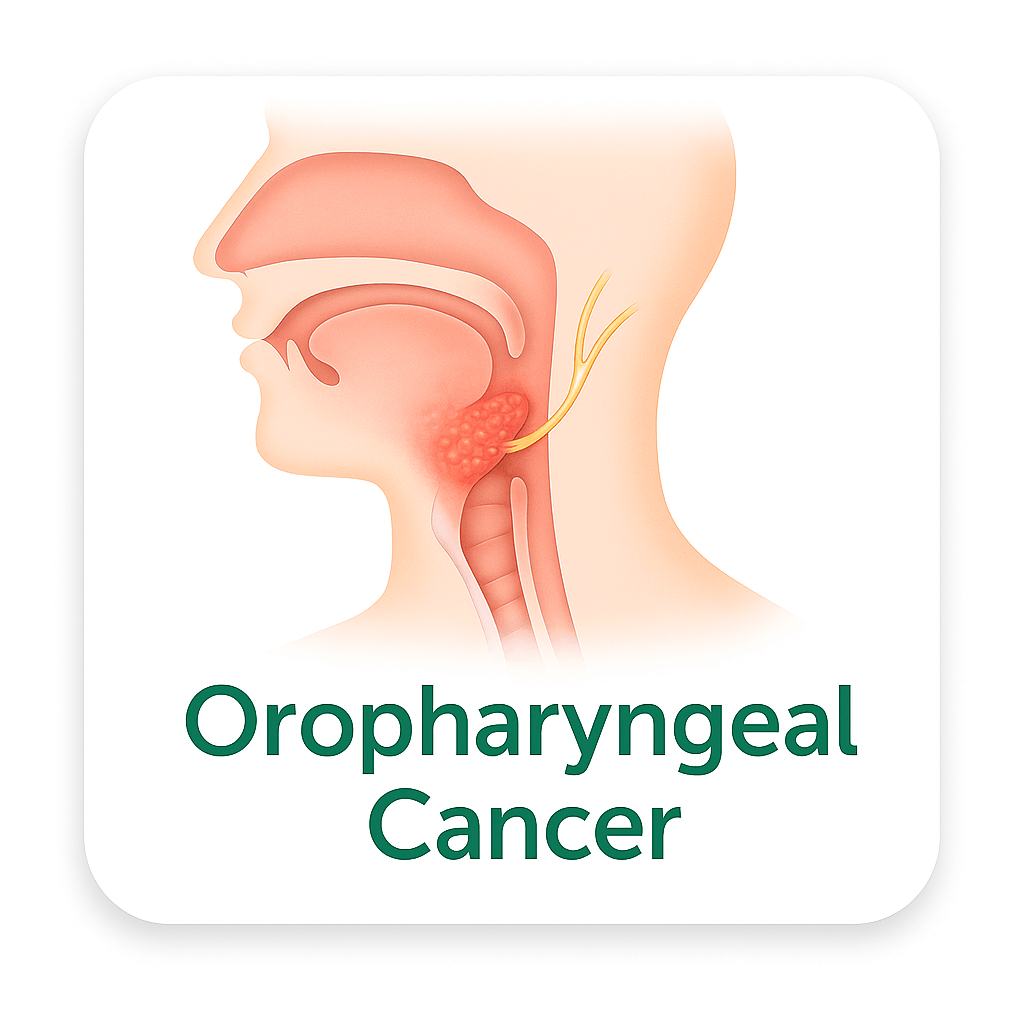
Oropharyngeal Cancer
Main Grouping
Respiratory/Digestive
Organ System
Oropharynx,head and neck,oral cavity,upper aerodigestive tract
Cell Origin
Squamous epithelium
Pathways Affected
Oropharyngeal cancer involves two molecularly distinct pathways, with overlapping oncogenic signaling through EGFR/PI3K/AKT/mTOR and NF-kB as dominant shared axes. The p53 tumor suppressor pathway is disrupted in over 80 percent of HPV-negative OPSCC through direct TP53 mutations generating non-functional p53 protein; in HPV-positive OPSCC, p53 protein is functionally disrupted through E6-mediated ubiquitin-proteasome degradation despite wild-type TP53 sequence; loss of p53-mediated DNA damage response, apoptosis induction, and cell cycle checkpoint enforcement is central to both OPSCC subtypes; curcumin, quercetin, and EGCG all have documented p53 pathway restoration or stabilization activity in HNSCC cell models.
The EGFR/MAPK/ERK pathway is overexpressed in approximately 80 to 90 percent of HNSCC through EGFR gene amplification, overexpression, or constitutive activation by autocrine ligand loops; EGFR overexpression drives downstream MAPK/ERK and PI3K/AKT proliferative and survival signaling in both HPV-positive and HPV-negative OPSCC; quercetin, EGCG, and curcumin all inhibit EGFR kinase activity and downstream MAPK/ERK in HNSCC cell models; curcumin downregulates EGFR expression at the transcriptional and post-translational level through multiple mechanisms documented in HNSCC cell lines (PMC3055228). The PI3K/AKT/mTOR pathway is activated in OPSCC through PIK3CA mutations (approximately 56% in HPV-positive, 18% in HPV-negative OPSCC), PTEN loss, and upstream EGFR overexpression; mTORC1 drives protein synthesis and metabolic reprogramming in OPSCC cells; quercetin, curcumin, and EGCG all inhibit PI3K/AKT/mTOR multi-site signaling in HNSCC models.
The NF-kB signaling pathway is constitutively activated in HNSCC through multiple mechanisms including TRAF3 loss in HPV-positive OPSCC (approximately 22%), CASP8 inactivation in HPV-negative OPSCC, tobacco carcinogen-driven inflammatory signaling, and chronic mucosal inflammatory microenvironment; NF-kB drives anti-apoptotic gene expression, cytokine production, and VEGF-mediated angiogenesis in OPSCC; curcumin has the most directly documented NF-kB inhibitory activity in HNSCC, with dose-dependent suppression of IKK activity, IkB-alpha phosphorylation, and downstream NF-kB nuclear translocation documented in multiple HNSCC cell lines including CCL23, CAL27, UM-SCC1, and UM-SCC14A (PMC3055228). The cell cycle checkpoint pathway is disrupted through CDKN2A loss (approximately 58% of HPV-negative OPSCC) releasing CDK4/6-mediated RB phosphorylation and G1/S progression, and through CCND1/cyclin D1 amplification (approximately 28%) providing excess CDK4/6 activity; in HPV-positive OPSCC, RB1 pathway disruption occurs through E7-mediated pRb degradation. The STAT3 pathway is constitutively activated in HNSCC through upstream EGFR and IL-6 JAK/STAT signaling; STAT3 drives BCL-2 family anti-apoptotic gene expression, cyclin D1, and MYC proliferative programs in OPSCC cells; curcumin has documented dose-dependent STAT3 inhibition in HNSCC cell lines through EGFR/STAT3 axis suppression. The Notch signaling pathway shows loss-of-function mutations in approximately 19 percent of HPV-negative HNSCC, disrupting the tumor suppressor function of Notch signaling in squamous cell differentiation. The Wnt/beta-catenin pathway is deregulated in a subset of OPSCC through FAT1 mutations. The VEGF angiogenesis pathway is active in OPSCC driving tumor vascularization. The EMT signaling pathway enables OPSCC invasion and lymph node metastasis, particularly in poorly differentiated tumors.
Description
Oropharyngeal cancer (OPC) is a malignancy arising from the squamous epithelium of the oropharynx, a region of the throat encompassing the base of tongue, tonsils, soft palate, and posterior pharyngeal wall. OPC has undergone a dramatic epidemiological transformation over the past three decades, transitioning from a disease predominantly caused by tobacco and alcohol use in older men to a cancer increasingly driven by a separate molecular etiology in younger, non-smoking patients, with this second etiological pathway representing a substantial change in the demographics and biology of oropharyngeal cancer.
The incidence of oropharyngeal cancer has been rising in Western countries, with the United States experiencing an increase from approximately 5,000 cases per year in the mid-1980s to over 18,000 cases per year in 2023 estimates, making oropharyngeal cancer the most rapidly increasing head and neck cancer in the United States. Approximately 54,540 new cases of oral cavity and pharyngeal cancers were estimated in the United States for 2023. The male-to-female ratio is approximately 3 to 4:1, and the peak incidence is in the fifth to seventh decades.
Two molecularly and clinically distinct subtypes of OPSCC are well-established. HPV-negative OPSCC is driven by tobacco carcinogen-induced DNA damage, alcohol exposure, and chronic mucosal irritation, with a molecular profile dominated by TP53 mutations in over 80 percent of cases, CDKN2A deletion or silencing in approximately 58 percent, EGFR overexpression in approximately 80 percent of HNSCC, CCND1 amplification in approximately 28 percent, and NOTCH1 loss-of-function mutations; this subtype has a 5-year overall survival of approximately 30 to 40 percent for advanced disease. HPV-positive OPSCC is characterized by much more favorable prognosis, with 5-year overall survival of approximately 70 to 80 percent for locoregional disease, and is characterized by p16/CDKN2A protein overexpression (used as surrogate diagnostic marker), functionally active p53 pathway disruption through E6-mediated p53 protein degradation rather than TP53 mutation, RB1 pathway disruption through E7-mediated pRb degradation, PIK3CA mutations in approximately 56 percent, TRAF3 loss in approximately 22 percent, and NF-kB activation through TRAF3 loss.
The TCGA comprehensive genomic characterization of head and neck squamous cell carcinomas (Nature 2015, PMC5493146 for TP53 review) confirmed that TP53 is the most frequently mutated tumor suppressor gene in HPV-negative HNSCC, and that TP53 mutation status significantly correlates with poor prognosis and treatment resistance. PIK3CA mutations and amplifications are the dominant alterations across both OPSCC subtypes. EGFR is overexpressed in approximately 80 to 90 percent of HNSCC and drives MAPK/ERK and PI3K/AKT/mTOR downstream proliferative and survival signaling. NF-kB is constitutively activated in HNSCC through multiple mechanisms.
Multiple plant phytochemicals including curcumin, quercetin, EGCG, and resveratrol have documented anti-HNSCC activity. Curcumin has the most extensive documented evidence in HNSCC, with a comprehensive review (PMC3055228) documenting curcumin's effects on NF-kB, EGFR, STAT3, PI3K/AKT, and cell cycle pathways in HNSCC cell models including CCL23, CAL27, UM-SCC1, and UM-SCC14A cell lines, with documented dose-dependent suppression of IL-6 and IL-8 through IKK inhibition.
Plant-Based Description
Whole-food plant-based dietary patterns provide nutrients and phytochemicals with documented activity relevant to oropharyngeal cancer through NF-kB inhibition, EGFR and STAT3 suppression, PI3K/AKT/mTOR pathway blockade, p53 pathway support, cell cycle checkpoint restoration, VEGF angiogenesis inhibition, and apoptosis induction in HNSCC cell models. Curcumin from turmeric has the most extensively documented anti-HNSCC activity with a comprehensive review (PMC3055228) confirming its effects on NF-kB, EGFR, STAT3, PI3K/AKT, and apoptosis pathways across multiple HNSCC cell lines. Quercetin from yellow onions and kale inhibits EGFR, PI3K/AKT/mTOR, NF-kB, and STAT3 in head and neck cancer models. EGCG from green tea inhibits EGFR, PI3K/AKT, and NF-kB in HNSCC cell models. Resveratrol from grapes inhibits NF-kB and PI3K/AKT in HNSCC models. Sulforaphane from cruciferous vegetables activates Nrf2 and inhibits NF-kB. Beta-glucans from shiitake and maitake mushrooms modulate innate immune signaling. Carotenoids from orange and yellow vegetables provide antioxidant protection. Dietary folate from leafy greens and legumes supports DNA methylation chemistry. Vitamin C from fruits provides mucosal antioxidant protection. Whole grains provide fiber, B vitamins, and selenium relevant to oropharyngeal epithelial cell integrity and immune function.
Plant Chemistry Detail
Curcumin from turmeric is the most extensively studied plant phytochemical in head and neck squamous cell carcinoma including oropharyngeal cancer. A comprehensive review published in Cancer (PMC3055228) documented curcumin's broad anti-HNSCC molecular activity: dose-dependent suppression of IL-6 and IL-8 in CCL23, CAL27, UM-SCC1, and UM-SCC14A HNSCC cell lines through IKK (inhibitor kappa B kinase) inhibition, blocking IkB-alpha phosphorylation and NF-kB nuclear translocation; downregulation of EGFR expression at the transcriptional level; STAT3 pathway inhibition through EGFR/STAT3 axis suppression; suppression of downstream NF-kB target genes including BCL-2, cyclin D1, COX-2, MMP-9, and VEGF; induction of apoptosis through caspase-3 activation and PARP cleavage; and G2/M cell cycle arrest documented in HNSCC cell lines. A separate study (PMC5584201) confirmed curcumin-induced G2/M arrest and apoptosis in HNSCC through ATM/Chk2/p53-dependent pathway activation. A third study (PMC4547100) confirmed curcumin treatment of FaDu and CAL27 HNSCC cells blocked NF-kB activity through IkB-alpha suppression and induced apoptosis through SIRT1-mediated mechanisms.
Quercetin from yellow onions, kale, and apples inhibits EGFR tyrosine kinase activity overexpressed in approximately 80 to 90 percent of HNSCC, and additionally inhibits downstream MAPK/ERK, PI3K/AKT/mTOR, and STAT3 pathways in head and neck cancer cell models; quercetin induces G1 cell cycle arrest through CDK inhibitor elevation directly relevant to CDKN2A loss in HPV-negative OPSCC, and induces apoptosis through BCL-2 family protein alterations. EGCG from green tea inhibits EGFR and downstream PI3K/AKT signaling in HNSCC cell models, inhibits NF-kB through IKK suppression, suppresses VEGF angiogenesis, and has documented anti-proliferative activity in HNSCC cell lines including CAL27 and UM-SCC cells. Resveratrol from grapes inhibits NF-kB and PI3K/AKT, and has documented synergistic anti-tumor activity with curcumin and epicatechin gallate in HPV-positive HNSCC cell models (PMC5601119). Sulforaphane from broccoli and cruciferous vegetables activates Nrf2/ARE antioxidant response, inhibits HDAC activity relevant to epigenetic silencing of tumor suppressor genes including CDKN2A through promoter methylation in OPSCC, and inhibits NF-kB in HNSCC cell models. Ellagic acid from pomegranate inhibits PI3K/AKT and NF-kB in HNSCC-relevant cell models. Beta-glucans from shiitake and maitake mushrooms activate innate immune signaling through dectin-1/TLR pathways relevant to the immune evasion mechanisms in OPSCC. Allicin and diallyl compounds from garlic inhibit NF-kB and EGFR downstream signaling.
Nutritional Focus
Nutritional focus in oropharyngeal cancer research is led by curcumin from turmeric, with the most extensively documented anti-HNSCC evidence summarized in a comprehensive review (PMC3055228) documenting dose-dependent NF-kB inhibition through IKK suppression and IkB-alpha blockade in multiple HNSCC cell lines including CCL23, CAL27, UM-SCC1, and UM-SCC14A, with downstream suppression of IL-6, IL-8, BCL-2, cyclin D1, COX-2, MMP-9, and VEGF; EGFR downregulation at transcriptional level; STAT3 pathway inhibition through EGFR/STAT3 axis suppression; and apoptosis induction through caspase-3 activation and PARP cleavage directly targeting the dominant NF-kB, EGFR, and STAT3 oncogenic axes in OPSCC; quercetin from yellow onions and kale inhibiting EGFR overexpressed in approximately 80 to 90 percent of HNSCC and downstream MAPK/ERK, PI3K/AKT/mTOR, and STAT3 in head and neck cancer models; EGCG from green tea inhibiting EGFR and PI3K/AKT and suppressing NF-kB in HNSCC cell lines; resveratrol from grapes with documented synergistic activity with curcumin and epicatechin gallate in HPV-positive HNSCC models; sulforaphane from cruciferous vegetables activating Nrf2/ARE and inhibiting HDAC activity targeting epigenetic CDKN2A silencing through promoter methylation in OPSCC; beta-glucans from shiitake and maitake mushrooms modulating innate immune signaling relevant to the immune evasion through IDO/tryptophan kynurenine pathway in the OPSCC tumor microenvironment; and folate from leafy greens and legumes supporting one-carbon SAM-cycle methylation chemistry relevant to CDKN2A epigenetic regulation and DNA repair capacity in tobacco carcinogen-exposed oropharyngeal epithelium.
Research Notes
OPSCC epidemiology: approximately 54,540 new oral cavity and pharyngeal cancer cases estimated in the United States in 2023; OPC rising from approximately 5,000 to over 18,000 cases per year; male:female approximately 3-4:1; peak incidence 5th-7th decades. Two molecular subtypes: HPV-negative (tobacco/alcohol-driven): TP53 mutations >80%, CDKN2A loss ~58%, EGFR overexpression ~80-90%, CCND1 amplification ~28%, NOTCH1 ~19%, FAT1 ~23%, PIK3CA ~18%; 5-year survival advanced disease approximately 30-40%. HPV-positive: PIK3CA ~56%, TRAF3 loss ~22%, p16/CDKN2A overexpression as diagnostic surrogate, wild-type TP53 but E6-mediated p53 protein degradation, E7-mediated pRb degradation; 5-year survival approximately 70-80%. TCGA HNSCC characterization (Nature 2015): confirmed TP53 most frequent mutation in HPV-negative HNSCC; EGFR/ERBB2 or FGFR1/3 RTK alterations most frequent RTK alterations; PIK3CA mutations dominant across both subtypes.
Curcumin HNSCC evidence (PMC3055228): dose-dependent suppression of IL-6 and IL-8 through IKK inhibition in CCL23, CAL27, UM-SCC1, UM-SCC14A cell lines; NF-kB nuclear translocation blocked via IkB-alpha phosphorylation suppression; EGFR transcriptional downregulation; STAT3 inhibition; BCL-2, cyclin D1, COX-2, MMP-9, VEGF downregulation; apoptosis via caspase-3 and PARP cleavage. Curcumin G2/M arrest in HNSCC via ATM/Chk2/p53 pathway (PMC5584201). Curcumin in FaDu and CAL27 cells: NF-kB IkB-alpha suppression and SIRT1-mediated apoptosis (PMC4547100). Resveratrol+curcumin+epicatechin gallate (TriCurin) anti-tumor activity in HPV-positive HNSCC (PMC5601119).
Notes Visibility
show
Key Foods
Turmeric,Broccoli,Kale,Spinach,Brussels Sprouts,Cauliflower,Garlic,Yellow Onion,Carrot,Sweet Potato,Tomato,Apple,Blueberry,Pomegranate,Grape,Raspberry,Strawberry,Blackberry,Orange,Mango,Soybeans,Edamame,Green Lentils,Black Beans,Chickpeas,Brown Rice,Quinoa,Oats,Wild Rice,Rye Berries,Sorghum,Walnut,Almond,Brazil Nut,Pumpkin Seeds,Flaxseed,Chia Seeds,Sesame Seeds,Hemp Seeds,Shiitake,Maitake,Cremini,Portobello,Lions Mane,Green Tea,Ginger,Black Pepper,Garlic Powder,Parsley,Rosemary,Oregano, Leek,Avocado,Artichoke,Radish,Tangerine, Red Onion
Linked Nutrients
vitamin-c,vitamin-e,vitamin-d3,vitamin-b9,vitamin-b6,vitamin-a,selenium,zinc,magnesium,calcium,potassium,iron,curcumin,quercetin,egcg,resveratrol,sulforaphane,ellagic-acid,beta-carotene,anthocyanins,beta-glucans,dietary-fiber,plant-ala-omega3
Last Updated
2025-10-13 09:50:53

