
ID
32
Cancer Name
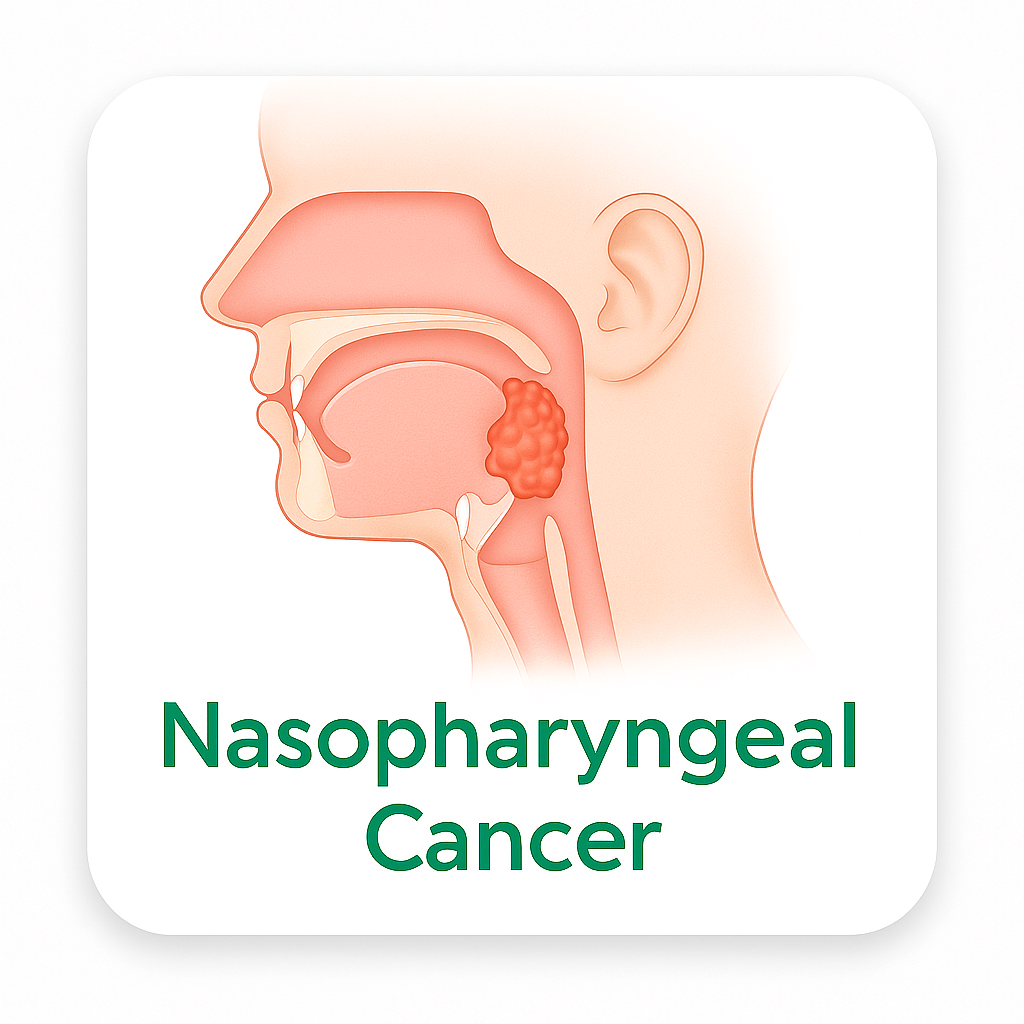
Nasopharyngeal Cancer
Main Grouping
Respiratory
Organ System
Nasopharynx,head and neck,upper respiratory tract,lymphatic system
Cell Origin
Epithelial cells
Pathways Affected
Nasopharyngeal carcinoma involves constitutive NF-kB pathway activation as the dominant oncogenic axis, complemented by PI3K/AKT/mTOR, EGFR/MAPK/ERK, cell cycle checkpoint, epigenetic RASSF1A silencing, and VEGF angiogenesis pathway dysregulation. The NF-kB signaling pathway is constitutively activated in NPC through multiple mechanisms: LMP1 (latent membrane protein 1) signaling in EBV-associated NPC activating NF-kB through TRAF2/5/3 and TRADD adaptor proteins; TRAF3 loss-of-function mutations disrupting the negative regulatory control of NF-kB; and the chronic inflammatory tumor microenvironment providing paracrine NF-kB-activating cytokine signals; NF-kB drives anti-apoptotic gene expression including BCL-2 and BCL-XL, cytokine production including IL-6 and IL-8, MMP-driven invasion and metastasis, and VEGF-driven angiogenesis; curcumin, EGCG, and quercetin all target NF-kB in NPC cell models with documented suppression of NF-kB nuclear translocation and downstream target gene expression.
The PI3K/AKT/mTOR pathway is activated in NPC through PIK3CA mutations (approximately 10-20%), EGFR overexpression-driven downstream signaling, and NF-kB crosstalk; mTORC1 drives protein synthesis and metabolic reprogramming in NPC cells; curcumin, EGCG, and quercetin all inhibit PI3K/AKT/mTOR in NPC-relevant cell models. The EGFR/MAPK/ERK pathway is activated through EGFR overexpression in approximately 80 percent of NPC; EGFR drives downstream MAPK/ERK and PI3K/AKT proliferative and survival signaling; EGCG has documented direct EGFR inhibitory activity in NPC cells, suppressing ERK phosphorylation and AP-1/Sp1 transactivation and downstream MMP-2 and MMP-9 expression (PMC4346850). The cell cycle checkpoint pathway is disrupted through CDKN2A loss in approximately 60 percent of NPC releasing CDK4/6 activity and G1/S checkpoint control, and through CCND1/cyclin D1 amplification at chromosome 11q13 providing excess CDK4/6 activation; curcumin induced cell cycle arrest in NPC cells through miR-7-mediated Skp2 inhibition and p21 elevation (PMC5422505). The RASSF1A epigenetic silencing pathway is the most consistently documented epigenetic alteration in NPC, with RASSF1A promoter hypermethylation present in over 80 percent of NPC cases silencing this tumor suppressor that normally inhibits cyclin D1 accumulation and promotes apoptosis; EGCG and curcumin both have documented DNMT inhibitory activity targeting this epigenetic silencing mechanism. The p53 tumor suppressor pathway is disrupted in approximately 40 percent of NPC through TP53 mutations; EGCG restored p53 and p21 expression in NPC cells driving apoptosis (PMC4346850); curcumin induced p53-dependent apoptosis in NPC cells through ERK/FOXO3a/p53 pathway activation. The Wnt/beta-catenin pathway is activated in NPC with nuclear beta-catenin accumulation; EGCG suppressed beta-catenin nuclear translocation in NPC cells (PMC4346850). The TGF-beta/SMAD pathway mediates immune suppression and EMT in NPC. The VEGF angiogenesis pathway is highly active in NPC, with VEGF overexpression driving the dense tumor vasculature; EGCG suppressed VEGF in NPC xenograft models. The tryptophan-kynurenine pathway mediates immune evasion in the NPC tumor microenvironment relevant to the immune suppressive phenotype of LMP1-associated NPC.
Description
Nasopharyngeal carcinoma (NPC) is a malignancy arising from the epithelium of the nasopharynx with a highly distinctive geographic distribution, molecular biology, and epidemiology that distinguishes it from other head and neck cancers. NPC displays one of the most striking geographic distributions of any cancer globally, with the highest incidence rates in Southern China (particularly Guangdong and Guangxi provinces, with rates of 20 to 80 per 100,000 population), Southeast Asia (Malaysia, Singapore, Vietnam, Indonesia, Philippines), North Africa, and in indigenous Arctic populations (Inuit), contrasting with very low incidence in Western Europe and North America (approximately 0.5 to 1 per 100,000 population). Approximately 133,000 new cases of NPC were estimated globally in 2020 according to GLOBOCAN data. The median age at diagnosis is 40 to 55 years, and the male-to-female ratio is approximately 2.5 to 3:1.
The molecular classification of NPC distinguishes three WHO histological subtypes with distinct biology and prognosis. WHO Type 1 keratinizing SCC, which shows similarities to conventional head and neck squamous cell carcinoma and is more common in lower-incidence Western populations, is frequently associated with tobacco and alcohol exposure and has a worse prognosis. WHO Type 2 (non-keratinizing differentiated) and WHO Type 3 (non-keratinizing undifferentiated, lymphoepithelioma) account for the vast majority of NPC in endemic high-incidence regions and have more favorable responses to radiotherapy.
The genomic landscape of NPC is dominated by frequent alterations at chromosome 9p21 encompassing CDKN2A (p16 and p14ARF) in approximately 60 percent of cases, PIK3CA activating mutations in approximately 10 to 20 percent, EGFR overexpression in approximately 80 percent, and NF-kB pathway constitutive activation through multiple mechanisms. RASSF1A tumor suppressor gene promoter hypermethylation silences RASSF1A in over 80 percent of NPC cases, making it among the most consistently methylated tumor suppressor genes in any cancer; RASSF1A normally inhibits cyclin D1 accumulation and promotes apoptosis. CCND1 amplification at chromosome 11q13 drives cell cycle dysregulation. TP53 alterations are present in approximately 40 percent. Chromosome 3p deletions encompassing multiple tumor suppressor loci including RASSF1A, RARbeta, and others are characteristic of NPC.
The 5-year overall survival for NPC is approximately 75 to 85 percent for stage I-II disease, approximately 65 to 75 percent for stage III disease, and approximately 35 to 45 percent for stage IVA-IVB locoregional advanced disease. Distant metastatic NPC (stage IVC) has 5-year overall survival of approximately 20 to 30 percent. The primary treatment modality for NPC is radiotherapy, with the nasopharynx being highly radiosensitive, particularly for WHO Type 2-3 subtypes.
Multiple plant phytochemicals have documented activity in NPC cell models. EGCG from green tea has demonstrated anti-NPC activity in both in vitro and in vivo xenograft models, inhibiting proliferation, invasiveness, MMP-2 and MMP-9 through ERK and AP-1 suppression, and inducing apoptosis through p53, p21, and caspase-3 activation, with NF-kB and beta-catenin nuclear translocation suppressed in NPC cells (PMC4346850). Curcumin has documented anti-NPC activity in CNE1 and CNE2 NPC cell lines through miR-7/Skp2/p21 pathway regulation, NF-kB and mTOR inhibition, and apoptosis induction (PMC5422505).
Plant-Based Description
Whole-food plant-based dietary patterns provide nutrients and phytochemicals with documented activity relevant to nasopharyngeal carcinoma through NF-kB inhibition, PI3K/AKT/mTOR pathway blockade, EGFR and MAPK/ERK suppression, MMP inhibition reducing invasiveness, p53 pathway restoration, beta-catenin nuclear translocation suppression, epigenetic DNMT inhibition targeting RASSF1A hypermethylation, VEGF angiogenesis blockade, and apoptosis induction in NPC cell models. EGCG from green tea has the most extensively documented anti-NPC activity, with both in vitro and in vivo xenograft data demonstrating inhibition of NPC cell proliferation, invasiveness, MMP-2 and MMP-9, NF-kB nuclear translocation, and beta-catenin nuclear accumulation, while inducing p53, p21, and caspase-3-mediated apoptosis (PMC4346850). Curcumin from turmeric has documented anti-NPC activity in CNE1 and CNE2 NPC cell lines through miR-7/Skp2/p21 pathway regulation, NF-kB and mTOR suppression, and apoptosis induction (PMC5422505). Quercetin inhibits PI3K/AKT/mTOR and NF-kB in NPC-relevant models. Sulforaphane from cruciferous vegetables activates Nrf2 and inhibits DNMT activity relevant to RASSF1A hypermethylation in over 80 percent of NPC. Resveratrol from grapes inhibits NF-kB and PI3K/AKT. Carotenoids from orange and dark green vegetables provide antioxidant protection. Dietary folate from leafy greens and legumes supports DNA methylation chemistry relevant to the extensive epigenetic alterations in NPC. Beta-glucans from shiitake and maitake mushrooms modulate innate immune signaling relevant to the highly immunosuppressive NPC tumor microenvironment.
Plant Chemistry Detail
EGCG from green tea is the most directly documented plant phytochemical in NPC with published in vitro and in vivo evidence. A study published in Nutrients (PMC4346850) documented EGCG inhibiting proliferation and invasiveness of NPC cells without affecting normal immortalized nasopharyngeal epithelial cells; EGCG upregulated E-cadherin and beta-catenin cell adhesion molecules, downregulated MMP-2 and MMP-9 through suppression of ERK phosphorylation and AP-1 and Sp1 transactivation, significantly inhibited spheroid formation by NPC cells in suspension, suppressed tumor growth in xenografted mice bearing NPC tumors, elevated p53 and p21 expression leading to apoptosis via caspase-3 activation, and suppressed nuclear translocation of NF-kB and beta-catenin in NPC cells; these results establish EGCG's multi-mechanism anti-NPC activity targeting the dominant NF-kB, Wnt/beta-catenin, EGFR/MAPK/ERK, and MMP invasive pathways simultaneously in NPC.
Curcumin from turmeric has documented anti-NPC activity in CNE1 and CNE2 NPC cell lines (PMC5422505): curcumin inhibited NPC cell growth, induced apoptosis, retarded cell migration and invasion, triggered cell cycle arrest, upregulated miR-7 expression, inhibited Skp2 (a direct miR-7 target involved in p21 protein degradation through ubiquitin-proteasome pathway), and increased p21 tumor suppressor protein levels; the miR-7/Skp2/p21 axis directly addresses the cell cycle checkpoint dysregulation through CDKN2A loss in approximately 60 percent of NPC; curcumin also targets NF-kB, AKT, Notch, mTOR, and Hedgehog pathways in NPC cells. A separate curcumin NPC study (PMC4079154) documented curcumin increasing ERK1/2 phosphorylation and inducing FOXO3a and p53 protein expression in NPC cells in a dose-dependent manner, with gene silencing experiments confirming that both FOXO3a and p53 were required for curcumin's anti-proliferative activity, establishing the ERK1/2/FOXO3a/p53 axis as a curcumin-regulated mechanism in NPC cells. Quercetin from yellow onions and kale inhibits PI3K/AKT/mTOR and NF-kB signaling in NPC-relevant cell models through multi-site pathway suppression. Sulforaphane from broccoli, Brussels sprouts, and kale activates Nrf2/ARE antioxidant response and inhibits DNMT enzyme activity directly targeting the RASSF1A promoter hypermethylation that silences this tumor suppressor in over 80 percent of NPC cases. Resveratrol from grapes inhibits NF-kB and PI3K/AKT in NPC cell models. Allicin and diallyl compounds from garlic inhibit NF-kB and PI3K/AKT relevant to NPC survival signaling. Beta-glucans from shiitake and maitake mushrooms activate innate immune TLR/dectin-1 signaling relevant to the highly immunosuppressive NPC tumor microenvironment.
Nutritional Focus
Nutritional focus in nasopharyngeal carcinoma research is led by EGCG from green tea, with the most directly documented anti-NPC evidence from a published Nutrients study (PMC4346850) demonstrating that EGCG inhibited NPC cell proliferation and invasiveness without affecting normal nasopharyngeal epithelial cells, suppressed MMP-2 and MMP-9 through ERK phosphorylation and AP-1/Sp1 transactivation suppression, significantly inhibited spheroid formation, suppressed NPC tumor growth in xenografted mice, elevated p53 and p21 driving caspase-3-mediated apoptosis, and suppressed nuclear translocation of both NF-kB and beta-catenin — targeting the dominant NF-kB, Wnt/beta-catenin, EGFR/MAPK/ERK, and invasive MMP pathways simultaneously; curcumin from turmeric with documented anti-NPC activity in CNE1 and CNE2 NPC cell lines through miR-7/Skp2/p21 axis regulation, cell cycle arrest, apoptosis, and inhibition of NF-kB, AKT, mTOR, and Notch pathways (PMC5422505); curcumin additionally documented to increase FOXO3a and p53 protein expression through ERK1/2 signaling in NPC cells with gene silencing confirming requirement of both FOXO3a and p53 for curcumin anti-proliferative activity (PMC4079154); quercetin from onions and kale inhibiting PI3K/AKT/mTOR and NF-kB in NPC-relevant models; sulforaphane from cruciferous vegetables activating Nrf2 and inhibiting DNMT activity directly targeting the RASSF1A promoter hypermethylation present in over 80 percent of NPC cases; folate from leafy greens and legumes supporting the SAM-cycle methionine chemistry that provides substrate for DNMT-mediated RASSF1A promoter methylation in NPC; and beta-glucans from shiitake and maitake mushrooms modulating innate immune TLR/dectin-1 signaling relevant to the highly immunosuppressive NPC tumor microenvironment driven by IDO-mediated tryptophan kynurenine pathway activation.
Research Notes
NPC epidemiology: approximately 133,000 new cases globally in 2020 (GLOBOCAN); highest incidence Southern China 20-80 per 100,000, Southeast Asia, North Africa, Arctic indigenous populations; male:female approximately 2.5-3:1; median age 40-55 years; 5-year survival stage I-II approximately 75-85%, stage III approximately 65-75%, stage IVA-IVB approximately 35-45%, distant metastatic approximately 20-30%. WHO NPC subtypes: Type 1 keratinizing SCC (~20-25% in low-incidence regions), Type 2 non-keratinizing differentiated, Type 3 non-keratinizing undifferentiated (lymphoepithelioma, ~60-95% in endemic regions). NPC molecular landscape: CDKN2A loss ~60%; PIK3CA mutations ~10-20%; EGFR overexpression ~80%; TP53 alterations ~40%; RASSF1A promoter hypermethylation >80%; CCND1 amplification at 11q13; characteristic chromosome 3p deletions; chromosome 9p21.3 deletion at CDKN2A locus; TRAF3 mutations; NF-kB constitutive activation through multiple mechanisms.
EGCG NPC in vitro and xenograft (PMC4346850): EGCG inhibited NPC cell proliferation without affecting normal cells; suppressed MMP-2 and MMP-9 through ERK and AP-1/Sp1 suppression; inhibited spheroid formation; suppressed tumor growth in NPC xenograft mice; elevated p53 and p21; induced apoptosis via caspase-3; suppressed NF-kB and beta-catenin nuclear translocation. Curcumin NPC CNE1 and CNE2 cells (PMC5422505): inhibited growth, induced apoptosis, retarded migration and invasion, triggered cell cycle arrest, upregulated miR-7, inhibited Skp2, increased p21 levels. Curcumin NPC ERK/FOXO3a/p53 (PMC4079154): increased ERK1/2 phosphorylation, induced FOXO3a and p53 protein dose-dependently; gene silencing confirmed requirement of both proteins for curcumin anti-proliferative activity.
Notes Visibility
show
Key Foods
Broccoli,Kale,Spinach,Brussels Sprouts,Cauliflower,Garlic,Yellow Onion,Carrot,Sweet Potato,Tomato,Apple,Blueberry,Pomegranate,Grape,Raspberry,Strawberry,Blackberry,Orange,Mango,Soybeans,Edamame,Green Lentils,Black Beans,Chickpeas,Brown Rice,Quinoa,Oats,Wild Rice,Rye Berries,Sorghum,Walnut,Almond,Brazil Nut,Pumpkin Seeds,Flaxseed,Chia Seeds,Sesame Seeds,Hemp Seeds,Shiitake,Maitake,Cremini,Portobello,Lions Mane,Green Tea,Turmeric,Ginger,Black Pepper,Garlic Powder,Parsley,Rosemary,Oregano, Leek,Avocado,Artichoke,Radish,Tangerine, Red Onion
Linked Nutrients
vitamin-c,vitamin-e,vitamin-d3,vitamin-b9,vitamin-b6,vitamin-a,selenium,zinc,magnesium,calcium,potassium,iron,egcg,curcumin,quercetin,sulforaphane,resveratrol,beta-carotene,anthocyanins,beta-glucans,dietary-fiber,plant-ala-omega3
Last Updated
2025-10-13 09:50:53

