ID
33
Cancer Name
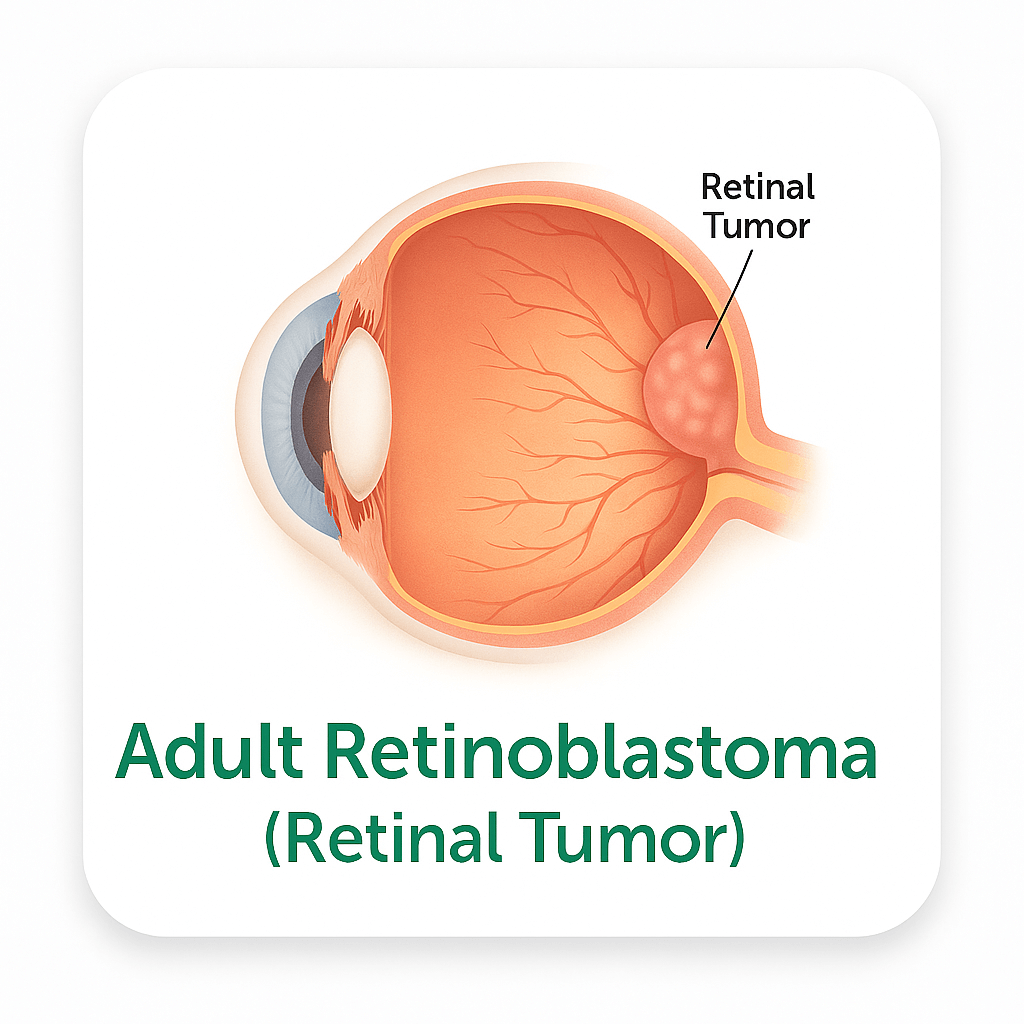
Adult Retinoblastoma (Retinal Tumor)
Main Grouping
Ophthalmologic
Organ System
Eye,retina,optic nerve,central nervous system
Cell Origin
Retinal cells, cone photoreceptor precursor cells.
Pathways Affected
Retinoblastoma involves biallelic RB1 tumor suppressor inactivation as the defining molecular founding event, with secondary pathway dysregulation through E2F1 transcriptional activation, PI3K/AKT/mTOR axis, MAPK/ERK, MDM2-p53 pathway, MYCN amplification, and VEGF angiogenesis dysregulation. The RB1/E2F cell cycle checkpoint pathway is the central defining pathway in retinoblastoma; pRB normally sequesters E2F transcription factors in G1 through direct binding, preventing transcription of S-phase entry genes; biallelic RB1 loss releases constitutive E2F activity driving continuous S-phase entry in retinal progenitors; E2F1 is specifically activated by RB1 loss and drives transcription of cyclin E, DHFR, thymidylate synthase, and DNA replication gene programs; E2F1 also drives MYCN expression contributing to the proliferative drive; quercetin's documented restoration of p21 and p27 CDK inhibitor proteins in retinoblastoma Y79 cells directly counteracts the loss of CDK inhibitor-mediated G1 braking that results from RB1 loss.
The PI3K/AKT/mTOR pathway is activated in retinoblastoma through the E2F1/CKS2/PTEN axis; E2F1 transcriptional activity following RB1 loss upregulates CKS2 (cyclin-dependent kinase regulatory subunit 2), which activates the PI3K/AKT pathway through PTEN regulation; phospho-AKT activation is documented in human retinoblastoma specimens and is correlated with Ki-67 positive proliferating regions; mTORC1 drives protein synthesis and metabolic reprogramming in retinoblastoma cells; quercetin, curcumin, and EGCG all inhibit PI3K/AKT/mTOR signaling in retinoblastoma-relevant cell models. The MAPK/JNK and p38 MAPK pathways are the mechanisms through which quercetin and curcumin specifically induce apoptosis in retinoblastoma Y79 cells; quercetin-induced phosphorylation of JNK and p38 MAPK drives caspase-3/9 activation and mitochondrial membrane potential collapse in Y79 cells (PMC5729262); inhibitor experiments confirmed the JNK and p38 MAPK pathway requirement for quercetin-mediated apoptosis in retinoblastoma cells. The p53 tumor suppressor pathway is abrogated in approximately 10 to 15 percent of retinoblastoma through MDM2 and MDM4 amplification, preventing p53-mediated apoptosis that would normally be triggered by E2F1 overactivity following RB1 loss; dietary phytochemicals including curcumin and quercetin restore p53 pathway activity and FOXO3a-dependent apoptosis in cancer cell models. The STAT3 pathway is aberrantly activated in retinoblastoma, identified by network pharmacology as a core curcumin target in retinoblastoma alongside RB1 and CDKN2A (PMC9325604); STAT3 drives BCL-2 family anti-apoptotic gene expression in retinoblastoma cells. The VEGF angiogenesis pathway is active in retinoblastoma, supporting tumor vascularization particularly in endophytic growth patterns. The Nrf2 antioxidant response pathway is relevant to retinal oxidative stress biology; curcumin activates Nrf2 and upregulates HO-1 and NQO1 in retinal cell models, relevant to the photoreceptor-derived oxidative stress environment where retinoblastoma arises. The retinoic acid signaling pathway is relevant to retinal photoreceptor cell differentiation biology, the cellular context from which retinoblastoma arises; retinoids and their plant precursors (carotenoids) regulate photoreceptor progenitor differentiation pathways disrupted in retinoblastoma.
Description
Retinoblastoma is a malignant intraocular tumor arising from retinal progenitor cells and is defined at the molecular level by biallelic inactivation of the RB1 tumor suppressor gene. While retinoblastoma is the most common primary intraocular malignancy in children worldwide, accounting for approximately 6,000 new cases globally per year with approximately 8,000 children diagnosed annually across all ages, adult-onset retinoblastoma is a distinctly uncommon entity; adult retinoblastoma represents fewer than 2 percent of all retinoblastoma cases, with documented case reports and small case series in the literature spanning patients from the second through seventh decades of life.
The molecular pathogenesis of retinoblastoma across all age groups is defined by biallelic RB1 inactivation. The RB1 gene at chromosome 13q14.2 encodes the 928-amino acid retinoblastoma protein (pRB), which functions as a critical cell cycle checkpoint gatekeeper by binding E2F family transcription factors in its hypophosphorylated form during G1 phase, preventing their transcriptional activation of S-phase entry genes including thymidylate synthase, cyclin E, and DHFR; when CDK4/6-cyclin D phosphorylates pRB, E2F factors are released to drive S-phase gene programs; loss of both RB1 alleles eliminates pRB, resulting in constitutive E2F-driven cell cycle progression in retinal progenitors. Hereditary retinoblastoma (approximately 40% of cases) results from germline RB1 mutation in one allele inherited in an autosomal dominant pattern, with subsequent somatic loss of the remaining wild-type allele required for tumor initiation; germline RB1 carriers have approximately 90% lifetime risk of developing retinoblastoma and are at substantially elevated risk for second primary cancers. Non-hereditary retinoblastoma (approximately 60% of cases) results from two somatic RB1 mutations occurring independently within a single retinal progenitor cell.
The secondary molecular alterations in retinoblastoma provide the context for plant phytochemical research. MYCN amplification drives extreme proliferative capacity in a subset of retinoblastoma; E2F1 transcriptional programs following RB1 loss upregulate cell cycle, DNA replication, and survival genes; MDM2/MDM4 amplification abrogates p53-mediated apoptosis; and PI3K/AKT pathway activation through E2F1/CKS2/PTEN axis disruption drives survival signaling. Quercetin has directly documented anti-retinoblastoma activity in Y79 retinoblastoma cells, inducing G1 cell cycle arrest through CDK2/6 and cyclin D3 downregulation and CDK inhibitor p21 and p27 upregulation, and inducing apoptosis through JNK and p38 MAPK pathway activation and caspase-3/9 activation in the mitochondrial pathway (PMC5729262). Curcumin has documented anti-retinoblastoma activity in Y79 cells through JNK/p38 MAPK pathway activation, G1 arrest via cyclin D3/CDK downregulation and p21/p27 upregulation, and caspase-9/-3-mediated apoptosis (PMID 27432244). A network pharmacology analysis identified RB1, STAT3, and CDKN2A as core curcumin targets in retinoblastoma (PMC9325604).
Plant-Based Description
Whole-food plant-based dietary patterns provide nutrients and phytochemicals with documented activity relevant to retinoblastoma through direct retinoblastoma cell line activity, CDK inhibitor restoration counteracting RB1-loss-driven cell cycle dysregulation, JNK/p38 MAPK-mediated apoptosis induction, PI3K/AKT/mTOR inhibition, STAT3 suppression, p53 pathway support, Nrf2/ARE retinal antioxidant activation, and VEGF angiogenesis blockade. Quercetin from yellow onions, kale, and apples has the most directly documented anti-retinoblastoma evidence in Y79 retinoblastoma cells (PMC5729262): reducing Y79 cell viability, arresting G1 phase through CDK2/6 and cyclin D3 downregulation and p21/p27 elevation, inducing apoptosis through JNK and p38 MAPK activation and caspase-3/9-mediated mitochondrial pathway, and collapsing mitochondrial membrane potential in Y79 retinoblastoma cells. Curcumin from turmeric has documented anti-retinoblastoma activity in Y79 cells through JNK/p38 MAPK activation, G1 arrest, and caspase-mediated apoptosis (PMID 27432244), with network pharmacology confirming RB1, STAT3, and CDKN2A as core curcumin targets in retinoblastoma (PMC9325604). EGCG from green tea inhibits PI3K/AKT and STAT3 in cancer cell models relevant to retinoblastoma pathway biology. Lutein and zeaxanthin from leafy greens are the dietary carotenoids that accumulate selectively in the macula of the retina where they serve as antioxidants against light-induced oxidative stress, directly relevant to the retinal photoreceptor oxidative environment in which retinoblastoma arises. Beta-carotene provides vitamin A precursor activity directly relevant to retinoic acid signaling in photoreceptor progenitor differentiation. Sulforaphane from cruciferous vegetables activates Nrf2 in retinal cells.
Plant Chemistry Detail
Quercetin from yellow onions, kale, and apples is the most directly documented plant phytochemical with published evidence in retinoblastoma cell lines. A study published in BMC Complementary Medicine and Therapies (PMC5729262) documented quercetin in Y79 retinoblastoma cells: quercetin (0-100 μM) reduced Y79 cell viability in a dose-dependent manner; induced G1 phase cell cycle arrest through decreasing expression levels of CDK2, CDK6, and cyclin D3 and increasing levels of both CDK inhibitor proteins p21 and p27; induced apoptosis of Y79 cells through activation of both caspases-3 and -9; caused collapse in mitochondrial membrane potential in Y79 cells by flow cytometry; confirmed phosphorylation of JNK and p38 MAPK by western blot; and demonstrated through inhibitor experiments that JNK and p38 MAPK pathway inhibitors suppressed quercetin-mediated caspase-3/9 activation and apoptosis, confirming the mechanistic requirement of JNK and p38 MAPK for quercetin's anti-retinoblastoma apoptosis activity; the CDK2/6 and cyclin D3 downregulation by quercetin directly targets the cell cycle machinery dysregulated by RB1 loss, and the p21/p27 elevation restores the CDK inhibitor-mediated G1 braking eliminated by biallelic RB1 inactivation.
Curcumin from turmeric has published anti-retinoblastoma activity in Y79 retinoblastoma cells (PMID 27432244): curcumin reduced Y79 cell viability, caused G1 phase arrest through downregulating cyclin D3, CDK2, and CDK6 and upregulating p21 and p27, induced apoptosis through activation of caspases-9 and -3, and induced phosphorylation of JNK and p38 MAPK; these data confirmed that curcumin's anti-retinoblastoma mechanism shares the JNK/p38 MAPK apoptosis pathway with quercetin in Y79 cells. A network pharmacology study (PMC9325604) identified RB1, STAT3, and CDKN2A as the three core curcumin targets in retinoblastoma, with molecular docking confirming significant curcumin binding affinity for all three targets, and the curcumin-CDKN2A binding energy showing the highest affinity; CDKN2A encodes p16INK4a, the CDK4/6 inhibitor that protects pRB from phosphorylation and cell cycle entry — its restoration by curcumin directly targets the RB1 pathway biology.
EGCG from green tea inhibits PI3K/AKT signaling in cancer cell models, relevant to the documented PI3K/AKT activation in human retinoblastoma specimens through the E2F1/CKS2/PTEN axis; EGCG also inhibits STAT3, identified as a core curcumin and anti-retinoblastoma target. Lutein and zeaxanthin, the macular carotenoids found in kale, spinach, and collard greens, accumulate selectively in the retina where they form the macular pigment that provides antioxidant protection and blue-light filtering in the central retina where photoreceptor cone cells, the cell of origin for retinoblastoma, are most dense. Beta-carotene from carrot, sweet potato, and kale provides plant-derived vitamin A precursor activity relevant to retinoic acid receptor-mediated photoreceptor differentiation pathways in retinal progenitors. Sulforaphane from cruciferous vegetables activates Nrf2/ARE antioxidant response in retinal cell models, upregulating HO-1 and NQO1 to protect against the elevated oxidative stress characteristic of the retinal photoreceptor environment. Resveratrol from grapes inhibits PI3K/AKT and STAT3 and has documented anti-proliferative activity in ocular cancer cell models. Beta-glucans from shiitake and maitake mushrooms modulate innate immune signaling relevant to the immune tumor microenvironment of retinoblastoma.
Nutritional Focus
Nutritional focus in retinoblastoma research is led by quercetin from yellow onions and kale, with the most directly documented anti-retinoblastoma evidence from a published BMC Complementary Medicine and Therapies study (PMC5729262) in Y79 retinoblastoma cells documenting dose-dependent reduction of Y79 cell viability, G1 phase cell cycle arrest through CDK2/CDK6/cyclin D3 downregulation and p21/p27 CDK inhibitor elevation directly restoring the G1 braking eliminated by RB1 loss, mitochondrial membrane potential collapse, apoptosis through JNK and p38 MAPK activation and caspase-3/9 activation, with inhibitor experiments confirming JNK and p38 MAPK as mechanistically required for quercetin-mediated apoptosis; curcumin from turmeric with documented anti-retinoblastoma activity in Y79 cells through JNK/p38 MAPK activation, G1 arrest, and caspase-9/3-mediated apoptosis (PMID 27432244), with network pharmacology confirming RB1, STAT3, and CDKN2A as core curcumin targets in retinoblastoma with significant molecular docking binding affinity particularly for CDKN2A (PMC9325604); EGCG from green tea inhibiting PI3K/AKT and STAT3 relevant to the documented phospho-AKT activation in human retinoblastoma specimens and STAT3 overexpression in retinoblastoma; sulforaphane from cruciferous vegetables activating Nrf2/HO-1/NQO1 antioxidant protection in retinal cells directly relevant to the high oxidative stress environment of the photoreceptor cone cells that are the retinoblastoma cell of origin; lutein and zeaxanthin from kale, spinach, and collard greens as the dietary carotenoids that accumulate selectively in the retinal macula protecting cone photoreceptors from light-induced oxidative stress; beta-carotene from carrot and sweet potato providing vitamin A precursor relevant to retinoic acid receptor-mediated differentiation signaling in retinal progenitor cells; and folate from leafy greens and legumes supporting SAM-cycle methionine chemistry relevant to the epigenetic tumor suppressor gene promoter hypermethylation documented in retinoblastoma.
Research Notes
Retinoblastoma epidemiology: approximately 6,000-8,000 new cases globally per year; predominantly childhood (>95% diagnosed before age 5); adult retinoblastoma (<2% of cases) documented in case reports and small series; male:female approximately 1:1; hereditary retinoblastoma (approximately 40%) from germline RB1 mutation with approximately 90% lifetime penetrance for bilateral disease; non-hereditary (approximately 60%) from two somatic RB1 mutations in one retinal cell; IIRC classification groups A-E by tumor characteristics. RB1 molecular biology: RB1 at chromosome 13q14.2 encodes pRB which sequesters E2F transcription factors in G1; biallelic loss releases constitutive E2F activity driving S-phase genes and MYCN; secondary alterations include MDM2/MDM4 amplification (~10-15%), MYCN amplification (~2%), PI3K/AKT activation through E2F1/CKS2/PTEN axis, STAT3 activation, VEGF overexpression.
Quercetin Y79 retinoblastoma (PMC5729262): reduced Y79 cell viability dose-dependently; G1 arrest via CDK2/6 and cyclin D3 downregulation, p21/p27 upregulation; apoptosis via caspases-3/9; mitochondrial membrane potential collapse; JNK and p38 MAPK phosphorylation by western blot; JNK and p38 MAPK inhibitor experiments confirmed mechanistic requirement for quercetin-mediated apoptosis. Curcumin Y79 retinoblastoma (PMID 27432244): reduced Y79 viability; G1 arrest via cyclin D3/CDK2/6 downregulation and p21/p27 upregulation; caspase-9/-3 apoptosis; JNK and p38 MAPK activation. Curcumin network pharmacology retinoblastoma (PMC9325604): RB1, STAT3, CDKN2A identified as core targets; CDKN2A showed highest curcumin binding affinity by molecular docking.
Notes Visibility
show
Key Foods
Kale,Spinach,Broccoli,Brussels Sprouts,Cauliflower,Carrot,Sweet Potato,Tomato,Yellow Onion,Garlic,Collard Greens,Apple,Blueberry,Pomegranate,Grape,Raspberry,Strawberry,Orange,Mango,Soybeans,Edamame,Green Lentils,Black Beans,Chickpeas,Brown Rice,Quinoa,Oats,Wild Rice,Rye Berries,Sorghum,Walnut,Almond,Brazil Nut,Pumpkin Seeds,Flaxseed,Chia Seeds,Sesame Seeds,Hemp Seeds,Shiitake,Maitake,Cremini,Portobello,Lions Mane,Green Tea,Turmeric,Ginger,Black Pepper,Garlic Powder,Parsley,Rosemary,Oregano, Leek,Avocado,Artichoke,Radish,Tangerine, Red Onion
Linked Nutrients
vitamin-a,vitamin-c,vitamin-e,vitamin-d3,vitamin-b9,vitamin-b6,selenium,zinc,magnesium,calcium,potassium,iron,quercetin,curcumin,egcg,sulforaphane,resveratrol,lutein,zeaxanthin,beta-carotene,anthocyanins,beta-glucans,dietary-fiber,plant-ala-omega3
Last Updated
2025-10-13 09:50:53