
ID
34
Cancer Name
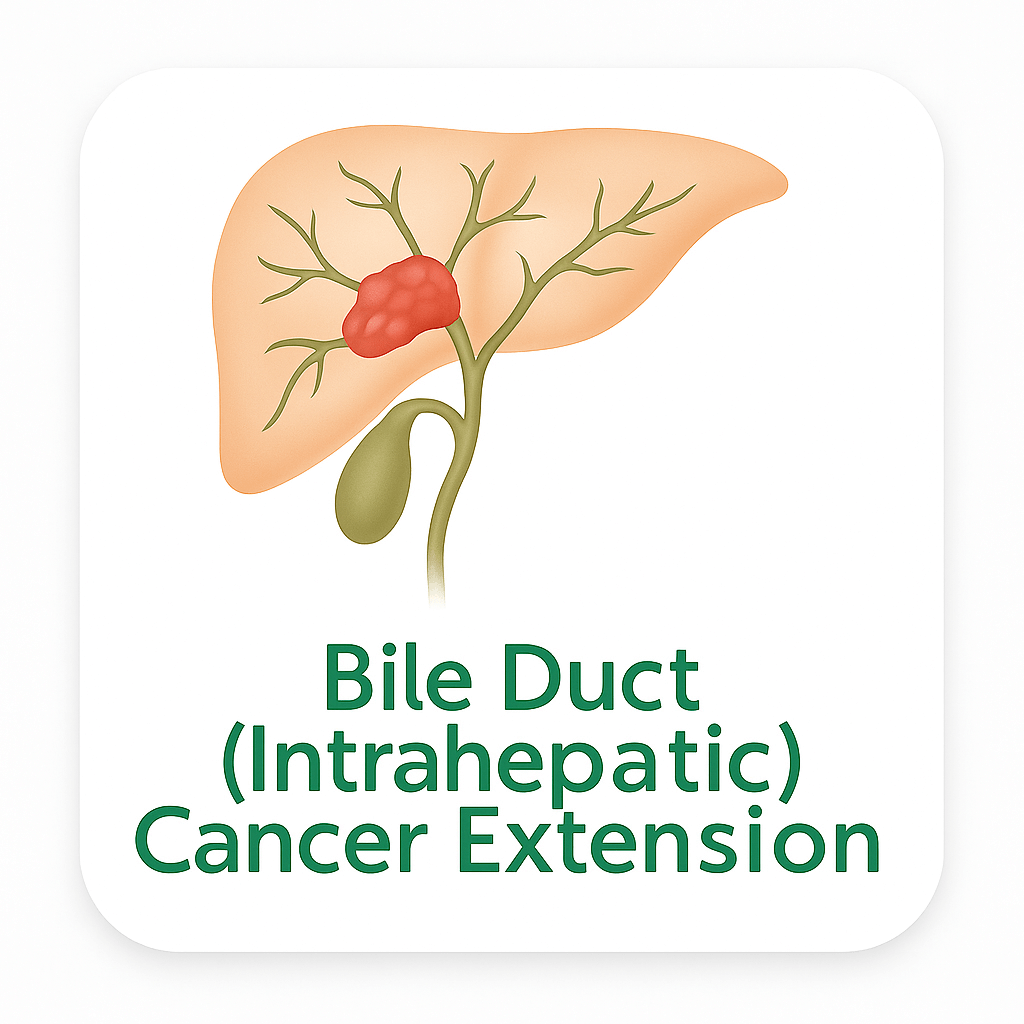
Bile Duct (Intrahepatic) Cancer Extension
Main Grouping
Digestive
Organ System
Intrahepatic bile ducts,liver,hepatobiliary system.
Cell Origin
Cholangiocyte epithelium
Pathways Affected
Intrahepatic cholangiocarcinoma involves a multi-pathway oncogenic landscape with FGFR2 fusion-driven and IDH1-mutant pathway dysregulation as the defining molecular axes, complemented by constitutive PI3K/AKT/mTOR and MAPK/ERK activation, NF-kB inflammatory signaling, TGF-beta-mediated desmoplasia, VEGF angiogenesis, and extensive epigenetic silencing through the IDH1-2-HG-CIMP axis.
The FGFR2 fusion signaling pathway is the most clinically significant targetable alteration in iCCA, present in approximately 10 to 22 percent of cases predominantly in small-duct iCCA; FGFR2 fusion proteins constitutively dimerize independently of ligand, activating downstream MAPK/ERK, PI3K/AKT/mTOR, and STAT3 signaling through tyrosine kinase activation; sulforaphane, quercetin, and EGCG all have documented inhibitory activity against FGFR/MAPK/ERK and PI3K/AKT downstream signaling relevant to FGFR2 fusion-positive iCCA.
The IDH1 mutant metabolic pathway is the second major iCCA defining alteration, present in approximately 20 to 30 percent of cases; mutant IDH1 produces the oncometabolite 2-hydroxyglutarate (2-HG), which competitively inhibits alpha-ketoglutarate-dependent TET2 DNA demethylase and KDM histone demethylase enzymes, driving the CpG island methylator phenotype (CIMP) with widespread epigenetic silencing of tumor suppressor genes including CDH13, RASSF1A, and SOCS1; the TCA cycle IDH1 branch point directly connects to TCA cycle anaplerosis affected by this mutation; folate, vitamin C, and methionine cycle integrity from plant foods are relevant to the epigenetic methylation chemistry disrupted by IDH1-2-HG.
The PI3K/AKT/mTOR pathway is activated in iCCA through PIK3CA mutations (7-14%), PTEN alterations, FGFR2 fusion downstream signaling, and KRAS mutation-driven PI3K activation; mTORC1 drives protein synthesis and metabolic reprogramming in iCCA cells; curcumin, quercetin, and EGCG all inhibit PI3K/AKT/mTOR multi-site signaling in CCA-relevant cell models. The NF-kB signaling pathway is constitutively activated in CCA through chronic biliary inflammation, and curcumin abolished constitutive NF-kB activation in three CCA cell lines including blocking nuclear translocation, DNA binding, and downstream p65 phosphorylation (PMC3165121). The MAPK/ERK pathway is activated through KRAS mutations (5-15%), BRAF mutations (5-7%), FGFR2 fusion downstream signaling, and NRAS mutations in iCCA; curcumin, quercetin, and EGCG all inhibit MAPK/ERK signaling. The JAK/STAT pathway is activated through IL-6 autocrine signaling, FGFR2 fusion downstream STAT3 activation, and ARID1A loss releasing STAT3 pathway inhibition; curcumin suppressed STAT3 activation in CCA cells (PMC3165121). The TGF-beta/SMAD pathway drives the dense desmoplastic stroma that accounts for the majority of iCCA tumor mass and mediates EMT enabling invasion and metastasis; SMAD4 mutations are present in large-duct iCCA. The bile acid synthesis and xenobiotic metabolism pathways are directly relevant to the hepatobiliary tissue context of iCCA and the chronic bile acid-mediated inflammatory carcinogenesis in biliary epithelium. The Wnt/beta-catenin pathway is dysregulated in a subset of iCCA contributing to cholangiocyte proliferation and stemness. The Nrf2 antioxidant response pathway is suppressed in iCCA cells, making sulforaphane and curcumin Nrf2 activators directly relevant to restoring antioxidant defense in cholangiocarcinoma cells. The methionine/SAM cycle is relevant to the IDH1-2-HG-driven CIMP hypermethylation phenomenon.
Description
Intrahepatic cholangiocarcinoma (iCCA), also designated as bile duct cancer with intrahepatic extension, is a primary malignancy of the biliary epithelium arising within the liver parenchyma from cholangiocytes lining the intrahepatic bile duct system. It is the second most common primary liver malignancy worldwide after hepatocellular carcinoma, accounting for approximately 10 to 20 percent of primary liver cancers, and represents approximately 20 percent of all cholangiocarcinomas across all anatomical subtypes. The global incidence of iCCA has been rising across multiple world regions over the past four decades, a pattern documented across North America, Europe, and Asia. An estimated 7,000 to 8,000 new iCCA cases are diagnosed annually in the United States. The overall 5-year survival rate for iCCA remains poor, at approximately 5 to 15 percent for all stages combined, with resectable disease showing 5-year survival of approximately 20 to 40 percent and advanced-stage disease 5-year survival of less than 10 percent.
iCCA has two molecularly and clinically distinct subtypes based on anatomical origin within the intrahepatic biliary tree. Small-duct iCCA arises from peripheral intrahepatic bile ducts and is characterized by IDH1/2 mutations (approximately 20 percent) and FGFR2 gene fusions (approximately 10 to 15 percent in Western series), which are mutually exclusive and define two distinct actionable molecular subgroups; small-duct iCCA also shows frequent BAP1 mutations (approximately 20 percent) and ARID1A mutations (approximately 22 percent). Large-duct iCCA arises from larger intrahepatic bile ducts near the hepatic hilum and shows a molecular profile resembling perihilar CCA, with enrichment of KRAS mutations, TP53 mutations, SMAD4 alterations, and MDM2 amplification.
The comprehensive molecular profile of iCCA across both subtypes includes ARID1A (22-23%), BAP1 (20-23%), IDH1 (20-30%), TP53 (11-20%), FGFR2 fusions (10-22%), KRAS (5-15%), CDKN2A/B loss (15%), PIK3CA (7-14%), IDH2 (9%), ATM (9%), BRAF (5-7%), and SMAD4 alterations. IDH1 mutations produce the oncometabolite 2-hydroxyglutarate (2-HG), which competitively inhibits alpha-ketoglutarate-dependent dioxygenase enzymes including TET DNA demethylases and histone demethylases, causing a CpG island methylator phenotype (CIMP) with widespread epigenetic silencing of tumor suppressor genes and blocked cholangiocyte differentiation. FGFR2 fusion proteins activate constitutive downstream MAPK/ERK and PI3K/AKT/mTOR signaling through dimerization-independent kinase activation. ARID1A loss disrupts SWI/SNF chromatin remodeling complex function, inhibiting PI3K/AKT and JAK/STAT pathway regulation and impairing DNA repair. BAP1 is a deubiquitylase regulating histone H2A ubiquitylation and chromatin structure.
Multiple plant phytochemicals have documented anti-CCA activity. Curcumin has the most directly confirmed activity in cholangiocarcinoma cell lines, with a published study demonstrating curcumin inhibited proliferation and induced apoptosis in three CCA cell lines (KKU100, KKU-M156, KKU-M213) through NF-kB abolishment, STAT3 suppression, caspase activation, and PARP cleavage (PMC3165121). Quercetin, EGCG, and sulforaphane all inhibit the PI3K/AKT/mTOR, MAPK/ERK, and NF-kB pathways that are constitutively activated in iCCA through FGFR2 fusions, PIK3CA mutations, and KRAS mutations.
Plant-Based Description
Whole-food plant-based dietary patterns provide nutrients and phytochemicals with documented activity relevant to intrahepatic cholangiocarcinoma through direct CCA cell line anti-proliferative activity, NF-kB abolishment, PI3K/AKT/mTOR inhibition, MAPK/ERK suppression, STAT3 inhibition, Nrf2 antioxidant restoration, TGF-beta/EMT pathway modulation, apoptosis induction through caspase and PARP cleavage, and epigenetic DNMT inhibition targeting the IDH1-2-HG-driven CIMP hypermethylation in iCCA. Curcumin from turmeric has the most directly documented anti-CCA evidence (PMC3165121) in three CCA cell lines (KKU100, KKU-M156, KKU-M213) demonstrating NF-kB abolishment, STAT3 suppression, caspase activation, and PARP cleavage. Quercetin from onions and kale inhibits PI3K/AKT/mTOR, NF-kB, and MAPK/ERK relevant to FGFR2 fusion and KRAS-mutant iCCA signaling. EGCG from green tea inhibits FGFR2 downstream MAPK/ERK, PI3K/AKT, and STAT3 in cancer cell models directly relevant to the dominant FGFR2 fusion-positive iCCA subtype. Sulforaphane from cruciferous vegetables activates Nrf2 and inhibits NF-kB in hepatobiliary cell models. Dietary folate from leafy greens and legumes supports one-carbon SAM-cycle methylation chemistry directly relevant to the IDH1-2-HG-CIMP epigenetic landscape of iCCA. Beta-glucans from shiitake and maitake mushrooms modulate innate immune signaling relevant to the immunosuppressive iCCA tumor microenvironment characterized by abundant cancer-associated fibroblasts and M2-polarized tumor-associated macrophages in the desmoplastic stroma. Whole grains provide fiber, selenium, B vitamins, and phytate compounds relevant to hepatobiliary epithelial cell integrity and detoxification capacity.
Plant Chemistry Detail
Curcumin from turmeric has the most directly documented anti-cholangiocarcinoma evidence in published literature. A study published in Oncology Reports (PMC3165121) used three Thai CCA cell lines (KKU100, KKU-M156, and KKU-M213) to demonstrate that curcumin: inhibited proliferation via mitochondrial dehydrogenase activity assay; induced apoptosis confirmed by phosphatidylserine externalization, esterase staining, caspase activation, and PARP cleavage; showed anti-colony-forming activity; and in mechanistic analysis revealed that all three CCA cell lines exhibited constitutively active NF-kB, which curcumin abolished as indicated by DNA binding suppression, blocked nuclear translocation, and p65 phosphorylation inhibition; curcumin also suppressed STAT3 signaling in CCA cells; these findings confirm curcumin's multi-mechanism anti-CCA activity directly targeting the constitutive NF-kB activation that drives anti-apoptotic BCL-2 family expression, cytokine production, and survival in iCCA.
Quercetin from yellow onions, kale, and apples inhibits PI3K/AKT/mTOR signaling directly relevant to PIK3CA mutations present in approximately 7 to 14 percent of iCCA; quercetin inhibits MAPK/ERK signaling activated through KRAS mutations (5-15%), BRAF mutations (5-7%), and FGFR2 fusion downstream kinase cascades in iCCA; quercetin also inhibits STAT3 and NF-kB through multi-site pathway suppression, induces G2/M arrest through CDK inhibitor elevation, and induces apoptosis through BCL-2 family modulation and caspase activation in biliary-relevant cancer cell models. EGCG from green tea inhibits FGFR downstream MAPK/ERK signaling relevant to FGFR2 fusion-positive iCCA, the most clinically important targetable alteration in iCCA; EGCG also inhibits PI3K/AKT/mTOR, suppresses STAT3 through JAK/STAT axis inhibition, and suppresses NF-kB nuclear translocation; EGCG activates p53 and PTEN/p21 promoting apoptosis. Sulforaphane from broccoli, Brussels sprouts, and kale activates Nrf2/ARE antioxidant response and inhibits HDAC/DNMT activity, which is directly relevant to the IDH1 mutant-driven CpG island methylator phenotype causing epigenetic silencing of tumor suppressor genes in approximately 20 percent of iCCA; sulforaphane additionally inhibits NF-kB and has documented anti-proliferative activity in hepatobiliary cancer cell models. Resveratrol from grapes inhibits PI3K/AKT, NF-kB, and COX-2/prostaglandin inflammatory signaling relevant to the chronic biliary inflammation-driven carcinogenesis in iCCA. Ellagic acid from pomegranate inhibits PI3K/AKT and NF-kB in hepatocellular and biliary-relevant cancer cell models. Allicin and diallyl compounds from garlic inhibit NF-kB and MAPK/ERK and have anti-proliferative activity in hepatobiliary cancer models. Beta-glucans from shiitake and maitake mushrooms activate innate immune TLR/dectin-1 signaling, promoting M1 macrophage polarization that counteracts the M2 tumor-associated macrophage phenotype dominant in the immunosuppressive desmoplastic stroma of iCCA. Genistein from soybeans inhibits NF-kB, PI3K/AKT, and STAT3 signaling in hepatobiliary cancer cell models.
Nutritional Focus
Nutritional focus in intrahepatic cholangiocarcinoma research is led by curcumin from turmeric, with the most directly documented anti-CCA evidence from a published Oncology Reports study (PMC3165121) in three CCA cell lines (KKU100, KKU-M156, KKU-M213) demonstrating inhibition of proliferation confirmed by mitochondrial dehydrogenase activity, induction of apoptosis through phosphatidylserine externalization, esterase staining, caspase activation, and PARP cleavage, confirmation of anti-colony-forming activity, and mechanistic demonstration that curcumin abolished constitutive NF-kB activation in all three CCA cell lines through DNA binding suppression, blocked nuclear translocation, and p65 phosphorylation inhibition, with additional STAT3 suppression; this directly targets the constitutive NF-kB and STAT3 activation that drives anti-apoptotic gene expression, cytokine production, and survival in iCCA cells; quercetin from yellow onions and kale inhibiting PI3K/AKT/mTOR, MAPK/ERK, NF-kB, and STAT3 relevant to PIK3CA mutations, FGFR2 fusion downstream MAPK/ERK and PI3K/AKT, and KRAS mutation-driven signaling in iCCA; EGCG from green tea inhibiting FGFR downstream MAPK/ERK relevant to FGFR2 fusion-positive iCCA, the most important actionable alteration in Western iCCA, and additionally suppressing PI3K/AKT, STAT3, and NF-kB with p53 and PTEN/p21 restoration driving apoptosis; sulforaphane from cruciferous vegetables activating Nrf2/ARE and inhibiting DNMT activity targeting the IDH1-mutant-driven CpG island methylator phenotype epigenetic silencing of tumor suppressor genes in approximately 20 to 30 percent of iCCA; folate from leafy greens and legumes supporting SAM-cycle methionine chemistry providing substrate for DNMT-mediated methylation at the IDH1-2-HG-driven CIMP loci; genistein from soybeans inhibiting NF-kB, PI3K/AKT, and STAT3 in hepatobiliary cancer models; and beta-glucans from shiitake and maitake mushrooms activating innate immune TLR/dectin-1 signaling promoting M1 macrophage polarization in the immunosuppressive desmoplastic iCCA stroma dominated by cancer-associated fibroblasts and M2 tumor-associated macrophages.
Research Notes
iCCA epidemiology: second most common primary liver malignancy after HCC; approximately 10-20% of primary liver cancers; approximately 20% of all cholangiocarcinomas; approximately 7,000-8,000 new cases per year in the United States; rising incidence across North America, Europe, and Asia over past four decades; 5-year overall survival approximately 5-15% all stages; resectable disease 5-year survival approximately 20-40%; advanced disease 5-year survival less than 10%. Morphological subtypes: mass-forming (most common), periductal infiltrating, intraductal (best prognosis). Molecular profile: IDH1 (20-30%), ARID1A (22-23%), BAP1 (20-23%), TP53 (11-20%), FGFR2 fusions (10-22%), KRAS (5-15%), CDKN2A/B (15%), PIK3CA (7-14%), IDH2 (9%), ATM (9%), BRAF (5-7%), SMAD4 (large-duct subtype). IDH1/2 mutations and FGFR2 fusions are mutually exclusive and define small-duct iCCA. IDH1 mutation produces 2-HG oncometabolite inhibiting TET2 and KDM histone demethylases driving CIMP epigenetic silencing. BAP1 and ARID1A (SWI/SNF) are epigenetic regulatory tumor suppressors.
Curcumin anti-CCA (PMC3165121): three CCA cell lines KKU100, KKU-M156, KKU-M213; curcumin inhibited proliferation (mitochondrial dehydrogenase assay); induced apoptosis (phosphatidylserine externalization, esterase staining, caspase activation, PARP cleavage); anti-colony-forming activity confirmed; all three CCA cell lines showed constitutively active NF-kB; curcumin abolished NF-kB activation (DNA binding, nuclear translocation, p65 phosphorylation); curcumin suppressed STAT3 activation.
Notes Visibility
show
Key Foods
Turmeric,Broccoli,Kale,Spinach,Brussels Sprouts,Cauliflower,Garlic,Yellow Onion,Carrot,Beetroot,Artichoke,Dandelion Greens,Apple,Blueberry,Pomegranate,Grape,Raspberry,Orange,Lemon,Soybeans,Edamame,Green Lentils,Black Beans,Chickpeas,Brown Rice,Quinoa,Oats,Wild Rice,Sorghum,Rye Berries,Walnut,Almond,Brazil Nut,Pumpkin Seeds,Flaxseed,Chia Seeds,Sesame Seeds,Hemp Seeds,Shiitake,Maitake,Cremini,Portobello,Lions Mane,Green Tea,Ginger,Black Pepper,Garlic Powder,Parsley,Rosemary,Oregano, Leek,Avocado,Radish,Tangerine, Red Onion
Linked Nutrients
vitamin-c,vitamin-e,vitamin-d3,vitamin-b9,vitamin-b6,vitamin-a,selenium,zinc,magnesium,calcium,potassium,iron,curcumin,quercetin,egcg,sulforaphane,resveratrol,genistein,beta-carotene,anthocyanins,beta-glucans,dietary-fiber,plant-ala-omega3
Last Updated
2025-10-13 09:50:53

