
ID
35
Cancer Name
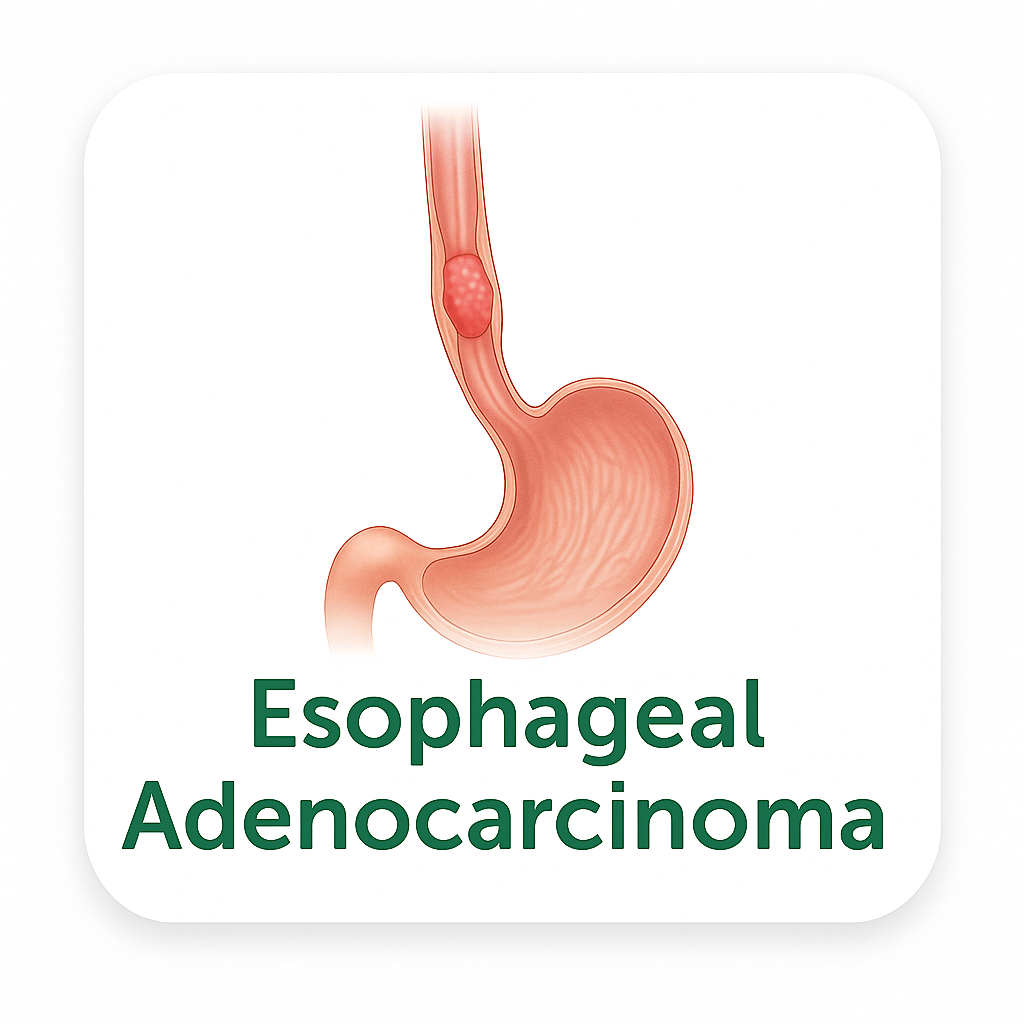
Esophageal Adenocarcinoma
Main Grouping
Digestive
Organ System
Esophagus (lower)
Cell Origin
Glandular epithelium
Pathways Affected
Esophageal adenocarcinoma involves a multi-pathway oncogenic landscape driven by the Barrett's metaplasia-dysplasia-carcinoma sequence, with NF-kB and COX-2/prostaglandin inflammatory signaling, EGFR/MAPK/ERK, PI3K/AKT/mTOR, TP53/cell cycle checkpoint dysfunction, and VEGF angiogenesis as the dominant axes. The NF-kB signaling pathway is constitutively activated in EAC, with the most directly documented evidence from a study (PMC2847317) using oligonucleotide microarray analysis of 46 Barrett's/EAC tissue samples showing significantly elevated REL (33%), RELA (40%), RELB (40%), and NFkB2 (47%) mRNA expression in EAC compared with Barrett's metaplasia, along with IKKbeta, IKKgamma, and IKKepsilon upregulation; concomitantly, effector caspases CASP3 (30%), CASP6 (47%), and CASP7 (60%) were downregulated in EAC compared with Barrett's metaplasia; curcumin in Flo-1 and OE33 EAC cell lines suppressed NF-kB activity, restored caspase expression, induced apoptosis, and increased chemosensitivity; NF-kB drives anti-apoptotic gene expression including BCL-2, BCL-XL, XIAP, and IL-8 overexpression documented 4-fold elevated in Barrett's and EAC.
The COX-2/prostaglandin E2 pathway is overexpressed in Barrett's metaplasia and EAC; acid and bile exposure in GERD activates NF-kB driving COX-2 upregulation; COX-2 produces PGE2 that modulates cell proliferation, resistance to apoptosis, angiogenesis, and tumor invasion in EAC; dietary phytochemicals including quercetin, curcumin, and resveratrol inhibit COX-2 and PGE2 production in esophageal cell models. The EGFR/MAPK/ERK pathway is activated through EGFR amplification in approximately 8 to 10 percent of EAC and through upstream TGF-alpha and EGFR ligand overexpression; EGFR drives downstream RAS/MAPK/ERK and PI3K/AKT proliferative and survival signaling; HER2 (ERBB2) amplification in 17 to 32 percent of EAC provides additional RTK-driven signaling; quercetin and EGCG inhibit EGFR and downstream MAPK/ERK signaling in esophageal cancer cell models. The PI3K/AKT/mTOR pathway is activated through PIK3CA mutations in approximately 10 to 15 percent, PTEN loss, and upstream EGFR/HER2 signaling; mTORC1 drives anabolic protein synthesis and metabolic reprogramming in EAC cells; curcumin, quercetin, and resveratrol all inhibit PI3K/AKT/mTOR. The p53 tumor suppressor pathway is disrupted through TP53 mutations in approximately 72 percent of EAC, eliminating DNA damage checkpoint responses and enabling the aneuploidy and chromosomal instability that characterize EAC; CDKN2A inactivation in 75 to 90 percent eliminates p16/CDK4-6/RB cell cycle checkpoint control, releasing CDK4/6 activity and driving G1/S cell cycle entry; sulforaphane and curcumin restore p53 pathway activity in esophageal cancer cell models. The TGF-beta/SMAD pathway drives EMT and desmoplastic stroma formation in EAC; SMAD4 mutations are present in approximately 7 percent of EAC. The Wnt/beta-catenin pathway is activated in a subset of EAC driving glandular differentiation and cancer stem cell phenotype. The hippo signaling pathway is relevant to the gastroesophageal tissue context of EAC. The VEGF angiogenesis pathway is activated through VEGFA amplification in approximately 15 percent of EAC and upstream EGFR/KRAS/NF-kB-driven VEGF transcription; resveratrol suppressed VEGF signaling in esophageal adenocarcinoma models. The bile acid synthesis pathway is directly relevant to bile acid-mediated GERD carcinogenesis driving Barrett's esophagus progression to EAC through NF-kB activation and ROS generation.
Description
Esophageal adenocarcinoma (EAC) is a primary malignancy of the distal esophagus and gastroesophageal junction arising from columnar-lined Barrett's esophagus through a stepwise metaplasia-dysplasia-adenocarcinoma sequence. EAC represents one of the most rapidly rising cancers in Western nations, with the incidence in the United States increasing by more than 600 percent over the past four decades; EAC now accounts for approximately 75 to 80 percent of all esophageal cancers in the United States and other Western nations, while esophageal squamous cell carcinoma (ESCC) predominates in Asia and Africa. An estimated 22,370 new esophageal cancer cases and approximately 16,130 deaths were projected in the United States in 2024. EAC shows a striking male predominance with a male-to-female ratio of approximately 7 to 8:1, and a peak incidence in the sixth to seventh decades of life. The overall 5-year survival rate remains approximately 15 to 20 percent across all stages; localized EAC (stage I) has 5-year survival of approximately 50 percent, regional disease (stage III) approximately 25 percent, and distant metastatic EAC (stage IV) approximately 5 percent.
The precursor lesion Barrett's esophagus is present in approximately 5 to 15 percent of patients with chronic GERD and in approximately 1 to 5 percent of the general adult population in Western countries. The annual risk of EAC development from non-dysplastic Barrett's esophagus is approximately 0.1 to 0.5 percent per year; low-grade dysplasia carries approximately 0.5 to 1 percent annual risk; and high-grade dysplasia carries approximately 5 to 10 percent annual risk of EAC development. The primary risk factors for Barrett's esophagus and EAC include chronic GERD (particularly nocturnal GERD), obesity (BMI greater than 30 associated with approximately 2 to 3-fold increased risk), male sex, white race, smoking (approximately 2-fold increased risk), and absence of a protective effect from fruits and vegetables in observational studies.
The molecular landscape of EAC is dominated by extreme chromosomal instability, making it among the most genomically unstable of all adenocarcinomas. TP53 mutations in approximately 72 percent and CDKN2A inactivation in approximately 75 to 90 percent are the earliest and most frequent events in Barrett's carcinogenesis, providing the loss of cell cycle checkpoint function driving aneuploidy and chromosomal instability. Downstream oncogenic drivers include ERBB2 (HER2) amplification in 17 to 32 percent, EGFR amplification in 8 to 10 percent, VEGFA amplification in 15 percent, KRAS amplification in 13 percent, PIK3CA mutations in 10 to 15 percent, and GATA6 amplification in 12 percent. The NF-kB pathway is constitutively activated in EAC, with expression microarray analysis of 46 Barrett's/EAC tissue samples documenting significant upregulation of REL, RELA, RELB, and NFkB2 along with IKK subunits in EAC compared with Barrett's metaplasia, and inverse downregulation of effector caspases CASP3, CASP6, and CASP7 (PMC2847317). COX-2 is overexpressed in Barrett's metaplasia and EAC, producing prostaglandin E2 (PGE2) that modulates cell proliferation, apoptosis, and tumor invasion. Curcumin has directly confirmed anti-EAC activity in Flo-1 and OE33 EAC cell lines through NF-kB suppression, apoptosis induction, and caspase restoration (PMC2847317), with a Barrett's esophagus pilot study showing doubled apoptotic frequency in curcumin-treated epithelial cells.
Plant-Based Description
Whole-food plant-based dietary patterns provide nutrients and phytochemicals with documented activity relevant to esophageal adenocarcinoma through direct EAC cell line anti-proliferative activity, NF-kB suppression directly countering the constitutive NF-kB activation documented in EAC by microarray analysis, COX-2/PGE2 inhibition reducing the prostaglandin-driven inflammatory carcinogenesis in Barrett's esophagus, EGFR and MAPK/ERK suppression targeting EGFR amplification and HER2-driven signaling, PI3K/AKT/mTOR inhibition, p53 pathway support, Nrf2 antioxidant activation in esophageal mucosal cells, and apoptosis induction restoring the caspase deficit documented in EAC. Curcumin from turmeric has the most directly documented anti-EAC evidence: in Flo-1 and OE33 EAC cell lines it suppressed NF-kB activity and induced apoptosis (PMC2847317); in a Barrett's esophagus pilot study, curcumin supplementation doubled the apoptotic frequency in Barrett's epithelial cells. Resveratrol from grapes has documented anti-EAC activity in OE33, OE19, and FLO-1 EAC cell lines through apoptosis, caspase activation, BCL-2 downregulation, and Ku80 downregulation (PMC8616317). EGCG from green tea was studied in a phase 1b clinical trial of 44 Barrett's esophagus patients, demonstrating clinically significant EGCG accumulation in esophageal tissue. Quercetin from onions and kale inhibits EGFR, COX-2, NF-kB, and PI3K/AKT/mTOR in esophageal cancer cell models. Sulforaphane from cruciferous vegetables activates Nrf2 and inhibits NF-kB in esophageal epithelial cell models. Dietary fiber from whole grains and legumes reduces GERD-associated esophageal acid exposure and regulates the insulin/IGF-1 axis relevant to obesity-driven EAC carcinogenesis. Beta-carotene and vitamin C from fruits and vegetables provide antioxidant protection in esophageal mucosal cells.
Plant Chemistry Detail
Curcumin from turmeric has the most directly documented anti-esophageal adenocarcinoma evidence in published literature. A study published in Cancer Prevention Research (PMC2847317) used oligonucleotide microarray analysis of 46 esophageal tissue samples (Barrett's metaplasia, low-grade dysplasia, high-grade dysplasia, and EAC) to document that NF-kB transcriptional regulators REL, RELA, RELB, and NFkB2 were significantly upregulated in EAC compared with Barrett's metaplasia, along with IKK subunits, while effector caspases CASP3, CASP6, and CASP7 were significantly downregulated in EAC; in Flo-1 and OE33 EAC cell lines, curcumin suppressed NF-kB activity, increased apoptosis, and increased chemosensitivity; and a Barrett's esophagus pilot study demonstrated a doubling of apoptotic frequency in curcumin-treated Barrett's epithelial cells, providing direct clinical translational evidence; additional mechanistic studies confirmed curcumin in esophageal OE33 cell line blocked NF-kB pathway and downstream anti-apoptotic genes BCL-XL, XIAP, and IL-8 at the tissue level through upregulation of IkB expression in Barrett's epithelial cells; curcumin additionally suppressed COX-2 and inflammatory cytokine expression in GERD acid-exposed esophageal epithelial cell lines (PMC6857884).
Resveratrol from grapes has published anti-EAC activity in three EAC cell lines (OE33, OE19, FLO-1) documented in a multilevel profiling study (PMC8616317): resveratrol reduced cancer cell viability, increased apoptotic and caspase-positive cell populations, decreased BCL-2 levels, modulated ROS, and through proteomic profiling identified Ku80 downregulation as a key differentially regulated signaling molecule; resveratrol suppressed N-nitrosomethylbenzylamine-induced esophageal tumorigenesis in F344 rat models; resveratrol inhibited cell cycle progression through S and G2 phases; and resveratrol showed chemopreventive activity against metaplasia initiation and carcinogenic progression in EAC animal models. EGCG from green tea was studied in a phase 1b clinical trial (PMC8381453) of 44 Barrett's esophagus patients treated with green tea-derived polyphenon E over 6 months, demonstrating clinically significant accumulation of EGCG in esophageal tissue at biologically relevant concentrations; EGCG inhibits EGFR kinase activity directly relevant to EGFR amplification present in approximately 8 to 10 percent of EAC; EGCG also inhibits COX-2, NF-kB, PI3K/AKT, and MAPK/ERK in esophageal cancer cell models. Quercetin from yellow onions, kale, and apples inhibits EGFR, HER2 downstream signaling, COX-2 and PGE2 production, NF-kB, PI3K/AKT/mTOR, and MAPK/ERK in esophageal cancer cell models relevant to EAC's multiple RTK amplifications and constitutive NF-kB activity. Sulforaphane from broccoli, Brussels sprouts, and kale activates Nrf2/ARE antioxidant response in esophageal epithelial cells and inhibits NF-kB, providing mucosal protection against acid and bile acid-mediated ROS generation driving Barrett's carcinogenesis. Ellagic acid from pomegranate inhibits NF-kB, COX-2, and PI3K/AKT in esophageal cancer cell models. Beta-glucans from shiitake and maitake mushrooms modulate innate immune signaling relevant to the immunosuppressive EAC tumor microenvironment. Dietary fiber from oats, legumes, and whole grains regulates the insulin/IGF-1 axis and reduces adiposity relevant to the documented obesity-EAC association.
Nutritional Focus
Nutritional focus in esophageal adenocarcinoma research is led by curcumin from turmeric, with the most directly documented anti-EAC evidence from a published Cancer Prevention Research study (PMC2847317) using microarray analysis of 46 Barrett's/EAC tissue samples documenting constitutive NF-kB upregulation (REL 33%, RELA 40%, RELB 40%, NFkB2 47%) alongside IKK subunit upregulation and concomitant effector caspase downregulation (CASP3 30%, CASP6 47%, CASP7 60%) in EAC compared with Barrett's metaplasia, with curcumin in Flo-1 and OE33 EAC cell lines suppressing NF-kB activity, restoring apoptosis, and increasing chemosensitivity, supported by a Barrett's esophagus pilot study showing doubled apoptotic frequency in curcumin-treated Barrett's epithelial cells — directly targeting the constitutive NF-kB axis that drives BCL-XL, XIAP, and IL-8 anti-apoptotic expression in EAC; resveratrol from grapes with published anti-EAC activity in OE33, OE19, and FLO-1 EAC cell lines showing apoptosis induction, caspase activation, BCL-2 downregulation, and Ku80 reduction through multilevel profiling (PMC8616317); EGCG from green tea studied in a phase 1b clinical trial of 44 Barrett's esophagus patients demonstrating clinically significant EGCG accumulation in esophageal tissue, with EGCG inhibiting EGFR, COX-2, PI3K/AKT, and NF-kB; quercetin from yellow onions and kale inhibiting EGFR, HER2, COX-2/PGE2, NF-kB, PI3K/AKT/mTOR, and MAPK/ERK targeting the multiple RTK amplifications in EAC; sulforaphane from cruciferous vegetables activating Nrf2/ARE in esophageal epithelial cells protecting against acid and bile acid-mediated ROS driving Barrett's carcinogenesis; and folate from leafy greens and legumes supporting SAM-cycle methionine chemistry relevant to CDKN2A promoter hypermethylation present in approximately 75 to 90 percent of EAC.
Research Notes
EAC epidemiology: incidence increased greater than 600 percent in the United States over four decades; 75-80% of all esophageal cancers in the US and Western nations; approximately 22,370 new esophageal cancer cases and 16,130 deaths projected in United States 2024; male:female ratio approximately 7-8:1; peak incidence 6th-7th decade; 5-year survival overall approximately 15-20%; stage I approximately 50%; stage III approximately 25%; stage IV approximately 5%. Barrett's esophagus risk of EAC: non-dysplastic BE approximately 0.1-0.5% per year; LGD approximately 0.5-1% per year; HGD approximately 5-10% per year. Major risk factors: chronic GERD, obesity (BMI >30 approximately 2-3x risk), male sex, white race, smoking. EAC molecular landscape (TCGA): TP53 (~72%), CDKN2A inactivation (~75-90%), ERBB2 HER2 amplification (~17-32%), PIK3CA mutations (~10-15%), EGFR amplification (~8-10%), VEGFA amplification (~15%), KRAS amplification (~13%), GATA6 amplification (~12%), SMAD4 mutations (~7%), ARID1A (~9%), CCND1 overexpression; extreme chromosomal instability dominant landscape.
Curcumin anti-EAC (PMC2847317): microarray 46 tissue samples showed NF-kB subunit upregulation and caspase downregulation in EAC vs Barrett's; curcumin in Flo-1 and OE33 EAC cell lines suppressed NF-kB, induced apoptosis, increased chemosensitivity; Barrett's pilot study showed doubled apoptotic frequency. Resveratrol anti-EAC (PMC8616317): OE33, OE19, FLO-1 cell lines; apoptosis induction, BCL-2 downregulation, Ku80 reduction. EGCG Barrett's clinical (PMC8381453): phase 1b 44 Barrett's patients, clinically significant EGCG accumulation in esophageal tissue at 6 months.
Notes Visibility
show
Key Foods
Turmeric,Broccoli,Kale,Spinach,Brussels Sprouts,Cauliflower,Garlic,Yellow Onion,Carrot,Tomato,Beetroot,Apple,Blueberry,Pomegranate,Grape,Raspberry,Strawberry,Orange,Lemon,Soybeans,Edamame,Green Lentils,Black Beans,Chickpeas,Brown Rice,Quinoa,Oats,Wild Rice,Sorghum,Rye Berries,Walnut,Almond,Brazil Nut,Pumpkin Seeds,Flaxseed,Chia Seeds,Sesame Seeds,Hemp Seeds,Shiitake,Maitake,Cremini,Portobello,Lions Mane,Green Tea,Ginger,Black Pepper,Garlic Powder,Parsley,Rosemary,Oregano, Leek,Avocado,Artichoke,Radish,Tangerine, Red Onion
Linked Nutrients
vitamin-c,vitamin-e,vitamin-d3,vitamin-b9,vitamin-b6,vitamin-a,selenium,zinc,magnesium,calcium,potassium,iron,curcumin,quercetin,resveratrol,egcg,sulforaphane,beta-carotene,anthocyanins,beta-glucans,dietary-fiber,plant-ala-omega3
Last Updated
2025-10-13 09:55:57

