
ID
38
Cancer Name
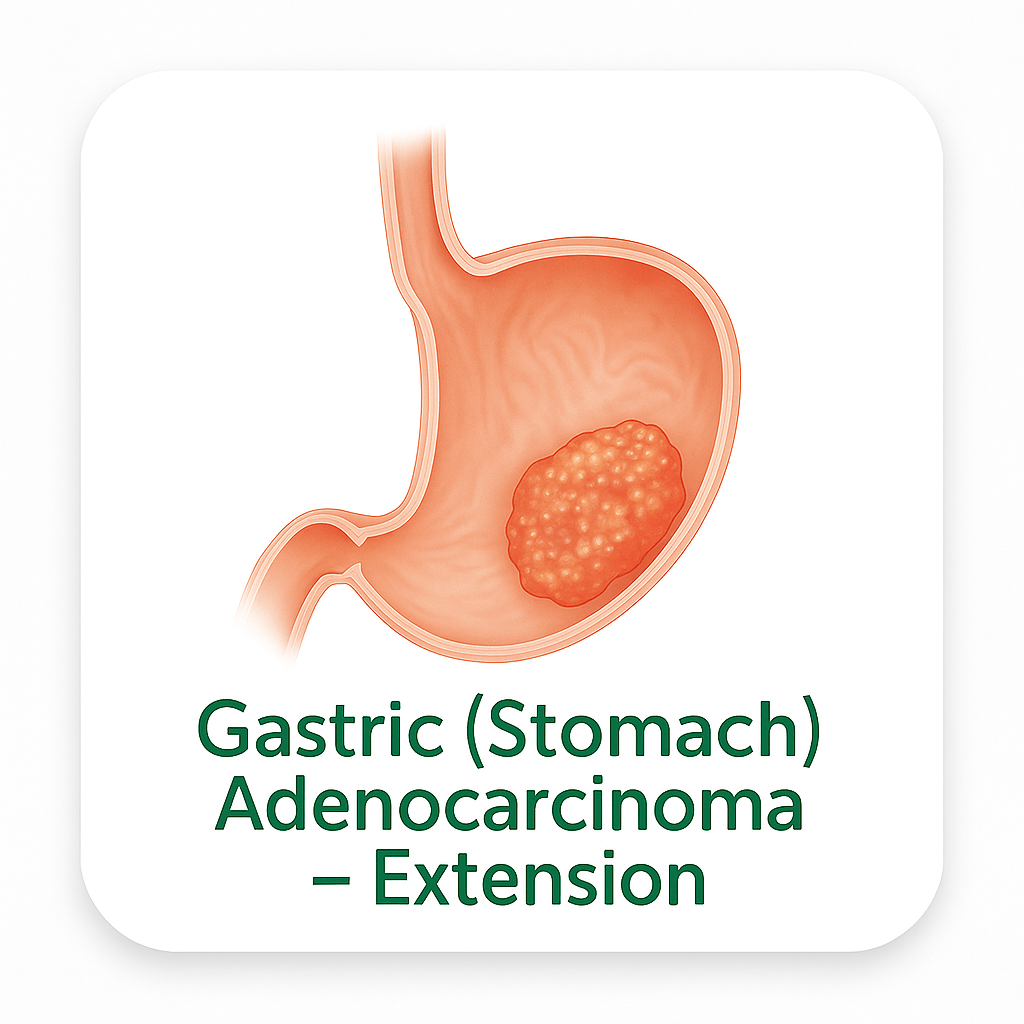
Gastric (Stomach) Adenocarcinoma – Extension
Main Grouping
Digestive
Organ System
Stomach,gastric mucosa
Cell Origin
Epithelial (adenocarcinoma)
Pathways Affected
Gastric adenocarcinoma involves four molecularly distinct pathway dysregulation profiles defined by TCGA: RTK/RAS/PI3K/AKT/mTOR and TP53 pathway activation in the CIN subtype; CDH1/RHOA/EMT pathway dysregulation in the GS subtype; PIK3CA/MLH1 hypermethylation in the MSI-H subtype; and PIK3CA/JAK-STAT/CIMP/PD-L1 activation in the EBV-positive subtype.
The ERBB2 (HER2)/EGFR/MAPK/ERK pathway is amplified in 24 percent of gastric cancer (ERBB2) and 10 percent (EGFR) predominantly in the CIN subtype, driving constitutive RTK/RAS/MAPK/ERK and PI3K/AKT/mTOR proliferative and survival signaling; FGFR2 amplifications in 8 percent and MET amplification in 8 percent provide additional RTK-driven signaling; curcumin and quercetin both inhibit ERBB2/HER2 downstream AKT and ERK phosphorylation in gastric cancer cell models (PMC6272649). The PI3K/AKT/mTOR pathway is activated through PIK3CA mutations in EBV-positive (PIK3CA mutations enriched) and MSI-H gastric cancer subtypes, and through upstream RTK amplifications in CIN gastric cancer; mTORC1 drives protein synthesis and metabolic reprogramming in gastric cancer cells; curcumin and quercetin inhibit PI3K/AKT/mTOR through multi-site signaling suppression in gastric cancer cell models. The NF-kB pathway is constitutively activated in gastric cancer through chronic gastric mucosal inflammation, KRAS mutations, and RTK/RAS signaling; NF-kB drives anti-apoptotic BCL-2 family gene expression, cytokine production, and VEGF-driven angiogenesis in gastric cancer cells; curcumin exhibited potent NF-kB downregulation in SGC-7901 and AGS gastric cancer cells through IKK inhibition (PMC4200840). The EMT signaling pathway is the defining molecular mechanism of the GS/MSS/EMT subtype of gastric cancer, the most aggressive subtype; CDH1/E-cadherin loss, RHOA mutations, and CLDN18-ARHGAP fusions all drive EMT, loss of epithelial cell cohesion, peritoneal dissemination, and signet-ring cell histology in diffuse-type gastric cancer. The p53 tumor suppressor pathway is disrupted through TP53 mutations in approximately 73 percent of CIN gastric cancer, eliminating DNA damage checkpoint response and enabling chromosomal instability. The Wnt/beta-catenin pathway is activated in a subset of gastric cancer contributing to gastric cancer stem cell biology and intestinal metaplasia progression. The TGF-beta/SMAD pathway mediates EMT in the diffuse GS subtype and immune suppression in the gastric cancer tumor microenvironment. The JAK/STAT pathway is activated in EBV-positive gastric cancer through JAK2 amplification and PD-L1/PD-L2 upregulation, providing the basis for immune checkpoint biology in this subtype. The VEGF angiogenesis pathway is activated through VEGFA amplification in CIN gastric cancer and through NF-kB and HIF-1alpha-mediated VEGF transcription across all subtypes; quercetin and curcumin inhibit VEGF in gastric cancer cell models. The methionine/SAM cycle is relevant to the extensive epigenetic hypermethylation (EBV-CIMP and MLH1 methylation in MSI-H) in gastric cancer. The mismatch repair pathway is deficient in approximately 22 percent of gastric cancer through MLH1 promoter hypermethylation, driving the MSI-H hypermutator phenotype with elevated immunogenicity and favorable prognosis. The bile acid synthesis pathway is directly relevant to gastric cancer through bile reflux-mediated mucosal injury contributing to intestinal metaplasia in the gastric cardia and CIN subtype gastroesophageal junction cancers.
Description
Gastric adenocarcinoma (GC) is the dominant histological subtype of stomach cancer, accounting for over 90 percent of all stomach cancers. Stomach cancer is the fifth most commonly diagnosed cancer and the fourth leading cause of cancer death globally, with approximately 968,000 new cases and 660,000 deaths reported globally in 2022 according to GLOBOCAN data. The highest incidence rates are found in Eastern Asia (particularly China, Korea, and Japan), Eastern Europe, and South America, while Western Europe and North America have significantly lower incidence. An estimated 26,500 new stomach cancer cases and approximately 11,130 deaths are projected in the United States in 2024. The male-to-female ratio is approximately 2:1, and the median age at diagnosis is approximately 68 years. The 5-year overall survival for all stages combined is approximately 36 percent in the United States, with localized disease approximately 75 percent, regional disease approximately 32 percent, and distant metastatic disease approximately 6 percent.
Gastric adenocarcinoma develops through a well-established carcinogenesis sequence defined by chronic mucosal inflammation progressing through atrophic gastritis, intestinal metaplasia, dysplasia, and adenocarcinoma, particularly for the intestinal-type Laurén histological subtype. The TCGA comprehensive molecular characterization of 295 gastric adenocarcinomas in 2014 defined four molecular subtypes with distinct biology and therapeutic implications. The CIN subtype (approximately 50 percent) is characterized by extreme chromosomal instability, frequent TP53 mutations (73%), and amplifications of key RTK oncogenes: ERBB2/HER2 (24%), EGFR (10%), FGFR2 (8%), MET (8%), VEGFA amplification, CCNE1, and CCND1; this subtype represents the therapeutically most actionable gastric cancer subtype. The GS subtype (approximately 20 percent), composed predominantly of diffuse-type tumors, harbors CDH1 mutations (26%), RHOA mutations, and CLDN18-ARHGAP fusions that drive EMT and peritoneal dissemination with the worst prognosis among gastric cancer subtypes. The MSI-H subtype (approximately 22 percent) shows the best prognosis and is associated with MLH1 hypermethylation and elevated immunogenicity. The EBV-positive subtype (approximately 9 percent) shows extreme DNA methylation and PD-L1/PD-L2 amplification.
Multiple plant phytochemicals have documented activity in gastric cancer cell models. A published study (PMC6272649) demonstrated that curcumin and quercetin in combination against MGC-803 gastric cancer cells inhibited proliferation, induced apoptosis through mitochondrial membrane potential collapse, cytochrome c release, and AKT and ERK phosphorylation inhibition. Curcumin additionally showed NF-kB downregulation in SGC-7901 and AGS gastric cancer cells (PMC4200840). A comprehensive review (PMC11721033) documented resveratrol, piceatannol, curcumin, and quercetin as the leading phytochemicals with anti-gastric cancer activity.
Plant-Based Description
Whole-food plant-based dietary patterns provide nutrients and phytochemicals with documented activity relevant to gastric adenocarcinoma through direct gastric cancer cell line anti-proliferative activity, NF-kB inhibition countering the constitutive NF-kB activation in gastric cancer, AKT and ERK phosphorylation inhibition targeting the dominant RTK/RAS/PI3K/AKT pathway activation in the CIN subtype (ERBB2/EGFR/FGFR2/MET amplifications present in 50 percent of gastric cancer), mitochondrial apoptosis pathway induction, EMT reversal through E-cadherin upregulation targeting the GS/diffuse subtype, and epigenetic DNMT inhibition targeting the CIMP and MLH1 hypermethylation in EBV-positive and MSI-H subtypes. Curcumin and quercetin in combination against MGC-803 gastric cancer cells demonstrated significant proliferation inhibition, mitochondrial membrane potential collapse, cytochrome c release, and AKT and ERK phosphorylation inhibition (PMC6272649). Curcumin additionally demonstrated NF-kB downregulation in SGC-7901 and AGS gastric cancer cells (PMC4200840). EGCG from green tea inhibits EGFR, HER2, PI3K/AKT, and NF-kB in gastric cancer models. Allicin and diallyl compounds from garlic have documented anti-gastric cancer activity through NF-kB inhibition and induction of apoptosis. Sulforaphane from cruciferous vegetables activates Nrf2 and inhibits DNMT, relevant to the extensive DNA hypermethylation in EBV-positive and MSI-H gastric cancer. Beta-carotene and vitamin C from fruits and vegetables provide antioxidant protection in gastric mucosal cells. Dietary fiber from whole grains and legumes modulates gastric mucosal integrity and gut microbiome composition directly relevant to the chronic gastric inflammatory carcinogenesis driving intestinal-type gastric adenocarcinoma.
Plant Chemistry Detail
Curcumin and quercetin in combination have the most directly documented anti-gastric cancer cell line evidence in published literature. A study published in Molecules (PMC6272649) applied quercetin and curcumin separately and in combination to human gastric cancer MGC-803 cells and documented: MTT assay-confirmed significant inhibition of cell growth for both compounds individually and synergistically in combination; Annexin V-FITC/PI flow cytometry confirming dose-dependent apoptosis induction with the combined treatment achieving significantly higher apoptosis rates than either compound alone; collapse of mitochondrial membrane potential (ΔΨm) indicating activation of the intrinsic mitochondrial apoptosis pathway; release of cytochrome c into the cytosol confirming mitochondrial outer membrane permeabilization; western blot analysis showing decreased phosphorylation of both AKT and ERK in curcumin/quercetin-treated MGC-803 cells — directly inhibiting the PI3K/AKT and MAPK/ERK pathways constitutively activated by ERBB2 (24%), EGFR (10%), FGFR2 (8%), MET (8%), and KRAS mutations across the dominant CIN subtype of gastric cancer; this study establishes the dual AKT/ERK inhibition as the primary mechanism of curcumin and quercetin anti-gastric cancer activity.
Curcumin in BGC-823 gastric cancer cells (PMC4200840) activated ROS-mediated ASK1-MKK4-JNK signaling pathway, inducing apoptosis through an oxidative stress-driven mechanism distinct from the AKT/ERK pathway. Curcumin also exhibited NF-kB downregulation in SGC-7901 and AGS gastric cancer cells through IKK kinase inhibition and IkB-alpha stabilization, reducing downstream anti-apoptotic BCL-2, BCL-XL, and survivin gene expression. A comprehensive review (PMC11721033) documented curcumin, quercetin, resveratrol, and piceatannol all have documented anti-gastric cancer activity: curcumin through PI3K/AKT, NF-kB, mitochondrial apoptosis; quercetin through PI3K/Akt/P-gp cascade reversal of drug resistance in SGC-7901 cells; resveratrol through multiple gastric cancer cell line models inducing autophagy and apoptosis.
EGCG from green tea inhibits EGFR and HER2 (ERBB2) kinase activity relevant to the 24 percent ERBB2 amplification and 10 percent EGFR amplification in CIN gastric cancer, and additionally inhibits PI3K/AKT, NF-kB, and VEGF in gastric cancer models. Allicin and diallyl compounds from garlic have the longest-established epidemiological and cell model evidence for anti-gastric cancer activity through NF-kB inhibition, H2O2 generation, and caspase-mediated apoptosis in gastric cancer cells; epidemiological studies have consistently documented allium vegetable consumption as inversely associated with gastric cancer risk. Sulforaphane from broccoli and cruciferous vegetables activates Nrf2/ARE and inhibits HDAC and DNMT activity targeting the EBV-CIMP and MLH1 promoter hypermethylation relevant to two of the four TCGA gastric cancer molecular subtypes. Quercetin from yellow onions and kale inhibits VEGF and PI3K/AKT/mTOR and has additional CDH1/E-cadherin upregulatory activity in cancer cell models relevant to the CDH1 loss-driven EMT in the GS/diffuse subtype. Lycopene from tomatoes has documented inverse association with gastric cancer risk in epidemiological studies and inhibits PI3K/AKT in gastric cancer cell models. Genistein from soybeans inhibits NF-kB, PI3K/AKT, and EGFR/ERBB2 in gastric cancer models.
Nutritional Focus
Nutritional focus in gastric adenocarcinoma research is led by curcumin and quercetin in combination, with the most directly documented anti-gastric cancer cell evidence from a published Molecules study (PMC6272649) in MGC-803 gastric cancer cells documenting significant cell growth inhibition (MTT assay), apoptosis induction (Annexin V-FITC/PI flow cytometry), mitochondrial membrane potential collapse, cytochrome c release, and decreased phosphorylation of both AKT and ERK — directly targeting the PI3K/AKT and MAPK/ERK pathways constitutively activated by ERBB2 (24%), EGFR (10%), FGFR2 (8%), and MET (8%) amplifications in the dominant CIN subtype of gastric cancer; curcumin additionally demonstrated NF-kB downregulation in SGC-7901 and AGS gastric cancer cells and ROS-mediated ASK1-MKK4-JNK apoptosis in BGC-823 gastric cancer cells (PMC4200840); EGCG from green tea inhibiting ERBB2/HER2 and EGFR kinase activity relevant to the 24 percent ERBB2 and 10 percent EGFR amplification in CIN gastric cancer; allicin and diallyl compounds from garlic with documented NF-kB inhibition and epidemiological evidence of allium vegetable consumption inversely associated with gastric cancer risk; sulforaphane from cruciferous vegetables activating Nrf2 and inhibiting DNMT targeting EBV-CIMP and MLH1 hypermethylation in two of the four TCGA gastric cancer subtypes; quercetin from yellow onions with documented AKT/ERK inhibition in gastric cancer cells and PI3K/Akt/P-gp pathway activity reversing drug resistance in SGC-7901 cells; resveratrol and piceatannol with documented gastric cancer cell line anti-tumor activity through autophagy and apoptosis induction; folate from leafy greens and legumes supporting SAM-cycle methionine chemistry providing substrate for DNMT-mediated methylation at CIMP loci; and lycopene from tomatoes with documented epidemiological inverse association with gastric cancer risk and PI3K/AKT inhibition in gastric cancer models.
Research Notes
Gastric adenocarcinoma epidemiology: approximately 968,000 new cases globally 2022 (GLOBOCAN); 5th most common cancer globally; 4th leading cause of cancer death; highest incidence Eastern Asia, Eastern Europe, South America; approximately 26,500 new cases and 11,130 deaths in US 2024; male:female approximately 2:1; median age approximately 68 years; 5-year survival all stages approximately 36%; localized approximately 75%; regional approximately 32%; distant metastatic approximately 6%. TCGA gastric cancer molecular subtypes (4 subtypes, 295 primary GC): EBV-positive (~9%): PIK3CA mutations, EBV-CIMP, JAK2/PD-L1/PD-L2 amplification; MSI-H (~22%): MLH1 hypermethylation, PIK3CA/ERBB3/ERBB2/EGFR/ARID1A/KRAS mutations, best prognosis; GS (~20%): CDH1 mutations (26%), RHOA mutations, CLDN18-ARHGAP fusions, diffuse histology, worst prognosis; CIN (~50%): TP53 mutations (73%), ERBB2 amplification (24%), EGFR (10%), ERBB3 (8%), FGFR2 (8%), MET (8%), VEGFA amplification, CCNE1/CCND1/CDK6.
Curcumin + quercetin gastric cancer (PMC6272649): MGC-803 cells; MTT assay growth inhibition; Annexin V/PI flow cytometry apoptosis confirmed; mitochondrial membrane potential collapse; cytochrome c release; AKT and ERK phosphorylation decreased by western blot. Curcumin NF-kB in SGC-7901 and AGS (PMC4200840): IKK/NF-kB downregulation; ROS-mediated ASK1-MKK4-JNK apoptosis in BGC-823. Comprehensive review (PMC11721033): curcumin, quercetin, resveratrol, piceatannol with documented anti-gastric cancer activity.
Notes Visibility
show
Key Foods
Turmeric,Garlic,Yellow Onion,Broccoli,Kale,Spinach,Brussels Sprouts,Cauliflower,Carrot,Tomato,Beetroot,Cabbage,Apple,Blueberry,Pomegranate,Grape,Raspberry,Strawberry,Orange,Lemon,Soybeans,Edamame,Green Lentils,Black Beans,Chickpeas,Brown Rice,Quinoa,Oats,Wild Rice,Rye Berries,Sorghum,Walnut,Almond,Brazil Nut,Pumpkin Seeds,Flaxseed,Chia Seeds,Sesame Seeds,Hemp Seeds,Shiitake,Maitake,Cremini,Portobello,Lions Mane,Green Tea,Ginger,Black Pepper,Garlic Powder,Parsley,Rosemary,Oregano,Cabbage, Leek,Avocado,Artichoke,Radish,Tangerine, Red Onion
Linked Nutrients
vitamin-c,vitamin-e,vitamin-d3,vitamin-b9,vitamin-b6,vitamin-a,selenium,zinc,magnesium,calcium,potassium,iron,curcumin,quercetin,egcg,allicin,sulforaphane,resveratrol,lycopene,beta-carotene,anthocyanins,beta-glucans,dietary-fiber,plant-ala-omega3
Last Updated
2025-10-13 09:55:57

