
ID
39
Cancer Name
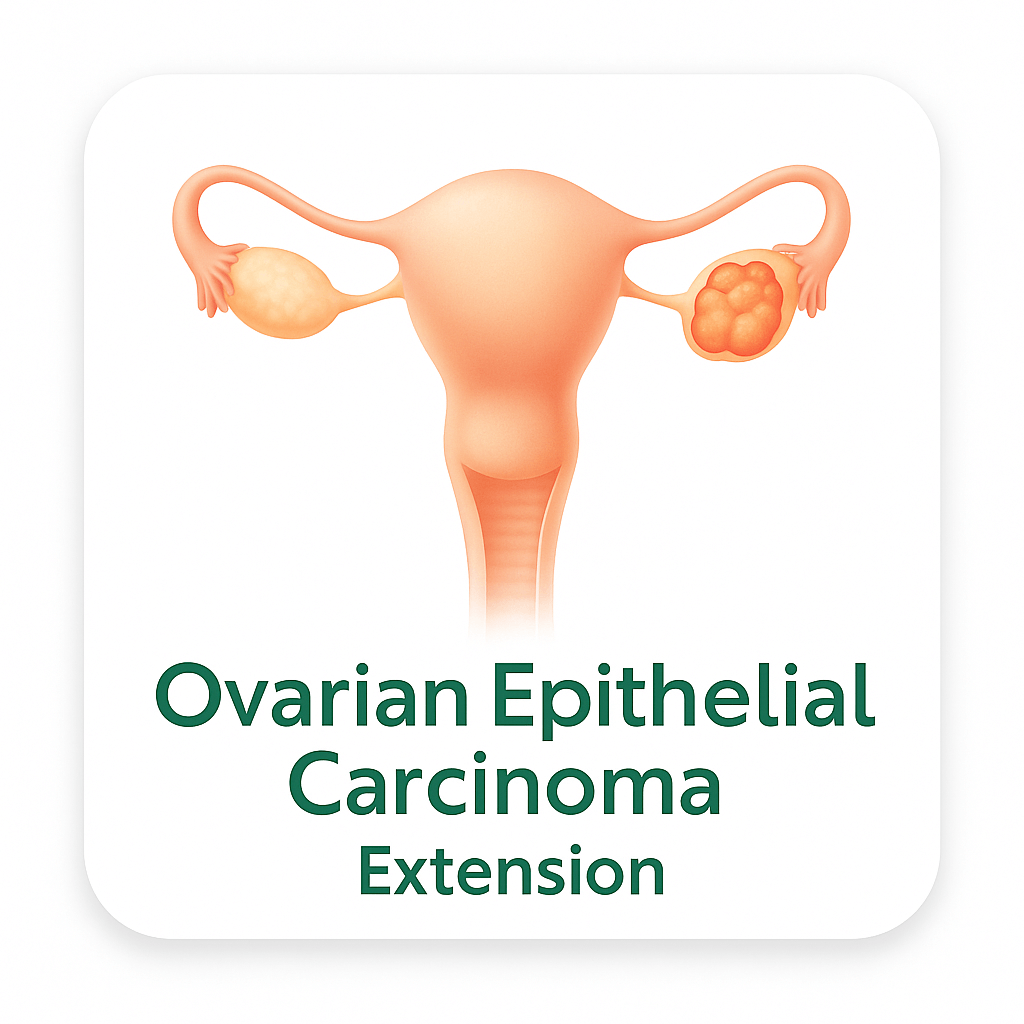
Ovarian Epithelial Carcinoma – Extension
Main Grouping
Endocrine/Reproductive
Organ System
Ovaries, Peritoneum
Cell Origin
Epithelial (serous predominant)
Pathways Affected
Ovarian epithelial carcinoma involves distinct pathway dysregulation profiles across histological subtypes, with TP53 tumor suppressor loss, BRCA1/2 homologous recombination DNA repair deficiency, PI3K/AKT/mTOR activation, and RB1 cell cycle checkpoint loss as the dominant molecular axes in the lethal high-grade serous subtype, complemented by KRAS/BRAF/MAPK/ERK constitutive activation in low-grade serous OEC, ARID1A/PIK3CA chromatin remodeling and PI3K pathway dysregulation in clear cell OEC, and PTEN/PIK3CA/CTNNB1 pathway alterations in endometrioid OEC.
The p53 tumor suppressor pathway is disrupted through TP53 mutations in greater than 96 percent of HGSOC, the dominant and most lethal subtype of OEC; TP53 mutations eliminate DNA damage checkpoint function enabling the extreme chromosomal instability (SCNAs) characteristic of HGSOC; p53 loss also permits bypass of apoptosis signals; curcumin activates p53-mediated apoptosis in ovarian cancer cell models (PMC7471673). The homologous recombination DNA repair pathway is deficient in approximately 50 percent of HGSOC through BRCA1 and BRCA2 mutations, epigenetic silencing of BRCA1 by promoter methylation, or mutations in other homologous recombination genes (BRIP1, PALB2, RAD51C, RAD51D, BARD1, CDK12, RAD51); BRCA1/2-deficient cells cannot repair double-strand DNA breaks through error-free homologous recombination; plant phytochemicals including quercetin inhibit DNA repair signaling in ovarian cancer cells. The PI3K/AKT/mTOR pathway is activated in approximately 45 percent of HGSOC through PI3K/RAS signaling deregulation, PIK3CA amplification and mutations (most prevalent in endometrioid and clear cell OEC), and PTEN loss-of-function mutations enriched in endometrioid OEC; PI3K/AKT/mTOR is the most clinically relevant signaling pathway in OEC as a master regulator of both autophagy and apoptosis; curcumin inhibited AKT/mTOR/p70S6K pathway in SKOV3 and A2780 ovarian cancer cells, and quercetin decreased phosphorylated AKT and phosphorylated p44/42 MAPK in A2780S cells. The MAPK/ERK pathway is constitutively activated in LGSOC through KRAS mutations (35%) and BRAF V600E mutations (33%), driving proliferation independently of upstream RTK activation; quercetin and resveratrol inhibit KRAS downstream MAPK/ERK signaling in OEC models. The VEGF angiogenesis pathway is strongly activated in OEC, with VEGF-A overexpression driven by HIF-1alpha and NF-kB signaling supporting the dense ascites-associated malignant vascular growth in advanced OEC; quercetin intravenously administered in A2780S xenograft models suppressed angiogenesis and activated caspase-3 and -9 (PMC7063794). The NF-kB pathway is constitutively activated in OEC through PI3K/AKT downstream signaling, TNF-alpha/IL-6 cytokine loops in the OEC tumor microenvironment, and RTK signaling; curcumin and EGCG both inhibit NF-kB in OEC cell models. The TGF-beta/SMAD pathway mediates EMT in the mesenchymal HGSOC transcriptional subtype with the worst prognosis and drives immune suppression and peritoneal dissemination in advanced OEC. The EMT signaling pathway is activated in the mesenchymal TCGA HGSOC subtype driving peritoneal metastasis, ascites formation, and omental implantation; curcumin reverses EMT through E-cadherin upregulation and MMP-2/MMP-9/VCAM-1 downregulation in SKOV3 cells. The cell cycle checkpoint pathway is disrupted through RB1 loss in approximately 67 percent of HGSOC and CCNE1 (cyclin E1) amplification in approximately 20 percent, enabling unchecked G1/S cell cycle progression; quercetin arrested SKOV-3 cells in G0/G1 phase. The estrogen signaling pathway is active in OEC through estrogen receptor alpha and beta expression in the majority of OEC histotypes, with estrogen driving PI3K/AKT and MAPK/ERK proliferative signaling in estrogen receptor-positive OEC; dietary phytoestrogens including genistein and daidzein from soybeans have documented ERalpha-competitive binding activity. The autophagy pathway is critically involved in OEC resistance to treatment; curcumin induced protective autophagy in SKOV3 and A2780 cells through AKT/mTOR/p70S6K suppression, and autophagy-specific inhibitor co-treatment markedly enhanced curcumin-induced apoptosis (PMC7471673). The methionine/SAM cycle pathway is relevant to the extensive epigenetic methylation silencing of BRCA1 and other tumor suppressor genes through promoter hypermethylation in HGSOC. The tryptophan/kynurenine pathway mediates immune evasion in OEC through IDO1 expression in the immunosuppressive OEC tumor microenvironment.
Description
Ovarian epithelial carcinoma (OEC) is the most common and lethal type of ovarian cancer, accounting for approximately 90 percent of all ovarian malignancies and representing the leading cause of death from gynecological cancers in the United States. An estimated 19,680 new cases of ovarian cancer and approximately 12,740 deaths were projected in the United States in 2024. Globally, approximately 313,959 new ovarian cancer cases and 207,252 deaths were reported in 2022 according to GLOBOCAN data. OEC is the fifth most common cause of cancer death in women in the United States. The 5-year overall survival for all stages combined is approximately 50 percent, with localized stage I disease approximately 92 percent, regional disease approximately 72 percent, and distant stage IV metastatic disease approximately 31 percent. Greater than 70 percent of OEC patients are diagnosed at advanced stage III or IV due to the absence of early symptoms and the lack of effective screening methods, which explains the poor overall prognosis despite 70 to 80 percent of patients achieving initial response to standard first-line treatment.
OEC is biologically classified into two major categories based on the dualistic model of carcinogenesis. Type I tumors are lower-grade, more indolent tumors (including LGSOC, endometrioid, clear cell, and mucinous OEC) arising through step-wise mutations and precursor lesions; Type I tumors are driven by KRAS, BRAF, PTEN, PIK3CA, ARID1A, and CTNNB1/beta-catenin mutations with relative chromosomal stability. Type II tumors are high-grade, rapidly progressive cancers (including HGSOC, which constitutes approximately 71 percent of all OEC) defined by extreme chromosomal instability, TP53 mutations in greater than 96 percent of cases, BRCA1/2 inactivation in approximately 50 percent, RB1 pathway loss in approximately 67 percent, and PI3K/RAS pathway activation in approximately 45 percent; these are the most common and lethal subtype.
The TCGA comprehensive molecular characterization of HGSOC documented four transcriptional subtypes: immunoreactive, differentiated, mesenchymal, and proliferative; the mesenchymal subtype shows activated TGF-beta and EMT gene expression and the worst prognosis; the immunoreactive subtype shows the best prognosis with active cytotoxic T-lymphocyte infiltration. Familial OEC risk is primarily driven by germline BRCA1 (conferring approximately 44 percent lifetime ovarian cancer risk) and BRCA2 (conferring approximately 17 percent lifetime risk) mutations, along with Lynch syndrome-associated mismatch repair gene mutations (MLH1, MSH2, MSH6, PMS2) conferring approximately 10 to 15 percent lifetime ovarian cancer risk.
Multiple plant phytochemicals have documented activity in ovarian cancer cell line models. A published Oncology Letters review (PMC7471673) documented curcumin inhibiting AKT/mTOR/p70S6K pathway, AKT phosphorylation, Bcl-2, survivin, STAT-3 phosphorylation, and NF-kB in SKOV3 and A2780 ovarian cancer cells with in vivo xenograft tumor growth reduction. Quercetin suppressed proliferation of SKOV-3 cells in a time- and dose-dependent manner, induced G0/G1 arrest, reduced survivin, and activated mitochondrial apoptosis in A2780S cells (PMC7063794). EGCG repressed proliferation of SKOV3 and OVCAR-3 cells and reduced xenograft tumor volume (PMC7471673).
Plant-Based Description
Whole-food plant-based dietary patterns provide nutrients and phytochemicals with documented activity relevant to ovarian epithelial carcinoma through direct OEC cell line anti-proliferative activity in SKOV3, A2780, OVCAR-3, and C13 cell lines, PI3K/AKT/mTOR suppression targeting the dominant oncogenic axis in approximately 45 percent of HGSOC and in clear cell and endometrioid OEC subtypes, p53-mediated apoptosis restoration, NF-kB inhibition, VEGF angiogenesis suppression, EMT reversal, G0/G1 and G2/M cell cycle arrest, Bcl-2/survivin downregulation with caspase-3/caspase-9 activation, STAT-3 inhibition, and DNA repair pathway modulation relevant to BRCA1/2-deficient OEC. Curcumin from turmeric inhibited AKT/mTOR/p70S6K, AKT phosphorylation, Bcl-2, survivin, STAT-3, and NF-kB in SKOV3 and A2780 OEC cells with in vivo xenograft tumor growth reduction (PMC7471673). Quercetin suppressed SKOV-3 proliferation dose- and time-dependently, induced G0/G1 arrest, reduced survivin, and activated mitochondrial apoptosis in A2780S cells with in vivo xenograft angiogenesis suppression (PMC7063794). EGCG repressed SKOV3 and OVCAR-3 proliferation dose-dependently with greater than 70 percent xenograft tumor volume reduction at 50 mg/kg intraperitoneal in mice. Sulforaphane from cruciferous vegetables inhibits HDAC and activates Nrf2 relevant to BRCA1 promoter hypermethylation-driven HGSOC. Genistein from soybeans inhibits PI3K/AKT and estrogen receptor signaling in OEC models. Ellagic acid from pomegranate inhibits PI3K/AKT and induces apoptosis in OEC cell models. Resveratrol inhibits PI3K/AKT/mTOR, MAPK/ERK, and NF-kB in OEC cell models. Dietary fiber drives SCFA production with butyrate inhibiting HDAC activity targeting epigenetically silenced tumor suppressors in OEC.
Plant Chemistry Detail
Curcumin from turmeric has the most comprehensively documented multi-mechanism anti-OEC activity across multiple cell lines with in vivo validation. A published Oncology Letters review (PMC7471673) documented curcumin in SKOV3 and A2780 ovarian cancer cells: curcumin inhibited the AKT/mTOR/p70S6K pathway — directly targeting the PI3K/AKT/mTOR pathway constitutively activated in approximately 45 percent of HGSOC and dominant in clear cell and endometrioid OEC; curcumin induced autophagy in SKOV3 and A2780 cells through AKT/mTOR/p70S6K suppression, and autophagy-specific inhibitor co-treatment markedly enhanced curcumin-induced apoptosis confirming that AKT/mTOR/p70S6K pathway suppression was the primary curcumin mechanism; curcumin downregulated AKT phosphorylation, Bcl-2, and survivin, activating both extrinsic (caspase-8) and intrinsic (caspase-9 and caspase-3) apoptotic pathways in OEC cells; curcumin inhibited STAT-3 phosphorylation in ovarian cancer cells, suppressing STAT-3-mediated proliferative and anti-apoptotic transcription activated by IL-6 and JAK2 in the OEC tumor microenvironment; bisdemethoxycurcumin (a curcuminoid) inactivated the NF-kB pathway through oxidative stress inhibition, reducing MMP-2, MMP-9, and VCAM-1 expression in SKOV3 cells targeting the EMT and invasion machinery of mesenchymal-type HGSOC; curcumin suppressed viability and colony formation in SKOV3, A2780, and OVCAR3 cells through upregulation of active caspase-3 and Bax and downregulation of PCNA; and curcumin reduced xenograft tumor size in OEC in vivo models.
Quercetin from onions and kale has documented direct anti-OEC activity across SKOV-3 and A2780S ovarian cancer cell lines. A published review (PMC7063794) documented quercetin: suppressing proliferation of SKOV-3 cells in a time- and dose-dependent manner; decreasing survivin protein expression in SKOV-3 cells; inducing G0/G1 cell cycle arrest in SKOV-3 cells directly relevant to RB1 pathway loss in approximately 67 percent of HGSOC; suppressing A2780S cell growth concentration-dependently; activating mitochondrial apoptosis through alteration of mitochondrial transmembrane potential, downregulation of Bcl-2 and MCL-1, and upregulation of Bax with caspase-3 and caspase-9 activation in A2780S cells; decreasing phosphorylated AKT and phosphorylated p44/42 MAPK directly targeting the two dominant oncogenic axes in OEC; and suppressing in vivo xenograft A2780S tumor growth with angiogenesis inhibition (VEGF suppression). EGCG from green tea repressed SKOV3 and OVCAR-3 cell proliferation dose-dependently, arrested OEC cells in G1/S and G2/M phase, downregulated NF-kB through aquaporin 5 suppression in SKOV3 cells, and achieved greater than 70 percent xenograft tumor volume reduction at 50 mg/kg intraperitoneal in mice. Sulforaphane from broccoli and cruciferous vegetables inhibits HDAC activity targeting the epigenetic BRCA1 promoter hypermethylation silencing that contributes to approximately 50 percent of HGSOC homologous recombination deficiency, and activates Nrf2/ARE antioxidant response relevant to protection of normal fallopian tube epithelial cells where HGSOC originates. Genistein from soybeans inhibits PI3K/AKT and estrogen receptor alpha-mediated proliferative signaling in estrogen receptor-positive OEC cell models. Resveratrol from grapes inhibits PI3K/AKT/mTOR, MAPK/ERK, and NF-kB in OEC cell models and activates AMPK-mediated tumor suppression. Ellagic acid from pomegranate inhibits PI3K/AKT and induces apoptosis in OEC models. Indole-3-carbinol from cruciferous vegetables modulates estrogen metabolism and inhibits OEC cell proliferation. Kaempferol from kale and broccoli inhibits VEGF and PI3K/AKT in OEC cell models.
Nutritional Focus
Nutritional focus in ovarian epithelial carcinoma research is led by curcumin from turmeric with the most comprehensively documented multi-mechanism anti-OEC evidence from a published Oncology Letters review (PMC7471673) in SKOV3 and A2780 ovarian cancer cells documenting AKT/mTOR/p70S6K inhibition directly targeting the PI3K/AKT/mTOR pathway constitutively activated in approximately 45 percent of HGSOC, AKT phosphorylation downregulation, Bcl-2 and survivin suppression, caspase-8/caspase-9/caspase-3 activation, STAT-3 phosphorylation inhibition suppressing IL-6-driven proliferative signaling, NF-kB inactivation reducing MMP-2/MMP-9/VCAM-1 invasion markers, PCNA downregulation with caspase-3/Bax upregulation in SKOV3/A2780/OVCAR3 cells, and in vivo xenograft tumor size reduction; quercetin from yellow onions with documented dose- and time-dependent SKOV-3 proliferation suppression, G0/G1 arrest targeting the RB1 checkpoint disrupted in approximately 67 percent of HGSOC, survivin reduction, and A2780S mitochondrial apoptosis with caspase-3/caspase-9 activation, AKT and MAPK phosphorylation reduction, and in vivo xenograft angiogenesis suppression (PMC7063794); EGCG from green tea achieving greater than 70 percent xenograft tumor volume reduction in OEC in vivo models with SKOV3 and OVCAR-3 dose-dependent proliferation repression and NF-kB inhibition; sulforaphane from cruciferous vegetables inhibiting HDAC targeting BRCA1 promoter hypermethylation epigenetic silencing in HGSOC and activating Nrf2 in fallopian tube epithelial cells; genistein from soybeans inhibiting PI3K/AKT and estrogen receptor-mediated signaling in estrogen receptor-positive OEC; resveratrol inhibiting PI3K/AKT/mTOR, MAPK/ERK, and NF-kB in OEC cell models; indole-3-carbinol from cruciferous vegetables modulating estrogen metabolism in OEC models; and folate from leafy greens and legumes supporting SAM-cycle methionine chemistry providing substrate for DNMT-mediated methylation relevant to BRCA1 and MLH1 promoter silencing in OEC.
Research Notes
OEC epidemiology: approximately 19,680 new US cases and 12,740 deaths projected 2024; approximately 313,959 new cases globally 2022 (GLOBOCAN); leading cause of death from gynecological cancers in US; 5th most common cause of cancer death in US women; 5-year survival all stages approximately 50%; localized stage I approximately 92%; regional approximately 72%; distant stage IV approximately 31%; greater than 70% diagnosed at advanced stage III-IV. TCGA HGSOC molecular characterization: TP53 mutations greater than 96%; BRCA1/2 mutation or epigenetic silencing approximately 50% (germline BRCA1/2 approximately 14.6%); RB1 pathway deregulation approximately 67%; PI3K/RAS pathway approximately 45%; four transcriptional subtypes: immunoreactive, differentiated, mesenchymal, proliferative. Histological subtypes: HGSOC (~71%); clear cell (~9.5%); endometrioid (~8.3%); mucinous (~3.2%); LGSOC (~4.1%). KRAS (~35%) and BRAF V600E (~33%) mutations dominant in LGSOC. ARID1A (~50-57%) and PIK3CA (~33-50%) dominant in clear cell OEC. PTEN loss and PIK3CA/CTNNB1 mutations dominant in endometrioid OEC. Curcumin in OEC (PMC7471673): AKT/mTOR/p70S6K suppression; AKT phosphorylation reduction; Bcl-2/survivin downregulation; caspase-3/8/9 activation; STAT-3 inhibition; NF-kB inactivation; MMP-2/MMP-9/VCAM-1 reduction in SKOV3; xenograft tumor growth reduction. Quercetin in OEC (PMC7063794): SKOV-3 proliferation suppression; G0/G1 arrest; survivin reduction; A2780S mitochondrial apoptosis; caspase-3/9 activation; AKT/MAPK phosphorylation reduction; angiogenesis suppression in vivo.
Notes Visibility
show
Key Foods
Turmeric,Broccoli,Kale,Spinach,Brussels Sprouts,Cauliflower,Garlic,Yellow Onion,Carrot,Tomato,Beetroot,Cabbage,Apple,Blueberry,Pomegranate,Grape,Raspberry,Strawberry,Orange,Lemon,Soybeans,Edamame,Green Lentils,Black Beans,Chickpeas,Brown Rice,Quinoa,Oats,Wild Rice,Rye Berries,Sorghum,Walnut,Almond,Brazil Nut,Pumpkin Seeds,Flaxseed,Chia Seeds,Sesame Seeds,Hemp Seeds,Shiitake,Maitake,Cremini,Portobello,Lions Mane,Green Tea,Ginger,Black Pepper,Garlic Powder,Parsley,Rosemary,Oregano, Leek,Avocado,Artichoke,Radish,Tangerine, Red Onion
Linked Nutrients
vitamin-c,vitamin-e,vitamin-d3,vitamin-b9,vitamin-b6,vitamin-a,selenium,zinc,magnesium,calcium,potassium,iron,curcumin,quercetin,egcg,sulforaphane,resveratrol,ellagic-acid,genistein,beta-carotene,anthocyanins,beta-glucans,dietary-fiber,plant-ala-omega3
Last Updated
2025-10-13 09:55:57

