
ID
4
Cancer Name
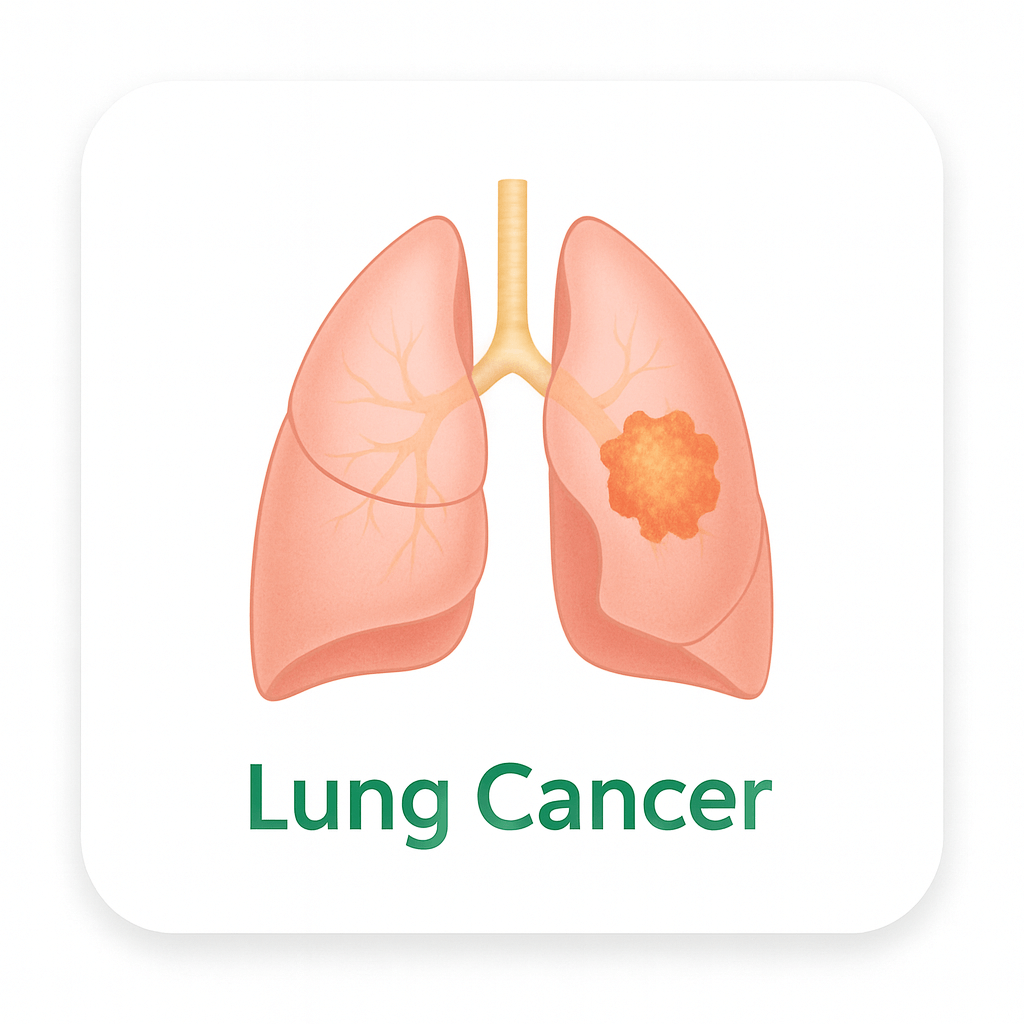
Lung Cancer (NSCLC)
Main Grouping
Respiratory
Organ System
Lungs
Cell Origin
Epithelial
Pathways Affected
NSCLC involves dysregulation across multiple interconnected molecular signaling pathways governing proliferation, survival, apoptosis, angiogenesis, oxidative stress, inflammation, and DNA damage response. RTK/EGFR signaling is a central driver of NSCLC, particularly in adenocarcinoma, where activating EGFR mutations lead to constitutive downstream signaling through both the RAS/MAPK and PI3K/AKT/mTOR cascades, promoting cell proliferation, survival, and resistance to apoptosis. RAS/MAPK/ERK signaling is altered in approximately 25 percent of adenocarcinomas through KRAS, NRAS, BRAF, and NF1 mutations, with this pathway controlling cell growth, differentiation, and apoptotic resistance. ALK and ROS1 gene fusions activate JAK/STAT, RAS/MAPK, and PI3K/AKT signaling simultaneously, contributing to aggressive tumor growth.
The PI3K/AKT/mTOR pathway promotes cell survival, protein synthesis, and cellular metabolism and is activated in a substantial portion of NSCLC through PIK3CA mutation, PTEN loss, and AKT amplification. TP53 pathway inactivation disrupts DNA damage response, cell cycle arrest, senescence, and apoptosis and is among the most frequent alterations across all NSCLC subtypes. NF-kB signaling drives pro-inflammatory cytokine expression, anti-apoptotic gene regulation, angiogenesis, and tumor microenvironment remodeling in NSCLC. The Nrf2/KEAP1/ARE oxidative stress response pathway regulates antioxidant enzyme systems and phase II detoxification enzymes, with KEAP1 mutations resulting in constitutive Nrf2 activation found in approximately 10 percent of adenocarcinomas and 34 percent of squamous cell carcinomas.
WNT/beta-catenin signaling contributes to tumor initiation, stemness, and progression in NSCLC with upregulated WNT pathway activity documented in lung cancer development. VEGF-mediated angiogenesis signaling supports tumor vascularization and growth. Apoptosis pathway dysregulation through BCL-2 family members and caspase cascades allows tumor cells to evade programmed cell death. Cell cycle regulatory pathway disruption through CDKNA2, RB1, and CDK alterations sustains uncontrolled proliferation across NSCLC subtypes. These pathways are used to organize food, nutrient, phytochemical, and compound relationships at the biological process level.
Description
Non-small cell lung cancer (NSCLC) is the most common major category of lung cancer, accounting for approximately 85 percent of all lung cancer diagnoses. It encompasses three primary histological subtypes: adenocarcinoma, squamous cell carcinoma, and large cell carcinoma. Adenocarcinoma is the most frequent subtype in most countries and arises from alveolar type II pneumocytes and bronchiolar epithelial cells in peripheral lung tissue, representing 35 to 40 percent of all lung cancers. Squamous cell carcinoma arises from bronchial epithelial cells near central airways and accounts for 25 to 30 percent of lung cancer cases. Large cell carcinoma comprises 10 to 15 percent of lung cancers and consists of undifferentiated epithelial cells lacking the histological features of either adenocarcinoma or squamous cell carcinoma.
NSCLC is the leading cause of cancer-related mortality worldwide, with approximately 1.6 million deaths annually attributed to lung cancer globally. Common molecular alterations include mutations and rearrangements involving EGFR, KRAS, ALK, ROS1, BRAF, MET, RET, NTRK, ERBB2, and NF1 genes, with significant variation in frequency across histological subtypes. TP53 alterations are present in approximately 50 percent of adenocarcinomas and 80 percent of squamous cell carcinomas. The PI3K/AKT pathway is altered in 10 to 12 percent of adenocarcinomas and up to 59 percent of squamous cell carcinomas. EGFR mutations are present in approximately 20 to 30 percent of adenocarcinomas. RTK pathway alterations including EGFR, ALK, MET, ERBB2, ROS1, and RET are found in approximately 50 percent of adenocarcinomas.
Geographical variation in incidence patterns has generated research interest in dietary and lifestyle factors. Epidemiological data from multiple prospective cohort studies including the European Prospective Investigation into Cancer and Nutrition and the NIH-AARP Diet and Health Study have documented associations between fruit and vegetable intake and lung cancer risk. A systematic review and meta-analysis of prospective cohort studies found dietary carotenoids were associated with reduced lung cancer risk with a relative risk of 0.79 in the highest versus lowest intake categories. A meta-analysis of flavonoid intake studies found that a 20 mg per day increase in flavonoid intake was associated with a 10 percent decreased risk of lung cancer. Quercetin from onions and apples has been inversely associated with lung cancer risk, particularly for squamous cell carcinoma, in population-based case-control studies. Plant foods provide vitamins, minerals, fiber, and phytochemicals including carotenoids, glucosinolates, flavonoids, organosulfur compounds, catechins, and polyphenols studied in relation to NSCLC biology.
Plant-Based Description
Whole-food plant-based dietary patterns provide measurable nutrients and phytochemicals studied in relation to oxidative stress, inflammation, DNA damage response, detoxification enzyme induction, immune signaling, and cellular metabolism relevant to NSCLC biology. Fruits provide vitamin C, carotenoids, polyphenols, flavonoids, and anthocyanins. Vegetables provide carotenoids including beta-carotene and beta-cryptoxanthin, glucosinolates, isothiocyanates, folate, potassium, and fiber. Legumes and whole grains provide fiber, amino acids, minerals, and fermentable carbohydrates that support gut microbiome diversity and systemic immune regulation. Nuts and seeds provide vitamin E, selenium, zinc, magnesium, lignans, and plant-sourced ALA omega-3 fatty acids. Mushrooms provide beta-glucans and ergothioneine with immune-modulatory properties. Herbs and spices provide concentrated phenolic compounds including curcuminoids, catechins, gingerols, organosulfur compounds, and piperine studied in relation to NF-kB, Nrf2, PI3K/AKT, and apoptosis pathway biology in NSCLC.
Plant Chemistry Detail
Beta-carotene and related carotenoids including beta-cryptoxanthin, alpha-carotene, lycopene, and lutein are found in carrot, sweet potato, kale, spinach, tomato, cantaloupe, and citrus fruits and have been studied in relation to lung cancer risk in pooled cohort analyses, with a meta-analysis of eight cohort studies reporting a relative risk of 0.79 for the highest versus lowest dietary carotenoid intake categories. Sulforaphane is an isothiocyanate derived from glucoraphanin in cruciferous vegetables including broccoli, Brussels sprouts, kale, cauliflower, and cabbage that induces phase II detoxification enzymes via Nrf2/ARE activation, promotes apoptosis, and in NSCLC research has been shown to target c-MYC through miR-214 upregulation to suppress cancer stem cell phenotypes.
Quercetin is a flavonol found in yellow onions, apples, kale, and broccoli that has been identified as an antagonist of the aryl hydrocarbon receptor regulating cytochrome P450 enzyme expression, inhibits PI3K/AKT signaling, and demonstrates inverse association with lung cancer risk in population-based studies. EGCG from green tea inhibits EGFR kinase activity, PI3K/AKT, NF-kB, and STAT3 signaling in NSCLC cell models. Curcumin from turmeric inhibits NF-kB, MAPK, and PI3K/AKT pathways while inducing apoptosis through BCL-2 downregulation and caspase activation. Luteolin from spinach, celery, and parsley downregulates PURB-mediated MAPK/PI3K pathways to reduce NSCLC angiogenesis.
Resveratrol downregulates cyclin D1/CDK4 and VEGF expression in lung cancer cell models. Organosulfur compounds from garlic and allium vegetables modulate NF-kB signaling, cell cycle arrest, and apoptotic pathways. Beta-glucans from shiitake and maitake mushrooms modulate innate immune signaling relevant to the tumor microenvironment. Gingerols and shogaols from ginger, piperine from black pepper, and rosmarinic acid from rosemary contribute additional phenolic compound activity across NF-kB and oxidative stress response pathways.
Nutritional Focus
Nutritional focus in NSCLC research includes carotenoid-rich vegetables such as carrot, sweet potato, kale, and spinach providing beta-carotene and beta-cryptoxanthin; cruciferous vegetables including broccoli, Brussels sprouts, cauliflower, and cabbage providing glucosinolates and sulforaphane; allium vegetables including garlic and yellow onion providing quercetin and organosulfur compounds; polyphenol-rich fruits including blueberry, apple, pomegranate, mango, strawberry, and orange; legumes and whole grains providing fiber, folate, minerals, and fermentable carbohydrates; nuts and seeds providing plant-sourced ALA omega-3 fatty acids, vitamin E, selenium, and zinc; mushrooms including shiitake and maitake providing beta-glucans; and herbs and spices including green tea, turmeric, ginger, black pepper, and rosemary providing concentrated phytochemicals connected to NF-kB, Nrf2, EGFR, PI3K/AKT, and apoptosis pathway biology in NSCLC.
Research Notes
A systematic review and meta-analysis of prospective cohort studies (Vieira et al., Annals of Oncology, 2016) found dietary carotenoids were associated with reduced lung cancer risk at RR 0.79 for highest versus lowest intake categories across eight cohort studies. A population-based case-control study (Christensen et al., 2012) reported that lower dietary flavonoid intake increases lung cancer risk, and an increase of 20 mg per day in flavonoid intake was associated with a 10 percent decreased lung cancer risk across combined cohort and case-control data. A meta-analysis of prospective cohort studies found fruit consumption was negatively correlated with lung cancer risk among current smokers at summary RR 0.86 with 95% CI of 0.78 to 0.94 and among former smokers at summary RR 0.91 with 95% CI of 0.84 to 0.99.
Dietary carotenoid pooled analysis across seven cohort studies found greater intake of beta-cryptoxanthin from citrus fruit was modestly associated with lower lung cancer risk (Mannisto et al., PubMed). Sulforaphane research in NSCLC demonstrated targeting of c-MYC through miR-214 upregulation to suppress cancer stem cell phenotypes (Anticancer Research, 2022). Molecular pathway analysis documented phytochemical activity across EGFR, PI3K/AKT, MAPK, STAT3, NF-kB, and TP53 signaling cascades in NSCLC (PMC10398694). Genomic analysis of NSCLC pathways documented RTK alterations in 50 percent of adenocarcinomas, TP53 alterations in 50 to 80 percent across subtypes, and Nrf2/KEAP1 oxidative stress pathway alterations in 10 to 34 percent of NSCLC depending on subtype (PMC4039220).
Notes Visibility
Key Foods
Carrot,Sweet Potato,Broccoli,Kale,Spinach,Brussels Sprouts,Cauliflower,Garlic,Yellow Onion,Tomato,Apple,Blueberry,Pomegranate,Mango,Strawberry,Blackberry,Orange,Cantaloupe,Black Beans,Chickpeas,Green Lentils,Red Lentils,Black Lentils,Soybeans,Edamame,Brown Rice,Quinoa,Oats,Rye Berries,Purple Barley,Sorghum,Millet,Walnut,Almond,Brazil Nut,Black Walnut,Pecan,Pistachio,Flaxseed,Chia Seeds,Pumpkin Seeds,Sesame Seeds,Sunflower Seeds,Hemp Seeds,Shiitake,Maitake,White Button Mushroom,Cremini,Portobello,Oyster Mushroom,Green Tea,Turmeric,Garlic Powder,Ginger,Black Pepper,Oregano,Rosemary,Parsley, Fennel, Leek,Avocado,Artichoke,Endive,Radish,Parsnip,Radicchio,Fig,Tangerine,Dragon Fruit Red, Red Onion
Linked Nutrients
vitamin-a,vitamin-c,vitamin-e,vitamin-d,vitamin-b6,folate,vitamin-k,selenium,zinc,magnesium,calcium,potassium,iron,manganese,beta-carotene,beta-cryptoxanthin,quercetin,sulforaphane,egcg,curcumin,luteolin,anthocyanins,glucosinolates,beta-glucans,plant-ala-omega3,dietary-fiber
Last Updated
2025-10-13 08:50:54

