
ID
41
Cancer Name
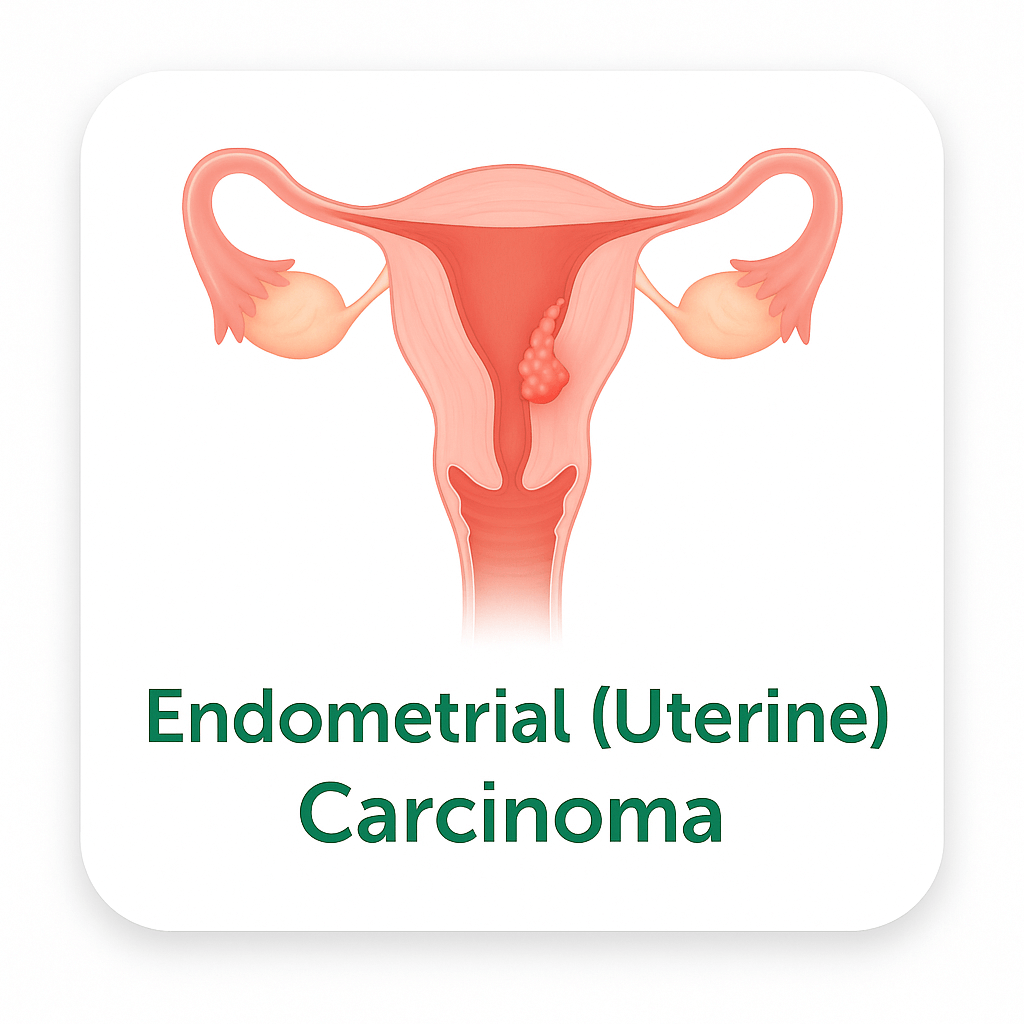
Endometrial (Uterine) Carcinoma – Extension
Main Grouping
Reproductive
Organ System
Uterus
Cell Origin
Endometrial epithelium
Pathways Affected
Endometrial carcinoma involves the PI3K/AKT/mTOR pathway as the single most dominant and consistent oncogenic axis across all molecular subtypes, with PTEN loss in approximately 80 to 83 percent of Type I endometrioid EC and up to 95 percent of all EC cases harboring alterations in the PI3K/PIK3R1/PTEN pathway; additionally, estrogen signaling drives endometrial epithelial proliferation in Type I EC, KRAS/MAPK/ERK mutations drive proliferative signaling in a subset of EC, CTNNB1/Wnt/beta-catenin activating mutations are the most specific molecular alteration for endometrioid EC, TP53 loss drives chromosomal instability in high-grade serous and copy-number high EC, and MMR/mismatch repair deficiency drives the MSI-H hypermutated subtype in approximately 28 percent of EC.
The PI3K/AKT/mTOR pathway is the most consistently altered pathway across all endometrial carcinoma molecular subtypes, with PTEN loss-of-function mutations in approximately 80 to 83 percent of Type I endometrioid EC directly releasing PI3K/AKT from PTEN's phosphatase-mediated negative regulation; PIK3CA mutations in approximately 20 to 40 percent of Type I EC and PIK3R1 mutations in approximately 43 percent of Type I EC co-occur with PTEN loss creating compounded PI3K/AKT/mTOR pathway activation; mTORC1 drives protein synthesis, cellular metabolism, and endometrial cell proliferation downstream of constitutive AKT activation; curcumin inhibits PI3K/AKT/mTOR in endometrial cancer cell models and reduces PTEN-loss-driven AKT activation.
The estrogen signaling pathway drives Type I endometrioid EC carcinogenesis through prolonged unopposed estrogen exposure stimulating endometrial glandular epithelial proliferation; estrogen receptor alpha (ERalpha) mediates transcriptional activation of proliferative genes including MYC, CCND1 (cyclin D1), and growth factor receptor genes in endometrial epithelial cells; dietary phytoestrogens from soybeans (genistein and daidzein) and flaxseed (lignans secoisolariciresinol and matairesinol) compete with estradiol for ERalpha binding and additionally stimulate sex hormone binding globulin (SHBG) production reducing circulating free estradiol; indole-3-carbinol from cruciferous vegetables modulates cytochrome P450-mediated estrogen hydroxylation toward the less potent 2-hydroxyestradiol pathway rather than the carcinogenic 16-alpha-hydroxyestradiol pathway.
The KRAS/MAPK/ERK pathway is activated through KRAS mutations in approximately 15 to 26 percent of Type I endometrioid EC and through RTK signaling in a broader subset of EC; KRAS mutations drive constitutive RAS/RAF/MEK/ERK proliferative signaling; curcumin inhibited ERK2 and JUN gene expression and ERK/c-Jun phosphorylation in Ishikawa endometrial carcinoma cells (PMC7012278), directly targeting this pathway. The Wnt/beta-catenin pathway is activated through CTNNB1 (beta-catenin) mutations in approximately 14 to 44 percent of endometrioid EC, making CTNNB1 mutation the most histologically specific mutation for endometrioid carcinoma histology; activating CTNNB1 mutations stabilize beta-catenin preventing ubiquitin-mediated degradation and enabling beta-catenin nuclear translocation with TCF/LEF transcriptional activation of MYC, CCND1, and MMP7; quercetin and curcumin both inhibit Wnt/beta-catenin signaling in EC cell models. The NF-kB pathway is activated in endometrial cancer through PI3K/AKT downstream signaling and TNF-alpha/IL-6 inflammatory cytokine loops; liposomal curcumin downregulated NF-kB proteins in Ishikawa and HEC-1 endometrial cancer cells through caspase-3 activation and MMP suppression (PMC6586219). The p53 tumor suppressor pathway is disrupted through TP53 mutations in approximately 90 percent of Type II serous EC and approximately 10 to 20 percent of Type I EC; p53 loss enables the extensive chromosomal instability and copy number alterations characterizing the CN-H/p53-aberrant molecular subtype. The mismatch repair pathway is deficient in approximately 28 percent of EC through MLH1/MSH2/MSH6/PMS2 mutations or MLH1 promoter hypermethylation (approximately 80 percent of sporadic MSI-H EC); MSI-H EC associated with Lynch syndrome carries germline MMR gene mutations. The IGF-1 signaling pathway is activated in endometrial cancer through hyperinsulinemia and elevated IGF-1 from adipose tissue and liver in obese patients, directly stimulating endometrial cell proliferation through IGF-1R/PI3K/AKT; dietary phytochemicals including EGCG and genistein inhibit IGF-1R in EC models. The FGFR2 pathway is mutated in approximately 16 percent of Type I endometrioid EC providing an additional RTK/MAPK/ERK driver; quercetin and EGCG inhibit FGFR2 kinase activity in cancer cell models. The ERBB2 (HER2) pathway is amplified in approximately 13.4 percent of CN-H/p53-aberrant EC, primarily in high-grade serous histology, providing an actionable RTK target; curcumin and EGCG inhibit ERBB2 kinase and downstream AKT/ERK signaling. The ARID1A chromatin remodeling pathway is mutated in a significant subset of EC; ARID1A encodes a SWI/SNF complex member regulating chromatin accessibility and gene expression; sulforaphane and curcumin inhibit HDAC and DNMT activity targeting epigenetically silenced genes in EC.
Description
Endometrial carcinoma is the most commonly diagnosed cancer of the female reproductive tract in the United States, the fourth most common cancer in women in the United States, and the most common gynecological cancer in developed countries globally. An estimated 67,880 new cases of uterine corpus cancer and approximately 13,250 deaths were projected in the United States in 2024. Globally, endometrial cancer is the sixth most common cancer in women with approximately 417,000 new cases and 97,000 deaths reported in 2022 according to GLOBOCAN data. The 5-year relative survival for all stages is approximately 81 percent in the United States: localized stage I approximately 95 percent, regional disease approximately 69 percent, and distant stage IV approximately 19 percent. Endometrial cancer incidence has been rising in the United States over the past several decades, with increases observed across all racial and ethnic groups.
The most well-established endometrial carcinoma risk factor is prolonged exposure to unopposed estrogen relative to progesterone, whether through endogenous sources (obesity, anovulation, polycystic ovary syndrome, late menopause) or exogenous sources; adipose tissue aromatizes androgens to estrogens, making obesity the strongest modifiable risk factor for EC (women with BMI greater than 40 have approximately 9-fold increased risk compared to normal BMI women); insulin resistance and hyperinsulinemia further stimulate endometrial cell proliferation through insulin receptor and IGF-1 receptor signaling. Lynch syndrome (hereditary nonpolyposis colorectal cancer, HNPCC) is the most important hereditary EC risk syndrome, caused by germline mutations in mismatch repair genes (MLH1, MSH2, MSH6, PMS2) conferring approximately 40 to 60 percent lifetime EC risk.
The TCGA integrated genomic classification (2013) of 373 endometrial carcinomas established four molecular subtypes: POLE ultramutated (approximately 6 to 10 percent of EC, characterized by POLE exonuclease domain mutations causing extremely high tumor mutational burden greater than 100 mutations per megabase, associated with excellent prognosis with 5-year recurrence-free survival above 96 percent in grade 3 early EC); MSI hypermutated (approximately 28 percent, MSI or MMR deficiency with MLH1/MSH2/MSH6/PMS2 mutations or MLH1 promoter hypermethylation, elevated TMB of 10 to 100 mutations per megabase, frequent PTEN/PIK3CA/KRAS mutations, intermediate prognosis); copy-number low/NSMP (no specific molecular profile, approximately 39 percent, predominantly low-grade endometrioid with PTEN/CTNNB1/PIK3CA/KRAS mutations, normal p53, intermediate-good prognosis); and copy-number high/p53 aberrant (approximately 26 percent, high-grade tumors predominantly serous histology, frequent TP53 mutations, extensive somatic copy number alterations, ERBB2/CCNE1 amplification, worst prognosis).
Multiple plant phytochemicals have documented activity in endometrial cancer cell line models. A published study (PMC7012278) demonstrated curcumin decreasing Ishikawa endometrial carcinoma cell viability, inhibiting cell migration, inducing apoptosis, causing S-phase cell cycle arrest, and reducing ERK2 and JUN gene expression and phosphorylation of ERK and c-Jun, targeting the MAPK/ERK and AP-1 signaling pathway in endometrial cancer cells. Additional evidence confirms curcumin suppressing migration and invasion in HEC-1B and Ishikawa cells (PMC4533742) and downregulating NF-kB in Ishikawa and HEC-1 cells (PMC6586219).
Plant-Based Description
Whole-food plant-based dietary patterns provide nutrients and phytochemicals with documented activity relevant to endometrial carcinoma through direct EC cell line anti-proliferative activity in Ishikawa, HEC-1, HEC-1B, and AN3CA endometrial cancer cell lines, PI3K/AKT/mTOR suppression targeting the dominant pathway altered in up to 95 percent of EC cases, MAPK/ERK and AP-1/c-Jun signaling inhibition in Ishikawa cells, NF-kB suppression in Ishikawa and HEC-1 EC cells, Wnt/beta-catenin inhibition targeting CTNNB1-mutant endometrioid EC, anti-migration and anti-invasion activity in EC cell models, S-phase cell cycle arrest, apoptosis induction through caspase-3/MMP pathway, estrogen metabolism modulation toward less carcinogenic 2-hydroxyestradiol pathway, phytoestrogen competitive ERalpha binding, IGF-1 pathway inhibition relevant to obesity-driven EC, and HDAC/DNMT inhibition targeting epigenetically silenced tumor suppressors including MLH1 in MSI-H EC. Curcumin decreased Ishikawa cell viability, inhibited migration, induced apoptosis, caused S-phase arrest, and reduced ERK2/JUN expression and ERK/c-Jun phosphorylation (PMC7012278). Curcumin also suppressed migration and invasion of HEC-1B and Ishikawa cells (PMC4533742). Genistein and daidzein from soybeans compete with estradiol for ERalpha binding. Indole-3-carbinol modulates CYP450-mediated estrogen hydroxylation. Quercetin inhibits PI3K/AKT, Wnt/beta-catenin, and FGFR2 in EC models.
Plant Chemistry Detail
Curcumin from turmeric has the most directly documented anti-endometrial carcinoma activity across multiple EC cell lines with confirmed molecular mechanisms. A published study in Computational and Mathematical Methods in Medicine (PMC7012278) documented curcumin in Ishikawa endometrial carcinoma cells: curcumin decreased cell viability in a dose-dependent manner confirmed by MTT assay; curcumin inhibited migration of Ishikawa cancer cells in wound healing assay; curcumin induced apoptosis; curcumin caused S-phase cell cycle arrest; curcumin reduced the mRNA expression levels of ERK2 and JUN genes (confirmed by mRNA expression analysis); curcumin inhibited phosphorylation of ERK and c-Jun (confirmed by western blotting); the study concluded that curcumin inhibits proliferation of endometrial carcinoma cells by downregulating ERK/c-Jun signaling pathway activity, directly targeting the MAPK/ERK and AP-1 transcriptional pathway activated through KRAS mutations in approximately 15 to 26 percent of Type I endometrioid EC and through multiple RTK pathways across EC subtypes.
A published study in International Journal of Molecular Medicine (PMC4533742) documented curcumin in HEC-1B and Ishikawa endometrial carcinoma cells: curcumin significantly inhibited migration of HEC-1B cells in a concentration-dependent manner with inhibition rates of approximately 65 percent at 10 μM, 69 percent at 20 μM, and 90 percent at 30 μM of curcumin at 24 hours; curcumin reduced invasion of HEC-1B cells substantially in a concentration-dependent manner with quantified invasiveness reduction of 18.58 percent, 51.89 percent, and 73.58 percent at the same concentrations; anti-metastatic effects were also observed in Ishikawa cells; this study confirmed that curcumin targets the EMT and invasion machinery in endometrial carcinoma.
Additional documented curcumin anti-EC evidence includes: inhibition of Wnt signaling pathway downregulating the androgen receptor in EC cells; reduction of Bcl-2 expression and proto-oncogene Ets-1 levels in HEC-1-A endometrial adenocarcinoma cells; induction of apoptosis and DNA degradation in HEC-1-A cells; NF-kB protein downregulation in Ishikawa and HEC-1 cells through liposomal delivery, reducing caspase-3 pro-apoptotic signaling, IL-6, TNF-alpha, and MMP expression (PMC6586219); FOXO1 tumor suppressor upregulation (FOXO1 is downregulated in EC); miR-21-mediated anti-proliferative, pro-apoptotic, anti-metastatic effects; and PI3K/AKT/mTOR inhibition through PTEN restoration in PTEN-deficient endometrial cancer cell models (PMC7891161).
Quercetin from yellow onions and kale inhibits PI3K/AKT, KRAS downstream MAPK/ERK, and Wnt/beta-catenin (CTNNB1) signaling in endometrial cancer cell models, targeting three of the four most common oncogenic alterations in Type I endometrioid EC. EGCG from green tea inhibits PI3K/AKT, FGFR2, ERBB2, and IGF-1R in endometrial cancer cell models; EGCG also inhibits DNMT targeting MLH1 promoter hypermethylation driving sporadic MSI-H EC. Genistein and daidzein from soybeans competitively bind ERalpha and reduce endometrial cell estrogen responsiveness; genistein additionally inhibits PI3K/AKT and FGFR2 in EC models; flaxseed lignans secoisolariciresinol and matairesinol are converted to enterodiol and enterolactone by gut microbiota and compete with estradiol for ERalpha binding with documented inverse associations with EC risk in epidemiological studies. Indole-3-carbinol from cruciferous vegetables modulates CYP1A1 and CYP1B1-mediated estrogen hydroxylation toward the 2-hydroxyestradiol (less carcinogenic) pathway rather than the 16-alpha-hydroxyestradiol (more carcinogenic) pathway relevant to estrogen-driven Type I EC. Sulforaphane from broccoli activates Nrf2/ARE and inhibits HDAC targeting epigenetically silenced MLH1 in sporadic MSI-H EC through MLH1 promoter hypermethylation. Resveratrol inhibits PI3K/AKT, NF-kB, and VEGF in endometrial cancer models. Apigenin from parsley inhibits PI3K/AKT and activates AMPK in EC models. Luteolin from celery and parsley inhibits STAT3 and PI3K/AKT in EC cell models.
Nutritional Focus
Nutritional focus in endometrial carcinoma research is led by curcumin from turmeric with direct endometrial cancer cell line evidence from a published study (PMC7012278) in Ishikawa endometrial carcinoma cells documenting cell viability reduction, migration inhibition, apoptosis induction, S-phase cell cycle arrest, and reduced ERK2 and JUN mRNA expression and ERK/c-Jun phosphorylation — targeting the MAPK/ERK and AP-1 pathway activated through KRAS mutations in approximately 15 to 26 percent of Type I endometrioid EC; curcumin additionally suppressing migration and invasion in HEC-1B and Ishikawa cells with inhibition rates of 65 to 90 percent concentration-dependently at 24 hours (PMC4533742) — directly targeting EC metastatic progression; curcumin downregulating NF-kB proteins in Ishikawa and HEC-1 EC cells with reduced IL-6, TNF-alpha, and MMP expression (PMC6586219); quercetin from yellow onions inhibiting PI3K/AKT, KRAS/MAPK/ERK, and CTNNB1/Wnt/beta-catenin targeting three of the four most common oncogenic alterations in Type I endometrioid EC; genistein and daidzein from soybeans competitively binding ERalpha reducing endometrial estrogen responsiveness in Type I estrogen-driven EC; EGCG from green tea inhibiting PI3K/AKT, FGFR2, ERBB2, IGF-1R, and DNMT targeting MLH1 hypermethylation in sporadic MSI-H EC; indole-3-carbinol from cruciferous vegetables shifting estrogen metabolism from carcinogenic 16-alpha-hydroxyestradiol toward 2-hydroxyestradiol through CYP1A1 modulation directly relevant to estrogen-driven Type I EC carcinogenesis; flaxseed lignans secoisolariciresinol and matairesinol converted by gut microbiota to enterodiol and enterolactone competing with estradiol for ERalpha binding; sulforaphane activating Nrf2 and inhibiting HDAC/DNMT targeting MLH1 epigenetic silencing in MSI-H EC; folate from leafy greens and legumes providing one-carbon methyl groups for SAM-cycle chemistry relevant to MLH1 and tumor suppressor gene promoter methylation regulation in EC.
Research Notes
EC epidemiology: approximately 67,880 new US cases and 13,250 deaths projected 2024; most common cancer of female reproductive tract in US; 4th most common cancer in US women; approximately 417,000 new cases globally 2022; 5-year survival all stages approximately 81%; localized stage I approximately 95%; distant stage IV approximately 19%; incidence rising. TCGA EC molecular subtypes (2013, 373 tumors): POLE ultramutated (~6-10%): TMB greater than 100 mut/Mb, best prognosis, 5-year RFS above 96% grade 3; MSI hypermutated (~28%): MLH1/MSH2/MSH6/PMS2 mutations or MLH1 hypermethylation (~80% sporadic), TMB 10-100 mut/Mb; PTEN/PIK3CA/KRAS frequent; CN-low/NSMP (~39%): PTEN/CTNNB1/PIK3CA/KRAS mutations, normal p53; CN-high/p53-aberrant (~26%): TP53 mutations, extensive SCNA, ERBB2/CCNE1 amplification, worst prognosis. Type I molecular alterations: PTEN loss ~80-83%; PIK3CA mutations ~20-40%; PIK3R1 mutations ~43%; KRAS mutations ~15-26%; CTNNB1 mutations ~14-44%; up to 95% of all EC alter PI3K pathway. Curcumin in Ishikawa EC (PMC7012278): cell viability reduction; migration inhibition; apoptosis induction; S-phase arrest; ERK2/JUN mRNA reduced; ERK/c-Jun phosphorylation inhibited. Curcumin migration/invasion in HEC-1B (PMC4533742): migration inhibition 65-90% concentration-dependent; invasion reduced 18-74%. Curcumin NF-kB Ishikawa/HEC-1 (PMC6586219): NF-kB downregulation; caspase-3 activation; MMP/IL-6/TNF-alpha reduction.
Notes Visibility
show
Key Foods
Turmeric,Broccoli,Kale,Spinach,Brussels Sprouts,Cauliflower,Garlic,Yellow Onion,Carrot,Tomato,Beetroot,Cabbage,Flaxseed,Apple,Blueberry,Pomegranate,Grape,Raspberry,Strawberry,Orange,Lemon,Soybeans,Edamame,Green Lentils,Black Beans,Chickpeas,Brown Rice,Quinoa,Oats,Wild Rice,Rye Berries,Sorghum,Walnut,Almond,Brazil Nut,Pumpkin Seeds,Chia Seeds,Sesame Seeds,Hemp Seeds,Shiitake,Maitake,Cremini,Portobello,Lions Mane,Green Tea,Ginger,Black Pepper,Garlic Powder,Parsley,Rosemary,Oregano, Celery, Fennel, Leek,Avocado,Artichoke,Radish,Tangerine, Red Onion
Linked Nutrients
vitamin-c,vitamin-e,vitamin-d3,vitamin-b9,vitamin-b6,vitamin-a,selenium,zinc,magnesium,calcium,potassium,iron,curcumin,quercetin,genistein,egcg,indole-3-carbinol,sulforaphane,secoisolariciresinol,beta-carotene,anthocyanins,beta-glucans,dietary-fiber,plant-ala-omega3
Last Updated
2025-10-13 09:58:15

