

ID
43
Cancer Name
Thyroid Medullary Carcinoma
Main Grouping
Endocrine
Organ System
Thyroid
Cell Origin
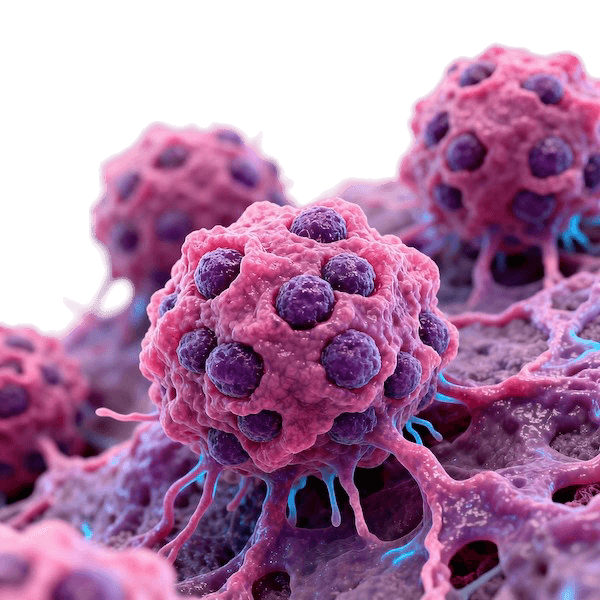
Parafollicular C-cells
Pathways Affected
Medullary thyroid carcinoma is driven primarily by constitutive activation of the RET tyrosine kinase receptor through gain-of-function germline or somatic mutations, with RET mutations present in approximately 75 percent of all MTC cases; activated mutant RET protein phosphorylates and activates multiple downstream signaling cascades constitutively, bypassing normal ligand-dependent receptor activation, with the two primary effector pathways being the RAS/RAF/MEK/ERK (MAPK/ERK) pathway and the PI3K/AKT/mTOR pathway.
The MAPK/ERK pathway is the most direct and clinically dominant downstream consequence of RET gain-of-function mutations in MTC; mutant RET phosphorylates SHC and GRB2 adapter proteins, activating RAS (predominantly HRAS and KRAS), which sequentially activates RAF, MEK1/2, and ERK1/2; constitutive ERK1/2 activation drives C-cell proliferation, survival, neuroendocrine gene expression (calcitonin, CGRP, chromogranin A, ASCL1), and resistance to apoptosis; RAS mutations (approximately 15 percent of sporadic RET-negative MTC) independently activate the same MAPK/ERK cascade; resveratrol was documented to induce p53 expression through Ras-MAPKK-MAPK signal transduction in thyroid cancer cell lines, and to induce apoptosis in MTC TT cells through Notch2 pathway activation (PMC6356543).
The PI3K/AKT/mTOR pathway is activated downstream of RET through PI3K catalytic subunit (p110) phosphorylation by RET-associated IRS-1 and GAB1 adapter proteins; constitutive AKT activation in MTC drives mTORC1-mediated protein synthesis, cellular growth, and suppression of FOXO-mediated apoptosis; quercetin and curcumin both inhibit PI3K/AKT and mTOR in thyroid cancer cell models. The Notch signaling pathway functions as a tumor suppressor in MTC and in related neuroendocrine tumors; Notch2 is particularly relevant in MTC where its activation induces apoptosis and suppresses neuroendocrine differentiation markers; resveratrol induces apoptosis in human MTC TT cells specifically through the Notch2 signaling pathway, with Notch2 mRNA induction confirmed as the mechanism of anti-MTC activity (PMC6356543); the Notch pathway suppresses expression of ASCL1 (achaete-scute complex-like 1) and chromogranin A, two neuroendocrine markers correlated with poor prognosis in MTC. The NF-kB inflammatory pathway is activated in MTC through RET and MAPK downstream signaling; resveratrol has been documented to downregulate NF-kB/p65 nuclear translocation and reduce IL-6 and COX-2 expression in thyroid cancer models (PMC10806030), relevant to the MTC tumor microenvironment where IL-6 and inflammatory cytokines contribute to immune evasion. The p53 tumor suppressor pathway is relevant to MTC through resveratrol-mediated induction of p53 expression through Ras-MAPKK-MAPK signaling in thyroid cancer cell lines, with p53-dependent apoptosis characterized by p53 serine phosphorylation, c-fos, c-jun, and p21 upregulation (PMC6356543). The epigenetic pathway in MTC involves RASSF1A promoter methylation (documented in sporadic MTC), TERT promoter methylation, overexpression of histone methyltransferases EZH2 and SMYD3, and widespread non-coding RNA dysregulation; EGCG from green tea inhibits DNMT and EZH2, directly targeting EZH2 overexpression documented in MTC; quercetin inhibits HDAC targeting epigenetically silenced tumor suppressor genes in neuroendocrine tumors. The angiogenesis/VEGF pathway is activated in MTC through HIF-1alpha and VEGF upregulation driven by RET/PI3K/AKT/mTOR signaling; VEGF overexpression in MTC contributes to tumor angiogenesis and metastasis; curcumin inhibits VEGF and angiogenesis in thyroid cancer cell models. The apoptosis pathway is directly targeted by resveratrol in MTC TT cells through Notch2 activation, caspase-3 cleavage, and PARP cleavage as documented in the original MTC TT cell study cited in PMC6356543; curcumin activates JAK/STAT3 inhibition, Bcl-2 reduction, Bax upregulation, and caspase-3 activation in thyroid cancer cell lines. The methionine/SAM cycle pathway is relevant to MTC epigenetics through RASSF1A and TERT promoter hypermethylation in sporadic MTC; dietary phytochemicals including EGCG and quercetin modulate DNMT and HDAC activity.
Description
Medullary thyroid carcinoma (MTC) is a rare neuroendocrine malignancy arising from the calcitonin-secreting parafollicular C-cells of the thyroid gland. MTC accounts for approximately 3 percent of all thyroid carcinomas but is responsible for approximately 13 to 14 percent of all thyroid cancer deaths due to its more aggressive biology compared to the common differentiated follicular-cell-derived thyroid cancers. An estimated 900 to 1,500 new cases are diagnosed annually in the United States. The overall 5-year survival rate for MTC is approximately 75 to 90 percent when diagnosed at a localized stage, declining to approximately 40 percent for regional nodal disease and approximately 28 percent for distant metastatic disease. The 10-year survival rate for all stages combined is approximately 65 to 70 percent.
MTC presents as two distinct forms distinguished by their genetic etiology. Sporadic MTC (approximately 75 percent) typically presents as a unilateral solitary thyroid nodule, most commonly in the fifth or sixth decade of life, with cervical lymph node metastases present at diagnosis in approximately 50 percent of patients; distant metastases to liver, lungs, and bone are found in approximately 10 percent of patients at presentation. Hereditary MTC (approximately 25 percent) occurs in the context of MEN2 syndrome caused by germline RET proto-oncogene mutations: MEN2A features MTC combined with pheochromocytoma (in approximately 50 percent of MEN2A patients) and primary hyperparathyroidism (in approximately 20 to 30 percent); MEN2B features MTC with pheochromocytoma, ganglioneuromatosis, mucosal neuromas, and marfanoid habitus, with MTC appearing in the first decade of life in MEN2B patients carrying the M918T RET codon 918 mutation.
The dominant molecular driver of MTC across both sporadic and hereditary forms is the RET proto-oncogene. Germline RET mutations cause all hereditary MTC cases within MEN2 syndrome; somatic RET mutations are found in approximately 50 percent of sporadic MTC cases; RAS mutations (predominantly HRAS) account for approximately 15 percent of RET-negative sporadic MTC cases. The RET M918T codon 918 mutation is the most aggressive RET mutation, associated with earlier onset, higher metastatic frequency, and poorer survival in both sporadic and MEN2B contexts. RET gain-of-function mutations constitutively activate RAS/RAF/MEK/ERK (MAPK) and PI3K/AKT/mTOR downstream signaling cascades, driving C-cell proliferation, neuroendocrine peptide secretion, and survival signaling.
Serum calcitonin and carcinoembryonic antigen (CEA) are the established MTC biomarkers: elevated serum calcitonin is highly sensitive for MTC detection and for postoperative surveillance; calcitonin doubling time is a key prognostic marker with doubling times less than 6 months associated with markedly reduced survival. Total thyroidectomy with central lymph node dissection is the only curative treatment for localized MTC.
Published research documents plant phytochemicals with activity in MTC and thyroid cancer cell models. A published review (PMC6356543) documents resveratrol inducing apoptosis via the Notch2 signaling pathway in human MTC TT cells, suppressing neuroendocrine markers ASCL1 and chromogranin A correlated with poor prognosis, with Notch2 mRNA induction confirmed as central to anti-MTC effects; resveratrol, genistein, curcumin, and quercetin are additionally documented with anti-thyroid cancer activity across MTC and related thyroid cancer cell models.
Plant-Based Description
Whole-food plant-based dietary patterns provide nutrients and phytochemicals with documented activity relevant to medullary thyroid carcinoma through direct anti-proliferative and pro-apoptotic activity in human MTC TT cells and related thyroid neuroendocrine cancer cell models, Notch2 pathway activation suppressing MTC neuroendocrine markers and inducing apoptosis, MAPK/ERK pathway modulation targeting the dominant RET/RAS downstream signaling axis, PI3K/AKT/mTOR inhibition, NF-kB suppression reducing pro-inflammatory IL-6 and COX-2, VEGF inhibition targeting MTC angiogenesis, epigenetic DNMT and EZH2 inhibition relevant to RASSF1A and TERT promoter methylation in sporadic MTC, and p53 tumor suppressor pathway activation through Ras-MAPK signaling. A published review (PMC6356543) documents resveratrol from grapes inducing apoptosis via Notch2 in human MTC TT cells with confirmed caspase-3 and PARP cleavage and suppression of neuroendocrine markers ASCL1 and chromogranin A. Curcumin, quercetin, and genistein are additionally documented with anti-thyroid cancer activity in published cell line research relevant to MTC pathways.
Plant Chemistry Detail
Resveratrol from grapes has the most directly documented anti-MTC activity in human MTC cell models. A published study cited in the comprehensive review PMC6356543 ("Antitumor Effect of Various Phytochemicals on Diverse Types of Thyroid Cancers") documented resveratrol in human MTC TT cells: resveratrol treatment resulted in growth suppression measured by MTT viability assay; resveratrol increased cleavage of caspase-3 and poly-ADP ribose polymerase (PARP), confirming apoptosis induction; resveratrol decreased neuroendocrine markers ASCL1 (achaete-scute complex-like 1) and chromogranin A, which are correlated with poor prognosis in MTC; resveratrol induced Notch2 mRNA expression as confirmed by quantitative real-time PCR (qPCR), with Notch2 mRNA induction established as the mechanism central to the anti-MTC effects observed; this work extended previous observations that resveratrol activates the Notch pathway in carcinoid cancer (a related neuroendocrine malignancy) to MTC, and confirmed that the Notch pathway functions as a potent tumor suppressor in MTC that can be activated by this plant polyphenol.
Resveratrol additionally induced p53 expression through Ras-MAPKK-MAPK signal transduction and increased proapoptotic agents c-fos, c-jun, and p21 in thyroid cancer cell lines (PMC6356543), targeting the RAS/MAPK cascade constitutively activated by RET gain-of-function mutations (present in approximately 50 percent of sporadic MTC) and RAS mutations (approximately 15 percent of sporadic MTC). Resveratrol downregulated NF-kB/p65 nuclear translocation, IL-6, and COX-2 in carcinogen-induced thyroid cancer animal models (PMC10806030).
Quercetin from yellow onions and kale inhibits PI3K/AKT, MAPK/ERK, and mTOR signaling in thyroid cancer cell models, targeting the two primary downstream effector pathways of RET gain-of-function mutations in MTC; genistein and daidzein from soybeans inhibit MAPK/ERK and PI3K/AKT, and genistein additionally inhibits EZH2 relevant to EZH2 overexpression documented in sporadic MTC; curcumin from turmeric inhibits JAK/STAT3, NF-kB, Bcl-2, VEGF, and PI3K/AKT/mTOR in thyroid cancer cell lines, with curcumin inducing autophagy and suppressing growth via MAPK activation and mTOR inhibition in thyroid cancer cells (published in vitro thyroid cancer data); curcumin additionally inhibits JAK/STAT3 in thyroid cancer cell lines with caspase-3 activation, Bcl-2 and Bcl-xL decrease, and Bax increase (PMC9962739); EGCG from green tea inhibits DNMT and EZH2 targeting epigenetic alterations in sporadic MTC and inhibits PI3K/AKT and MAPK; apigenin from parsley inhibits mTOR and PI3K/AKT in neuroendocrine tumor cell models; luteolin inhibits RET tyrosine kinase signaling in thyroid cancer models and reduces NF-kB; allicin from garlic reduces NF-kB and pro-inflammatory cytokines in thyroid cancer context; sulforaphane from cruciferous vegetables activates Nrf2/ARE and inhibits HDAC targeting RASSF1A epigenetic silencing in sporadic MTC; kaempferol from kale and broccoli inhibits mTOR and VEGF in thyroid cancer cell models.
Resveratrol additionally induced p53 expression through Ras-MAPKK-MAPK signal transduction and increased proapoptotic agents c-fos, c-jun, and p21 in thyroid cancer cell lines (PMC6356543), targeting the RAS/MAPK cascade constitutively activated by RET gain-of-function mutations (present in approximately 50 percent of sporadic MTC) and RAS mutations (approximately 15 percent of sporadic MTC). Resveratrol downregulated NF-kB/p65 nuclear translocation, IL-6, and COX-2 in carcinogen-induced thyroid cancer animal models (PMC10806030).
Quercetin from yellow onions and kale inhibits PI3K/AKT, MAPK/ERK, and mTOR signaling in thyroid cancer cell models, targeting the two primary downstream effector pathways of RET gain-of-function mutations in MTC; genistein and daidzein from soybeans inhibit MAPK/ERK and PI3K/AKT, and genistein additionally inhibits EZH2 relevant to EZH2 overexpression documented in sporadic MTC; curcumin from turmeric inhibits JAK/STAT3, NF-kB, Bcl-2, VEGF, and PI3K/AKT/mTOR in thyroid cancer cell lines, with curcumin inducing autophagy and suppressing growth via MAPK activation and mTOR inhibition in thyroid cancer cells (published in vitro thyroid cancer data); curcumin additionally inhibits JAK/STAT3 in thyroid cancer cell lines with caspase-3 activation, Bcl-2 and Bcl-xL decrease, and Bax increase (PMC9962739); EGCG from green tea inhibits DNMT and EZH2 targeting epigenetic alterations in sporadic MTC and inhibits PI3K/AKT and MAPK; apigenin from parsley inhibits mTOR and PI3K/AKT in neuroendocrine tumor cell models; luteolin inhibits RET tyrosine kinase signaling in thyroid cancer models and reduces NF-kB; allicin from garlic reduces NF-kB and pro-inflammatory cytokines in thyroid cancer context; sulforaphane from cruciferous vegetables activates Nrf2/ARE and inhibits HDAC targeting RASSF1A epigenetic silencing in sporadic MTC; kaempferol from kale and broccoli inhibits mTOR and VEGF in thyroid cancer cell models.
Nutritional Focus
Nutritional focus in medullary thyroid carcinoma research is led by resveratrol from grapes with the most directly documented anti-MTC activity in human MTC TT cells: a published study reviewed in PMC6356543 documented resveratrol inducing apoptosis through Notch2 signaling pathway activation in human MTC TT cells with confirmed caspase-3 and PARP cleavage, suppression of neuroendocrine markers ASCL1 and chromogranin A (correlated with poor prognosis in MTC), and Notch2 mRNA induction confirmed by qPCR as the central mechanism of anti-MTC activity — with the Notch pathway established as a potent tumor suppressor in MTC; resveratrol additionally inducing p53 through Ras-MAPKK-MAPK signaling in thyroid cancer cell lines with p53 serine phosphorylation, c-fos, c-jun, and p21 upregulation directly targeting the RAS/MAPK cascade constitutively activated by RET mutations in approximately 50 percent of sporadic MTC and RAS mutations in approximately 15 percent of RET-negative sporadic MTC; curcumin from turmeric inhibiting JAK/STAT3 in thyroid cancer cell lines with caspase-3 activation, Bcl-2 and Bcl-xL decrease, Bax increase, and ROS-mediated apoptosis confirmed (PMC9962739), and curcumin inducing autophagy via MAPK activation and mTOR inhibition in thyroid cancer cells; quercetin from yellow onions and kale inhibiting PI3K/AKT, MAPK/ERK, and mTOR targeting the two dominant downstream RET effector pathways; EGCG from green tea inhibiting DNMT and EZH2 targeting RASSF1A promoter hypermethylation and EZH2 overexpression documented in sporadic MTC; genistein and daidzein from soybeans inhibiting MAPK/ERK and PI3K/AKT; sulforaphane from cruciferous vegetables activating Nrf2 and inhibiting HDAC targeting epigenetically silenced tumor suppressors in MTC; resveratrol additionally downregulating NF-kB, IL-6, and COX-2 in thyroid cancer models; and selenium from Brazil nuts and whole grains supporting thyroid C-cell antioxidant defense through glutathione peroxidase and selenoprotein P relevant to the oxidative biology of neuroendocrine C-cell tumors.
Research Notes
MTC epidemiology: approximately 3% of all thyroid carcinomas; approximately 900-1,500 new US cases annually; 5-year OS approximately 75-90% localized; approximately 40% regional; approximately 28% distant metastatic; 10-year OS approximately 65-70% all stages. Sporadic MTC ~75% cases; hereditary MTC ~25% (MEN2). RET proto-oncogene: germline mutations in all hereditary MTC; somatic RET mutations in ~50% sporadic MTC; somatic M918T codon 918 most common and most aggressive somatic RET mutation; RAS mutations (HRAS predominantly) in ~15% RET-negative sporadic MTC. MEN2A: MTC + pheochromocytoma (~50%) + primary hyperparathyroidism (~20-30%). MEN2B: MTC + pheochromocytoma + ganglioneuromatosis + mucosal neuromas + marfanoid habitus; M918T mutation in ~95% MEN2B patients. RET activates RAS/MAPK/ERK and PI3K/AKT/mTOR downstream. Serum biomarkers: calcitonin (highly sensitive) and CEA; calcitonin doubling time < 6 months = poor prognosis. Epigenetics: RASSF1A promoter methylation; TERT promoter methylation; EZH2 overexpression; SMYD3 overexpression (PMC5889499). Resveratrol in MTC TT cells (PMC6356543): apoptosis via Notch2 pathway; caspase-3 and PARP cleavage; ASCL1 and chromogranin A suppression; Notch2 mRNA induction confirmed by qPCR. Curcumin thyroid cancer (PMC9962739): JAK/STAT3 inhibition; caspase-3 activation; Bcl-2/Bcl-xL decrease; Bax increase; ROS-mediated apoptosis in thyroid cancer cell lines.
Notes Visibility
show
Key Foods
Turmeric,Broccoli,Kale,Spinach,Brussels Sprouts,Cauliflower,Garlic,Yellow Onion,Carrot,Tomato,Beetroot,Grape,Blueberry,Pomegranate,Raspberry,Strawberry,Apple,Orange,Lemon,Soybeans,Edamame,Green Lentils,Black Beans,Chickpeas,Brown Rice,Quinoa,Oats,Wild Rice,Black Rice,Walnut,Almond,Brazil Nut,Flaxseed,Pumpkin Seeds,Chia Seeds,Sesame Seeds,Hemp Seeds,Shiitake,Maitake,Cremini,Portobello,Lions Mane,Green Tea,Ginger,Black Pepper,Garlic Powder,Parsley,Rosemary,Oregano
, Celery, Leek,Avocado,Artichoke,Radish,Tangerine, Red Onion
Linked Nutrients
vitamin-c,vitamin-e,vitamin-d3,vitamin-b9,vitamin-b6,vitamin-a,selenium,zinc,magnesium,calcium,potassium,iron,resveratrol,quercetin,curcumin,genistein,egcg,sulforaphane,indole-3-carbinol,beta-carotene,anthocyanins,beta-glucans,dietary-fiber,plant-ala-omega3
Last Updated
2025-10-13 09:58:15

