ID
45
Cancer Name
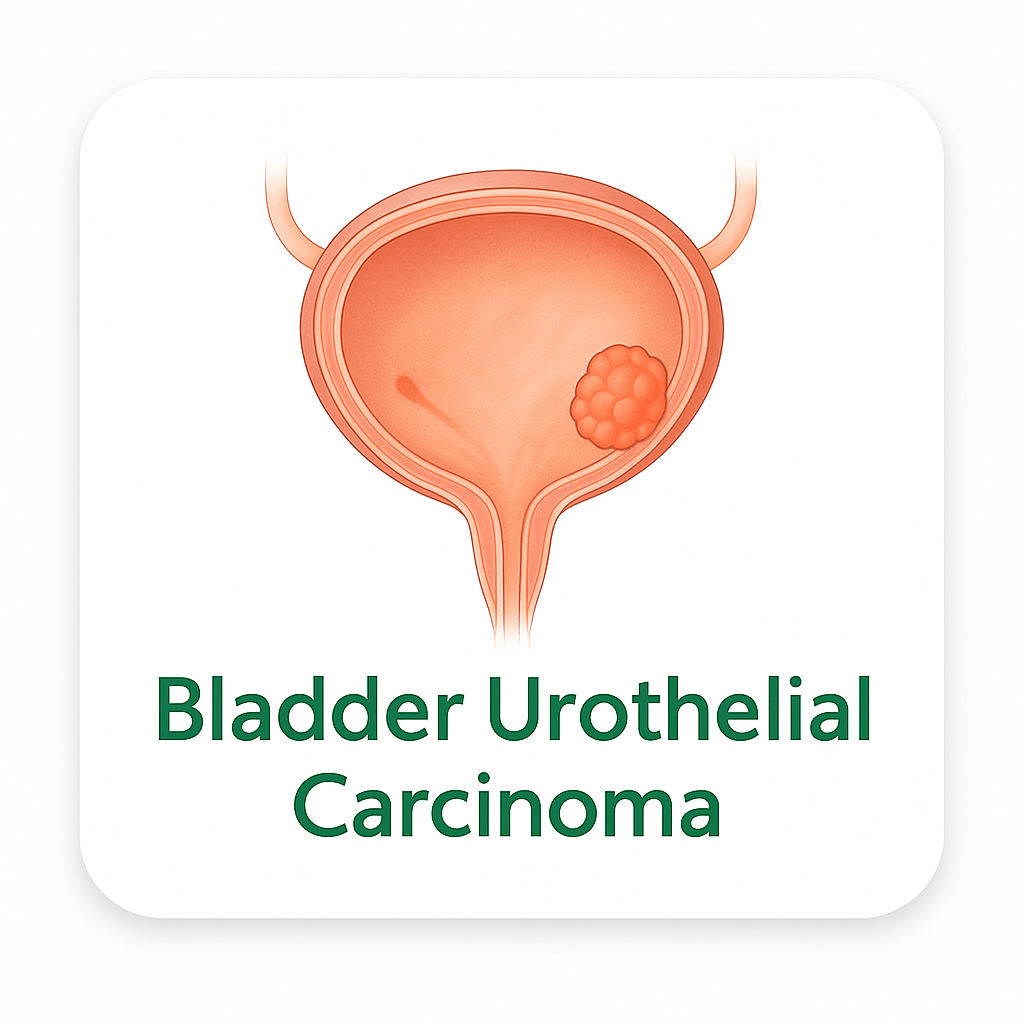
Bladder Urothelial Carcinoma – Extension
Main Grouping
Urinary
Organ System
Bladder
Cell Origin
Urothelial epithelium
Pathways Affected
Bladder urothelial carcinoma involves multiple oncogenic signaling pathways, with the dominant molecular alterations across NMIBC and MIBC defining distinct pathway-level biology and creating distinct therapeutic vulnerabilities.
The FGFR3/RTK/MAPK/PI3K pathway is the dominant oncogenic axis in NMIBC papillary tumors: FGFR3 activating mutations in approximately 70 percent of low-grade Ta NMIBC constitutively activate FGFR3 receptor tyrosine kinase, which sequentially phosphorylates and activates RAS, RAF, MEK, ERK (MAPK/ERK cascade) and PI3K (p110 alpha, PIK3CA mutations in 20 to 25 percent of all UC) and AKT/mTOR downstream; sulforaphane was documented to suppress growth and proliferation of RT4, RT112, T24, and TCCSUP bladder cancer cell lines through AKT/mTOR signaling cascade investigation (PMC9564120), directly targeting this pathway; quercetin and EGCG inhibit FGFR3 kinase activity in bladder cancer cell models; curcumin inhibits PI3K/AKT/mTOR and MAPK/ERK in bladder cancer cell lines.
The PI3K/AKT/mTOR pathway is constitutively activated in bladder UC through FGFR3 mutations (NMIBC), PIK3CA mutations (20 to 25 percent of all UC), and PTEN loss; mTORC1 drives urothelial cell protein synthesis, growth, and proliferation; sulforaphane inhibited AKT/mTOR signaling in drug-sensitive and drug-resistant RT4, RT112, T24, and TCCSUP bladder cancer cell lines (PMC9564120); sulforaphane also inhibits PI3K/Akt/mTOR as documented in a comprehensive bladder cancer review (PMC10540234). The TP53/p53 tumor suppressor pathway is disrupted through TP53 mutations in 48 percent of MIBC (highest prevalence in basal-squamous subtype) and in approximately 10 percent of NMIBC; p53 loss eliminates G1/S DNA damage checkpoint control allowing genomic instability and MIBC progression; sulforaphane induces apoptosis in T24 human urinary bladder cancer cells through a ROS-mediated mitochondrial pathway with endoplasmic reticulum stress and Nrf2 pathway involvement (PubMed 24993616); curcumin activates p53 and induces apoptosis in bladder cancer cell lines.
The RB1/CDKN2A/cell cycle pathway is inactivated through CDKN2A deletions in 24 percent and RB1 mutations in 18 percent of MIBC, releasing CDK4/cyclin D1 and CDK6/cyclin D3 from CDKN2A-mediated inhibition and CDK4/6/cyclin D from RB1-mediated transcriptional repression, enabling constitutive E2F1-driven transcription of proliferative genes; quercetin and apigenin inhibit CDK4 and CDK6 in bladder cancer cell models, targeting this pathway. The TERT pathway drives urothelial cell immortalization through TERT promoter mutations (approximately 66 to 80 percent of all bladder cancers) increasing TERT mRNA and telomerase enzyme activity in urothelial tumor cells; EGCG inhibits telomerase activity in cancer cell lines. The Nrf2/ARE antioxidant response pathway is uniquely dual-role in bladder cancer: carcinogen detoxification in normal urothelial cells requires Nrf2/ARE-mediated phase II enzyme induction (NAT2, GSTM1, GSTT1) to eliminate bladder carcinogens including 4-aminobiphenyl from tobacco smoke; GSTM1 null polymorphism (gene deletion, approximately 50 percent of population) and GSTT1 null polymorphism are established bladder cancer risk factors due to reduced phase II detoxification; sulforaphane activates Nrf2/ARE inducing HO-1, NQO1, GST, and GCS and is the most potent dietary Nrf2 activator, providing dual protection through carcinogen detoxification in normal urothelium and direct anti-tumor activity in established bladder cancer cells (PMC10165231, PMC9564120). The NF-kB inflammatory pathway is constitutively activated in MIBC through TNF-alpha/IL-6 tumor microenvironment signaling and MAPK/AKT downstream activation; sulforaphane inhibits NF-kB in bladder cancer cell models (PMC10540234); curcumin inhibits NF-kB in bladder cancer cell lines. The JAK/STAT3 pathway is activated in MIBC through IL-6 and oncostatin M signaling in the tumor microenvironment; sulforaphane was documented to inhibit miR-124/IL-6R/STAT3 in bladder cancer models (PMC10540234); EGCG inhibits STAT3 in bladder cancer cells. The Wnt/beta-catenin pathway is activated in bladder UC through APC mutations and CTNNB1 beta-catenin mutations; sulforaphane inhibits ZO-1/beta-catenin signaling in bladder cancer (PMC10540234); curcumin and quercetin inhibit Wnt/beta-catenin in bladder cancer cell models.
Description
Bladder urothelial carcinoma is the tenth most common cancer globally and the sixth most common cancer in the United States by incidence. An estimated 83,190 new cases and 16,840 deaths from bladder cancer were projected in the United States in 2024. Globally, approximately 614,000 new bladder cancer cases and 220,000 deaths were reported in 2022 according to GLOBOCAN data. Bladder cancer has the highest recurrence rate of any solid tumor, with non-muscle invasive bladder cancer recurring in approximately 50 to 70 percent of patients within 5 years and progressing to muscle-invasive disease in approximately 10 to 30 percent of high-risk NMIBC cases. The 5-year relative survival by stage is approximately 96 percent for localized (Ta/T1), 70 percent for T2, 40 percent for T3, 23 percent for T4a, and 5 to 6 percent for metastatic M1 bladder cancer. Bladder cancer is the 4th most common cancer in men in the United States with a 4:1 male-to-female incidence ratio. Smoking tobacco is the dominant environmental risk factor, accounting for approximately 50 to 65 percent of bladder cancer cases in men; occupational exposure to aromatic amines, polycyclic aromatic hydrocarbons, and other bladder-specific carcinogens through the dyestuff, rubber, leather, and textile industries accounts for approximately 25 percent of cases.
The molecular landscape of bladder urothelial carcinoma is heterogeneous and stage-dependent. The most universal molecular alteration across all bladder cancer subtypes is TERT promoter mutation, present in approximately 66 to 80 percent of bladder cancers across all stages, representing an early driver event that extends telomere length supporting urothelial cell immortalization. FGFR3 activating mutations (predominantly S249C, R248C, G372C, Y375C, A393E in the extracellular and transmembrane domains) are the dominant driver of NMIBC papillary tumors, present in approximately 70 percent of Ta low-grade NMIBC; FGFR3 activating mutations constitutively activate FGFR3 tyrosine kinase independent of FGF ligand binding, driving PI3K/AKT/mTOR and MAPK/ERK proliferative signaling in urothelial cells.
MIBC is characterized by TP53 mutations (48 percent) and RB1 pathway disruption (CDKN2A deletions 24 percent, RB1 mutations 18 percent) resulting in loss of both G1/S (TP53/p21/CDK4-CDKN2A) and G2/M (RB1/E2F) cell cycle checkpoint control; these alterations are mutually enriched in basal-squamous MIBC. PIK3CA activating mutations (20 to 25 percent) provide an additional mechanism of constitutive PI3K/AKT/mTOR activation across both NMIBC and MIBC. The APOBEC mutational signature (predominantly C-to-T and C-to-G transversions at TCA/TCT contexts) is found in approximately 67 percent of bladder cancers and is driven by APOBEC3A/3B cytidine deaminase activity, representing a major source of mutation diversity in bladder UC. Chromatin remodeling gene mutations (KDM6A approximately 27 percent, ARID1A, CREBBP, EP300, KMT2D, ASXL2) are among the most prevalent alterations in bladder cancer, establishing epigenetic dysregulation as a fundamental biological feature.
Published laboratory research documents sulforaphane from cruciferous vegetables with direct anti-bladder cancer activity in multiple bladder cancer cell lines including RT4, RT112, T24, and TCCSUP (PMC9564120), suppressing growth and proliferation through AKT/mTOR signaling, inducing apoptosis, and causing cell cycle arrest; and a comprehensive review (PMC10540234) documents sulforaphane anti-bladder cancer activity through multiple pathways including PI3K/AKT/mTOR, MAPK, NF-kB, Nrf2, and STAT3 across multiple bladder cancer cell lines and animal models.
Plant-Based Description
Whole-food plant-based dietary patterns provide nutrients and phytochemicals with documented direct anti-bladder cancer cell line activity in multiple established bladder urothelial carcinoma cell lines. Sulforaphane from cruciferous vegetables was documented to suppress growth and proliferation of drug-sensitive and drug-resistant bladder cancer cell lines RT4, RT112, T24, and TCCSUP through AKT/mTOR signaling (PMC9564120); to induce apoptosis in T24 human urinary bladder cancer cells through ROS-mediated mitochondrial pathway with Nrf2 pathway involvement (PubMed 24993616); and to inhibit bladder cancer through PI3K/AKT/mTOR, MAPK, NF-kB, Nrf2, and STAT3 pathways across multiple bladder cancer cell lines and animal models including UM-UC-3 xenografts with 67 percent tumor volume reduction and 5-fold increase in apoptotic cells (PMC10540234, PMC10165231). Curcumin, quercetin, EGCG, resveratrol, and isothiocyanates all have documented anti-bladder cancer cell line activity in published research. Dietary fiber, anthocyanins from berries, and kaempferol from kale and broccoli provide additional documented anti-urothelial cancer phytochemical activity.
Plant Chemistry Detail
Sulforaphane from cruciferous vegetables has the most comprehensively documented direct anti-bladder cancer activity across multiple bladder cancer cell lines, multiple published studies, and in vivo xenograft validation. A published study (PMC9564120) documented sulforaphane in drug-sensitive and drug-resistant RT4, RT112, T24, and TCCSUP bladder cancer cell lines: sulforaphane suppressed tumor growth dose-dependently confirmed by growth assays at 15, 20, and 30 μM concentrations; sulforaphane suppressed proliferation confirmed by BrdU incorporation assay at 20 and 30 μM concentrations; sulforaphane induced apoptosis in sensitive and drug-resistant bladder cancer cell lines confirmed by flow cytometry; sulforaphane altered cell cycle progression confirmed by cell cycle analysis; cell-cycle-regulating proteins and the AKT/mTOR signaling cascade were assayed as mechanisms of action; the study demonstrated sulforaphane's proliferation-blocking effects specifically in drug-resistant bladder cancer cell lines (cisplatin-resistant and gemcitabine-resistant RT4, RT112, T24, TCCSUP), directly relevant to the clinical problem of chemo-resistance in muscle-invasive bladder cancer.
A mechanistic review (PMC10165231) documented sulforaphane in T24 human urinary bladder cancer cells: sulforaphane reduces cell proliferation; leads to chromatin clumping and fragmentation; increases cytochrome c release; activates caspase-9 and caspase-3; induces T24 cell apoptosis through ROS-mediated mitochondrial pathway; induces endoplasmic reticulum stress; releases Nrf2 from Keap1 measured by HO-1 induction; in UM-UC-3 bladder cancer cells sulforaphane induces DNA fragmentation, caspase-9 and caspase-3 cleavage, mitochondrial damage, G2-M cell cycle arrest in vitro; and in UM-UC-3 xenograft mouse model sulforaphane treatment resulted in 67 percent tumor volume reduction compared to control at 15 days, 36 percent reduced tumor volume at 24 days, decreased angiogenesis, increased immune cell infiltration, and more than 5-fold increase in apoptotic cells in SFN-treated tumor tissue versus control. A comprehensive bladder cancer sulforaphane review (PMC10540234) documented sulforaphane anti-bladder cancer activity through PI3K/AKT/mTOR, MAPK, NF-kB, Nrf2, ZO-1/beta-catenin, and miR-124/IL-6R/STAT3 pathways in multiple bladder cancer cell lines (RT4, T24, RT112, 5637, UM-UC-3, TCCSUP, J82, SW780) across both NMIBC and MIBC subtypes.
Curcumin from turmeric inhibits PI3K/AKT, MAPK/ERK, NF-kB, Wnt/beta-catenin, and STAT3 in bladder cancer cell models and activates p53 and induces apoptosis through caspase-3 in bladder cancer cell lines. Quercetin from yellow onions and kale inhibits PI3K/AKT, FGFR3, MAPK/ERK, and NF-kB and induces G2/M arrest in bladder cancer cell models, targeting FGFR3 mutations in approximately 70 percent of NMIBC. EGCG from green tea inhibits FGFR3 kinase, STAT3, TERT, and PI3K/AKT in bladder cancer cell lines and reduces urothelial cancer cell proliferation in published models. Resveratrol inhibits PI3K/AKT, NF-kB, Wnt/beta-catenin, and STAT3 in bladder cancer models and induces apoptosis in T24 cells. Apigenin from parsley inhibits CDK4/CDK6 and PI3K/AKT in bladder cancer models. Indole-3-carbinol from cruciferous vegetables modulates xenobiotic CYP1A1/CYP1B1 enzyme activity relevant to bladder carcinogen metabolism (4-aminobiphenyl from tobacco) and NAT2/GSTM1 polymorphism contexts. Phenethyl isothiocyanate (PEITC) from cruciferous vegetables inhibits HIF-1alpha and STAT3 in bladder cancer models.
Nutritional Focus
Nutritional focus in bladder urothelial carcinoma research is led by sulforaphane from cruciferous vegetables with the most comprehensively documented multi-cell-line, multi-mechanism direct anti-bladder cancer activity across both NMIBC and MIBC cell line models: a published study (PMC9564120) documenting sulforaphane suppressing growth and proliferation of drug-sensitive and drug-resistant bladder cancer cell lines RT4, RT112, T24, and TCCSUP through AKT/mTOR signaling cascade with confirmed apoptosis induction and cell cycle arrest — critically demonstrated in cisplatin-resistant and gemcitabine-resistant bladder cancer cell lines directly relevant to the major clinical challenge of chemo-resistance in MIBC; sulforaphane inducing apoptosis in T24 human urinary bladder cancer cells through ROS-mediated mitochondrial pathway with cytochrome c release, caspase-9 and caspase-3 activation confirmed by biochemical assay, and HO-1 induction confirming Nrf2 release from Keap1 (PubMed 24993616); sulforaphane reducing UM-UC-3 xenograft tumor volume by 67 percent with greater than 5-fold increase in apoptotic cells and decreased angiogenesis in vivo; sulforaphane inhibiting bladder cancer through PI3K/AKT/mTOR, MAPK, NF-kB, Nrf2, ZO-1/beta-catenin, and miR-124/IL-6R/STAT3 pathways across RT4, T24, RT112, 5637, UM-UC-3, TCCSUP, J82, SW780 cell lines (PMC10540234); sulforaphane also activating Nrf2/ARE in normal urothelial cells inducing phase II detoxification enzymes (HO-1, NQO1, GST, GCS) targeting the carcinogen detoxification deficit in GSTM1-null and GSTT1-null individuals (approximately 50 percent of population) who face elevated bladder cancer risk from tobacco carcinogens; quercetin from yellow onions and kale inhibiting FGFR3 kinase and PI3K/AKT targeting the dominant NMIBC driver mutation (approximately 70 percent of NMIBC); EGCG from green tea inhibiting FGFR3, STAT3, TERT/telomerase, and PI3K/AKT in bladder cancer cell models; curcumin from turmeric inhibiting PI3K/AKT, MAPK/ERK, NF-kB, Wnt/beta-catenin, STAT3, and inducing p53 and apoptosis in bladder cancer models; indole-3-carbinol from cruciferous vegetables modulating CYP1A1/CYP1B1 metabolism of tobacco aromatic amine bladder carcinogens; and selenium from Brazil nuts and whole grains supporting glutathione peroxidase antioxidant defense in urothelial cells against bladder carcinogens.
Research Notes
Bladder UC epidemiology: approximately 83,190 new US cases and 16,840 deaths projected 2024; approximately 614,000 new global cases and 220,000 deaths 2022; 6th most common cancer in US by incidence; 4th most common in US men; 4:1 male-to-female ratio; highest recurrence rate of any solid tumor. NMIBC ~75% of new diagnoses (Ta 70%, T1 20%, CIS 10%); recurrence ~50-70% within 5 years; NMIBC progression to MIBC ~10-30% high-risk cases. 5-year OS: localized ~96%; T2 ~70%; T3 ~40%; T4a ~23%; metastatic ~5-6%. TCGA MIBC molecular alterations (412 cases): TP53 48%; CDKN2A deletion 24%; RB1 18%; PIK3CA 20-25%; FGFR3 ~70% NMIBC, ~15% MIBC; KDM6A ~27%; TERT promoter ~66-80% all stages; APOBEC signature ~67%. TCGA MIBC 5 subtypes: LumP (35%, FGFR3, best OS); LumNS (19%, PD-L1/PD-1 high); Lum (6%, UPK1A/UPK2); Ba/Sq (35%, TP53, CD44, KRT5); Ne-like (5%, worst). Sulforaphane bladder cancer: RT4, RT112, T24, TCCSUP growth suppression AKT/mTOR (PMC9564120); T24 apoptosis ROS-mitochondrial pathway caspase-9/caspase-3/Nrf2 (PubMed 24993616); UM-UC-3 xenograft 67% tumor volume reduction (PMC10165231); PI3K/AKT/mTOR, MAPK, NF-kB, Nrf2, STAT3, Wnt/beta-catenin review (PMC10540234).
Notes Visibility
Key Foods
Broccoli,Kale,Brussels Sprouts,Cauliflower,Turmeric,Spinach,Garlic,Yellow Onion,Carrot,Tomato,Beetroot,Cabbage,Blueberry,Pomegranate,Cranberry,Raspberry,Strawberry,Apple,Orange,Lemon,Soybeans,Edamame,Green Lentils,Black Beans,Chickpeas,Brown Rice,Quinoa,Oats,Wild Rice,Black Rice,Walnut,Almond,Brazil Nut,Flaxseed,Pumpkin Seeds,Chia Seeds,Sesame Seeds,Hemp Seeds,Shiitake,Maitake,Cremini,Portobello,Lions Mane,Green Tea,Ginger,Black Pepper,Garlic Powder,Parsley,Rosemary,Oregano, Celery, Fennel, Leek,Avocado,Artichoke,Radish,Tangerine, Red Onion
Linked Nutrients
vitamin-c,vitamin-e,vitamin-d3,vitamin-b9,vitamin-b6,vitamin-a,selenium,zinc,magnesium,calcium,potassium,iron,sulforaphane,curcumin,quercetin,egcg,indole-3-carbinol,phenethyl-isothiocyanate,glucoraphanin,beta-carotene,anthocyanins,beta-glucans,dietary-fiber,plant-ala-omega3
Last Updated
2025-10-13 09:59:03