
ID
46
Cancer Name
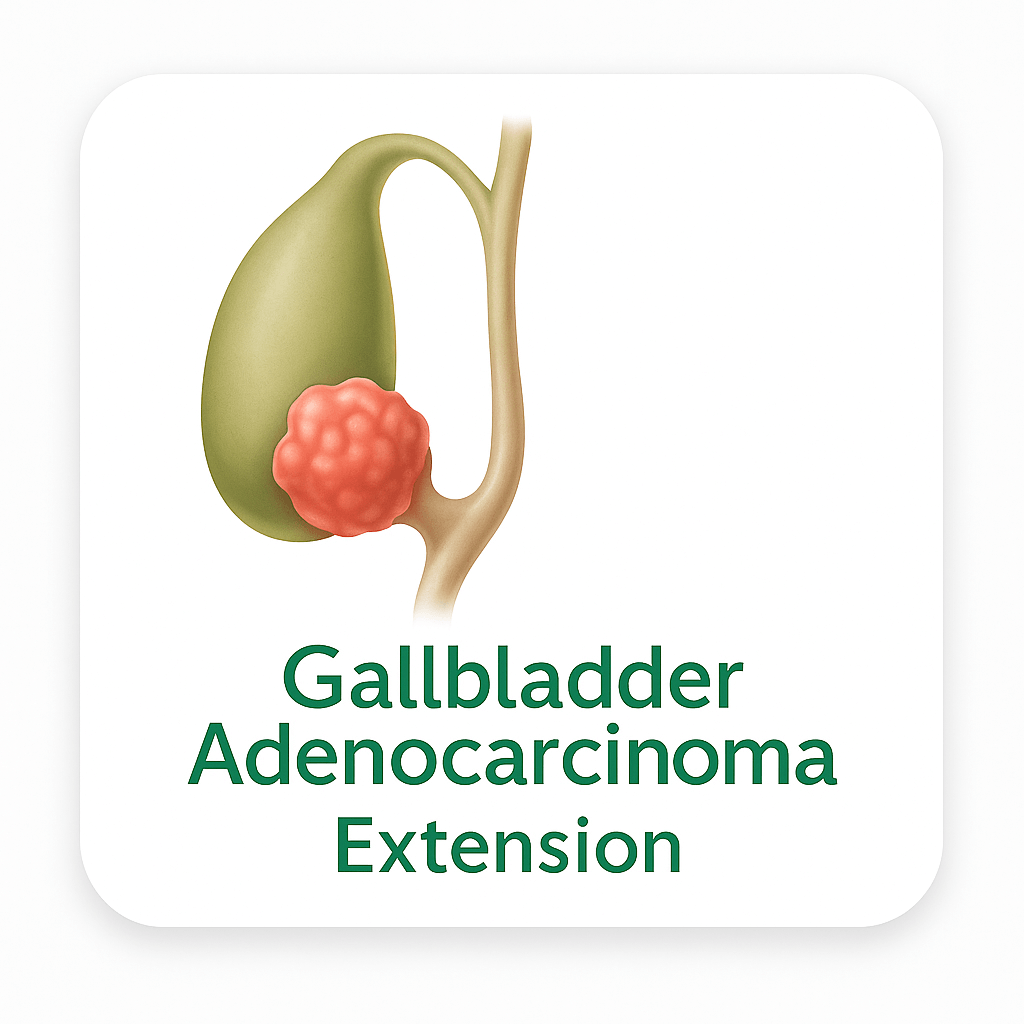
Gallbladder Adenocarcinoma – Extension
Main Grouping
Digestive
Organ System
Gallbladder
Cell Origin
Epithelial (adenocarcinoma)
Pathways Affected
Gallbladder adenocarcinoma involves a complex molecular pathway landscape centered on the TP53 tumor suppressor pathway (the most frequently altered in approximately 47 to 73 percent of GBC), the PI3K/AKT/mTOR pathway (PIK3CA mutations 12 to 20 percent), the MAPK/ERK pathway (KRAS mutations 11 to 24 percent and ERBB2/EGFR RTK activation), the ERBB2 (HER2) RTK pathway (amplification 11 to 18 percent), and the cell cycle checkpoint pathway (CDKN2A deletions/mutations 21 to 25 percent).
The TP53/p53 tumor suppressor pathway is the most frequently disrupted pathway in GBC (47 to 73 percent of GBC cases), making TP53 the dominant tumor suppressor loss in gallbladder carcinogenesis; TP53 mutations accumulate during the sequential progression from chronic cholecystitis to metaplasia to dysplasia to invasive adenocarcinoma; chronic bile acid exposure and reactive oxygen species in cholelithiasis-associated chronic cholecystitis drive oxidative DNA damage at the TP53 locus; curcumin activates p53, upregulates Bax, and induces caspase-3 and PARP cleavage in GBC-SD gallbladder carcinoma cells (PMC3733655), restoring pro-apoptotic p53-Bax-caspase-3 axis signaling in TP53 pathway-disrupted gallbladder cancer cells. The PI3K/AKT/mTOR pathway is activated in GBC through PIK3CA mutations (12 to 20 percent) and PTEN loss (approximately 1 percent); curcumin inhibits PI3K/AKT/mTOR in biliary tract cancer cell models; quercetin inhibits PI3K/AKT and mTOR in GBC models; EGCG inhibits PI3K/AKT in gallbladder cancer cell lines. The MAPK/ERK pathway is activated in GBC through KRAS mutations (11 to 24 percent) and ERBB2/EGFR RTK downstream signaling; KRAS gain-of-function mutations constitutively activate RAS/RAF/MEK/ERK driving gallbladder epithelial cell proliferation; curcumin inhibits MAPK/ERK in biliary tract cancer models; tea polyphenols including EGCG inhibit MAPK/ERK in gallbladder cancer cell lines. The ERBB2 (HER2) RTK pathway is amplified or overexpressed in approximately 11 to 18 percent of GBC, representing the most commonly actionable RTK alteration in GBC; ERBB2 amplification activates RAS/MAPK/ERK and PI3K/AKT/mTOR downstream; ERBB3 (HER3) mutations are also documented in GBC; ERBB2 genomic alterations promote PD-L1 upregulation enabling immune escape in GBC; EGCG and curcumin inhibit ERBB2 kinase and downstream AKT/ERK signaling in cancer cell models. The cell cycle checkpoint pathway is disrupted through CDKN2A deletion or mutation (approximately 21 to 25 percent of GBC), eliminating the CDK4/CDK6 brake provided by p16INK4A and the ARF-p53 checkpoint provided by p14ARF; ERBB2 amplification and CCND1/CCND3/CCNE1 amplification independently drive CDK-mediated cell cycle activation in GBC; quercetin and apigenin inhibit CDK4/CDK6 in biliary tract cancer models. The NF-kB inflammatory pathway is activated in GBC through chronic cholecystitis-driven TNF-alpha/IL-6/IL-1beta signaling from gallstone-associated macrophages and neutrophils; NF-kB activation drives COX-2 expression (overexpressed in approximately 50 to 100 percent of GBC) and prostaglandin E2 production; curcumin inhibits NF-kB and COX-2 in biliary tract cancer models; EGCG inhibits NF-kB in gallbladder cancer cell lines; tea polyphenols in GBC cells (PMC5856445) reduced NF-kB activation and inflammatory cytokines. The TGF-beta/SMAD pathway is altered in GBC through SMAD4 mutations (approximately 10 percent) and TGF-beta signaling alterations documented in transcriptomic analysis of GBC (TP53 47%, ELF3 13%, ARID1A 11% with TGF-beta pathway alterations); TGF-beta/SMAD contributes to EMT in invasive GBC. The Wnt/beta-catenin pathway is activated in a subset of GBC through CTNNB1 (beta-catenin) mutations and APC mutations; quercetin and curcumin inhibit Wnt/beta-catenin in biliary tract cancer models. The chromatin remodeling pathway is disrupted in GBC through ARID1A mutations (approximately 11 to 17 percent of GBC), PBRM1 mutations, KMT2C and KMT2D mutations; ARID1A encodes a SWI/SNF complex member regulating chromatin accessibility; sulforaphane and EGCG inhibit HDAC and DNMT targeting epigenetically dysregulated tumor suppressor genes in GBC. The bile acid/cholestasis inflammatory pathway is the unique GBC environmental driver: secondary bile acids (deoxycholic acid, lithocholic acid) produced by gut microbiota from primary bile acids activate TGR5, FXR, and TLR4/NF-kB signaling in gallbladder epithelial cells driving the chronic cholecystitis-carcinogenesis cascade; dietary fiber from whole plant foods reduces secondary bile acid production through gut microbiome SCFA-mediated mechanisms.
Description
Gallbladder adenocarcinoma (GBC) is the most common and most lethal biliary tract malignancy, representing approximately 80 to 90 percent of all biliary tract cancers by incidence globally. GBC accounts for approximately 1.2 percent of all cancer diagnoses globally and is the 6th most common gastrointestinal malignancy. An estimated 11,600 new cases of gallbladder and biliary tract cancers were projected in the United States in 2024. Globally, GBC incidence is heavily concentrated in specific regions including Chile, Bolivia, India, South Korea, Pakistan, Japan, and Israel, where GBC incidence rates in women are among the highest in the world; gallbladder cancer is the leading cause of cancer death among women in Chile and Bolivia. The global 5-year overall survival for all stages of GBC is approximately 5 to 19 percent due to the typically advanced stage at diagnosis; localized resectable GBC (stage I and II) carries a 5-year survival of approximately 39 to 50 percent, while stage III regional disease has approximately 10 to 28 percent 5-year survival, and stage IV metastatic GBC has a 5-year survival of approximately 2 to 5 percent. GBC is more common in women than in men, with a female-to-male ratio of approximately 2:1 to 3:1 in high-incidence regions.
Cholelithiasis (gallstone disease) is the dominant modifiable risk factor for GBC, present in approximately 70 to 90 percent of GBC patients; the risk of GBC increases with gallstone size (stones greater than 3 cm carry 10-fold higher GBC risk than stones less than 1 cm), gallstone number, and duration of cholelithiasis; cholesterol gallstones (most common in Western populations) and pigment gallstones (more common in East Asian populations) both confer GBC risk; chronic cholecystitis, porcelain gallbladder (calcified gallbladder wall), and anomalous pancreaticobiliary junction (APBJ, found in approximately 10 to 15 percent of GBC in Asia) are independent GBC risk factors; primary sclerosing cholangitis (PSC) is associated with elevated GBC risk; obesity and metabolic syndrome are also associated with elevated GBC risk through cholestasis and chronic inflammation; the inflammation-dysplasia-carcinoma sequence driven by chronic bile acid exposure, oxidative stress, and NF-kB activation is the dominant biological framework of GBC carcinogenesis.
The molecular landscape of GBC is dominated by TP53 mutations (47 to 73 percent of GBC cases across all geographic cohorts), CDKN2A alterations (21 to 25 percent), ERBB2 amplification (11 to 18 percent), PIK3CA mutations (12 to 20 percent), and KRAS mutations (11 to 24 percent). A published study (PMC3733655) documented curcumin inducing apoptosis in the GBC-SD human gallbladder carcinoma cell line through reduced cell proliferation confirmed by MTT and colony formation assays, early apoptosis confirmed by annexin V/propidium iodide double-staining and Hoechst 33342 staining, mitochondrial membrane potential disruption, cell cycle arrest confirmed by flow cytometric analysis, and altered expression of caspase-3, PARP, Bcl-2, and Bax by western blot and quantitative real-time PCR. A published study (PMC5856445) documented tea polyphenols including EGCG inducing S phase arrest and apoptosis in SGC-996, NOZ, OCUG-1, and GBC-SD gallbladder cancer cell lines.
Plant-Based Description
Whole-food plant-based dietary patterns provide nutrients and phytochemicals with documented direct anti-gallbladder cancer activity in established gallbladder carcinoma cell lines. Curcumin from turmeric was documented to induce apoptosis in GBC-SD human gallbladder carcinoma cells through disruption of mitochondrial membrane potential, increased caspase-3 and PARP cleavage, reduced Bcl-2 expression, and increased Bax expression confirmed by western blot and quantitative PCR (PMC3733655), targeting the TP53-Bax-caspase-3 apoptotic pathway altered in 47 to 73 percent of GBC. Tea polyphenols including EGCG induced S phase arrest and apoptosis in SGC-996, NOZ, OCUG-1, and GBC-SD gallbladder cancer cell lines (PMC5856445). Quercetin, resveratrol, and sulforaphane all have documented activity in biliary tract cancer models. Dietary fiber from whole plant foods reduces secondary bile acid exposure through gut microbiome-mediated mechanisms, targeting the dominant GBC environmental driver. Plant-based diets high in fruits, vegetables, and fiber are associated with reduced gallstone formation risk, the primary GBC risk factor.
Plant Chemistry Detail
Curcumin from turmeric has the most directly documented anti-gallbladder carcinoma activity in the GBC-SD human gallbladder cancer cell line in a published study (PMC3733655): curcumin anti-proliferative activities in curcumin-treated versus untreated GBC-SD cells were determined using the MTT assay and colony formation assay with statistically significant proliferation reduction; early apoptosis was detected by annexin V/propidium iodide double-staining assay and Hoechst 33342 staining assay confirming curcumin-induced apoptosis in GBC-SD cells; detection of mitochondrial membrane potential was used to validate the ability of curcumin to induce apoptosis through mitochondrial dysfunction; cell cycle changes were detected by flow cytometric analysis; the expressions of the apoptosis-related proteins and genes caspase-3, PARP, Bcl-2, and Bax were analyzed by western blot and quantitative real-time PCR with curcumin increasing pro-apoptotic Bax and caspase-3 and decreasing anti-apoptotic Bcl-2 expression in GBC-SD cells; the study demonstrated curcumin induces apoptosis in gallbladder carcinoma GBC-SD cells through the mitochondrial apoptotic pathway involving Bcl-2 family counter-regulation and caspase-3 activation, directly targeting the apoptotic signaling deficits created by TP53 mutations (47 to 73 percent of GBC) in gallbladder carcinoma cells.
Tea polyphenols including EGCG from green tea were documented to induce S phase arrest and apoptosis in SGC-996, NOZ, OCUG-1, and GBC-SD human gallbladder cancer cell lines (PMC5856445), targeting the cell cycle checkpoint dysregulation (CDKN2A deletion 21 to 25 percent of GBC and ERBB2 amplification driving uncontrolled cell cycle progression); EGCG additionally inhibits ERBB2 kinase activity directly targeting the 11 to 18 percent of GBC with ERBB2 amplification, and inhibits PI3K/AKT downstream of PIK3CA mutations (12 to 20 percent of GBC); EGCG inhibits NF-kB in gallbladder cancer cells reducing COX-2 and inflammatory cytokines relevant to the chronic cholecystitis-driven GBC tumor microenvironment.
Quercetin from yellow onions and kale inhibits PI3K/AKT and mTOR targeting PIK3CA-mutated GBC (12 to 20 percent), inhibits KRAS downstream MAPK/ERK targeting KRAS-mutated GBC (11 to 24 percent), inhibits CDK4/CDK6 targeting CDKN2A-deleted GBC (21 to 25 percent), and inhibits NF-kB and COX-2 targeting inflammatory gallbladder epithelial carcinogenesis. Resveratrol inhibits PI3K/AKT, NF-kB, MAPK/ERK, and VEGF in biliary tract cancer models and induces apoptosis in GBC cell lines. Sulforaphane from cruciferous vegetables activates Nrf2/ARE targeting the oxidative stress driven by chronic bile acid exposure and cholelithiasis-associated reactive oxygen species in GBC carcinogenesis, and inhibits HDAC and DNMT targeting ARID1A-mutation-associated epigenetic dysregulation (11 to 17 percent of GBC). Apigenin from parsley inhibits STAT3, mTOR, and PI3K/AKT in biliary tract cancer cell models. Luteolin from celery and parsley inhibits NF-kB, EGFR, and STAT3 in GBC models. Kaempferol from kale and broccoli inhibits PI3K/AKT and mTOR and induces apoptosis in biliary tract cancer cell models. Genistein and daidzein from soybeans inhibit ERBB2 and PI3K/AKT signaling and reduce cell proliferation in biliary tract cancer models, directly targeting the 11 to 18 percent of GBC with ERBB2 amplification. Gallic acid from grapes, pomegranate, and berries induces apoptosis in gallbladder cancer cell models through caspase-3 activation and Bcl-2 reduction. Dietary fiber from whole plant foods reduces gut microbiota-mediated deoxycholic acid (secondary bile acid) production, reducing the TLR4/NF-kB gallbladder inflammatory signaling that drives the cholecystitis-carcinogenesis cascade.
Nutritional Focus
Nutritional focus in gallbladder adenocarcinoma research is led by curcumin from turmeric with direct documented activity in GBC-SD human gallbladder carcinoma cells in a published study (PMC3733655): curcumin reducing GBC-SD cell proliferation confirmed by MTT and colony formation assays; inducing early apoptosis confirmed by annexin V/propidium iodide double-staining and Hoechst 33342 staining; disrupting mitochondrial membrane potential confirming mitochondrial apoptotic pathway activation; inducing cell cycle arrest confirmed by flow cytometry; increasing pro-apoptotic Bax expression and caspase-3 and PARP cleavage while decreasing anti-apoptotic Bcl-2 expression confirmed by western blot and quantitative real-time PCR — directly restoring the Bcl-2-Bax-caspase-3 apoptotic balance disrupted by TP53 mutations in 47 to 73 percent of GBC; EGCG from green tea inducing S phase arrest and apoptosis in SGC-996, NOZ, OCUG-1, and GBC-SD gallbladder cancer cell lines (PMC5856445) targeting cell cycle checkpoint dysregulation (CDKN2A deletion 21 to 25 percent) and ERBB2 amplification (11 to 18 percent) in GBC; quercetin from yellow onions and kale inhibiting PI3K/AKT targeting PIK3CA mutations (12 to 20 percent), MAPK/ERK targeting KRAS mutations (11 to 24 percent), CDK4/CDK6 targeting CDKN2A deletion, and NF-kB/COX-2 targeting the chronic cholecystitis-driven inflammatory microenvironment of GBC; resveratrol inducing apoptosis in biliary tract cancer models and inhibiting NF-kB and VEGF; sulforaphane activating Nrf2/ARE providing antioxidant defense against bile acid-induced reactive oxygen species driving GBC carcinogenesis in chronic cholelithiasis and inhibiting HDAC targeting ARID1A chromatin remodeling disruption (11 to 17 percent of GBC); genistein and daidzein from soybeans inhibiting ERBB2 kinase targeting GBC ERBB2 amplification; dietary fiber from whole plant foods reducing gut microbiota-mediated secondary bile acid (deoxycholic acid) production reducing TLR4/NF-kB gallbladder epithelial inflammatory signaling; selenium from Brazil nuts supporting glutathione peroxidase antioxidant defense against bile acid-induced oxidative stress in gallbladder epithelial cells; and folate from leafy greens and legumes supporting SAM-cycle one-carbon chemistry relevant to ARID1A and CDKN2A epigenetic regulation in GBC.
Research Notes
GBC epidemiology: 6th most common GI cancer globally; approximately 11,600 new US biliary tract cases projected 2024; global 5-year OS approximately 5-19% all stages; localized resectable ~39-50%; stage III ~10-28%; stage IV metastatic ~2-5%; 2:1 to 3:1 female-to-male ratio; highest incidence in Chile, Bolivia, India, South Korea, Pakistan, Japan, Israel; leading cancer death in women in Chile and Bolivia. Cholelithiasis in ~70-90% of GBC patients; gallstone >3 cm = 10-fold increased GBC risk versus <1 cm stones. Molecular landscape: TP53 ~47-73% (most common mutated gene); CDKN2A ~21-25%; ERBB2 amplification ~11-18%; PIK3CA ~12-20%; KRAS ~11-24%; ARID1A ~11-17%; ELF3 ~13%; SMAD4 ~10%; MSI-H ~5-10%. MSK-IMPACT 505-gene GBC analysis: cell cycle pathway alterations TP53 63% and CDKN2A 21%; RTK_RAS pathways ERBB2 15% and KRAS 11%; actionable alteration in 35% patients. Copy number alterations: CDKN2A/B deletion; ERBB2 amplification; KRAS amplification; CCND1, CCND3, CCNE1, CDK12, MDM2, MYC amplifications. Curcumin GBC-SD gallbladder carcinoma cells (PMC3733655): MTT/colony formation proliferation reduction; annexin V/PI and Hoechst 33342 apoptosis confirmed; mitochondrial membrane potential disruption; flow cytometry cell cycle arrest; western blot and qPCR: caspase-3 and PARP increased; Bcl-2 decreased; Bax increased. EGCG/tea polyphenols GBC cells (PMC5856445): S phase arrest and apoptosis in SGC-996, NOZ, OCUG-1, GBC-SD.
Notes Visibility
Key Foods
Turmeric,Broccoli,Kale,Spinach,Brussels Sprouts,Cauliflower,Garlic,Yellow Onion,Carrot,Tomato,Beetroot,Cabbage,Apple,Blueberry,Pomegranate,Grape,Raspberry,Strawberry,Orange,Lemon,Soybeans,Edamame,Green Lentils,Black Beans,Chickpeas,Brown Rice,Quinoa,Oats,Wild Rice,Black Rice,Walnut,Almond,Brazil Nut,Flaxseed,Pumpkin Seeds,Chia Seeds,Sesame Seeds,Hemp Seeds,Shiitake,Maitake,Cremini,Portobello,Lions Mane,Green Tea,Ginger,Black Pepper,Garlic Powder,Parsley,Rosemary,Oregano, Celery, Leek,Avocado,Artichoke,Radish,Tangerine, Red Onion
Linked Nutrients
vitamin-c,vitamin-e,vitamin-d3,vitamin-b9,vitamin-b6,vitamin-a,selenium,zinc,magnesium,calcium,potassium,iron,curcumin,egcg,quercetin,resveratrol,sulforaphane,genistein,beta-carotene,anthocyanins,beta-glucans,dietary-fiber,plant-ala-omega3
Last Updated
2025-10-13 09:59:03

