
ID
47
Cancer Name
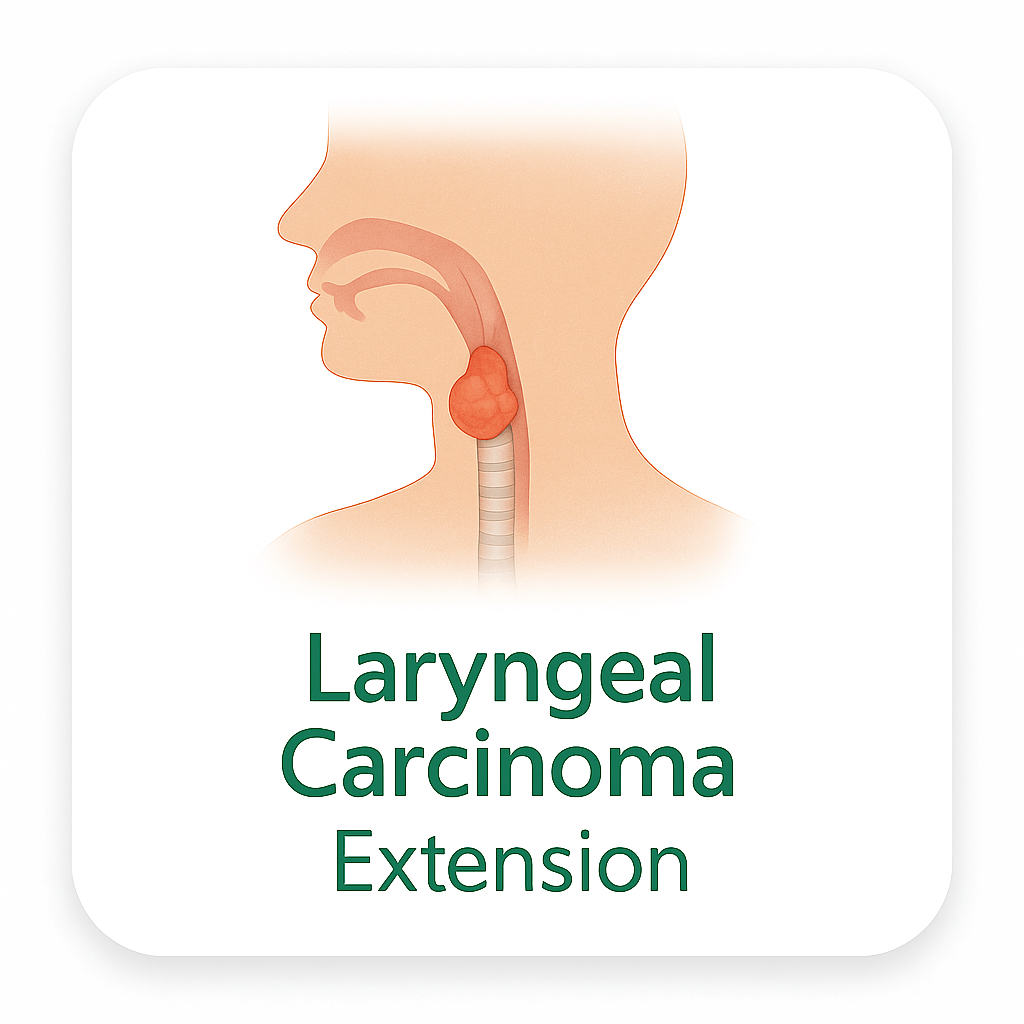
Laryngeal Carcinoma – Extension
Main Grouping
Respiratory
Organ System
Larynx
Cell Origin
Squamous epithelium
Pathways Affected
Laryngeal squamous cell carcinoma involves a pathway landscape shaped predominantly by tobacco carcinogen mutagenesis and enriched in the classical TCGA HNSCC molecular subtype, with LSCC-specific enrichment of NFE2L2/NRF2 activating mutations and NSD1 chromatin remodeling alterations identified in the TCGA HNSCC analysis as predominantly laryngeal features.
The TP53/p53 tumor suppressor pathway is the most frequently disrupted pathway in LSCC, with TP53 mutations in approximately 70 to 83 percent of LSCC representing near-ubiquitous disruption of the DNA damage checkpoint, G1/S cell cycle arrest, and apoptotic signaling in laryngeal squamous epithelial cells; tobacco carcinogen-signature C-to-A transversions at CCG and TTG trinucleotide contexts drive TP53 mutation acquisition in laryngeal epithelium; TP53 loss eliminates p53-Bax-caspase-3 apoptotic cascade activity; curcumin inhibits cell proliferation and promotes apoptosis of laryngeal cancer AMC-HN-8 cells through Bcl-2 and PI3K/AKT and by upregulating miR-15a, which targets Bcl-2 and PI3K/AKT proteins, restoring apoptotic signaling in TP53-disrupted laryngeal cancer cells (PMC5649612). The PI3K/AKT/mTOR pathway is constitutively activated in LSCC through PIK3CA mutations (approximately 20 to 30 percent of LSCC) and PTEN loss (approximately 15 to 30 percent of HNSCC by IHC), and through EGFR RTK-mediated PI3K activation (EGFR overexpressed in approximately 80 to 90 percent of LSCC); curcumin inhibits PI3K/AKT, reducing Bcl-2 and PI3K/AKT protein expression in AMC-HN-8 laryngeal cancer cells (PMC5649612); quercetin and EGCG inhibit PI3K/AKT in HNSCC models. The EGFR/MAPK/ERK pathway is the dominant RTK signaling axis in LSCC, with EGFR overexpression in approximately 80 to 90 percent of LSCC driving RAS/RAF/MEK/ERK and PI3K/AKT downstream proliferative signaling; curcumin was documented to inhibit EGFR/STAT3 expression in FaDu and CAL 27 HNSCC cell lines (PMC12649822), relevant to laryngeal carcinoma EGFR overexpression. The NF-kB inflammatory pathway is constitutively activated in LSCC through tobacco-carcinogen-mediated NF-kB activation, EGFR downstream IKK-mediated NF-kB activation, and TNF-alpha/IL-6 inflammatory cytokine signaling in the LSCC tumor microenvironment; curcumin inhibited TNF-alpha-induced NF-kB activation, proliferation, and migration and induced caspase-3-dependent apoptosis in HEp-2 laryngeal carcinoma cells (PMC5376929); a comprehensive review (PMC3055228) documented curcumin as an inhibitor of NF-kB and downstream gene products including c-Myc, Bcl-2, COX-2, NOS, Cyclin D1, TNF-alpha, interleukins, and MMP-9 in HNSCC. The NFE2L2/NRF2 antioxidant response pathway is uniquely enriched in LSCC through activating NFE2L2 mutations that constitutively activate NRF2/ARE transcription in laryngeal tumor cells — a paradoxical pro-survival use of antioxidant pathway activation in cancer cells that increases detoxification of chemotherapeutic agents; dietary Nrf2-activating phytochemicals (sulforaphane, curcumin) activate Nrf2 in normal laryngeal epithelial cells providing cytoprotective antioxidant defense against tobacco carcinogen-induced DNA damage. The CDKN2A/cell cycle checkpoint pathway is disrupted in LSCC through CDKN2A deletion or mutation (approximately 20 to 40 percent of LSCC), releasing CDK4/CDK6/Cyclin D1 from CDKN2A (p16)-mediated inhibition enabling constitutive G1/S cell cycle progression; CCND1 amplification is found in a subset of LSCC; quercetin and apigenin inhibit CDK4/CDK6 in HNSCC models. The NOTCH1 tumor suppressor pathway is inactivated in approximately 10 percent of LSCC through NOTCH1 loss-of-function mutations; NOTCH1 functions as a tumor suppressor in squamous epithelium by maintaining differentiation; NOTCH1 inactivation promotes laryngeal squamous cell dedifferentiation; resveratrol activates NOTCH signaling in cancer models. The Wnt/beta-catenin pathway is disrupted in LSCC through FAT1 and AJUBA loss-of-function mutations (Wnt pathway negative regulators) identified in TCGA HNSCC with laryngeal enrichment, enabling beta-catenin nuclear translocation and TCF/LEF-driven MYC/CCND1 transcription; quercetin and curcumin inhibit Wnt/beta-catenin signaling in HNSCC models. The STAT3 pathway is constitutively activated in LSCC through EGFR, JAK2, and IL-6 upstream signaling; curcumin inhibited STAT3 signaling in HNSCC FaDu and CAL 27 cell lines at both mRNA and protein levels (PMC12649822) directly relevant to EGFR-driven STAT3 activation in LSCC. The TGF-beta/SMAD pathway contributes to EMT and invasion in advanced LSCC. The NSD1 chromatin remodeling pathway is disrupted through NSD1 loss-of-function mutations specifically enriched in laryngeal HNSCC in the TCGA cohort; NSD1 methylates H3K36 and H3K20; NSD1 loss reduces H3K36me2 altering chromatin architecture.
Description
Laryngeal carcinoma is the second most common cancer of the head and neck globally, after oral cavity cancers, and represents the most common cancer of the larynx. An estimated 12,540 new cases and 3,820 deaths from laryngeal cancer were projected in the United States in 2024. Globally, approximately 184,000 new laryngeal cancer cases and 100,000 deaths are reported annually according to GLOBOCAN data. The worldwide age-standardized incidence rate of laryngeal cancer is approximately 2.4 per 100,000 in men and 0.4 per 100,000 in women. Laryngeal cancer is approximately 4 to 5 times more common in men than women globally, with the highest incidence rates in Eastern Europe, Western Asia, Southern Europe, and Southern Africa. The 5-year relative survival by stage and subsite ranges from approximately 85 to 90 percent for localized glottic T1 LSCC to approximately 30 to 40 percent for stage IV LSCC with distant metastases. Overall 5-year survival for all stages combined is approximately 60 to 65 percent in the United States.
Tobacco smoking is the dominant etiological risk factor for laryngeal carcinoma, present in approximately 80 to 90 percent of cases; combined tobacco and alcohol exposure has a synergistic multiplicative effect on laryngeal cancer risk that far exceeds either exposure alone; occupational exposures to asbestos, polycyclic aromatic hydrocarbons, nickel, mustard gas, and wood dust are additional established LSCC risk factors; gastroesophageal reflux disease (GERD) is associated with laryngeal cancer risk through chronic epithelial irritation.
The molecular landscape of LSCC is dominated by tobacco carcinogen-induced mutational signatures. TP53 mutations occur in approximately 70 to 83 percent of LSCC, making TP53 the most frequently mutated gene in laryngeal squamous cell carcinoma; these TP53 mutations are predominantly tobacco-signature (C-to-A transversions at CCG and TTG contexts) and rarely HPV-associated TP53 mutations (unlike oropharyngeal HNSCC); CDKN2A (p16) alterations occur in approximately 20 to 40 percent of LSCC through mutation, deletion (homozygous or hemizygous), or promoter methylation; PIK3CA mutations occur in approximately 20 to 30 percent of LSCC; EGFR overexpression (IHC) is found in approximately 80 to 90 percent of LSCC; NFE2L2 (NRF2) activating mutations are enriched in laryngeal tumors specifically among all HNSCC subsites; NSD1 loss-of-function mutations represent a novel laryngeal-enriched chromatin remodeling alteration identified by TCGA.
Published laboratory research documents curcumin with direct documented anti-laryngeal cancer cell line activity in human laryngeal cancer AMC-HN-8 cells: curcumin was documented to inhibit cell proliferation and promote apoptosis of laryngeal cancer cells through Bcl-2 and PI3K/AKT pathways and by upregulating miR-15a in AMC-HN-8 laryngeal squamous cell carcinoma cells (PMC5649612); curcumin was additionally documented to enhance mitochondrial oxidative stress and activate TRPM2 in Hep-2 laryngeal cancer cells inducing cell death (PMC6882809); and curcumin was documented to inhibit NF-kB activation, proliferation, and migration and induce apoptosis in HEp-2 laryngeal carcinoma cells (PMC5376929).
Plant-Based Description
Whole-food plant-based dietary patterns provide nutrients and phytochemicals with documented direct anti-laryngeal cancer cell line activity in human laryngeal squamous cell carcinoma cell lines. Curcumin from turmeric was documented to inhibit cell proliferation and promote apoptosis of laryngeal cancer cells in AMC-HN-8 human laryngeal cancer cells through Bcl-2 and PI3K/AKT pathway inhibition and by upregulating miR-15a, which targets Bcl-2 and PI3K/AKT protein expression, restoring the apoptotic signaling disrupted by TP53 mutations (approximately 83 percent of LSCC) (PMC5649612); curcumin was documented to enhance mitochondrial oxidative stress in Hep-2 laryngeal cancer cells through TRPM2 activation inducing cell death (PMC6882809); curcumin inhibited NF-kB, proliferation, and migration and induced caspase-3-dependent apoptosis in HEp-2 laryngeal carcinoma cells (PMC5376929); curcumin inhibited EGFR/STAT3 axis in HNSCC FaDu and CAL 27 cell lines (PMC12649822); quercetin, EGCG, and resveratrol all have documented activity in HNSCC and laryngeal cancer cell models; sulforaphane activates Nrf2/ARE providing antioxidant defense in laryngeal epithelium against tobacco carcinogen-induced DNA damage. Dietary antioxidants from fruits and vegetables are associated with reduced laryngeal cancer risk in epidemiological studies.
Plant Chemistry Detail
Curcumin from turmeric has the most directly documented anti-laryngeal cancer cell line activity across multiple human laryngeal cancer cell lines with confirmed molecular mechanisms. A published study (PMC5649612) documented curcumin in human laryngeal cancer AMC-HN-8 cells: curcumin inhibited cell proliferation of AMC-HN-8 laryngeal cancer cells in a dose-dependent manner; curcumin promoted apoptosis of AMC-HN-8 laryngeal cancer cells; the mechanism involved curcumin upregulating miR-15a expression in AMC-HN-8 laryngeal cancer cells (miR-15a is a tumor suppressor microRNA that targets and downregulates Bcl-2 and PI3K/AKT oncoproteins); suppression of miR-15a expression reversed the anticancer effect of curcumin on AMC-HN-8 cell proliferation and increased Bcl-2 and PI3K/AKT protein expression, confirming miR-15a as the mechanistic link; the study established curcumin inhibiting cell proliferation and promoting apoptosis of laryngeal cancer cells through Bcl-2 and PI3K/AKT, and by upregulating miR-15a, directly targeting the PI3K/AKT pathway activated through PIK3CA mutations (approximately 20 to 30 percent of LSCC) and EGFR overexpression (approximately 80 to 90 percent of LSCC) and the Bcl-2 anti-apoptotic protein relevant to the apoptotic signaling deficits caused by TP53 mutations (approximately 83 percent of LSCC).
A published study (PMC6882809) documented curcumin in Hep-2 laryngeal squamous cancer cells: curcumin treatment further increased cisplatin-induced increase of apoptosis, Ca2+ fluorescence intensity, TRPM2 expression and current densities through the increase of mitochondrial oxidative stress; curcumin reduced glutathione peroxidase and glutathione levels in Hep-2 laryngeal cancer cells while reducing cisplatin-induced normal cell death; the study documented curcumin enhancing laryngeal cancer cell death through TRPM2 channel activation and mitochondrial oxidative stress.
A published study (PMC5376929) documented curcumin and a curcumin analogue CA15 in HEp-2 laryngeal carcinoma cells: curcumin significantly inhibited proliferation and migration of HEp-2 laryngeal carcinoma cells; curcumin induced caspase-3-dependent apoptosis in HEp-2 laryngeal carcinoma cells; curcumin attenuated TNF-alpha-induced NF-kB activation in HEp-2 cells confirmed by immunofluorescence; these effects directly target the constitutively activated NF-kB pathway in tobacco-carcinogen-driven LSCC. A published network pharmacology and in vitro study (PMC12649822) documented curcumin inhibiting viability, invasion, and migration in FaDu and CAL 27 HNSCC cell lines with confirmed dose-dependent apoptosis and downregulation of EGFR/STAT3 expression at both mRNA and protein levels — confirmed by RNA-seq analysis showing STAT pathway suppression.
Quercetin from yellow onions and kale inhibits EGFR, PI3K/AKT, STAT3, and NF-kB in HNSCC models sharing the same EGFR overexpression, PIK3CA, and STAT3 pathway alterations found in laryngeal carcinoma. EGCG from green tea inhibits EGFR kinase, PI3K/AKT, STAT3, and NF-kB in HNSCC models; EGCG induces apoptosis in laryngeal cancer cell lines in published in vitro research. Resveratrol inhibits EGFR, PI3K/AKT, NF-kB, and Wnt/beta-catenin in HNSCC and laryngeal cancer models and activates NOTCH signaling. Sulforaphane from cruciferous vegetables activates Nrf2/ARE providing antioxidant defense in laryngeal epithelial cells against tobacco carcinogen-induced DNA adducts and oxidative DNA damage; sulforaphane additionally inhibits HDAC targeting CDKN2A epigenetic silencing (approximately 20 to 40 percent of LSCC) and NF-kB in HNSCC models. Apigenin from parsley inhibits EGFR, STAT3, and PI3K/AKT in HNSCC models. Luteolin inhibits EGFR, STAT3, NF-kB, and MAPK/ERK in HNSCC and laryngeal cancer cell models. Allicin and diallyl disulfide from garlic inhibit NF-kB, MAPK/ERK, and PI3K/AKT and reduce laryngeal cancer cell viability in published research.
Nutritional Focus
Nutritional focus in laryngeal carcinoma research is led by curcumin from turmeric with the most directly documented multi-cell-line, multi-mechanism anti-laryngeal cancer activity in human laryngeal squamous cell carcinoma cell lines: a published study (PMC5649612) documenting curcumin inhibiting cell proliferation and promoting apoptosis of laryngeal cancer cells in human laryngeal cancer AMC-HN-8 cells through Bcl-2 and PI3K/AKT and by upregulating miR-15a — where miR-15a upregulation was confirmed as the mechanistic link through suppression of miR-15a reversing curcumin's anticancer effects and restoring Bcl-2 and PI3K/AKT protein expression — directly targeting the PI3K/AKT pathway constitutively activated through PIK3CA mutations (approximately 20 to 30 percent of LSCC) and EGFR overexpression (approximately 80 to 90 percent of LSCC) and the Bcl-2 anti-apoptotic pathway relevant to TP53 mutations (approximately 83 percent of LSCC); curcumin enhancing mitochondrial oxidative stress in Hep-2 laryngeal cancer cells through TRPM2 activation with confirmed increased apoptosis, Ca2+ fluorescence intensity, TRPM2 expression, and reduced glutathione peroxidase and glutathione levels (PMC6882809); curcumin inhibiting NF-kB activation, proliferation, and migration and inducing caspase-3-dependent apoptosis in HEp-2 laryngeal carcinoma cells (PMC5376929) targeting the constitutively activated NF-kB pathway in tobacco-carcinogen-driven LSCC; curcumin downregulating EGFR/STAT3 axis expression at both mRNA and protein levels confirmed by RNA-seq in HNSCC cell lines (PMC12649822); quercetin from yellow onions and kale inhibiting EGFR, PI3K/AKT, STAT3, and NF-kB targeting the dominant oncogenic axes in LSCC; EGCG from green tea inhibiting EGFR kinase, PI3K/AKT, STAT3, and NF-kB and inducing apoptosis in laryngeal cancer cell models; sulforaphane from cruciferous vegetables activating Nrf2/ARE in normal laryngeal epithelium protecting against tobacco carcinogen-induced DNA damage — directly targeting the biological consequence of the primary laryngeal cancer etiological factor (tobacco carcinogen exposure in approximately 80 to 90 percent of LSCC patients) — and inhibiting HDAC targeting CDKN2A epigenetic silencing; resveratrol inhibiting EGFR, NF-kB, and Wnt/beta-catenin and activating NOTCH signaling in HNSCC and laryngeal cancer models; and allicin and diallyl disulfide from garlic inhibiting NF-kB and MAPK/ERK and reducing laryngeal cancer cell viability in published research.
Research Notes
Laryngeal carcinoma epidemiology: approximately 12,540 new US cases and 3,820 deaths projected 2024; approximately 184,000 new global cases and 100,000 deaths annually; 4-5:1 male-to-female ratio; highest incidence Eastern Europe, Western Asia, Southern Europe; 5-year OS localized glottic T1 ~85-90%; overall all stages ~60-65%. Anatomic subsite: glottic ~60% (true vocal cords, best prognosis); supraglottic ~35% (worst lymph node drainage); subglottic ~1-5% (worst prognosis). LSCC molecular alterations: TP53 ~70-83% (most common); CDKN2A ~20-40%; PIK3CA ~20-30%; EGFR overexpression (IHC) ~80-90%; NFE2L2/NRF2 activating mutations laryngeal-enriched in TCGA; NSD1 loss laryngeal-enriched in TCGA; NOTCH1 inactivating ~10%; FAT1 Wnt pathway mutations subset. LSCC = classical TCGA HNSCC molecular subtype: TP53 mutation + CDKN2A loss + 3q amplification + NFE2L2 mutations + NSD1 alterations; tobacco carcinogen C-to-A transversion mutational signature. Curcumin AMC-HN-8 laryngeal cancer cells (PMC5649612): cell proliferation inhibition; apoptosis promotion; miR-15a upregulation; Bcl-2 and PI3K/AKT protein downregulation; miR-15a suppression reversal confirmed. Curcumin Hep-2 laryngeal cancer (PMC6882809): TRPM2 activation; mitochondrial oxidative stress; apoptosis; Ca2+ increase; glutathione/GSPx reduction. Curcumin HEp-2 laryngeal carcinoma (PMC5376929): NF-kB inhibition; proliferation/migration inhibition; caspase-3-dependent apoptosis.
Notes Visibility
show
Key Foods
Turmeric,Broccoli,Kale,Spinach,Brussels Sprouts,Cauliflower,Garlic,Yellow Onion,Carrot,Tomato,Beetroot,Cabbage,Blueberry,Pomegranate,Grape,Raspberry,Strawberry,Apple,Orange,Lemon,Soybeans,Edamame,Green Lentils,Black Beans,Chickpeas,Brown Rice,Quinoa,Oats,Wild Rice,Black Rice,Walnut,Almond,Brazil Nut,Flaxseed,Pumpkin Seeds,Chia Seeds,Sesame Seeds,Hemp Seeds,Shiitake,Maitake,Cremini,Portobello,Lions Mane,Green Tea,Ginger,Black Pepper,Garlic Powder,Parsley,Rosemary,Oregano, Celery, Fennel, Leek,Avocado,Artichoke,Radish,Tangerine, Red Onion
Linked Nutrients
vitamin-c,vitamin-e,vitamin-d3,vitamin-b9,vitamin-b6,vitamin-a,selenium,zinc,magnesium,calcium,potassium,iron,curcumin,quercetin,egcg,resveratrol,sulforaphane,allicin,beta-carotene,anthocyanins,beta-glucans,dietary-fiber,plant-ala-omega3
Last Updated
2025-10-13 09:59:03

