
ID
48
Cancer Name
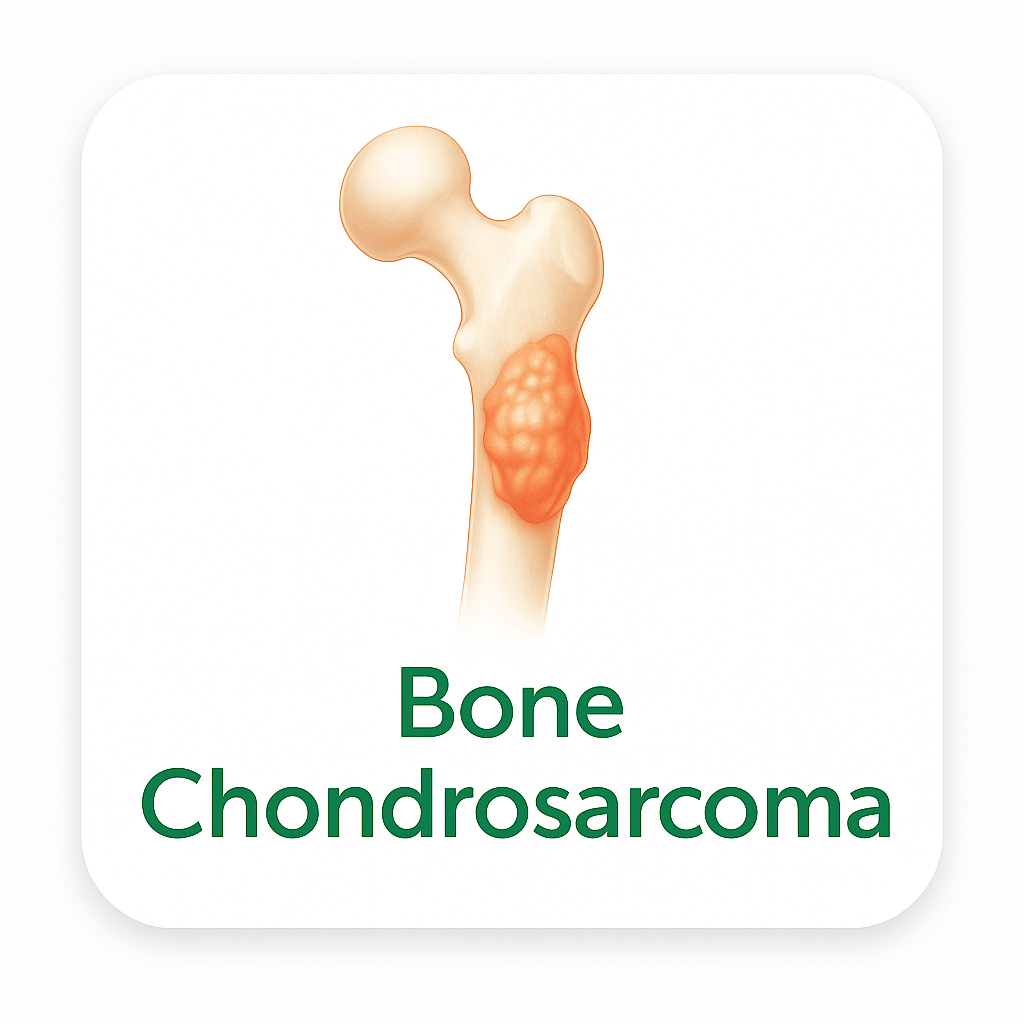
Bone Chondrosarcoma
Main Grouping
Musculoskeletal
Organ System
Bone (cartilage-producing)
Cell Origin
Chondrocytes
Pathways Affected
Chondrosarcoma involves a molecular pathway landscape defined primarily by the IDH1/IDH2 oncometabolite 2-hydroxyglutarate pathway as the dominant and most specific molecular alteration in approximately 50 percent of conventional CHS, combined with COL2A1 extracellular matrix pathway disruption (approximately 37 percent), RB1/CDKN2A cell cycle checkpoint pathway inactivation (approximately 33 percent), Hedgehog pathway activation (approximately 8 to 18 percent), and TP53 tumor suppressor pathway disruption (approximately 20 percent).
The IDH1/IDH2/2-hydroxyglutarate oncometabolite pathway is the most specific and frequent molecular alteration in conventional central chondrosarcoma; IDH1 R132 and IDH2 R172 gain-of-function hotspot mutations cause the mutant IDH enzyme to convert alpha-ketoglutarate (alpha-KG) to the oncometabolite 2-hydroxyglutarate (2-HG) instead of performing normal oxidative decarboxylation of isocitrate; 2-HG competitively inhibits alpha-KG-dependent enzymes including TET2 DNA demethylases (preventing 5-methylcytosine oxidation to 5-hydroxymethylcytosine, driving CpG island hypermethylation and a CIMP epigenetic phenotype) and KDM (lysine demethylase) histone demethylases at H3K4me3, H3K9me3, and H3K27me3 marks causing histone hypermethylation; 2-HG-driven DNA and histone hypermethylation silences differentiation-associated genes (RARA, PDGFRA, BCOR) preventing normal chondrocyte maturation in CHS progenitor cells; 2-HG also inhibits collagen prolyl hydroxylases including P4HA1 and P4HA2 (required for collagen type I and type II hydroxylation), directly relevant to COL2A1 collagen II pathway disruption; curcumin inhibits DNMT and HDAC activity targeting epigenetic silencing in IDH-mutant CIMP CHS.
The COL2A1/collagen extracellular matrix pathway is disrupted in approximately 37 percent of CHS through insertions, deletions, and rearrangements selected to impair normal collagen type II biosynthesis; COL2A1 encodes the cartilaginous alpha-1 chain of collagen type II, the dominant structural extracellular matrix protein of hyaline cartilage; COL2A1 mutations disrupt the normal fibrillar collagen II extracellular matrix of chondrosarcoma tumors, contributing to the hypovascular, mechanically altered ECM that imposes the physical drug delivery barrier unique to chondrosarcoma.
The Hedgehog/IHH/PTCH/GLI signaling pathway is constitutively activated in CHS through PTCH1 mutations (approximately 8 to 18 percent of CHS) and through autocrine IHH (Indian Hedgehog) ligand secretion by chondrosarcoma cells; CHS shows high expression of the Hedgehog target genes GLI1 and PTCH1 which upregulate tumor cell proliferation when constitutively activated; BCL2 reactivation through IHH/PTHLH pathway activation promotes chondrosarcoma cell survival and distinguishes low-grade CHS from enchondromas; curcumin inhibits Hedgehog/GLI signaling in cancer cell models. The RB1/CDKN2A cell cycle checkpoint pathway is inactivated in approximately 33 percent of CHS through CDKN2A/p16/INK4A deletion at 9p21 (loss of p16 is associated with high-grade CHS) and RB1 inactivating mutations; CDKN2A loss releases CDK4/CDK6/Cyclin D1 from p16-mediated inhibition enabling constitutive G1/S cell cycle progression; MDM2 amplification at 12q13 occurs in a subset of CHS providing an RB1-pathway-independent cell cycle deregulation mechanism; quercetin inhibits CDK4/CDK6 and MDM2 in bone sarcoma models. The TP53/p53 tumor suppressor pathway is disrupted in approximately 20 percent of CHS, predominantly occurring late in high-grade and dedifferentiated chondrosarcomas; TP53 mutations are enriched in dedifferentiated CHS where they co-occur with IDH1/2 mutations, CDKN2A/B copy-number losses, and TERT promoter mutations; curcumin induced upregulation of Fas, FasL, and DR5 in chondrosarcoma cells through p53 activation, with p53 involvement in curcumin-mediated Fas/FasL/DR5 expression confirmed (PubMed 22522053). The NF-kB inflammatory pathway is constitutively activated in chondrosarcoma through TNF-alpha/IL-6 inflammatory cytokine signaling and AKT downstream activation in the CHS tumor microenvironment; resveratrol significantly inhibited NF-kB signaling by deacetylating the p65 subunit of the NF-kB complex through SIRT1 activation in JJ012 human chondrosarcoma cells, and this NF-kB inhibition was reversed by SIRT1 siRNA transfection, confirming SIRT1-NF-kB as the resveratrol mechanism in chondrosarcoma (PMC5466619). The PI3K/AKT/mTOR pathway is activated in a subset of CHS through PTEN loss (approximately 2 percent) and TSC1 mutations (approximately 2 percent), providing mTORC1 activation in a proportion of CHS; curcumin and quercetin inhibit PI3K/AKT in bone sarcoma models. The EXT1/EXT2/heparan sulfate proteoglycan pathway is disrupted in peripheral CHS arising from EXT1/EXT2-mutated osteochondromas (hereditary multiple exostoses); EXT1/EXT2 encode heparan sulfate transferase enzymes required for heparan sulfate chain elongation on proteoglycans; heparan sulfate proteoglycans are required as co-receptors for Hedgehog, FGF, Wnt, and BMP signaling; EXT mutations impair these signaling pathways in the osteochondroma cartilage cap; quercetin inhibits Wnt, FGF, and Hedgehog signaling relevant to EXT-mutated peripheral CHS. The VEGF/angiogenesis pathway is paradoxically suppressed in conventional CHS due to the avascular nature of the cartilaginous ECM, yet high-grade and dedifferentiated CHS show elevated VEGF expression; resveratrol and curcumin inhibit VEGF and angiogenesis in bone sarcoma models. The autophagy pathway is relevant to CHS drug resistance; quercetin induces autophagy in chondrosarcoma cell models.
Description
Chondrosarcoma is the second most common primary malignant bone tumor, comprising approximately 20 to 27 percent of all primary malignant bone tumors in the United States and approximately 30 percent globally. An estimated 2,470 new bone cancer cases in the United States in 2024 include chondrosarcoma as a major component. The annual incidence of chondrosarcoma in the United States is approximately 0.25 to 1.8 per 100,000, with an estimated 800 to 1,500 cases diagnosed annually in the United States. Chondrosarcoma can develop at any age from the second decade of life onward, with peak incidence between 30 and 60 years of age; it is slightly more common in men than women with a male-to-female ratio of approximately 1.5 to 2:1. The most common sites of primary chondrosarcoma are the pelvis (approximately 25 percent), femur (approximately 23 percent), humerus (approximately 10 percent), ribs and sternum (approximately 10 percent), and scapula (approximately 5 percent). The 5-year disease-specific survival by grade is approximately 95 percent for grade 1 (atypical cartilaginous tumor), approximately 70 to 80 percent for grade 2, and approximately 29 to 50 percent for grade 3 conventional CHS; dedifferentiated chondrosarcoma has a 5-year survival of approximately 7 to 24 percent due to its high-grade biology.
Chondrosarcoma is uniquely refractory to conventional cytotoxic chemotherapy and radiation therapy, both of which have no established efficacy in conventional grade 1 to 3 chondrosarcoma; wide surgical resection remains the definitive treatment for most CHS subtypes; dedifferentiated chondrosarcoma may receive systemic chemotherapy. The chemoresistance of CHS is attributed to multiple mechanisms: the hypo-vascular cartilaginous extracellular matrix (composed of collagen type II, proteoglycans, and hyaluronan) creates a mechanical barrier to drug delivery; high expression of multidrug resistance protein MDR-1 (P-glycoprotein encoded by ABCB1) reduces intracellular drug accumulation; the acidic tumor microenvironment reduces drug ionization and uptake; and low proliferation rates reduce the efficacy of S-phase-specific cytotoxic agents. The IDH1/2 oncometabolite 2-hydroxyglutarate drives a CIMP epigenetic phenotype silencing tumor suppressor genes through DNA and histone hypermethylation. Published laboratory research documents curcumin inducing apoptosis specifically in JJ012 and SW1353 human chondrosarcoma cell lines through the extrinsic Fas/FasL/DR5 death receptor pathway and p53 activation, without affecting primary chondrocytes (PubMed 22522053); and resveratrol inducing apoptosis in JJ012 human chondrosarcoma cells through SIRT1 activation, NF-kB deacetylation, and caspase-3 cleavage with confirmed in vivo xenograft tumor volume reduction (PMC5466619).
Plant-Based Description
Whole-food plant-based dietary patterns provide nutrients and phytochemicals with documented direct anti-chondrosarcoma cell line activity in established human chondrosarcoma cell lines. Resveratrol from grapes was documented to induce apoptosis in JJ012 human chondrosarcoma cells through SIRT1 activation and NF-kB deacetylation of the p65 subunit with confirmed caspase-3 cleavage and activity, with in vivo xenograft mouse model showing dramatic reduction in tumor volume and increased SIRT1 and cleaved caspase-3 expression in resveratrol-treated chondrosarcoma tumors (PMC5466619), directly targeting the NF-kB pathway constitutively activated in CHS. Curcumin from turmeric was documented to induce apoptosis in JJ012 and SW1353 human chondrosarcoma cell lines through the extrinsic Fas/FasL/DR5 death receptor pathway with p53 involvement, without affecting primary chondrocytes (PubMed 22522053) — demonstrating cancer-cell-specific selective activity in chondrosarcoma. Quercetin, EGCG, and sulforaphane have documented activity in bone sarcoma and chondrosarcoma cell models. Dietary phytochemicals targeting IDH-mutant 2-HG-driven CIMP epigenetics (EGCG, sulforaphane via DNMT/HDAC inhibition) and the COL2A1 collagen extracellular matrix pathway are additionally relevant.
Plant Chemistry Detail
Resveratrol from grapes has the most directly documented anti-chondrosarcoma activity with in vivo xenograft validation in a published study (PMC5466619) documenting resveratrol in JJ012 human chondrosarcoma cells: resveratrol significantly decreased cell viability in JJ012 human chondrosarcoma cells in a dose-dependent manner confirmed by MTT assay; resveratrol induced cell apoptosis in JJ012 chondrosarcoma cells in a dose-dependent manner confirmed by annexin V/PI double-staining flow cytometry; resveratrol markedly increased protein expression and activity of SIRT1 (sirtuin-1) in JJ012 chondrosarcoma cells in a dose-dependent manner; resveratrol significantly inhibited NF-kB signaling by deacetylating the p65 subunit of the NF-kB complex — this inhibition was reversed by siRNA-SIRT1 transfection or the deacetylation inhibitor MS-275, confirming SIRT1 activation as the mechanistic driver of NF-kB deacetylation by resveratrol; resveratrol-induced apoptosis involved a caspase-3-mediated mechanism with confirmed caspase-3 cleavage and activity; siRNA-SIRT1 transfection and MS-275 both significantly inhibited the resveratrol-induced caspase-3 cleavage and activity, confirming SIRT1-dependent caspase-3 activation; in vivo, resveratrol treatment of chondrosarcoma xenograft-bearing mice revealed a dramatic reduction in tumor volume and increased SIRT1 and cleaved caspase-3 expressions in the resveratrol-treated tumors — confirming anti-chondrosarcoma activity in vivo.
Curcumin from turmeric was documented in a published study (PubMed 22522053) in JJ012 and SW1353 human chondrosarcoma cell lines: curcumin induced apoptosis in JJ012 and SW1353 chondrosarcoma cell lines but not in primary chondrocytes, demonstrating cancer-selective apoptotic activity; curcumin induced upregulation of Fas, FasL, and DR5 (death receptor 5/TRAIL-R2) expression in JJ012 and SW1353 chondrosarcoma cells; transfection of chondrosarcoma cells with Fas siRNA, FasL siRNA, or DR5 siRNA reduced curcumin-induced cell death, confirming Fas, FasL, and DR5 as required effectors of curcumin-mediated chondrosarcoma apoptosis; p53 was involved in curcumin-mediated Fas, FasL, and DR5 expression and cell apoptosis in chondrosarcoma cells, establishing p53 as an upstream regulator of the curcumin/extrinsic death receptor pathway in CHS.
Quercetin from yellow onions and kale inhibits PI3K/AKT, CDK4/CDK6 (targeting CDKN2A-deleted CHS), and MDM2 in bone sarcoma models, and induces autophagy in chondrosarcoma cell lines; quercetin also inhibits Wnt, Hedgehog, and FGF signaling relevant to EXT1/EXT2-disrupted peripheral CHS. EGCG from green tea inhibits DNMT and HDAC activity targeting IDH-mutant 2-HG-driven CIMP epigenetic silencing in conventional central CHS, and inhibits PI3K/AKT and NF-kB in bone sarcoma models. Sulforaphane from cruciferous vegetables activates Nrf2/ARE and inhibits HDAC and DNMT targeting epigenetically silenced tumor suppressor genes in IDH-mutant CHS, and inhibits Hedgehog/GLI signaling in cancer models. Apigenin from parsley inhibits NF-kB, PI3K/AKT, and mTOR in bone sarcoma models. Kaempferol from kale and broccoli induces apoptosis through caspase-3 activation in bone sarcoma cell models. Luteolin inhibits NF-kB, Hedgehog, and mTOR in cancer models relevant to CHS.
Nutritional Focus
Nutritional focus in bone chondrosarcoma research is led by resveratrol from grapes with the most directly documented anti-chondrosarcoma activity including in vivo xenograft validation: a published study (PMC5466619) documenting resveratrol significantly decreasing cell viability and inducing dose-dependent apoptosis in JJ012 human chondrosarcoma cells confirmed by annexin V/PI flow cytometry; markedly increasing SIRT1 protein expression and activity; significantly inhibiting NF-kB signaling by deacetylating the p65 NF-kB subunit through SIRT1 activation (reversed by SIRT1 siRNA transfection confirming mechanistic specificity); inducing caspase-3 cleavage and activity (reversed by SIRT1 siRNA and deacetylation inhibitor confirming SIRT1-mediated caspase-3 activation); and in vivo chondrosarcoma xenograft study confirming dramatic reduction in tumor volume and increased SIRT1 and cleaved caspase-3 in resveratrol-treated tumors; curcumin from turmeric documented to induce apoptosis in both JJ012 and SW1353 human chondrosarcoma cell lines through the extrinsic Fas/FasL/DR5 death receptor pathway with p53 involvement — selectively in chondrosarcoma cells without affecting primary chondrocytes (PubMed 22522053) — directly targeting the TP53 pathway altered in approximately 20 percent of CHS; quercetin from yellow onions and kale inhibiting CDK4/CDK6 and MDM2 targeting CDKN2A deletion (approximately 33 percent RB1 pathway alterations in CHS) and inducing autophagy in chondrosarcoma cell models; EGCG from green tea inhibiting DNMT and HDAC targeting the IDH1/2-mutation-driven CIMP epigenetic phenotype (approximately 50 percent of central CHS) which drives 2-HG-mediated hypermethylation of lineage specification regulators; sulforaphane from cruciferous vegetables activating Nrf2/ARE and inhibiting HDAC and Hedgehog/GLI signaling targeting Hedgehog pathway activation (approximately 8 to 18 percent PTCH1 mutations in CHS and high GLI1 expression); and folate from leafy greens and legumes providing one-carbon methyl groups for SAM-cycle chemistry relevant to IDH-mutant 2-HG-driven DNA methylation dynamics in central conventional CHS.
Research Notes
CHS epidemiology: 2nd most common primary malignant bone tumor; approximately 20-27% of all primary malignant bone tumors; ~0.25-1.8 per 100,000 annual US incidence; approximately 800-1,500 US cases annually; peak incidence 30-60 years; male-to-female ratio ~1.5-2:1. Most common sites: pelvis ~25%; femur ~23%; humerus ~10%; ribs/sternum ~10%; scapula ~5%. 5-year DSS by grade: grade 1 (ACT) ~95%; grade 2 ~70-80%; grade 3 ~29-50%; dedifferentiated CHS ~7-24%. CHS is uniquely refractory to chemotherapy and radiation; wide surgical resection is definitive treatment. Molecular alterations: IDH1 ~39%; IDH2 ~12% (total IDH1/2 ~50% conventional central CHS, ~54-71% dedifferentiated CHS); COL2A1 ~37%; RB1 pathway alterations ~33%; TP53 ~20%; PTCH1 Hedgehog ~8-18%; MDM2 amplification at 12q13; PTEN ~2%; TSC1 ~2%. EXT1/EXT2 mutations in peripheral CHS from osteochondromas. IDH1/2 mutations produce 2-HG oncometabolite inhibiting TET2 (CIMP epigenetics), KDM histone demethylases (H3K9me3, H3K27me3 hypermethylation), collagen prolyl/lysyl hydroxylases (P4HA1/P4HA2, PLOD1/PLOD2), and alpha-KG-dependent enzymes. CHS chemoresistance: MDR-1/P-glycoprotein overexpression; avascular cartilaginous ECM (collagen II, proteoglycans, hyaluronan); acidic tumor microenvironment; low proliferation rates.
Resveratrol JJ012 chondrosarcoma (PMC5466619): cell viability reduction; apoptosis confirmed annexin V/PI; SIRT1 protein expression and activity increased; NF-kB p65 deacetylation; caspase-3 cleavage and activity; in vivo xenograft tumor volume reduction; SIRT1 and cleaved caspase-3 increased in tumors. Curcumin JJ012 and SW1353 chondrosarcoma (PubMed 22522053): apoptosis in JJ012 and SW1353 but not primary chondrocytes; Fas/FasL/DR5 upregulation; siRNA knockdown confirmed; p53 involvement confirmed.
Notes Visibility
Key Foods
Turmeric,Broccoli,Kale,Spinach,Brussels Sprouts,Cauliflower,Garlic,Yellow Onion,Carrot,Tomato,Beetroot,Cabbage,Grape,Blueberry,Pomegranate,Raspberry,Strawberry,Apple,Orange,Lemon,Soybeans,Edamame,Green Lentils,Black Beans,Chickpeas,Brown Rice,Quinoa,Oats,Wild Rice,Black Rice,Walnut,Almond,Brazil Nut,Flaxseed,Pumpkin Seeds,Chia Seeds,Sesame Seeds,Hemp Seeds,Shiitake,Maitake,Cremini,Portobello,Lions Mane,Green Tea,Ginger,Black Pepper,Garlic Powder,Parsley,Rosemary,Oregano, Celery, Leek,Avocado,Artichoke,Radish,Tangerine, Red Onion
Linked Nutrients
vitamin-c,vitamin-e,vitamin-d3,vitamin-b9,vitamin-b6,vitamin-a,selenium,zinc,magnesium,calcium,potassium,iron,resveratrol,curcumin,quercetin,egcg,sulforaphane,beta-carotene,anthocyanins,beta-glucans,dietary-fiber,plant-ala-omega3
Last Updated
2025-10-13 09:59:03

