
ID
50
Cancer Name
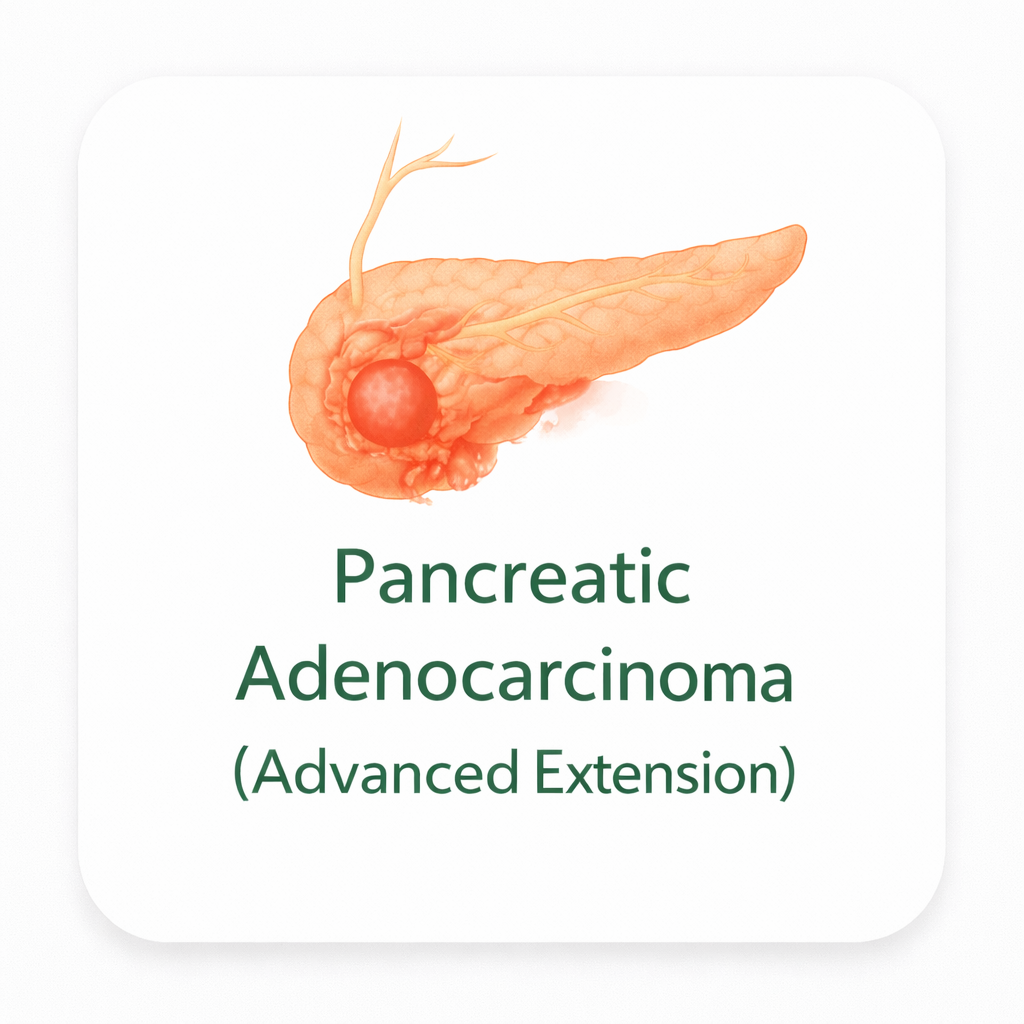
Pancreatic Adenocarcinoma – Advanced Extension
Main Grouping
Digestive
Organ System
Pancreas
Cell Origin
Exocrine glandular cells
Pathways Affected
Pancreatic ductal adenocarcinoma involves one of the most comprehensively characterized oncogenic pathway landscapes in human cancer, dominated by constitutive KRAS-driven RAS/RAF/MEK/ERK and PI3K/AKT/mTOR signaling, p53 tumor suppressor pathway collapse, CDKN2A/p16 cell cycle checkpoint loss, and SMAD4/TGF-beta tumor suppressor inactivation, with additional unique contributions from desmoplastic stroma, Hedgehog signaling, Notch signaling, and Wnt/beta-catenin pathway activation.
The KRAS/RAS/RAF/MEK/ERK MAPK pathway is the dominant and most pervasive oncogenic driver in PDAC, with KRAS activating point mutations present in approximately 92 to 97 percent of PDAC; the most common specific mutations are G12D (approximately 45 percent), G12V (approximately 31 percent), and G12R (approximately 16 percent) at the glycine-12 codon of the KRAS GTPase domain; these mutations eliminate the intrinsic GTPase activity of KRAS keeping it constitutively bound to GTP in the active state; constitutively active KRAS signals through CRAF/BRAF/MEK1/MEK2/ERK1/ERK2 driving sustained cell proliferation, survival, motility, and metabolic reprogramming in PDAC ductal epithelial cells; KRAS G12D specifically engages the RAF/MEK/ERK cascade and the PI3K-p110gamma isoform more potently than other KRAS mutations, contributing to the particularly aggressive biology of G12D-predominant PDAC; curcumin suppresses RAS/MAPK/ERK signaling in PDAC cell models including MiaPaCa-2, Panc-1, AsPC-1, BxPC-3, and Pan02 cells (PMC4963909). The PI3K/AKT/mTOR pathway is co-activated downstream of mutant KRAS PI3K engagement and through loss of PTEN in a subset of PDAC; KRAS-driven PI3K/AKT/mTOR activation promotes PDAC cell survival, metabolic reprogramming, and protein synthesis through mTORC1-S6K1-4EBP1 signaling; quercetin and EGCG both inhibit PI3K/AKT and mTORC1 in PDAC cell models.
The TP53 tumor suppressor pathway is inactivated through TP53 loss-of-function mutations in approximately 72 to 75 percent of PDAC, with both missense gain-of-function mutations (approximately two-thirds of TP53 mutations) and truncating mutations (approximately one-third) documented; TP53 mutations in PDAC are predominantly late-stage alterations occurring in PanIN-3 lesions immediately before invasive carcinoma development; gain-of-function TP53 mutations actively promote PDAC aggressiveness by altering the tumor microenvironment, promoting immune evasion, shaping interactions with cancer-associated fibroblasts (CAFs), regulating metabolic reprogramming, modulating autophagy, and promoting ferroptosis resistance; curcumin induced autophagy, apoptosis, and cell cycle arrest in PANC1 and BxPC3 human pancreatic cancer cells (PMC5610853) restoring pro-apoptotic signaling in TP53-disrupted PDAC cells.
The CDKN2A/p16/CDK4/Rb cell cycle checkpoint pathway is inactivated in approximately 90 to 95 percent of PDAC through CDKN2A deletion, mutation, or promoter hypermethylation; CDKN2A encodes p16/INK4a (CDK4/6 inhibitor protecting Rb from phosphorylation) and p14/ARF (MDM2 inhibitor protecting p53 from degradation); loss of CDKN2A simultaneously eliminates both the CDK4/6 cell cycle brake and the ARF-p53 axis, cooperating with TP53 mutations to completely disable G1/S cell cycle checkpoint control in PDAC; CCND1 (Cyclin D1) amplification occurs in a small subset of PDAC as an alternative mechanism of CDK4/6 activation. The SMAD4/TGF-beta/SMAD tumor suppressor pathway is inactivated through SMAD4 loss-of-function (homozygous deletion or mutation) in approximately 50 to 55 percent of PDAC; SMAD4 encodes the central signal transducer of TGF-beta receptor signaling; SMAD4 loss converts TGF-beta from a tumor suppressor to a tumor promoter in PDAC — TGF-beta signaling in SMAD4-deficient PDAC promotes EMT, invasion, metastasis, immunosuppression (SMAD-independent TGF-beta pathways), and cancer-associated fibroblast activation in the desmoplastic stroma; SMAD4 loss is the most commonly altered pathway in the metastatic progression of PDAC. The Hedgehog/Sonic Hedgehog/GLI pathway is constitutively activated in PDAC through autocrine Sonic Hedgehog (SHH) secretion by PDAC tumor cells activating paracrine Hedgehog signaling in pancreatic stellate cells (PSCs) and cancer-associated fibroblasts (CAFs); Hedgehog pathway activation drives the desmoplastic stroma formation in PDAC (the dense fibrotic collagen and hyaluronan ECM that constitutes 60 to 80 percent of tumor volume); curcumin inhibits Hedgehog/GLI signaling in PDAC models reducing SHH and GLI1 expression. The NF-kB inflammatory pathway is constitutively activated in PDAC through mutant KRAS-mediated IKK activation, TNF-alpha/IL-6 autocrine and paracrine signaling from PDAC cells and tumor-associated macrophages, and SMAD4-deficient TGF-beta signaling; NF-kB drives PDAC cell proliferation, survival, invasiveness, and metastasis; curcumin inhibited NF-kB in multiple PDAC cell lines including MiaPaCa-2, Panc-1, and L3.6pL cells in a time- and dose-dependent manner inducing growth inhibition and apoptosis (PMC4963909). The Notch signaling pathway is constitutively activated in PDAC and in pancreatic cancer stem cells through Notch-1 receptor overexpression; Notch-1 signaling was documented to be associated with NF-kB activity during curcumin-induced cell growth inhibition and apoptosis in PDAC cells (PMC4963909); curcumin downregulation of Notch signaling demonstrated a novel strategy in PDAC preclinical research. The Wnt/beta-catenin pathway is activated in a subset of PDAC through RNF43 mutations and RSPO gene fusions enabling beta-catenin/TCF-driven MYC and CCND1 transcription. The autophagy pathway is uniquely exploited by KRAS-mutant PDAC as a survival mechanism under the starvation conditions of the hypovascular, nutrient-depleted desmoplastic microenvironment; KRAS-driven PDAC cells upregulate basal autophagy to recycle intracellular components for TCA cycle anaplerosis; curcumin induced autophagy and apoptosis in PANC1 and BxPC3 cells (PMC5610853).
Description
Pancreatic ductal adenocarcinoma (PDAC) is the most lethal major solid malignancy, with a 5-year overall survival of approximately 12 to 13 percent across all stages. In the United States, an estimated 66,440 new pancreatic cancer cases and 51,750 deaths were projected for 2024 according to SEER data, making pancreatic cancer the third leading cause of cancer-related death in the United States. Globally, pancreatic cancer accounts for approximately 510,000 new cases and 467,000 deaths annually according to GLOBOCAN 2022 data, ranking as the 12th most common cancer by incidence but the 6th most common cause of cancer death globally. The global incidence of pancreatic cancer is highest in North America, Western Europe, Australia, and New Zealand, with lower incidence in Africa and South-East Asia.
PDAC is uniquely lethal due to the convergence of four biological characteristics: the overwhelming majority of cases are diagnosed at advanced (unresectable) or metastatic stage; only approximately 15 to 20 percent of patients present with potentially resectable disease at diagnosis; even among resected patients the 5-year survival is only approximately 20 to 30 percent due to high recurrence rates; and PDAC is intrinsically resistant to most systemic therapies due to its complex biology.
The 5-year survival by AJCC stage is approximately 44 percent for stage I localized resectable PDAC, approximately 15 to 19 percent for stage II regional PDAC, approximately 3 to 7 percent for stage III locally advanced unresectable PDAC, and approximately 3 to 4 percent for stage IV metastatic PDAC; approximately 50 to 55 percent of all newly diagnosed PDAC patients present with stage IV metastatic disease. The median overall survival for stage IV metastatic PDAC with systemic treatment is approximately 8 to 12 months, and with best supportive care alone is approximately 3 to 5 months.
KRAS activating mutations drive constitutive RAS/RAF/MEK/ERK and PI3K/AKT/mTOR proliferative signaling in virtually all PDAC (approximately 92 to 97 percent); TP53 mutations eliminate the G1/S DNA damage checkpoint and apoptotic signaling (approximately 72 to 75 percent); CDKN2A loss removes the p16 brake on CDK4/6 enabling unrestrained G1/S cell cycle progression (approximately 90 to 95 percent); SMAD4 loss eliminates TGF-beta tumor suppressor signaling enabling invasion and metastasis (approximately 50 to 55 percent). Published laboratory research documents curcumin with directly confirmed cytotoxic effects in multiple human pancreatic cancer cell lines including MiaPaCa-2, Panc-1, AsPC-1, BxPC-3, and Pan02 cells, with mechanisms including NF-kB inhibition, Notch-1 pathway inhibition, apoptosis induction, and oxidative stress reduction (PMC4963909); and curcumin inducing autophagy, apoptosis, and cell cycle arrest in PANC1 and BxPC3 human pancreatic cancer cells (PMC5610853).
Plant-Based Description
Whole-food plant-based dietary patterns provide nutrients and phytochemicals with documented direct anti-pancreatic cancer cell line activity in multiple human PDAC cell lines. Curcumin from turmeric has the most extensively documented anti-PDAC cell line activity across multiple published studies: curcumin demonstrated potent cytotoxic effects in MiaPaCa-2, Panc-1, AsPC-1, BxPC-3, MPanc-96, and Pan02 human pancreatic cancer cell lines through NF-kB inhibition, growth arrest, and apoptosis induction (PMC4963909); curcumin induced autophagy, apoptosis, and cell cycle arrest in PANC1 and BxPC3 cells (PMC5610853); curcumin inhibited Notch-1 signaling associated with NF-kB activity during PDAC cell growth inhibition; curcumin downregulated NF-kB and growth control molecules in a time- and dose-dependent manner; curcumin inhibited BxPC-3 cell proliferation by DNA-damage-mediated G2/M cell cycle arrest through inhibition of Cyclin B1/CDK1 and activation of ATM/Chk1/Cdc25C; and curcumin inhibited NF-kB expression and Panc-1 and L3.6pL cancer cell growth by downregulation of specificity protein Sp1. Quercetin, EGCG, sulforaphane, and resveratrol all have documented activity in PDAC cell lines through KRAS downstream pathway inhibition and NF-kB suppression. Dietary fiber from whole plant foods reduces gut microbiome-mediated inflammatory secondary bile acids linked to PDAC risk.
Plant Chemistry Detail
Curcumin from turmeric has the most extensively documented direct anti-pancreatic cancer cell line activity across multiple human PDAC cell lines with confirmed molecular mechanisms, comprehensively reviewed in a published study (PMC4963909): the first report on curcumin antitumor effects in pancreatic cancer documented that curcumin downregulated NF-kB and growth control molecules induced by NF-kB in human pancreatic cells in a time- and dose-dependent manner, accompanied by growth inhibition and apoptosis; curcumin inhibited the proliferation and enhanced apoptosis of MiaPaCa-2 cells through NF-kB suppression; curcumin demonstrated that Notch-1 signaling pathway was associated with NF-kB activity during curcumin-induced cell growth inhibition and apoptosis of pancreatic cancer cells; curcumin inhibited BxPC-3 human pancreatic cancer cell proliferation by DNA-damage-mediated G2/M cell cycle arrest, by inhibition of Cyclin B1/CDK1 expression, and by activation of ATM/Chk1/Cdc25C; curcumin inhibited NF-kB expression and Panc-1 and L3.6pL cancer cell growth by downregulation of the specificity protein Sp1; the anti-proliferative effects of curcumin were shown to be mainly due to inhibition of oxidative stress and angiogenesis and induction of apoptosis in MiaPaCa-2, MPanc-96, BxPC-3, Panc-1, AsPC-1, and L3.6pL pancreatic cancer cell lines; curcumin reduced clonogenicity, spherical growth, invasiveness, and migration of PDAC tumor cells; curcumin inhibited cancer stem cell function in PDAC; curcumin reversed epithelial-mesenchymal transition; curcumin suppressed NF-kB, miR-221, COX-2, and their effectors PTEN, p27, p57, and pro-inflammatory cytokines.
A published study (PMC5610853) documented curcumin inducing autophagy, apoptosis, and cell cycle arrest in PANC1 and BxPC3 human pancreatic cancer cells: curcumin dose-dependently inhibited cell viability confirmed by MTT assay in PANC1 and BxPC3 cells; curcumin induced apoptosis in PANC1 and BxPC3 confirmed by flow cytometry; curcumin induced cell cycle arrest confirmed by flow cytometry; curcumin activated autophagy in PANC1 and BxPC3 PDAC cells targeting the KRAS-driven constitutive autophagy survival mechanism of PDAC.
Quercetin from yellow onions and kale inhibits KRAS downstream MAPK/ERK and PI3K/AKT in PDAC cell models; quercetin inhibits STAT3 and NF-kB in MiaPaCa-2 and Panc-1 PDAC cells; quercetin inhibits Hedgehog/GLI signaling in PDAC models targeting desmoplastic stroma formation; quercetin induces G2/M cell cycle arrest and apoptosis in PDAC cell lines. EGCG from green tea inhibits KRAS downstream MAPK/ERK, PI3K/AKT, STAT3, and NF-kB in PDAC cell models; EGCG inhibits pancreatic stellate cell activation targeting the PSC-driven desmoplastic stroma; EGCG inhibits cancer stem cell self-renewal in PDAC. Sulforaphane from cruciferous vegetables inhibits NF-kB, STAT3, Hedgehog/GLI, and Wnt/beta-catenin in PDAC cell models; sulforaphane inhibits pancreatic cancer stem cells through Sonic Hedgehog pathway suppression; the published study (PMC3621734) documented curcumin combined with sulforaphane in MiaPaCa-2 and Panc-1 cells reducing NF-kB DNA-binding activity confirmed by ELISA and inducing apoptosis confirmed by annexin V/PI flow cytometry. Resveratrol inhibits KRAS downstream MAPK/ERK, PI3K/AKT, NF-kB, and Wnt/beta-catenin in PDAC cell lines and induces apoptosis through caspase-3 activation. Genistein from soybeans inhibits NF-kB, STAT3, VEGF, and Hedgehog signaling in PDAC cell models. Apigenin from parsley inhibits KRAS-driven MAPK/ERK, NF-kB, STAT3, and mTOR in PDAC cells. Luteolin inhibits KRAS downstream signaling and NF-kB in PDAC. Allicin from garlic induces apoptosis and inhibits invasion in PDAC cell models. 6-gingerol from ginger inhibits NF-kB, COX-2, and VEGF in PDAC cell models targeting the constitutive inflammatory signaling. Dietary fiber from whole plant foods produces short-chain fatty acids (butyrate, propionate, acetate) through gut microbiome fermentation; butyrate activates AMPK, inhibits HDAC, and reduces NF-kB in PDAC models; secondary bile acid (deoxycholic acid) production by gut microbiota is a modifiable PDAC risk factor reduced by high dietary fiber plant-based diets.
Nutritional Focus
Nutritional focus in pancreatic ductal adenocarcinoma research is led by curcumin from turmeric with the most extensively documented direct anti-PDAC cell line activity across multiple human pancreatic cancer cell lines: a comprehensive published review (PMC4963909) documenting curcumin demonstrating potent cytotoxic effects in MiaPaCa-2, MPanc-96, BxPC-3, Panc-1, AsPC-1, and L3.6pL human pancreatic cancer cell lines through NF-kB downregulation in a time- and dose-dependent manner with marked growth inhibition and apoptosis; Notch-1 pathway inhibition associated with NF-kB activity during curcumin-induced PDAC cell growth inhibition and apoptosis; curcumin inhibiting BxPC-3 cell proliferation by DNA-damage-mediated G2/M cell cycle arrest through Cyclin B1/CDK1 inhibition and ATM/Chk1/Cdc25C activation; curcumin inhibiting NF-kB expression and PDAC cell growth by downregulation of Sp1; and curcumin reducing clonogenicity, spherical growth, invasiveness, migration, cancer stem cell function, reversing EMT, and suppressing NF-kB, miR-221, COX-2, and pro-inflammatory cytokines in PDAC; curcumin inducing autophagy, apoptosis, and cell cycle arrest in PANC1 and BxPC3 human PDAC cells (PMC5610853); quercetin inhibiting KRAS downstream MAPK/ERK, PI3K/AKT, STAT3, and NF-kB in PDAC cell models and inhibiting Hedgehog/GLI signaling targeting desmoplastic stroma; EGCG inhibiting PDAC cancer stem cell self-renewal and pancreatic stellate cell activation targeting the desmoplastic barrier; sulforaphane inhibiting NF-kB, STAT3, Hedgehog/GLI, and pancreatic cancer stem cells with curcumin and sulforaphane combination documented to reduce NF-kB DNA-binding in MiaPaCa-2 and Panc-1 cells (PMC3621734); resveratrol inhibiting KRAS downstream MAPK/ERK, NF-kB, and Wnt/beta-catenin in PDAC; genistein from soybeans inhibiting NF-kB, STAT3, VEGF, and Hedgehog in PDAC; 6-gingerol from ginger inhibiting NF-kB, COX-2, and VEGF in PDAC targeting the constitutive KRAS-driven inflammatory signaling; and dietary fiber from whole plant foods reducing gut microbiome-mediated secondary bile acid production (a modifiable PDAC risk factor) and producing butyrate that activates AMPK and inhibits HDAC in PDAC models.
Research Notes
PDAC epidemiology: 5-year OS ~12-13% all stages; ~66,440 new US cases and ~51,750 deaths projected 2024; ~510,000 global new cases and ~467,000 deaths annually (GLOBOCAN 2022); 3rd leading cause of US cancer death; ~50-55% present as stage IV; median OS stage IV ~8-12 months with treatment. AJCC stage OS: stage I ~44%; stage II ~15-19%; stage III ~3-7%; stage IV ~3-4%. Resectable at diagnosis: ~15-20% only. 5-year OS resected ~20-30%. Molecular alterations: KRAS activating mutations ~92-97% (G12D ~45%, G12V ~31%, G12R ~16%); TP53 mutations ~72-75% (two-thirds missense GOF, one-third truncating); CDKN2A inactivation ~90-95% (deletion, mutation, or promoter methylation); SMAD4 loss ~50-55%; BRCA2 ~5-7%; ATM ~6-9%; ARID1A ~6-8%; NF1 ~5%; GNAS ~15% (IPMN-associated); MSI-H/dMMR ~1-2%. Desmoplastic stroma: 60-80% tumor volume; CAFs, stellate cells, collagen, hyaluronan; creates drug delivery barrier; drives hypoxia and immunosuppression. KRAS unique metabolic reprogramming: GOT1-MDH1-ME1 glutamine axis for NADPH; macropinocytosis of extracellular proteins. Curcumin PDAC cell lines (PMC4963909): MiaPaCa-2, MPanc-96, BxPC-3, Panc-1, AsPC-1, L3.6pL cytotoxicity; NF-kB inhibition time- and dose-dependent; Notch-1/NF-kB association confirmed; BxPC-3 G2/M arrest via ATM/Chk1/Cdc25C; Sp1 downregulation Panc-1 and L3.6pL; stem cell inhibition; EMT reversal; COX-2/miR-221 suppression. Curcumin PANC1 BxPC3 (PMC5610853): autophagy, apoptosis, cell cycle arrest. Combination curcumin+sulforaphane MiaPaCa-2 Panc-1 (PMC3621734): NF-kB ELISA reduction; annexin V/PI apoptosis confirmed.
Notes Visibility
show
Key Foods
Turmeric,Broccoli,Kale,Spinach,Brussels Sprouts,Cauliflower,Garlic,Yellow Onion,Carrot,Tomato,Beetroot,Cabbage,Blueberry,Pomegranate,Grape,Raspberry,Strawberry,Apple,Orange,Lemon,Soybeans,Edamame,Green Lentils,Black Beans,Chickpeas,Brown Rice,Quinoa,Oats,Wild Rice,Black Rice,Walnut,Almond,Brazil Nut,Flaxseed,Pumpkin Seeds,Chia Seeds,Sesame Seeds,Hemp Seeds,Shiitake,Maitake,Cremini,Portobello,Lions Mane,Green Tea,Ginger,Black Pepper,Garlic Powder,Parsley,Rosemary,Oregano, Celery, Fennel, Leek,Avocado,Artichoke,Endive,Radish,Parsnip,Tangerine,Dragon Fruit Red, Red Onion
Linked Nutrients
vitamin-c,vitamin-e,vitamin-d3,vitamin-b9,vitamin-b6,vitamin-a,selenium,zinc,magnesium,calcium,potassium,iron,curcumin,quercetin,egcg,sulforaphane,resveratrol,genistein,beta-carotene,anthocyanins,beta-glucans,dietary-fiber,plant-ala-omega3
Last Updated
2025-10-13 10:01:58

