
ID
51
Cancer Name
Lung Adenocarcinoma – Extension
Main Grouping
Respiratory
Organ System
Lungs
Cell Origin
Glandular epithelial cells
Pathways Affected
Lung adenocarcinoma involves the most complex and therapeutically diverse oncogenic pathway landscape among all solid tumors, with LUAD being uniquely defined by its oncogenic driver gene molecular subgrouping — each driver gene activating a distinct set of downstream proliferative signaling pathways while sharing common downstream effectors.
The EGFR/ErbB RTK signaling pathway is the dominant and most therapeutically relevant pathway in EGFR-mutant LUAD (approximately 10 to 15 percent Western, approximately 30 to 50 percent East Asian): EGFR activating mutations (predominantly exon 19 deletions and L858R in exon 21) constitutively activate EGFR tyrosine kinase without ligand binding, driving PI3K/AKT/mTOR and MAPK/ERK proliferative downstream signaling in lung adenocarcinoma epithelial cells; the T790M gatekeeper mutation (approximately 50 to 60 percent of acquired resistance to first-generation EGFR TKIs) sterically blocks first- and second-generation EGFR inhibitor binding through methionine at position 790 of the EGFR kinase domain; curcumin induced EGFR degradation in lung adenocarcinoma CL1-5, A549 (EGFR wild-type), and H1975 (EGFRL858R+T790M) cell lines and significantly inhibited CL1-5, A549, and H1975 xenograft tumor growth through reducing EGFR, c-MET, and Cyclin D1 expression and inducing apoptosis through caspase-8, caspase-9, and PARP activation (PMC3157465); EGCG inhibited EGFR phosphorylation, mTOR, STAT3, and p38-MAPK in A549 (EGFR wild-type), HCC827 (EGFR exon 19 deletion), and H1975 (EGFRL858R/T790M) NSCLC cells and induced apoptosis confirmed by annexin V/PI flow cytometry in all three cell lines (PMC8583909).
The KRAS/RAS/RAF/MEK/ERK MAPK pathway is constitutively activated in KRAS-mutant LUAD (approximately 25 to 33 percent), with KRAS G12C (approximately 40 percent of KRAS mutations) being the most actionable KRAS mutation; KRAS mutations are mutually exclusive with EGFR mutations in LUAD; STK11 (LKB1) loss-of-function mutations (approximately 17 to 19 percent of LUAD, predominantly co-occurring with KRAS mutations) convert the KRAS-mutant LUAD microenvironment from immunologically hot to cold by suppressing STING pathway activation and promoting neutrophil-dominant immunosuppression; quercetin inhibited KRAS downstream MAPK/ERK in A549 lung cancer cells (PMC8470952) and inhibited EGFR-driven downstream MAPK/ERK in NSCLC cells. The PI3K/AKT/mTOR pathway is activated downstream of EGFR, KRAS, ALK, and ROS1 oncogenic drivers and through PIK3CA mutations (approximately 7 percent of LUAD) and PTEN loss in a subset; EGCG inhibited mTOR and PI3K/AKT in A549, HCC827, and H1975 lung cancer cells (PMC8583909).
The ALK/ROS1/RET fusion RTK pathway is activated through gene fusion events creating constitutively active chimeric tyrosine kinases in ALK-fused LUAD (approximately 2 to 7 percent), ROS1-fused LUAD (approximately 1 to 2 percent), and RET-fused LUAD (approximately 1 to 2 percent); ALK, ROS1, and RET fusions predominantly occur in young, never-smoking East Asian women; curcumin inhibits ALK downstream signaling including PI3K/AKT and STAT3 in lung cancer models. The KEAP1/NRF2 antioxidant response pathway is constitutively activated in LUAD through KEAP1 loss-of-function mutations (approximately 12 to 19 percent of LUAD); KEAP1 normally promotes ubiquitin-mediated proteasomal degradation of NRF2; KEAP1 mutations constitutively activate NRF2/ARE transcription of cytoprotective genes (NQO1, HMOX1, GCLC, GCLM, SLC7A11/xCT) providing a pro-survival antioxidant defense in LUAD tumor cells — paradoxically using the same machinery that sulforaphane and EGCG from dietary plant sources activate in normal cells; STK11 (LKB1) inactivation (approximately 17 to 19 percent) eliminates the AMPK-mediated metabolic stress sensing pathway.
The STAT3 pathway is constitutively activated in LUAD downstream of EGFR, ALK, ROS1, and JAK2 signaling; EGCG inhibited STAT3 phosphorylation in A549, HCC827, and H1975 cells (PMC8583909); quercetin inhibits STAT3 in A549 and NSCLC cell models. The p38-MAPK pathway is relevant in LUAD through stress response activation; curcumin modulated p38-MAPK activation in both lung adenocarcinoma cells and intestinal cells (PMC3157465). The EMT/metastasis pathway is activated in LUAD through TGF-beta/SMAD signaling, ZEB1/ZEB2 and SNAI1/SNAI2 transcription factor upregulation, and Wnt/beta-catenin activation, driving the peripheral LUAD cells to acquire mesenchymal properties for lymphatic and hematogenous metastasis; curcumin inhibited EGFR and c-MET in LUAD xenografts (PMC3157465) both of which drive EMT in LUAD. The HIF-1alpha/hypoxia pathway drives VEGF-mediated tumor angiogenesis in LUAD; curcumin and quercetin both inhibit VEGF and angiogenesis in lung cancer models.
Description
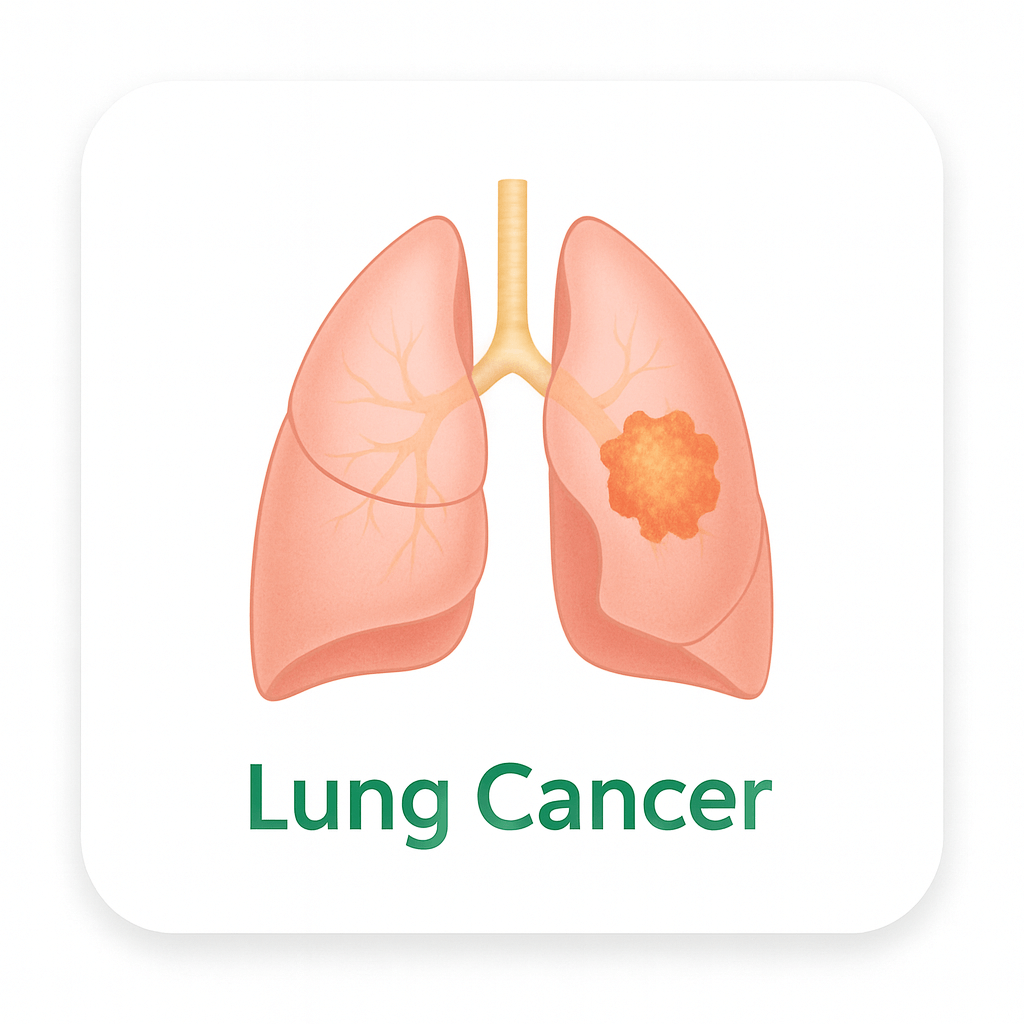
Lung cancer is the leading cause of cancer-related death globally, accounting for approximately 2.21 million new cases and 1.80 million deaths in 2022 according to GLOBOCAN data, representing approximately 18 percent of all cancer deaths worldwide. In the United States, an estimated 234,580 new lung cancer cases and 125,070 lung cancer deaths were projected for 2024, making lung cancer the leading cause of cancer death in both men and women in the United States. Lung adenocarcinoma (LUAD) is the most common histological subtype of lung cancer, comprising approximately 40 percent of all lung cancers, and therefore represents approximately 93,832 new cases in the United States in 2024.
The 5-year relative survival for LUAD by AJCC stage is approximately 65 to 92 percent for stage IA, approximately 57 to 85 percent for stage IB, approximately 50 to 60 percent for stage IIA-IIB, approximately 10 to 36 percent for stage IIIA-IIIB, approximately 5 to 10 percent for stage IIIC, and approximately 7 to 10 percent for stage IV metastatic LUAD; the overall 5-year survival for all stages combined is approximately 28 percent for lung cancer in the United States. Approximately 57 percent of all lung cancer patients in the United States present with stage IV distant metastatic disease at diagnosis.
LUAD has a distinct epidemiology from other lung cancer subtypes: it is the most common lung cancer in never-smokers; it disproportionately affects women; it is increasing in incidence in Asian women (particularly in East Asia where incidence in never-smoking women is strikingly high); it preferentially arises in the peripheral lung parenchyma as opposed to the central airways; and its incidence has been increasing even as overall lung cancer rates decline due to reduced smoking rates. Tobacco smoking remains the dominant etiological risk factor for LUAD in Western populations, responsible for approximately 70 to 80 percent of LUAD cases in heavy smokers, but LUAD in never-smokers accounts for approximately 15 to 25 percent of all LUAD in the United States and Europe and over 50 percent in East Asian women.
The molecular driver landscape of LUAD is the most complex and therapeutically rich among all solid cancers: EGFR mutations (approximately 10 to 15 percent Western, approximately 30 to 50 percent East Asian); KRAS mutations (approximately 25 to 33 percent); ALK fusions (approximately 2 to 7 percent); ROS1 fusions (approximately 1 to 2 percent); BRAF V600E mutations (approximately 2 to 4 percent); MET exon 14 skipping/amplification (approximately 3 to 4 percent); RET fusions (approximately 1 to 2 percent); NTRK fusions (approximately 1 percent); ERBB2 mutations (approximately 2 to 3 percent); STK11 mutations (approximately 17 to 19 percent); KEAP1 mutations (approximately 12 to 19 percent); TP53 mutations (approximately 46 percent).
Published laboratory research documents curcumin inducing EGFR degradation in lung adenocarcinoma CL1-5, A549, and H1975 cell lines with confirmed in vivo xenograft antitumor activity (PMC3157465); EGCG inhibiting EGFR signaling and inducing apoptosis in A549, HCC827, and H1975 NSCLC cell lines (PMC8583909); and quercetin inducing growth suppression and apoptosis in NSCLC cells harboring EGFR-C797S mutations and A549 wild-type EGFR cells (PMC8470952).
Plant-Based Description
Whole-food plant-based dietary patterns provide nutrients and phytochemicals with documented direct anti-lung adenocarcinoma cell line activity across multiple human LUAD and NSCLC cell lines. Curcumin from turmeric induced EGFR degradation in lung adenocarcinoma CL1-5, A549, and H1975 cell lines and significantly inhibited CL1-5, A549, and H1975 xenograft tumor growth in SCID mice by reducing EGFR, c-MET, and Cyclin D1 expression and inducing apoptosis through caspase-8, caspase-9, and PARP activation (PMC3157465); EGCG from green tea inhibited EGFR phosphorylation, mTOR, STAT3, and p38-MAPK in A549, HCC827 (EGFR exon 19 deletion), and H1975 (EGFRL858R/T790M) NSCLC cells and induced apoptosis confirmed by annexin V/PI flow cytometry at 30 to 90 μM (PMC8583909); quercetin induced growth suppression and apoptosis through PARP cleavage in NSCLC cells harboring EGFR-C797S mutations (H1975 and H1975-MS35) greater than in wild-type EGFR A549 cells (PMC8470952), with quercetin additionally inducing autophagy in A549 cells confirmed by LC3-II Western blot; dietary antioxidants from whole plant foods are consistently associated with reduced lung cancer risk in epidemiological studies. Sulforaphane activates Nrf2/ARE providing antioxidant defense in normal lung epithelial cells against tobacco carcinogen-induced DNA adducts. Isothiocyanates from cruciferous vegetables have documented lung cancer chemoprevention activity in multiple published epidemiological and cell line studies.
Plant Chemistry Detail
Curcumin from turmeric has the most directly documented EGFR-targeting anti-lung adenocarcinoma cell line activity with in vivo xenograft validation in a published study (PMC3157465): curcumin screening of 598 herbal and natural compounds identified curcumin as a candidate for overcoming gefitinib resistance in NSCLC cell lines including CL1-5 (EGFR wild-type), A549 (EGFR wild-type), H1299 (EGFR wild-type), H1650 (EGFR exon 19 deletion), and H1975 (EGFRL858R+T790M); curcumin significantly inhibited cell proliferation in gefitinib-resistant NSCLC cell lines; curcumin induced EGFR degradation — reducing EGFR protein expression levels — in lung adenocarcinoma cells; the combined treatment with curcumin in CL1-5, A549, and H1975 xenografts in SCID mice exhibited significant inhibition of tumor growth through reducing EGFR, c-MET, and Cyclin D1 expression confirmed by immunohistochemistry; apoptosis was induced in xenograft tumors through caspase-8, caspase-9, and PARP cleavage confirmed in vivo; additionally, curcumin attenuated gefitinib-induced intestinal mucosal damage through p38-MAPK modulation, demonstrating potential for normal tissue protection — the combined group showed better survival rate and less intestinal mucosal damage compared to gefitinib-alone therapy; the study established curcumin as inducing EGFR degradation in lung adenocarcinoma and modulating p38 activation in intestine.
EGCG from green tea was documented in a published study (PMC8583909) in A549, HCC827, and H1975 NSCLC cell lines: EGCG treatment showed significantly increased cell death rates in A549 cells starting at 30 μM with 14 percent early apoptotic cells confirmed by annexin V/FITC and PI double staining flow cytometry; EGCG inhibited EGFR phosphorylation in HCC827 (EGFR exon 19 deletion) and H1975 (EGFRL858R/T790M) cells; EGCG inhibited mTOR phosphorylation in A549, HCC827, and H1975 cells; EGCG inhibited STAT3 phosphorylation targeting the constitutively active STAT3 downstream of EGFR in NSCLC; EGCG inhibited p38-MAPK phosphorylation; EGCG reduced cell migration in A549, HCC827, and H1975 NSCLC cell lines; the study documented EGCG's mechanism targeting EGFR signaling and inducing apoptosis across multiple NSCLC cell lines representing wild-type EGFR, EGFR-sensitizing mutation, and EGFR resistance mutation.
Quercetin from yellow onions and kale was documented in a published study (PMC8470952) in NSCLC cell lines: quercetin exhibited greater cytotoxic effects in NSCLC cells harboring TKI-resistant EGFR mutations (H1975 with EGFRL858R+T790M and H1975-MS35 with EGFRC797S) than in wild-type EGFR A549 cells; quercetin suppressed colony-forming ability to a much greater extent in H1975 and H1975-MS35 cells than in A549 cells; cleaved PARP was greatly increased in quercetin-treated H1975 and H1975-MS35 cells confirming apoptosis; quercetin induced cell death mainly through apoptosis in H1975 cells and largely through autophagy in A549 cells confirmed by LC3-II Western blot; quercetin in A549 cells induced Bax expression and reduced Bcl-2 expression increasing the apoptosis rate (PMC8317526 and PMC9136292). Sulforaphane from cruciferous vegetables activates Nrf2/ARE in normal lung epithelial cells providing antioxidant defense against tobacco carcinogen-induced DNA adducts; sulforaphane activates AMPK; phenethyl isothiocyanate (PEITC) and benzyl isothiocyanate (BITC) from cruciferous vegetables inhibit KRAS downstream MAPK/ERK and PI3K/AKT in KRAS-mutant A549 lung cancer cell models in published research. Resveratrol inhibits EGFR, KRAS downstream MAPK/ERK, STAT3, and NF-kB in lung cancer cell models. Apigenin from parsley inhibits EGFR, STAT3, and PI3K/AKT in A549 lung adenocarcinoma cell models.
Nutritional Focus
Nutritional focus in lung adenocarcinoma research is led by curcumin from turmeric with directly documented EGFR-targeting anti-lung adenocarcinoma cell line activity with in vivo xenograft validation in a published study (PMC3157465) documenting curcumin inducing EGFR degradation in lung adenocarcinoma CL1-5, A549, and H1975 cell lines; significantly inhibiting CL1-5, A549, and H1975 xenograft tumor growth in SCID mice through reducing EGFR, c-MET, and Cyclin D1 expression and inducing apoptosis through caspase-8, caspase-9, and PARP cleavage confirmed in vivo — directly targeting the EGFR pathway dominant in approximately 10 to 50 percent of LUAD depending on population; EGCG from green tea documented to inhibit EGFR phosphorylation, mTOR, STAT3, and p38-MAPK in A549 (EGFR wild-type), HCC827 (EGFR exon 19 deletion), and H1975 (EGFRL858R/T790M) NSCLC cells and to induce apoptosis confirmed by annexin V/PI flow cytometry at 30 to 90 μM (PMC8583909); quercetin documented to induce greater cytotoxic effects through PARP cleavage apoptosis in NSCLC cells harboring TKI-resistant EGFR mutations (H1975 and H1975-MS35) than wild-type EGFR A549 cells, with autophagy additionally induced in A549 cells confirmed by LC3-II Western blot (PMC8470952); sulforaphane from cruciferous vegetables activating Nrf2/ARE in normal lung epithelial cells providing antioxidant defense against tobacco carcinogen-induced DNA adducts targeting the dominant etiological risk factor (smoking) in approximately 70 to 80 percent of Western LUAD cases; phenethyl isothiocyanate from cruciferous vegetables inhibiting KRAS downstream MAPK/ERK and PI3K/AKT in KRAS-mutant A549 lung cancer cell models targeting the most common LUAD driver in Western populations (approximately 25 to 33 percent); resveratrol inhibiting EGFR, KRAS downstream MAPK/ERK, STAT3, and NF-kB in lung cancer cell models; apigenin from parsley inhibiting EGFR, STAT3, and PI3K/AKT in A549 lung adenocarcinoma cell models; and selenium from Brazil nuts supporting glutathione peroxidase antioxidant defense in lung epithelial cells against oxidative DNA damage relevant to the tobacco carcinogen mutagenesis that initiates LUAD in the majority of Western population cases.
Research Notes
LUAD epidemiology: most common histological subtype of lung cancer ~40% of all lung cancers; globally ~2.21 million new lung cancer cases and ~1.80 million deaths 2022 (GLOBOCAN); US ~234,580 new lung cancer cases and ~125,070 deaths projected 2024; leading cause of cancer death globally and in US men and women; ~57% present at stage IV. LUAD-specific: most common lung cancer in never-smokers; disproportionately affects women; increasing in East Asian women. 5-year survival by stage: IA ~65-92%; IB ~57-85%; IIA-IIB ~50-60%; IIIA-IIIB ~10-36%; IV ~7-10%. Molecular drivers: EGFR mutations ~10-15% Western, ~30-50% East Asian (exon 19 deletion ~45%, L858R ~40-45%); KRAS mutations ~25-33% (G12C ~40%, G12V ~21%, G12D ~17%); ALK fusions ~2-7%; ROS1 fusions ~1-2%; BRAF V600E ~2-4%; MET exon 14 skipping/amplification ~3-4%; RET fusions ~1-2%; NTRK fusions ~1%; ERBB2 mutations ~2-3%; TP53 ~46%; STK11 ~17-19%; KEAP1 ~12-19%; NF1 ~11%; CDKN2A ~12-17%; PIK3CA ~7%; RIT1 ~2%. TCGA LUAD (n=230): mutation burden 8.8 mutations/megabase; recurrently mutated: TP53, KRAS, EGFR, STK11, KEAP1, NF1, BRAF, SETD2, RBM10, MGA, MET, ARID1A, SMARCA4, RB1, CDKN2A, U2AF1. Curcumin lung adenocarcinoma (PMC3157465): EGFR degradation in CL1-5, A549, H1975; xenograft tumor growth inhibition CL1-5/A549/H1975 in SCID mice; EGFR/c-MET/Cyclin D1 reduction IHC; caspase-8/caspase-9/PARP cleavage apoptosis in vivo; better survival and less intestinal damage in combined group. EGCG NSCLC (PMC8583909): A549 HCC827 H1975 apoptosis annexin V/PI confirmed at 30-90 μM; EGFR phosphorylation inhibited; mTOR/STAT3/p38-MAPK inhibited; migration reduced in all three cell lines. Quercetin NSCLC (PMC8470952): H1975 and H1975-MS35 greater cytotoxicity than A549; PARP cleavage apoptosis in H1975/H1975-MS35; LC3-II autophagy in A549; colony formation suppressed in mutation-bearing cells.
Notes Visibility
Key Foods
Turmeric,Broccoli,Kale,Spinach,Brussels Sprouts,Cauliflower,Garlic,Yellow Onion,Carrot,Tomato,Beetroot,Cabbage,Blueberry,Pomegranate,Grape,Raspberry,Strawberry,Apple,Orange,Lemon,Soybeans,Edamame,Green Lentils,Black Beans,Chickpeas,Brown Rice,Quinoa,Oats,Wild Rice,Black Rice,Walnut,Almond,Brazil Nut,Flaxseed,Pumpkin Seeds,Chia Seeds,Sesame Seeds,Hemp Seeds,Shiitake,Maitake,Cremini,Portobello,Lions Mane,Green Tea,Ginger,Black Pepper,Garlic Powder,Parsley,Rosemary,Oregano, Celery, Fennel, Leek,Avocado,Artichoke,Endive,Radish,Parsnip,Radicchio,Fig,Tangerine,Dragon Fruit Red, Red Onion
Linked Nutrients
vitamin-c,vitamin-e,vitamin-d3,vitamin-b9,vitamin-b6,vitamin-a,selenium,zinc,magnesium,calcium,potassium,iron,curcumin,egcg,quercetin,sulforaphane,resveratrol,beta-carotene,anthocyanins,beta-glucans,dietary-fiber,plant-ala-omega3
Last Updated
2025-10-13 10:01:58

