
ID
56
Cancer Name
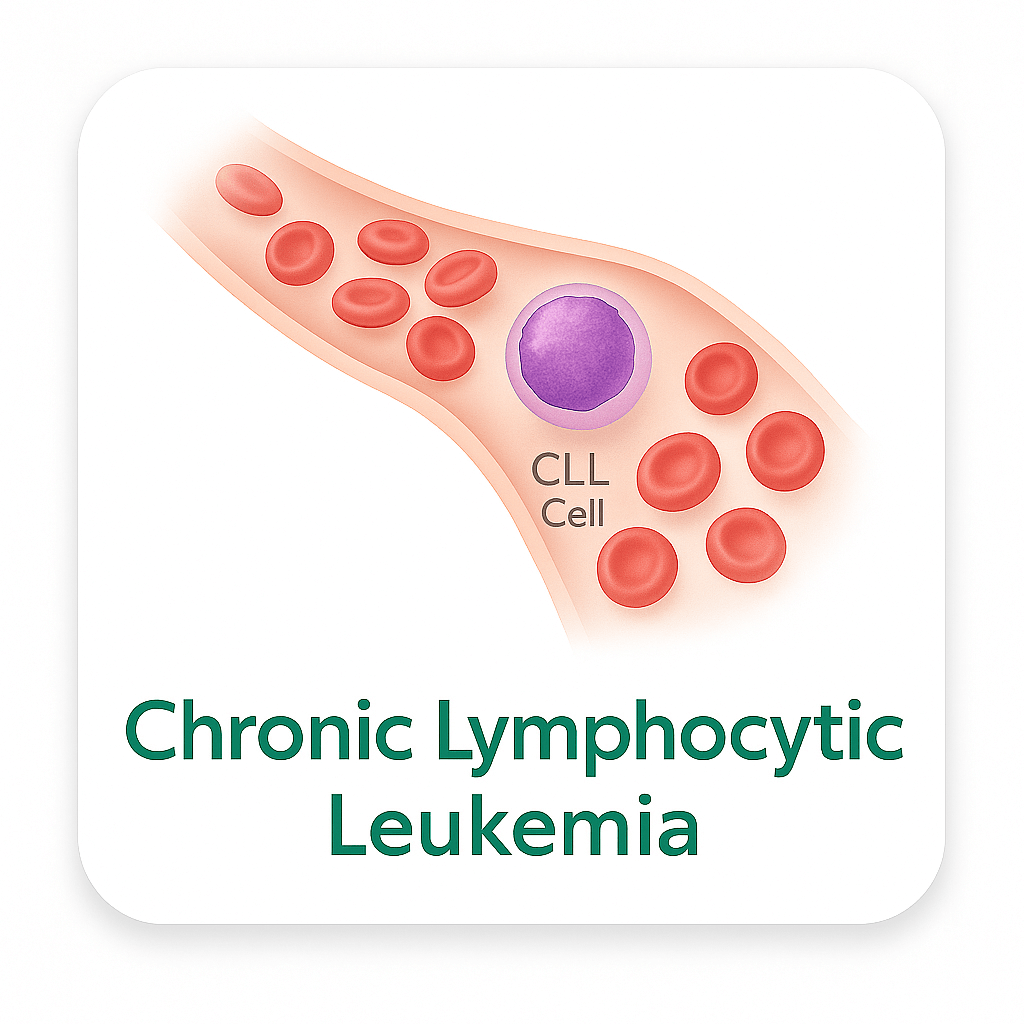
Chronic Lymphocytic Leukemia (CLL)
Main Grouping
Hematologic
Organ System
Blood, lymph nodes
Cell Origin
Mature B lymphocytes
Pathways Affected
Chronic lymphocytic leukemia involves a pathway landscape dominated by BCR signaling through BTK, constitutive NF-kB activation, BCL2-family anti-apoptotic signaling, PI3K/AKT/mTOR, and STAT3, with additional unique contributions from Notch signaling in NOTCH1-mutant CLL, the tumor microenvironment nurse-like cell and stromal niche, and the tryptophan-kynurenine immunosuppressive pathway.
The B-cell receptor (BCR) signaling pathway is the most therapeutically critical pathway in CLL: BCR engagement in CLL activates LYN/SYK/BTK (Bruton tyrosine kinase) and downstream PI3K/AKT and PLCG2 signaling that drives NF-kB activation, calcium-NFAT signaling, and ERK/MAPK proliferative signaling; BTK is the central kinase in BCR signal transduction in CLL B-cells; constitutive BCR pathway signaling through anergic tonic BCR signaling or antigen-stimulated BCR signaling drives CLL B-cell survival in the lymph node and bone marrow microenvironments; BCR signaling is the dominant pro-survival signal from the CLL tumor microenvironment; nurse-like cells (NLCs) in the bone marrow and lymph nodes secrete CXCL12 and CXCL13 driving CLL B-cell migration into these protective niches through CXCR4 and CXCR5; curcumin inhibited AKT (downstream of PI3K in BCR signaling) in primary CLL B-cells from 18 patients confirmed by Western blot (PMC3893060); EGCG inhibited VEGFR1 and VEGFR2 phosphorylation which are co-expressed on B-CLL cells and provide pro-survival signaling supplemental to BCR signaling.
The NF-kB inflammatory pathway is constitutively activated in CLL through multiple redundant mechanisms: BCR/BTK/IKK signaling; BIRC3 mutations (~4-5% of CLL) eliminate the E3 ligase cIAP1 which normally ubiquitinates NIK for proteasomal degradation, enabling constitutive non-canonical NF-kB pathway activation through NIK/IKKalpha/p52; MYD88 L265P mutations (~3% of CLL) constitutively activate TLR7/9/MYD88/IRAK4/TRAF6/IKK canonical NF-kB signaling; NOTCH1 intracellular domain directly activates NF-kB through NOTCH1/NF-kB transcriptional cooperation in NOTCH1-mutant CLL; and TRAF2 amplification drives TRAF2/cIAP1 canonical NF-kB signaling; curcumin abolished NF-kB activity in primary CLL B-cells from 18 CLL patients confirmed by Western blot of IkBa phosphorylation and NF-kB target gene expression (PMC3893060); EGCG also inhibits NF-kB in CLL B-cells.
The BCL2/apoptosis pathway is the most critical cell-intrinsic survival pathway in CLL: BCL2 protein is overexpressed in virtually all CLL cases through miR-15a/miR-16-1 microRNA regulation; the del(13q14) deletion that occurs as sole abnormality in approximately 55 percent of CLL cases deletes the miR-15a/miR-16-1 locus, removing these BCL2-suppressing microRNAs and enabling BCL2 overexpression; BCL2 overexpression protects CLL B-cells from apoptosis by sequestering BH3-domain pro-apoptotic proteins (BAX, BAK, BIM, PUMA, NOXA); MCL-1 and Bcl-xL provide additional anti-apoptotic protection; XIAP inhibits caspase-3 and caspase-9; curcumin induced PARP cleavage in primary CLL B-cells confirming caspase-mediated apoptosis induction and downregulated BCL2 family proteins; EGCG downregulated BCL2, MCL-1, and XIAP in primary B-CLL cells and induced caspase-3 activation and PARP cleavage (PMC2646173) targeting the dominant BCL2 anti-apoptotic program.
The STAT3 pathway is constitutively activated in CLL through IL-6, IL-10, and CXCL12 cytokine receptor signaling from nurse-like cells and stromal cells in the bone marrow and lymph node protective niches; STAT3 drives MCL-1, BCL-xL, Bcl-2, and cyclin D1 transcription in CLL B-cells; curcumin inhibited constitutively active STAT3 in primary CLL B-cells from 18 patients confirmed by Western blot (PMC3893060) — targeting the dominant microenvironment-driven STAT3 survival pathway; EGCG inhibits STAT3 in CLL B-cell models. The PI3K/AKT/mTOR pathway is constitutively activated in CLL through BCR/BTK, IL-6R, and CXCR4/5 signaling; PI3K-delta (PI3KCD, CD19+ B-cell-specific isoform) is the dominant PI3K isoform driving AKT/mTOR in CLL; curcumin inhibited AKT in primary CLL B-cells confirmed by Western blot (PMC3893060); quercetin inhibits PI3K/AKT in CLL B-cell models. The NOTCH1 pathway is activated in NOTCH1-mutant CLL (~10-15%): NOTCH1 PEST domain frameshift mutations (predominantly P2515fs) create a truncated NOTCH1 intracellular domain (NICD) that is not recognized by FBXW7 E3 ligase for ubiquitin-proteasomal degradation; stabilized NICD drives MYC, BCL-xL, CCND1 transcription and cooperates with NF-kB in NOTCH1-mutant CLL; curcumin inhibits NOTCH1 signaling in B-cell lymphoma cell models; EGCG inhibits gamma-secretase targeting NOTCH1 intracellular domain cleavage in B-cell models.
Description
Chronic lymphocytic leukemia (CLL) is the most common leukemia in Western countries, accounting for approximately 25 to 30 percent of all leukemias in the United States and Europe. In the United States, an estimated 20,700 new CLL cases and 4,440 deaths were projected for 2024, with a prevalence of over 200,000 CLL patients in the United States. CLL is predominantly a disease of older adults, with a median age at diagnosis of approximately 70 to 72 years; fewer than 10 percent of cases are diagnosed before age 50; and CLL is approximately 1.5 to 2 times more common in men than in women.
The overall 5-year relative survival for CLL is approximately 87 to 90 percent across all stages in current treatment eras; the overall survival varies substantially by CLL subgroup and risk category. The Rai and Binet staging systems classify CLL by degree of lymphocytosis, lymphadenopathy, hepatosplenomegaly, anemia, and thrombocytopenia: Rai stage 0 (low risk, lymphocytosis only) has a median survival exceeding 10 to 12 years; Rai stages I-II (intermediate risk) have a median survival of approximately 7 to 9 years; Rai stages III-IV (high risk, anemia or thrombocytopenia) have a median survival of approximately 1 to 5 years. CLL follows a highly variable clinical course — some patients have stable indolent disease requiring only observation (the watch-and-wait strategy) for years to decades, while others have rapidly progressive disease requiring immediate treatment.
The dominant biology of CLL is the progressive accumulation of long-lived apoptosis-resistant clonal B lymphocytes rather than increased cell proliferation; CLL B-cells have impaired apoptosis driven by BCL2 overexpression (the t(14;18)-independent mechanism of BCL2 upregulation), MCL-1 upregulation, XIAP, and Bcl-xL; constitutively active pro-survival signaling pathways including NF-kB, PI3K/AKT, STAT3, and B-cell receptor (BCR) signaling through the BTK (Bruton tyrosine kinase) pathway provide continuous anti-apoptotic survival signals to CLL B-cells. Published laboratory research documents curcumin inducing apoptosis in primary CLL B-cells from 18 CLL patients in a dose-dependent manner (5 to 20 μM) and inhibiting constitutively active pro-survival pathways including STAT3, AKT, and NF-kB confirmed by FACS annexin/PI and Western blotting, with curcumin overcoming stromal protection of CLL B-cells and synergizing with EGCG in sequential administration (PMC3893060); EGCG inducing apoptosis in B-CLL cells through partial inhibition of VEGFR1 and VEGFR2 phosphorylation, caspase-3 activation, PARP cleavage, and downregulation of BCL2, MCL-1, and XIAP in primary B-CLL cells.
Plant-Based Description
Whole-food plant-based dietary patterns provide phytochemicals with documented direct anti-CLL cell activity in primary CLL B-cells. Curcumin from turmeric induced apoptosis in primary CLL B-cells from 18 CLL patients in a dose-dependent manner (5 to 20 μM) and inhibited constitutively active pro-survival pathways including STAT3, AKT, and NF-kB — the three dominant survival signaling pathways driving CLL B-cell apoptosis resistance — confirmed by FACS annexin/PI and Western blot; curcumin overcame stromal protection of CLL B-cells in nurse-like cell co-culture model and synergized with EGCG in sequential (EGCG-then-curcumin) administration producing greater CLL cell death (PMC3893060); EGCG from green tea induced apoptosis in primary B-CLL cells through partial inhibition of VEGFR1 and VEGFR2 phosphorylation, caspase-3 activation, PARP cleavage, and downregulation of BCL2, MCL-1, and XIAP in primary B-CLL cells (PMC2646173); quercetin from onions and kale inhibits BCR downstream BTK/PI3K/AKT and NF-kB in CLL B-cell models; resveratrol induces apoptosis in CLL B-cells through caspase-3 activation and BCL2 reduction; sulforaphane activates Nrf2/ARE and inhibits NF-kB in CLL B-cell models.
Plant Chemistry Detail
Curcumin from turmeric has the most directly documented anti-CLL activity using primary CLL patient cells in a published study (PMC3893060): primary PBMC (≥90% CD5+/CD19+ B lymphocytes) isolated from 18 CLL patients were treated with increasing doses of curcumin (5 to 20 μM) for 24 hours; cells were stained with annexin/PI and analyzed by flow cytometry — curcumin induced apoptosis in primary CLL B-cells in a dose-dependent manner confirmed; Western blot analysis confirmed that curcumin inhibited constitutively active STAT3 phosphorylation, AKT phosphorylation, and NF-kB activation — the three dominant pro-survival signaling pathways in CLL B-cells driven by the BCR/BTK pathway, the tumor microenvironment nurse-like cells (NLCs), and BCR/BIRC3/MYD88 pathways respectively; curcumin was tested in CLL B-cells co-cultured with human stromal cells (HS-5 bone marrow stromal cell line) mimicking the protective CLL bone marrow niche and demonstrated ability to overcome stromal protection of CLL B-cells; sequential administration of EGCG followed by curcumin resulted in synergistic CLL cell death and neutralized stromal protection; curcumin also induced PARP cleavage in primary CLL B-cells confirming caspase-mediated apoptotic cell death and downregulated BCL2 family anti-apoptotic proteins including XIAP and Bcl-xL.
EGCG from green tea was documented in a published review (PMC2646173) of primary B-CLL cell experiments: EGCG induced apoptosis in primary B-CLL cells through partial inhibition of VEGFR1 and VEGFR2 phosphorylation — VEGFR1 and VEGFR2 are co-expressed on B-CLL cells and provide pro-survival BCR-independent signaling; EGCG induced caspase-3 activation in primary B-CLL cells confirmed; EGCG induced PARP cleavage in primary B-CLL cells confirmed; EGCG downregulated BCL2 protein in primary B-CLL cells targeting the dominant anti-apoptotic mechanism in CLL (del(13q14)/miR-15a-16-1-mediated BCL2 overexpression in ~55% of CLL); EGCG downregulated MCL-1 protein in primary B-CLL cells; EGCG downregulated XIAP protein in primary B-CLL cells; EGCG and curcumin target many of the same molecular pathways including PARP cleavage, telomerase activity inhibition, STAT3, AKT, NF-kB, and MCL-1/XIAP downregulation; sequential EGCG-then-curcumin produced the most effective combined CLL cell death.
Quercetin from onions and kale inhibits BCR downstream PI3K/AKT and NF-kB in CLL B-cell models, induces apoptosis through Bcl-2 reduction and Bax upregulation, and inhibits VEGF in CLL models in published research. Resveratrol from grapes and berries induces apoptosis in primary CLL B-cells through caspase-3 activation, Bcl-2 reduction, and activation of the p53 pro-apoptotic pathway targeting the TP53 abnormalities (~7-10% treatment-naive CLL, adverse prognosis) and the BCL2-driven anti-apoptotic program. Luteolin from celery and parsley induces apoptosis in CLL B-cells through MCL-1 reduction and caspase-3 activation in published research. Apigenin from parsley and chamomile induces apoptosis in CLL B-cells through caspase-3 activation and BCL2 reduction targeting the dominant apoptosis-resistance program. Sulforaphane from cruciferous vegetables activates Nrf2/ARE and inhibits NF-kB in CLL B-cell models, targeting the constitutive NF-kB activation driven by BIRC3 mutations, MYD88 mutations, and BCR/BTK signaling. Genistein from soybeans inhibits NF-kB, PI3K/AKT, and STAT3 in CLL B-cell models. Fisetin from strawberries inhibits BCR downstream signaling and induces apoptosis in CLL B-cell models in published research.
Nutritional Focus
Nutritional focus in chronic lymphocytic leukemia research is led by curcumin from turmeric with the most directly documented anti-CLL activity using primary CLL patient B-cells in a published study (PMC3893060): curcumin inducing apoptosis in primary CLL B-cells from 18 CLL patients in a dose-dependent manner (5 to 20 μM) confirmed by FACS annexin/PI flow cytometry; curcumin inhibiting constitutively active STAT3, AKT, and NF-kB — the three dominant pro-survival pathways driven by the CLL tumor microenvironment nurse-like cells and BCR/BTK/BIRC3/MYD88 signaling — confirmed by Western blot; curcumin overcoming bone marrow stromal cell protection of CLL B-cells in HS-5 co-culture model directly targeting the dominant cysteine-dependent microenvironmental protection mechanism; curcumin synergizing with EGCG in sequential EGCG-then-curcumin administration producing enhanced CLL B-cell death; EGCG from green tea inducing apoptosis in primary B-CLL cells through partial inhibition of VEGFR1/VEGFR2 phosphorylation, caspase-3 activation, PARP cleavage, and downregulation of BCL2, MCL-1, and XIAP — directly targeting the dominant BCL2-family-driven apoptosis resistance program in CLL (BCL2 overexpression through del(13q14)/miR-15a-16-1 loss occurring in ~55% of CLL as sole abnormality) (PMC2646173); quercetin from onions and kale inhibiting BCR downstream PI3K/AKT, NF-kB, and VEGF in CLL B-cell models; resveratrol inducing apoptosis in primary CLL B-cells through caspase-3 activation, BCL2 reduction, and p53 activation; luteolin inducing apoptosis in CLL B-cells through MCL-1 reduction and caspase-3 activation; apigenin from parsley inducing apoptosis in CLL B-cells; sulforaphane inhibiting NF-kB in CLL B-cell models targeting constitutive NF-kB activation driven by BIRC3 mutations (~4-5%), MYD88 L265P (~3%), and BCR/BTK signaling; genistein from soybeans inhibiting NF-kB, PI3K/AKT, and STAT3 in CLL B-cell models; and dietary fiber from whole plant foods producing SCFAs (butyrate, propionate) that activate AMPK and inhibit HDAC targeting epigenetic regulation of the del(13q14)/miR-15a-16-1/BCL2 epigenetic axis in CLL.
Research Notes
CLL epidemiology: US ~20,700 new cases and ~4,440 deaths projected 2024; most common leukemia in Western countries (~25-30% of all leukemias US/Europe); >200,000 CLL prevalence US; median age ~70-72 years; ~1.5-2x more common in men; 5-year OS ~87-90% all stages. Rai staging: stage 0 (lymphocytosis only) median OS >10-12 years; stages I-II ~7-9 years; stages III-IV (anemia/thrombocytopenia) ~1-5 years. IGHV status: m-CLL (≥2% somatic hypermutation, favorable) ~50%; u-CLL (<2% somatic hypermutation, adverse) ~50%. Cytogenetics FISH: del(13q14) sole ~55% (favorable, miR-15a/16-1 locus, BCL2 upregulation); del(11q22-23)/ATM ~25% advanced CLL (adverse, bulky lymphadenopathy); trisomy 12 ~15% (intermediate); del(17p13)/TP53 ~7-12% treatment-naive, ~40-50% relapsed/refractory (most adverse). Gene mutations: TP53 ~7-10% treatment-naive, ~30-50% relapsed; NOTCH1 ~10-15% (P2515fs PEST domain, Richter risk); SF3B1 ~5-10% (adverse, chemoresistance); BIRC3 ~4-5% (non-canonical NF-kB through NIK/cIAP1); ATM ~12%; MYD88 L265P ~3% (TLR/NF-kB); POT1 ~3-5%; XPO1 ~5%. Curcumin primary CLL B-cells (PMC3893060): 18 CLL patients, PBMC ≥90% CD5+/CD19+; 5-20 μM 24h; annexin/PI FACS apoptosis dose-dependent; Western blot STAT3/AKT/NF-kB inhibition; HS-5 stromal co-culture stromal protection overcome; sequential EGCG-curcumin synergy. EGCG primary B-CLL (PMC2646173): VEGFR1/VEGFR2 phosphorylation inhibition; caspase-3 activation; PARP cleavage; BCL2/MCL-1/XIAP downregulation confirmed.
Notes Visibility
Key Foods
Turmeric,Broccoli,Kale,Spinach,Brussels Sprouts,Cauliflower,Garlic,Yellow Onion,Carrot,Tomato,Beetroot,Cabbage,Blueberry,Pomegranate,Grape,Raspberry,Strawberry,Apple,Orange,Lemon,Soybeans,Edamame,Green Lentils,Black Beans,Chickpeas,Brown Rice,Quinoa,Oats,Wild Rice,Black Rice,Walnut,Almond,Brazil Nut,Flaxseed,Pumpkin Seeds,Chia Seeds,Sesame Seeds,Hemp Seeds,Shiitake,Maitake,Cremini,Portobello,Lions Mane,Green Tea,Ginger,Black Pepper,Garlic Powder,Parsley,Rosemary,Oregano, Celery, Leek,Avocado,Artichoke,Radish,Tangerine, Red Onion
Linked Nutrients
vitamin-c,vitamin-e,vitamin-d3,vitamin-b9,vitamin-b6,vitamin-a,selenium,zinc,magnesium,calcium,potassium,iron,curcumin,egcg,quercetin,luteolin,resveratrol,genistein,beta-carotene,anthocyanins,beta-glucans,dietary-fiber
Last Updated
2025-10-13 10:05:01

