
ID
67
Cancer Name
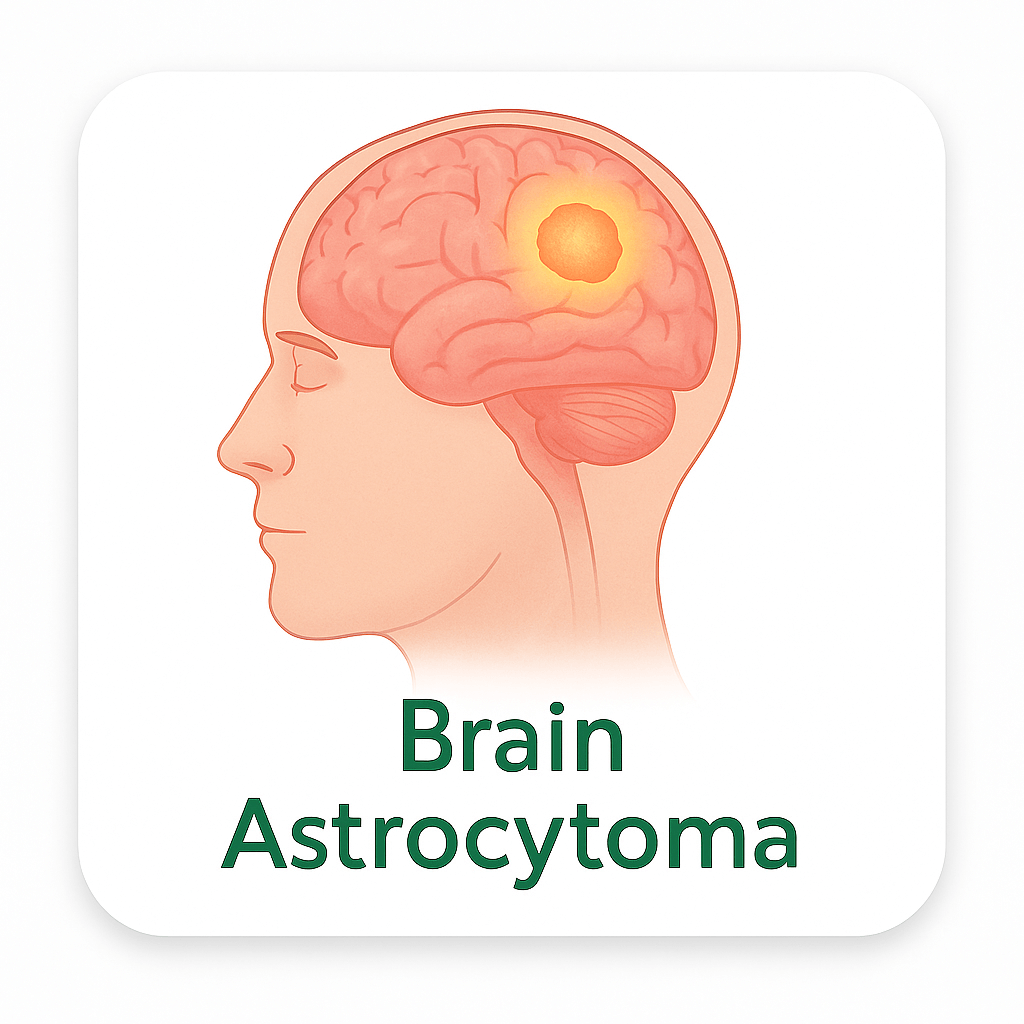
Brain Astrocytoma – Adult Low-Grade
Main Grouping
Nervous System
Organ System
Brain
Cell Origin
Astrocytes
Pathways Affected
Adult low-grade astrocytoma involves a pathway landscape uniquely defined by the IDH mutation-driven oncometabolic reprogramming, the IDH/D-2HG/TET2/CIMP epigenetic pathway, ATRX-ALT telomere maintenance, TP53 tumor suppressor inactivation, the PI3K/AKT/mTOR pathway (activated by PDGFRA amplification and PTEN loss), and MAPK/ERK pathway activation.
The IDH1/2 mutation/D-2-hydroxyglutarate/CIMP pathway is the defining and most fundamental molecular pathway in adult low-grade astrocytoma: IDH1 R132H and IDH2 R172 gain-of-function mutations create a neomorphic enzymatic activity converting alpha-ketoglutarate (alpha-KG) and NADPH to D-2-hydroxyglutarate (D-2HG) and NADP+; D-2HG reaches millimolar intracellular concentrations in IDH-mutant glioma cells; D-2HG competitively inhibits alpha-KG-dependent TET2 DNA demethylase — the enzyme that converts 5-methylcytosine to 5-hydroxymethylcytosine as the first step in active DNA demethylation; TET2 inhibition creates global CpG island hypermethylation (G-CIMP — glioma CpG island methylator phenotype) silencing tumor suppressor genes; D-2HG also inhibits KDM histone demethylases creating H3K9me2/3 and H3K27me3 histone hypermethylation blocking differentiation; D-2HG inhibits PHD/EglN prolyl hydroxylases that normally hydroxylate HIF-1α for proteasomal degradation — creating HIF-1α stabilization and pseudo-hypoxic gene expression at normoxia; the IDH/D-2HG pathway also inhibits aconitase competing with alpha-KG in the TCA cycle; the methionine/SAM cycle is critical in IDH-mutant low-grade astrocytoma because SAM is the universal methyl donor for all DNMT-catalyzed CpG methylation — including the G-CIMP tumor suppressor gene silencing that depends on DNMT3A/3B activity; D-2HG-mediated CIMP maintenance requires continuous DNMT activity and therefore adequate methionine/SAM cycle throughput; curcumin and resveratrol inhibit DNMT and HDAC in glioma cell models targeting the epigenetic silencing driven by D-2HG/CIMP in IDH-mutant astrocytoma; quercetin inhibits histone deacetylases in glioma cell models.
The ATRX/ALT telomere maintenance pathway is disrupted in approximately 60 to 80 percent of IDH-mutant astrocytomas: ATRX (Alpha-Thalassemia/Mental Retardation X-linked) is a chromatin remodeling ATPase/helicase of the SWI/SNF family that deposits histone variant H3.3 at telomeres, pericentric heterochromatin, and imprinted gene loci; ATRX loss activates alternative lengthening of telomeres (ALT) — a recombination-based mechanism for maintaining telomere length without telomerase — characterized by ultra-long heterogeneous telomeres, telomere sister chromatid exchange (T-SCE), and ALT-associated PML bodies (APBs); ATRX loss increases chromatin accessibility at repeat elements creating genomic instability; sulforaphane from cruciferous vegetables inhibits DNMT and HDAC targeting chromatin accessibility in ATRX-deficient astrocytoma cells.
The PI3K/AKT/mTOR pathway is activated in a substantial subset of adult low-grade astrocytomas through: PDGFRA amplification (~19% of IDH-mutant lower grade astrocytomas) — PDGFRA encodes the platelet-derived growth factor receptor alpha that activates PI3K/AKT and MAPK/ERK downstream; CDK4 amplification (~18%) — CDK4 drives G1/S cell cycle entry through RB1 phosphorylation; PTEN loss contributes to constitutive AKT activation; PI3K pathway activation tends to co-occur with CDKN2A/B deletion in IDH-mutant astrocytoma upgrading to grade 3/4; quercetin was confirmed to reduce p-AKT protein levels in U87-MG and SHG44 glioma cells by Western blot (PubMed25481090) targeting constitutive PI3K/AKT activation from PDGFRA amplification in low-grade astrocytoma; curcumin inhibited PI3K/Akt/mTOR pathway and NF-kB in U87, U87MG, U373 glioma cell lines targeting the PI3K/AKT/mTOR axis in IDH-mutant astrocytoma; EGCG inhibits PI3K/AKT/mTOR and STAT3 in glioma cell models.
The TP53 tumor suppressor pathway is disrupted in approximately 90 percent of IDH-mutant lower-grade astrocytomas: TP53 mutations in IDH-mutant astrocytomas are predominantly missense mutations at hotspot codons (R175H, G245S, R248W, R248Q, R273H, R282W) creating dominant-negative p53 protein that accumulates in tumor cells (creating the characteristic p53 immunopositivity on IHC); mutant p53 not only loses DNA damage response function but exerts gain-of-function oncogenic activities promoting proliferation, invasion, and metabolic reprogramming; quercetin promotes p53-dependent and p53-independent apoptosis in glioma cells through PI3K/AKT suppression targeting downstream pathways of TP53 in IDH-mutant astrocytoma; curcumin induces G2/M cell cycle arrest in glioma cells confirmed (PMC12113757).
Description
Adult low-grade astrocytoma (CNS WHO Grade 2, IDH-mutant) is a diffusely infiltrating primary brain tumor that predominantly affects young to middle-aged adults, with a peak incidence between 30 and 45 years of age and a slight male predominance. In the United States, approximately 3,500 to 5,000 new diffuse low-grade glioma cases (grades 2-3 combined) are diagnosed annually. The overall 5-year survival for WHO grade 2 astrocytoma (IDH-mutant) is approximately 75 to 80 percent, with a median overall survival of approximately 10 to 15 years in IDH-mutant tumors compared to approximately 1 to 2 years for IDH-wild-type grade 2 astrocytomas which follow a GBM-like clinical course.
The 2021 WHO classification (5th edition) defines adult low-grade astrocytoma as Astrocytoma, IDH-mutant, CNS WHO grade 2 — molecularly distinguished from oligodendroglioma (IDH-mutant with 1p/19q codeletion) and from IDH-wild-type glioblastoma. IDH1/2 mutations are found in approximately 80 percent of all diffuse low-grade gliomas in adults and serve as a favorable prognostic biomarker. IDH mutations create the oncometabolite D-2-hydroxyglutarate (D-2HG) which drives the CpG island methylator phenotype (G-CIMP), hypermethylates the genome, and blocks cellular differentiation — creating an undifferentiated astrocytic tumor cell that cannot complete normal glial maturation. The characteristic co-mutation pattern of IDH + TP53 + ATRX defines the astrocytic (non-oligodendroglial) lineage.
Clinical presentation is dominated by seizures in approximately 60 to 90 percent of patients reflecting the cortical infiltrative growth pattern. Headache, focal neurological deficits, and cognitive changes are additional presentations. MRI imaging shows T2/FLAIR hyperintensity without contrast enhancement (distinguishing grade 2 from grade 3-4); frontal and temporal lobe locations predominate in adult cases.
The 2016 and 2021 WHO classifications fundamentally reorganized low-grade glioma classification around molecular parameters: IDH mutation is the primary classifier; loss of 1p/19q distinguishes oligodendroglioma; ATRX loss and TP53 mutation define astrocytoma; CDKN2A/B homozygous deletion upgrades IDH-mutant astrocytoma to grade 4 regardless of histology. These molecular markers have entirely replaced the purely histological classification previously used for grade 2 diffuse astrocytoma.
Published laboratory research documents quercetin from onions and kale inhibiting human glioma cell viability in a dose-dependent manner in U87-MG, U251, and SHG44 glioma cell lines — inhibiting cell migration, promoting apoptosis and cell senescence, and reducing protein levels of p-AKT, p-ERK, Bcl-2, MMP-9, and fibronectin confirmed by MTS assay, wound healing assay, beta-galactosidase staining, Annexin V/PI flow cytometry, and Western blot (PubMed25481090) — directly targeting the PI3K/AKT and MAPK/ERK pathways constitutively activated in IDH-mutant low-grade astrocytoma through PDGFRA amplification and EGFR-pathway alterations.
Plant-Based Description
Whole-food plant-based dietary patterns provide phytochemicals with documented activity in human glioma cell lines directly applicable to adult low-grade astrocytoma through its dominant PI3K/AKT, MAPK/ERK, and IDH/epigenetic pathway landscape. Quercetin from onions, kale, and berries was confirmed to inhibit human glioma cell viability in a dose-dependent manner in U87-MG, U251, and SHG44 glioma cell lines through PI3K/AKT and MAPK/ERK pathway suppression — reducing p-AKT and p-ERK protein levels and promoting apoptosis confirmed by multiple assays (PubMed25481090) — directly targeting the PI3K/AKT activation from PDGFRA amplification documented in approximately 19 percent of IDH-mutant low-grade astrocytomas; curcumin from turmeric was confirmed to inhibit proliferation and migration and induce apoptosis in multiple glioma cell lines selectively without affecting primary astrocytes, inhibiting PI3K/Akt, NF-kB, Wnt/beta-catenin, and TGF-beta pathways confirmed in glioma cell models; EGCG from green tea inhibits STAT3 in U87 glioma cells; resveratrol inhibits Wnt/beta-catenin and NF-kB in glioma cell models; lions mane mushroom promotes NGF and nerve growth in neural cell models; sulforaphane activates Nrf2/ARE and inhibits DNMT/HDAC targeting the D-2HG-driven epigenetic landscape.
Plant Chemistry Detail
Quercetin from onions, kale, apples, and berries has confirmed anti-glioma cell line activity in a published study (PubMed25481090 — Pan HC, Jiang Q, et al., Neurochemistry International 2015) using U87-MG human glioblastoma and U251 and SHG44 human glioma cell lines. In this confirmed study: different concentrations of quercetin inhibited cell viability in U87-MG, U251, and SHG44 glioma cells in a dose-dependent manner confirmed by MTS assay at 48 and 72 hours; wound healing assays confirmed that quercetin significantly decreased glioma cell migration — directly relevant to the infiltrative growth pattern of adult low-grade astrocytoma; beta-galactosidase staining confirmed quercetin promoted cell senescence; DNA staining and Annexin V-EGF/PI double staining flow cytometry confirmed quercetin promoted apoptosis in human glioma cells; quercetin treatment significantly reduced protein levels of p-AKT (phosphorylated AKT at the active Ser473 residue) confirmed by Western blot — directly targeting the PI3K/AKT pathway activated by PDGFRA amplification (~19%) and PTEN loss in IDH-mutant lower-grade astrocytoma; quercetin significantly reduced p-ERK protein levels confirmed by Western blot — targeting the MAPK/ERK pathway activated by PDGFRA/KRAS signaling in glioma; quercetin significantly reduced Bcl-2 anti-apoptotic protein confirmed by Western blot — targeting BCL-2-mediated apoptosis resistance relevant to TP53-mutant IDH-mutant astrocytoma (~90% TP53 mutations); quercetin significantly reduced MMP-9 (matrix metallopeptidase 9) protein confirmed — targeting the extracellular matrix degradation driving the diffuse infiltrative growth pattern of low-grade astrocytoma; quercetin significantly reduced fibronectin expression confirmed; the authors concluded quercetin inhibits glioma viability, migration, and promotes apoptosis by suppressing Ras/MAPK/ERK and PI3K/AKT signaling pathways.
Additionally, curcumin from turmeric was confirmed to inhibit proliferation and migration and induce apoptosis in U87, U87MG, U138MG, U373, and C6 glioma cell lines selectively without affecting primary astrocytes viability confirmed; curcumin decreased constitutive PI3K/Akt activation and NF-kB survival pathways confirmed; curcumin downregulated BCL-XL confirmed; curcumin inhibited the Wnt/beta-catenin, PI3K/Akt/mTOR, NF-kB, and TGF-beta pathways confirmed by gene expression profiling in U87 glioblastoma cells (PMC12113757) — targeting the PI3K/AKT/mTOR pathway relevant to PDGFRA-amplified low-grade astrocytoma and the Wnt/beta-catenin pathway relevant to IDH-mutant glioma maintenance; curcumin caused G2/M cell cycle arrest and inhibited glioma cell migration confirmed; curcumin inhibited DNMT and EZH2 in glioma cell models targeting D-2HG/CIMP-dependent epigenetic silencing in IDH-mutant low-grade astrocytoma. Resveratrol from red grapes inhibits Wnt/beta-catenin and NF-kB in glioma cell models — relevant to D-2HG/Wnt crosstalk in IDH-mutant astrocytoma. EGCG from green tea inhibits STAT3 in U87 glioma cells, PI3K/AKT, and EGFR/ERK1/2 in glioma cell models. Sulforaphane activates Nrf2/ARE and inhibits DNMT targeting the D-2HG/CIMP epigenetic axis.
Nutritional Focus
Nutritional focus in adult low-grade astrocytoma research is led by quercetin from onions, kale, and berries with confirmed anti-glioma cell line activity: quercetin inhibiting U87-MG, U251, and SHG44 human glioma cell viability in a dose-dependent manner by MTS assay; inhibiting glioma cell migration by wound healing assay; promoting cell senescence by beta-galactosidase staining; inducing apoptosis confirmed by DNA staining and Annexin V/PI flow cytometry; reducing p-AKT, p-ERK, Bcl-2, MMP-9, and fibronectin protein levels confirmed by Western blot (PubMed25481090) — directly targeting PI3K/AKT activated by PDGFRA amplification (~19%) and MAPK/ERK in IDH-mutant low-grade astrocytoma; curcumin from turmeric confirmed to inhibit proliferation and migration and induce apoptosis selectively in U87, U87MG, U138MG, U373 glioma cell lines without affecting primary astrocytes; curcumin inhibiting PI3K/Akt, NF-kB, Wnt/beta-catenin, and TGF-beta pathways confirmed in glioma cell models; curcumin inhibiting DNMT and EZH2 targeting D-2HG/G-CIMP epigenetic silencing unique to IDH-mutant astrocytoma; EGCG from green tea inhibiting STAT3, PI3K/AKT, and EGFR/ERK1/2 in glioma cell models; resveratrol inhibiting Wnt/beta-catenin and NF-kB in glioma cell models and inhibiting MGMT/DNMT targeting IDH-mutant D-2HG/CIMP epigenetics; quercetin inhibiting survivin through AKT suppression confirmed in U87-MG glioma cells (PMC2718983) targeting the apoptosis-resistance relevant to TP53-mutant (~90%) IDH-mutant astrocytoma; sulforaphane activating Nrf2/ARE and inhibiting DNMT/HDAC targeting D-2HG-driven epigenetic silencing in IDH-mutant low-grade astrocytoma; Lion's Mane mushroom promoting NGF synthesis in neural cell models with relevance to the perilesional neural network in low-grade astrocytoma; and dietary fiber producing butyrate/SCFAs that inhibit HDAC targeting the epigenetic silencing programs driven by D-2HG/G-CIMP in IDH-mutant astrocytoma.
Research Notes
Adult low-grade astrocytoma (LGA) epidemiology: ~3,500-5,000 grade 2-3 diffuse glioma cases/year US; peak incidence 30-45 years; slight male predominance; 5-year OS IDH-mutant grade 2 ~75-80%; median OS IDH-mutant ~10-15 years; IDH-wild-type grade 2 median OS ~1-2 years (GBM-like). WHO 2021 5th edition defines: Astrocytoma IDH-mutant CNS WHO grade 2 (no CDKN2A/B homozygous deletion); grade 3 (with necrosis/microvascular proliferation); grade 4 (with CDKN2A/B homozygous deletion). IDH mutations: IDH1 R132H ~90% of IDH-mutant gliomas; IDH2 R172; creates D-2HG oncometabolite; TET2 inhibition → G-CIMP; KDM inhibition → H3K9me2/K27me3; PHD/EglN inhibition → pseudo-hypoxia HIF-1α. ATRX mutations ~60-80% IDH-mutant astrocytomas (ALT pathway). TP53 mutations ~90% IDH-mutant lower-grade astrocytomas (TCGA data). Co-mutation pattern: IDH+TP53+ATRX = astrocytoma lineage (no 1p/19q codeletion). Additional alterations: PDGFRA amplification ~19%; CDK4 amplification ~18%; CDKN2A/B deletion ~15%. IHC: GFAP+, OLIG2+, IDH1 R132H+, ATRX nuclear loss, p53 accumulation+, Ki-67 <5% grade 2. MRI: T2/FLAIR hyperintensity without contrast enhancement grade 2. Growth: ~3-5 mm/year. All grade 2 astrocytomas eventually progress. Quercetin U87-MG/U251/SHG44 glioma (PubMed25481090): MTS dose-dependent; wound healing migration inhibited; beta-galactosidase/DNA/Annexin V/PI apoptosis confirmed; p-AKT/p-ERK/Bcl-2/MMP-9/fibronectin Western blot downregulated confirmed. Curcumin U87/U87MG/U373/C6 glioma: proliferation/migration inhibited; PI3K/Akt/NF-kB inhibited; primary astrocytes spared. Curcumin U87 global gene expression (PMC12113757): RNA-seq PI3K-Akt/Wnt/NF-kB/TGF-b pathways confirmed; CDK6/KRAS/PIK3R1/PDGFA downregulated; G2/M arrest.
Notes Visibility
Key Foods
Turmeric,Broccoli,Kale,Spinach,Brussels Sprouts,Cauliflower,Garlic,Yellow Onion,Carrot,Tomato,Beetroot,Cabbage,Blueberry,Pomegranate,Grape,Raspberry,Strawberry,Apple,Orange,Lemon,Soybeans,Edamame,Green Lentils,Black Beans,Chickpeas,Brown Rice,Quinoa,Oats,Wild Rice,Black Rice,Walnut,Almond,Brazil Nut,Flaxseed,Pumpkin Seeds,Chia Seeds,Sesame Seeds,Hemp Seeds,Shiitake,Maitake,Lions Mane,Cremini,Portobello,Green Tea,Ginger,Black Pepper,Garlic Powder,Parsley,Rosemary,Oregano,Sweet Potato, Celery, Leek,Avocado,Artichoke,Radish,Tangerine, Red Onion
Linked Nutrients
vitamin-c,vitamin-e,vitamin-a,vitamin-b9,vitamin-b6,selenium,zinc,magnesium,calcium,potassium,iron,quercetin,curcumin,egcg,resveratrol,sulforaphane,beta-carotene,anthocyanins,beta-glucans,dietary-fiber,l-theanine
Last Updated
2025-10-13 10:20:26

