
ID
75
Cancer Name
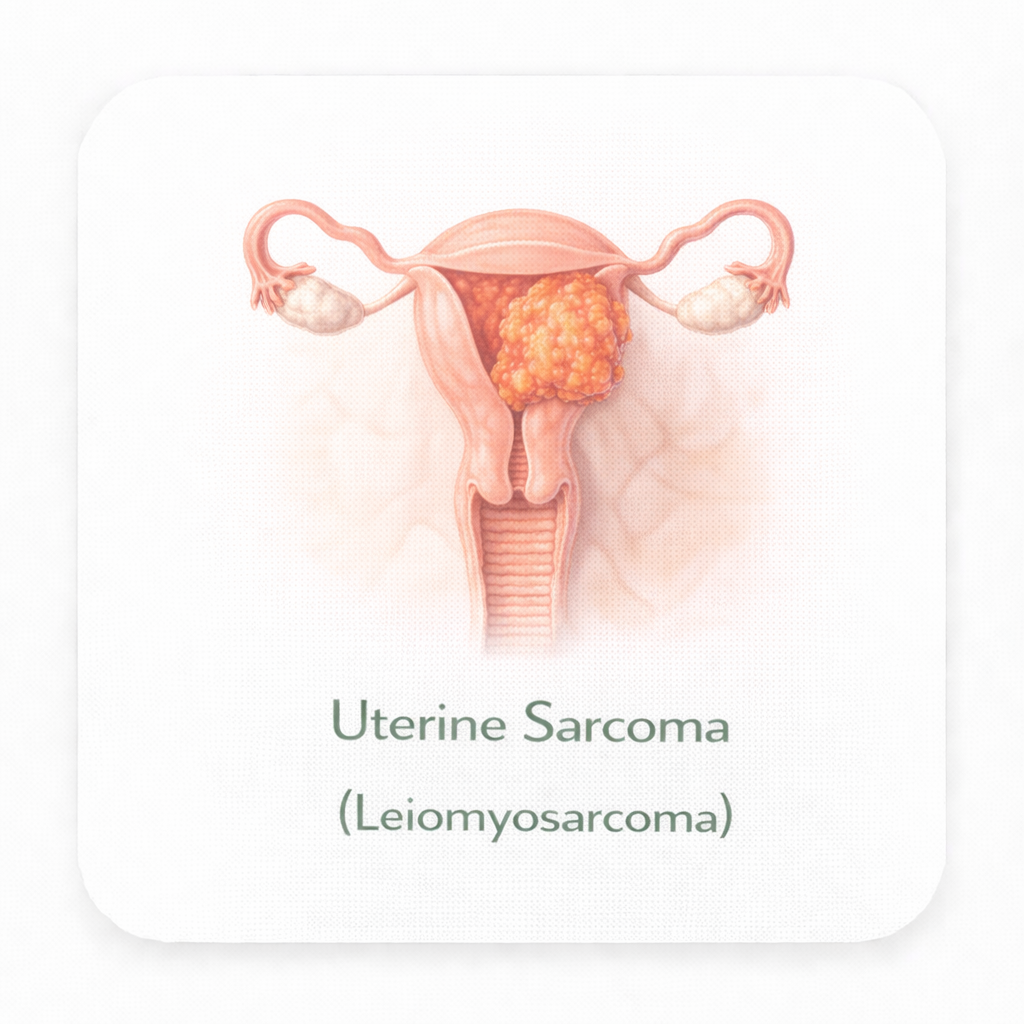
Uterine Sarcoma (Leiomyosarcoma)
Main Grouping
Reproductive
Organ System
Uterus (myometrium)
Cell Origin
Smooth muscle (mesenchymal)
Pathways Affected
Uterine leiomyosarcoma involves multiple interconnected oncogenic and metabolic pathways associated with uncontrolled proliferation, angiogenesis, genomic instability, inflammation, oxidative stress adaptation, and metastatic progression. The PI3K-AKT pathway is commonly activated in uterine leiomyosarcoma through PTEN loss and upstream growth factor signaling. PI3K-AKT activation stimulates mTORC1 signaling, promoting ribosome biogenesis, protein synthesis, cellular growth, glucose uptake, and inhibition of apoptosis. mTOR activation also supports hypoxia adaptation and increased glycolytic metabolism in aggressive sarcoma cells.
Cell-cycle dysregulation is a defining feature of uterine leiomyosarcoma. TP53 tumor suppressor pathway dysfunction impairs DNA damage response, apoptosis induction, and genomic stability. RB1 pathway inactivation disrupts G1/S checkpoint regulation, enabling uncontrolled cell division. Cell-cycle checkpoint abnormalities interact with mitotic spindle assembly dysfunction and chromosomal instability, leading to aggressive tumor progression and metastatic behavior.
MAPK-ERK signaling contributes to proliferation, migration, extracellular matrix remodeling, and survival signaling. NF-κB signaling promotes inflammatory cytokine production including IL-6 and TNF-α, supporting angiogenesis, invasion, and immune-modulating effects within the tumor microenvironment. VEGF signaling and angiogenesis pathways are strongly activated in uterine leiomyosarcoma, supporting vascular growth and hematogenous dissemination to distant organs.
Hypoxia-HIF1 response pathways increase glycolysis, lactate production, angiogenesis signaling, and metabolic adaptation in rapidly growing tumors. Oxidative stress pathways involving glutathione defense systems and Nrf2 antioxidant response signaling help tumor cells tolerate mitochondrial ROS generation and inflammatory stress. EMT signaling contributes to invasive behavior, migration, extracellular matrix degradation, and metastatic dissemination.
DNA repair pathways including homologous recombination, mismatch repair, and base excision repair are frequently altered in uterine leiomyosarcoma, contributing to genomic instability. AMPK signaling interacts with cellular energy sensing and can oppose excessive mTOR activation under metabolic stress conditions. Autophagy pathways are also involved in survival adaptation during hypoxia and nutrient deprivation. Plant-derived phytochemicals including curcumin, EGCG, quercetin, sulforaphane, apigenin, luteolin, and resveratrol have demonstrated laboratory interactions with PI3K-AKT, mTOR, MAPK, VEGF, NF-κB, apoptosis, oxidative stress, and EMT signaling pathways relevant to uterine leiomyosarcoma biology.
Description
Uterine leiomyosarcoma is a rare but highly aggressive mesenchymal malignancy arising from the smooth muscle tissue of the uterine myometrium. Although it accounts for only a small percentage of gynecologic cancers, it contributes disproportionately to uterine cancer mortality because of rapid hematogenous dissemination, high recurrence frequency, and resistance to long-term disease control. In the United States, uterine sarcomas comprise approximately 3 to 7 percent of uterine malignancies, and leiomyosarcoma represents the most common pure uterine sarcoma subtype. The median age at diagnosis is generally between 45 and 60 years, though cases occur across a broad adult age range.
The biological behavior of uterine leiomyosarcoma differs substantially from benign uterine leiomyoma despite both originating from smooth muscle tissue. uLMS demonstrates marked genomic instability with widespread chromosomal alterations, frequent TP53 dysfunction, RB1 pathway inactivation, PTEN loss, ATRX mutations, and dysregulated cell-cycle control. These alterations promote uncontrolled proliferation, defective apoptosis, increased angiogenesis, altered DNA repair, oxidative stress adaptation, and enhanced metastatic potential. Tumor growth is frequently associated with elevated VEGF signaling and increased vascular density, which support rapid expansion and hematogenous spread to the lungs, liver, bone, and abdominal cavity.
Metabolic reprogramming is a major component of uterine leiomyosarcoma biology. Increased glycolysis, mitochondrial stress responses, hypoxia signaling, inflammatory NF-κB activity, PI3K/AKT/mTOR activation, and enhanced glutamine utilization are commonly observed in aggressive soft tissue sarcomas including uterine leiomyosarcoma. Published laboratory studies document that several plant-derived phytochemicals including curcumin, quercetin, EGCG, sulforaphane, luteolin, genistein, resveratrol, and apigenin influence pathways relevant to sarcoma proliferation, oxidative stress, angiogenesis, EMT signaling, and cell-cycle progression in laboratory cancer models.
Oxidative stress and inflammatory signaling are central features of uLMS progression. Increased reactive oxygen species generation, altered glutathione metabolism, mitochondrial dysfunction, and inflammatory cytokines such as IL-6 and TNF-α contribute to tumor survival and extracellular matrix remodeling. Angiogenesis pathways involving VEGF and hypoxia-inducible signaling also drive metastatic progression. Activation of PI3K/AKT/mTOR and MAPK/ERK pathways promotes protein synthesis, proliferation, migration, and resistance to apoptosis.
Dietary patterns emphasizing whole plant foods provide a broad spectrum of fiber, carotenoids, flavonoids, lignans, glucosinolates, polyphenols, minerals, and amino acids that interact with oxidative stress regulation, inflammatory signaling, endothelial function, gut microbial metabolism, and mitochondrial redox balance. Cruciferous vegetables provide glucosinolates and sulforaphane precursors associated with Nrf2 activation and detoxification signaling. Berries, onions, apples, green tea, turmeric, garlic, legumes, mushrooms, and whole grains provide flavonoids, catechins, phenolic acids, lignans, organosulfur compounds, and fiber that have been studied in laboratory models involving apoptosis regulation, oxidative stress reduction, angiogenesis modulation, and inflammatory signaling pathways relevant to uterine leiomyosarcoma biology.
Plant-Based Description
Whole-food plant-based dietary patterns provide diverse phytochemicals, fiber, carotenoids, glucosinolates, lignans, flavonoids, minerals, and polyphenols associated with pathways relevant to oxidative stress regulation, inflammatory signaling, endothelial function, angiogenesis modulation, and cellular metabolism. Cruciferous vegetables including broccoli, kale, cabbage, Brussels sprouts, and cauliflower contain glucoraphanin-derived sulforaphane and indole compounds associated with Nrf2 activation and detoxification signaling. Berries, apples, onions, green tea, turmeric, garlic, legumes, mushrooms, flaxseed, and whole grains provide quercetin, catechins, lignans, organosulfur compounds, ellagic acid, and phenolic acids studied in laboratory models involving apoptosis signaling, oxidative stress reduction, angiogenesis modulation, and inflammatory pathway regulation relevant to uterine leiomyosarcoma biology.
Plant Chemistry Detail
Curcumin from turmeric has demonstrated laboratory activity involving PI3K-AKT, mTOR, NF-κB, VEGF, apoptosis, and oxidative stress signaling in multiple sarcoma and gynecologic cancer models. Curcumin reduces phosphorylation of AKT and mTOR pathway proteins, suppresses inflammatory cytokine signaling including IL-6 and TNF-α, and influences apoptosis-associated proteins including caspase activation and BCL2 family signaling. Quercetin from onions, apples, berries, and kale has demonstrated inhibition of MAPK-ERK and PI3K-AKT signaling pathways while influencing oxidative stress regulation and cell-cycle control in laboratory cancer studies.
EGCG from green tea has documented effects involving VEGF suppression, metalloproteinase reduction, oxidative stress modulation, and inhibition of PI3K-AKT signaling in multiple tumor models. Sulforaphane from broccoli, kale, Brussels sprouts, and other cruciferous vegetables activates Nrf2 antioxidant response signaling and influences glutathione-related detoxification pathways. Sulforaphane has also demonstrated interactions with histone deacetylase regulation, apoptosis signaling, and oxidative stress adaptation pathways.
Resveratrol from grapes and berries has shown laboratory activity involving AMPK activation, NF-κB suppression, mitochondrial stress signaling, and inhibition of inflammatory and angiogenic pathways. Apigenin from parsley and luteolin from celery and peppers have demonstrated interactions with VEGF signaling, inflammatory mediators, oxidative stress responses, and apoptosis pathways. Genistein from soybeans and edamame has been studied in relation to cell-cycle regulation, tyrosine kinase signaling, oxidative stress pathways, and angiogenesis modulation.
Garlic-derived organosulfur compounds including allicin and diallyl sulfides have demonstrated laboratory effects involving glutathione metabolism, detoxification pathways, inflammatory signaling, and apoptosis-associated mechanisms. Ellagic acid from berries and pomegranate has been studied for antioxidant and cell signaling interactions involving ROS modulation and inflammatory pathways. Lignans from flaxseed including secoisolariciresinol and matairesinol are metabolized into enterolignans by gut microbiota and interact with oxidative stress and inflammatory signaling systems. Collectively, these phytochemicals influence pathways relevant to uterine leiomyosarcoma including PI3K-AKT, mTOR, VEGF angiogenesis, NF-κB inflammation, oxidative stress adaptation, EMT signaling, and apoptosis regulation.
Nutritional Focus
Nutritional focus in uterine leiomyosarcoma research centers on oxidative stress regulation, inflammatory pathway modulation, angiogenesis signaling, mitochondrial metabolism, and cell-cycle control. Cruciferous vegetables provide sulforaphane and indole compounds associated with Nrf2 activation, detoxification signaling, and oxidative stress defense. Berries, pomegranate, apples, onions, and green tea provide flavonoids, catechins, ellagic acid, and polyphenols studied in laboratory models involving VEGF suppression, NF-κB signaling reduction, apoptosis regulation, and oxidative stress modulation. Soy foods provide genistein and related isoflavones associated with tyrosine kinase and inflammatory pathway interactions. Whole grains, legumes, seeds, mushrooms, and vegetables contribute fiber, minerals, glutathione-supportive sulfur compounds, lignans, carotenoids, and polyphenols relevant to mitochondrial metabolism, inflammatory regulation, endothelial function, and metabolic signaling pathways connected to uterine leiomyosarcoma biology.
Research Notes
uLMS represents the most aggressive common uterine sarcoma subtype with high recurrence and metastatic potential. Frequent molecular findings include TP53 dysfunction,RB1 loss,PTEN alterations,ATRX mutations,VEGF overexpression,and PI3K-AKT-mTOR activation. Hematogenous metastasis to lung is common. Genomic instability and chromosomal copy-number alterations are major hallmarks. VEGF angiogenesis signaling,oxidative stress adaptation,hypoxia pathways,and inflammatory cytokine signaling contribute to progression. Published laboratory literature documents plant-derived phytochemicals including curcumin,quercetin,EGCG,sulforaphane,resveratrol,luteolin,and genistein influencing apoptosis,oxidative stress,angiogenesis,and PI3K-AKT-mTOR signaling in sarcoma and gynecologic cancer models.
Notes Visibility
show
Key Foods
Broccoli,Kale,Brussels Sprouts,Cauliflower,Garlic,Yellow Onion,Tomato,Carrot,Spinach,Blueberry,Strawberry,Raspberry,Blackberry,Pomegranate,Apple,Grape,Orange,Lemon,Green Tea,Turmeric,Ginger,Black Pepper,Soybeans,Edamame,Black Beans,Brown Lentils,Chickpeas,Brown Rice,Quinoa,Oats,Walnut,Almond,Flaxseed,Chia Seeds,Pumpkin Seeds,Shiitake,Maitake,Portobello,Parsley,Oregano,Rosemary, Leek,Avocado,Artichoke,Radish,Tangerine, Red Onion
Linked Nutrients
vitamin-c,vitamin-e,vitamin-b9,vitamin-b6,vitamin-a,vitamin-k1,selenium,zinc,magnesium,calcium,potassium,iron,curcumin,quercetin,egcg,sulforaphane,resveratrol,ellagic-acid,lycopene,beta-carotene,dietary-fiber,lignans
Last Updated
2025-10-13 10:28:13

