
ID
76
Cancer Name
Cervical Squamous Cell Carcinoma – Non-Viral Emphasis
Main Grouping
Reproductive
Organ System
Cervix
Cell Origin
Squamous epithelium
Pathways Affected
Cervical squamous cell carcinoma involves pathway disruption across epithelial growth control, cell-cycle regulation, apoptosis, angiogenesis, inflammation, DNA repair, oxidative stress response, and metabolic adaptation. PI3K-AKT-mTOR signaling is one of the most consistently described oncogenic networks in cervical cancer research. PIK3CA alteration, PTEN pathway disruption, AKT activation, and mTORC1 signaling contribute to increased protein synthesis, glucose metabolism, proliferation, survival signaling, and resistance to apoptosis. EGFR signaling interacts with PI3K-AKT and MAPK-ERK cascades, supporting squamous epithelial proliferation, migration, invasion, and growth-factor responsiveness.
Cell-cycle checkpoint disruption is central to squamous carcinoma biology. p53 tumor suppressor pathway impairment reduces DNA damage response, apoptosis induction, and genomic stability. RB pathway dysfunction weakens G1/S checkpoint control, allowing abnormal entry into DNA synthesis. Dysregulated cyclin-dependent kinase signaling, mitotic spindle control, DNA replication stress, and repair pathway imbalance contribute to chromosomal instability and tumor progression.
VEGF angiogenesis and hypoxia-HIF1 response pathways are strongly relevant because invasive cervical squamous tumors require vascular remodeling for growth and metastatic spread. Hypoxia increases glycolysis, lactate production, angiogenic signaling, and extracellular matrix remodeling. NF-κB signaling contributes to inflammatory cytokine activity, cell survival signaling, and invasion-related gene expression. TGF-beta signaling and EMT pathways contribute to loss of epithelial organization, increased migration, matrix remodeling, and stromal invasion. Wnt/beta-catenin signaling, Notch signaling, and squamous differentiation pathways influence epithelial identity, stem-like behavior, and tumor heterogeneity.
Oxidative stress pathways, Nrf2 antioxidant response, glutathione defense, and ferroptosis regulation are relevant because cervical squamous tumors operate in an inflammatory, hypoxic, metabolically active microenvironment. Autophagy may support survival during nutrient stress and hypoxia. AMPK signaling interacts with cellular energy balance and can oppose excess mTOR activation under metabolic stress. Plant phytochemicals including EGCG, quercetin, curcumin, sulforaphane, apigenin, luteolin, genistein, and resveratrol have published laboratory evidence in cervical cancer or related epithelial cancer models involving PI3K-AKT, mTOR, EGFR, MAPK, NF-κB, VEGF, apoptosis, oxidative stress, and cell-cycle pathways.
Description
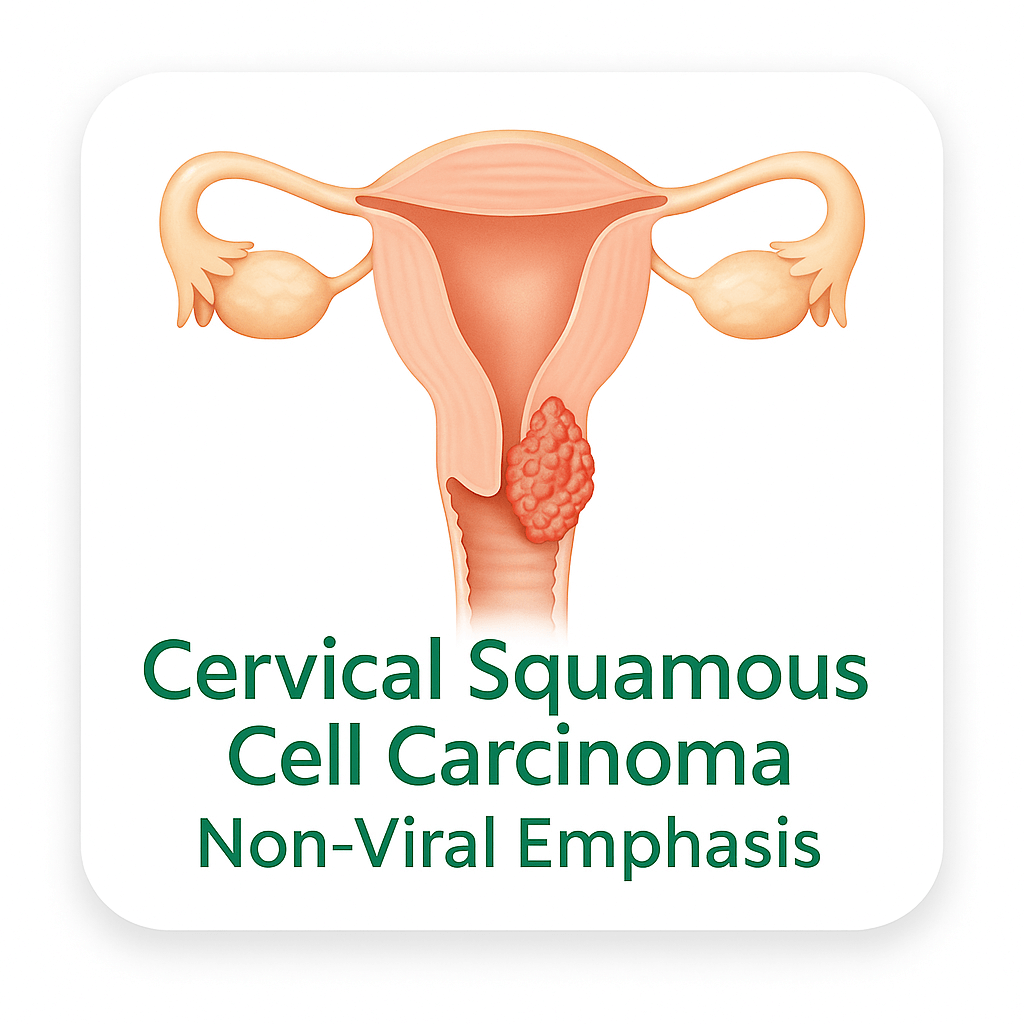
Cervical squamous cell carcinoma is the most common histologic form of cervical cancer and develops from malignant squamous epithelial cells of the cervix, most often within the transformation zone. In a non-viral emphasis, the disease is described through the biology of epithelial transformation, squamous differentiation failure, genomic instability, inflammatory signaling, oxidative stress, angiogenesis, and metabolic reprogramming rather than infectious causation. The cervix contains glandular endocervical epithelium and stratified squamous ectocervical epithelium, and the interface between these tissue types is a region of active epithelial remodeling. Squamous carcinoma emerges when regulatory systems that normally control proliferation, DNA damage response, differentiation, apoptosis, and tissue architecture become disrupted.
The tumor typically progresses from disordered squamous epithelial growth to invasive carcinoma through accumulation of molecular and microenvironmental changes. Key biologic alterations include activation of PI3K-AKT-mTOR signaling, increased EGFR and MAPK pathway activity, VEGF-driven angiogenesis, hypoxia-HIF1 response, inflammatory NF-κB signaling, altered cell-cycle checkpoint control, DNA repair stress, apoptosis resistance, and epithelial-mesenchymal transition. Cervical squamous tumors often show increased glycolytic metabolism, extracellular matrix remodeling, increased matrix metalloproteinase activity, and stromal interactions that support invasion. Metastatic spread commonly involves pelvic lymph nodes first, with advanced disease involving para-aortic lymph nodes, lung, liver, bone, and peritoneal surfaces.
Molecular studies of cervical squamous cell carcinoma identify frequent pathway activity involving PI3K-AKT-mTOR, EGFR, MAPK, VEGF, TGF-beta, Wnt/beta-catenin, p53 tumor suppressor signaling, RB cell-cycle control, hypoxia response, and immune-response remodeling. Integrated multi-omic analyses of cervical squamous carcinoma describe heterogeneous tumor groups with differences in copy-number alteration, methylation, gene expression, immune infiltration, epithelial differentiation, and metabolic activity. Squamous carcinomas can display keratinizing, non-keratinizing, basaloid, papillary, warty, and other morphologic patterns, but all share malignant squamous epithelial origin and invasive stromal behavior.
Whole-food plant-based nutrition provides fiber, carotenoids, flavonoids, glucosinolates, catechins, phenolic acids, organosulfur compounds, lignans, minerals, and amino acids that intersect with biological systems relevant to cervical squamous carcinoma research. Cruciferous vegetables provide glucoraphanin-derived sulforaphane and indole compounds studied for Nrf2 antioxidant response, detoxification signaling, apoptosis, and cell-cycle effects. Green tea provides EGCG, which has been studied in cervical cancer cells for anti-proliferative, pro-apoptotic, anti-metastatic, and angiogenesis-related effects. Quercetin from onions, apples, berries, and greens has been studied in cervical cancer cells for cell-cycle arrest, DNA damage signaling, and apoptosis. Turmeric provides curcumin, which has been studied in cervical cancer models for NF-κB, p53, caspase, PI3K-AKT, and Wnt/beta-catenin pathway interactions. These plant compounds are used here as pathway-linked food chemistry data, not as drug claims.
Plant-Based Description
Whole-food plant-based dietary patterns supply phytochemicals and nutrients that map to biological systems active in cervical squamous cell carcinoma research, including oxidative stress response, inflammatory signaling, angiogenesis, epithelial repair, DNA damage response, methylation biology, cell-cycle control, and gut microbial metabolism. Cruciferous vegetables such as broccoli, kale, Brussels sprouts, cauliflower, cabbage, watercress, mustard greens, and bok choy provide glucosinolates that form sulforaphane and indole compounds studied for Nrf2 activation, detoxification signaling, apoptosis, and cell-cycle arrest. Berries, pomegranate, apples, grapes, citrus, tomatoes, leafy greens, legumes, whole grains, mushrooms, seeds, and herbs provide flavonoids, carotenoids, catechins, lignans, phenolic acids, organosulfur compounds, fiber, folate, vitamin C, vitamin E, magnesium, zinc, selenium, and potassium. Green tea EGCG, onion and apple quercetin, turmeric curcumin, garlic allicin-related compounds, berry ellagic acid, tomato lycopene, and soy genistein are all linked to signaling pathways relevant to cervical squamous carcinoma laboratory literature.
Plant Chemistry Detail
EGCG from green tea has direct cervical cancer laboratory literature documenting anti-proliferative, anti-metastatic, and pro-apoptotic activity in cervical cancer cell models. Published work reports EGCG effects on cervical cancer cells involving reduced proliferation, apoptosis induction, migration and invasion suppression, and modulation of VEGF, MMP activity, PI3K-AKT, and oxidative stress-related signaling. Quercetin from onions, apples, berries, kale, and other plant foods has direct cervical cancer cell literature showing reduced cell viability, reduced colony formation, G2/M cell-cycle arrest, DNA damage signaling, increased apoptosis, and involvement of p53-related and mitochondrial apoptosis pathways.
Sulforaphane from cruciferous vegetables including broccoli, kale, Brussels sprouts, cauliflower, cabbage, watercress, and mustard greens has direct cervical cancer cell literature showing anti-proliferative activity, G2/M cell-cycle arrest, and apoptosis induction. Sulforaphane also activates Nrf2 antioxidant response and phase II detoxification signaling, making it relevant to oxidative stress, glutathione defense, and epithelial redox regulation. Curcumin from turmeric has cervical cancer literature involving NF-κB, p53, caspase-3, PI3K-AKT, Wnt/beta-catenin, inflammatory signaling, apoptosis, and proliferation control. Apigenin from parsley, celery-family herbs, and other plants has been reviewed with curcumin and EGCG in cervical cancer pathway literature and is linked to apoptosis, cell-cycle, angiogenesis, and inflammatory signaling.
Luteolin from peppers, celery-related plants, and herbs interacts with inflammatory signaling, VEGF, MAPK, PI3K-AKT, and apoptosis pathways in epithelial cancer models. Genistein from soybeans and edamame is linked to tyrosine kinase signaling, cell-cycle regulation, angiogenesis, and oxidative stress pathways. Lycopene from tomato and red plant foods is associated with antioxidant signaling and PI3K-AKT pathway interactions in epithelial cancer research. Ellagic acid from pomegranate, raspberry, strawberry, and blackberry contributes phenolic antioxidant chemistry linked to inflammation and cell signaling. Allicin-related organosulfur compounds from garlic interact with glutathione metabolism, apoptosis signaling, and inflammatory pathways. Lignans from flaxseed and sesame are converted by gut microbes into enterolignans that interact with oxidative stress and signaling biology. Together these compounds support a pathway-map focus on apoptosis, angiogenesis, oxidative stress response, cell-cycle control, epithelial barrier biology, and inflammatory regulation.
Nutritional Focus
Nutritional focus for cervical squamous cell carcinoma emphasizes whole plant foods rich in polyphenols, carotenoids, glucosinolates, organosulfur compounds, fiber, folate, vitamin C, vitamin E, magnesium, zinc, selenium, and potassium. Green tea provides EGCG studied directly in cervical cancer models for proliferation, apoptosis, migration, invasion, VEGF, and MMP-related effects. Cruciferous vegetables provide sulforaphane and indole compounds studied in cervical cancer cells for cell-cycle arrest and apoptosis. Onions, apples, berries, and greens provide quercetin studied in cervical cancer cells for G2/M arrest, DNA damage signaling, and apoptosis. Turmeric provides curcumin studied in cervical cancer models for NF-κB, p53, caspase, PI3K-AKT, and Wnt/beta-catenin pathway interactions. Legumes, whole grains, mushrooms, seeds, and nuts provide amino acids, minerals, fiber, and phytochemical support for redox balance, epithelial repair, immune-metabolic signaling, and gut microbial production of short-chain fatty acids.
Research Notes
Cervical squamous cell carcinoma is the dominant histologic subtype of cervical cancer and arises from squamous epithelium of the cervix, especially the transformation zone. Non-viral emphasis centers on tumor-cell and host-cell systems: PI3K-AKT-mTOR activity, EGFR signaling, MAPK-ERK signaling, VEGF angiogenesis, hypoxia-HIF1 response, NF-κB inflammatory signaling, cell-cycle checkpoint disruption, p53 pathway impairment, RB pathway disruption, DNA repair stress, apoptosis resistance, EMT signaling, oxidative stress adaptation, glutathione defense, ferroptosis regulation, and immune microenvironment remodeling. Integrated cervical squamous carcinoma multi-omic research identifies heterogeneity in copy number, methylation, gene expression, immune infiltration, and pathway activity. Published cervical cancer laboratory studies document EGCG anti-proliferative, anti-metastatic, and pro-apoptotic effects; quercetin-induced cell-cycle arrest, DNA damage signaling, and apoptosis; sulforaphane-induced G2/M arrest and apoptosis; and curcumin pathway effects involving NF-κB, p53, caspase, PI3K-AKT, and Wnt/beta-catenin signaling.
Notes Visibility
Key Foods
Green Tea,Broccoli,Kale,Brussels Sprouts,Cauliflower,Cabbage,Watercress,Mustard Greens,Bok Choy,Garlic,Yellow Onion,Tomato,Carrot,Spinach,Red Bell Pepper,Blueberry,Blackberry,Raspberry,Strawberry,Pomegranate,Apple,Grape,Orange,Lemon,Kiwi,Papaya,Soybeans,Edamame,Black Beans,Brown Lentils,Chickpeas,Green Lentils,Brown Rice,Quinoa,Oats,Black Rice,Wild Rice,Walnut,Almond,Brazil Nut,Flaxseed,Chia Seeds,Pumpkin Seeds,Sesame Seeds,Hemp Seeds,Shiitake,Maitake,Cremini,Portobello,Oyster Mushroom,Turmeric,Ginger,Black Pepper,Garlic Powder,Parsley,Oregano,Rosemary,Thyme, Leek,Avocado,Artichoke,Radish,Tangerine, Red Onion
Linked Nutrients
vitamin-c,vitamin-e,vitamin-b9,vitamin-b6,vitamin-a,vitamin-k1,selenium,zinc,magnesium,calcium,potassium,iron,manganese,copper,egcg,quercetin,sulforaphane,curcumin,apigenin,luteolin,genistein,lycopene,beta-carotene,ellagic-acid,allicin,resveratrol
Last Updated
2025-10-13 10:28:13

