
ID
78
Cancer Name
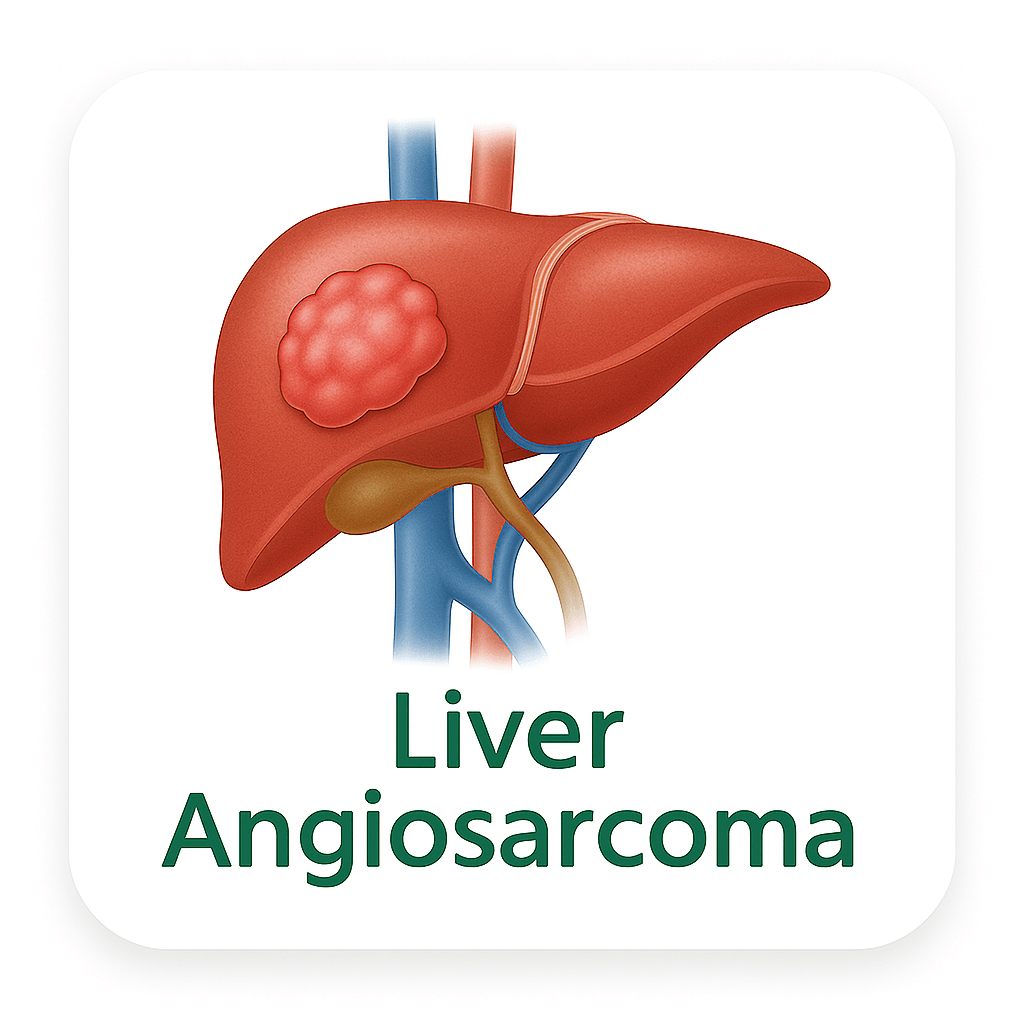
Liver Angiosarcoma (Vascular)
Main Grouping
Digestive
Organ System
Liver
Cell Origin
Endothelial (vascular) cells
Pathways Affected
Liver angiosarcoma is driven by malignant endothelial biology, so the dominant pathways include angiogenesis-VEGF signaling, endothelial receptor tyrosine kinase signaling, hypoxia-HIF1 response, PI3K-AKT-mTOR signaling, MAPK-ERK signaling, p53 tumor suppressor pathway disruption, DNA repair stress, NF-kB inflammatory signaling, extracellular matrix remodeling, apoptosis resistance and oxidative stress response.
VEGF signaling is central because hepatic angiosarcoma tumor cells are endothelial-derived and form abnormal vascular channels. VEGF, VEGFR2/KDR, FLT1 and related endothelial signaling systems regulate endothelial proliferation, survival, permeability, migration and sprouting. Angiosarcoma genomic studies identify vascular receptor tyrosine kinase pathway alterations, including KDR involvement in angiosarcoma biology, and hepatic angiosarcoma studies document endothelial marker expression and vascular differentiation. Hypoxia-HIF1 signaling contributes because rapidly expanding hemorrhagic vascular tumors contain hypoxic and necrotic regions; HIF1 activity can increase VEGF transcription, glycolytic metabolism, invasion and angiogenic remodeling.
PI3K-AKT-mTOR and MAPK-ERK signaling connect growth-factor signaling to protein synthesis, proliferation, survival and metabolic reprogramming. In vascular tumors, receptor tyrosine kinase activity can activate both AKT-mTOR and RAS-RAF-MAPK cascades. These pathways support endothelial cell-cycle progression, resistance to apoptosis and migration. TP53 and DNA repair pathways are relevant because angiosarcoma is a high-grade sarcoma with genomic instability; disruption of p53 signaling reduces normal DNA-damage checkpoints, apoptosis and senescence. PLCG1 biology is also relevant because PLCG1 R707Q mutation has been reported in angiosarcoma and specifically discussed in primary hepatic angiosarcoma context; PLCG1 transduces receptor tyrosine kinase signals into calcium, PKC and MAPK-linked endothelial activation.
Oxidative stress and Nrf2 antioxidant response are important because liver angiosarcoma has documented associations with chemical carcinogen exposure in some cases and because endothelial cells are highly sensitive to reactive oxygen species, redox signaling and inflammatory cytokine networks. NF-kB signaling supports inflammatory transcription, cytokine activity, endothelial adhesion molecules and survival signaling. EMT-like invasive programs and extracellular matrix remodeling participate in vascular invasion, sinusoidal infiltration, metastasis and tissue destruction.
Description
Liver angiosarcoma, also called primary hepatic angiosarcoma when it begins in the liver, is a rare malignant vascular tumor derived from hepatic endothelial cells. It represents a very small fraction of primary liver malignancies but is recognized as the most common primary mesenchymal malignancy of the adult liver. Published reviews describe it as an aggressive cancer with difficult early recognition because symptoms are often nonspecific and imaging findings can overlap with other vascular liver lesions. The tumor may present as a single dominant mass, multiple hepatic nodules, diffuse infiltrative disease, or sinusoidal-type growth that spreads through hepatic vascular channels. Clinical findings reported in the literature include abdominal pain, abdominal distension, weight loss, fatigue, hepatomegaly, anemia, thrombocytopenia, abnormal liver enzymes, hemoperitoneum from tumor rupture, and rapidly progressive hepatic dysfunction in advanced cases.
The defining biology of liver angiosarcoma is malignant endothelial transformation. Instead of arising from hepatocytes or bile duct epithelium, it arises from cells that line blood vessels and hepatic sinusoids. This explains its hemorrhagic appearance, blood-filled tumor spaces, frequent vascular invasion, and expression of endothelial markers such as ERG, CD31, CD34 and factor VIII-related antigen. Pathology studies describe several morphologic patterns, including sinusoidal infiltrative growth, vasoformative mass-forming growth, epithelioid areas and spindle cell areas. These patterns matter because the tumor can be difficult to distinguish from benign vascular lesions or other hepatic malignancies without careful histology and endothelial marker testing.
Etiologic literature documents that many cases have no identified cause, while some are associated with prior exposure to vinyl chloride, Thorotrast, inorganic arsenic or radiation. Molecular studies of angiosarcoma and hepatic angiosarcoma describe alterations in vascular signaling, angiogenesis, receptor tyrosine kinase pathways, TP53-related genomic instability, KDR/VEGFR2 signaling, PLCG1 mutation in a subset, ROS1 investigation in hepatic angiosarcoma, PI3K-AKT-mTOR signaling, MAPK signaling, hypoxia-response biology and oxidative stress adaptation. Because the tumor is endothelial and vascular, angiogenesis biology is central: VEGF signaling, endothelial migration, vascular channel formation, extracellular matrix remodeling, invasion and hypoxia response all contribute to tumor progression.
The natural history is typically aggressive. Systematic reviews and clinical outcome studies report poor overall outcomes, frequent advanced presentation, limited standardized protocols because of rarity, and better survival mainly when localized disease can be completely resected. The database emphasis for P53 Nutrition is vascular cancer biology: endothelial transformation, angiogenesis, oxidative stress, DNA damage response, inflammatory signaling, extracellular matrix remodeling, hypoxia response and cell-cycle disruption.
Plant-Based Description
A whole-food plant-based pattern for this vascular liver cancer entry focuses on foods that supply polyphenols, carotenoids, organosulfur compounds, isothiocyanates, folate, vitamin C, vitamin E, magnesium, potassium, selenium, zinc, copper, manganese, plant amino acids and fiber-linked metabolites. The selected foods are mapped to endothelial biology, angiogenesis control, oxidative stress response, DNA repair support, inflammatory signaling balance, glutathione defense, mitochondrial metabolism and collagen/extracellular matrix turnover. The food list uses only whole plant foods, herbs, spices, mushrooms, legumes, whole grains, nuts and seeds. No animal foods, no fish, no dairy and no oils are included.
Plant Chemistry Detail
Green tea supplies EGCG and related catechins that are widely studied in endothelial and cancer biology for effects on VEGF expression, angiogenesis signaling, oxidative stress and matrix metalloproteinase activity. Turmeric supplies curcumin, which has published pathway activity across NF-kB, VEGF, PI3K-AKT-mTOR, MAPK, apoptosis and oxidative stress systems in cancer biology. Broccoli, Brussels sprouts, kale, watercress and cauliflower supply glucosinolates and isothiocyanate-linked compounds such as sulforaphane, glucoraphanin, sinigrin, gluconasturtiin and indole-3-carbinol that map to Nrf2 antioxidant response, phase II enzyme signaling, glutathione-linked redox defense and cell-cycle regulation.
Tomato, red bell pepper, carrot and sweet potato provide lycopene, beta-carotene, alpha-carotene, lutein and related carotenoids that support antioxidant networks and epithelial or endothelial redox balance. Berries, pomegranate and grapes provide ellagic acid, punicalagin, quercetin, anthocyanidin-related compounds, resveratrol, catechins and gallic acid, all relevant to oxidative stress, endothelial signaling, inflammatory transcription and DNA damage response. Garlic, onion and garlic powder provide allicin, diallyl disulfide, diallyl trisulfide and S-allyl-L-cysteine chemistry relevant to redox biology and hepatic phase II pathways. Flax, chia, sesame, pumpkin and hemp seeds provide plant protein, minerals, lignan-related chemistry and substrates for glutathione and collagen-related amino acid needs. Mushrooms such as shiitake, maitake, cremini and oyster provide beta-glucan-rich whole-food matrix support and mineral content. Whole grains and legumes provide fiber, folate, magnesium and amino acids that support one-carbon metabolism, SCFA signaling and metabolic stability.
Nutritional Focus
The nutritional focus for liver angiosarcoma is vascular-endothelial pathway support using whole plant foods rich in polyphenols, isothiocyanates, carotenoids, folate, vitamin C, vitamin E, magnesium, potassium, selenium, zinc, copper, manganese, fiber and plant amino acids. The mapping emphasizes VEGF and angiogenesis biology, endothelial oxidative stress, NF-kB inflammatory transcription, p53 and DNA repair pathways, glutathione defense, collagen and extracellular matrix turnover, hypoxia response and metabolic stability. The core food pattern centers on green tea, turmeric, cruciferous vegetables, berries, pomegranate, tomato, garlic, onion, legumes, whole grains, seeds, nuts and mushrooms.
Research Notes
Primary hepatic angiosarcoma is a rare malignant endothelial tumor of the liver and is described in published reviews as the most common primary mesenchymal malignancy of the adult liver while still representing only a very small percentage of primary liver cancers. It originates from hepatic endothelial cells and can show sinusoidal, vasoformative, epithelioid and spindle-cell morphologic patterns. Immunohistochemistry commonly supports endothelial differentiation with ERG, CD31, CD34, factor VIII-related antigen and related vascular markers. ERG has been studied as a sensitive and specific diagnostic marker for hepatic angiosarcoma. Clinical literature documents nonspecific presentation, frequent multifocal or infiltrative disease, hemorrhagic growth, risk of rupture and hemoperitoneum, poor prognosis, and improved outcomes mainly when localized disease can be surgically resected with negative margins. Etiologic studies document associations in some cases with vinyl chloride, Thorotrast, arsenic and radiation, while many cases remain without a defined cause. Molecular and pathology literature supports involvement of endothelial growth signaling, angiogenesis, VEGF/KDR pathways, TP53-related genomic instability, PLCG1 signaling in a subset, ROS1 investigation, PI3K-AKT-mTOR, MAPK-ERK, hypoxia response, oxidative stress, apoptosis resistance and extracellular matrix remodeling. The references below were selected because they are directly about primary hepatic/liver angiosarcoma, hepatic angiosarcoma diagnosis, pathology, clinical behavior, outcomes or molecular features.
Notes Visibility
Key Foods
Green Tea,Turmeric,Broccoli,Brussels Sprouts,Kale,Watercress,Cauliflower,Garlic,Yellow Onion,Tomato,Red Bell Pepper,Carrot,Sweet Potato,Spinach,Pomegranate,Blueberry,Blackberry,Raspberry,Strawberry,Grape,Apple,Orange,Lemon,Black Beans,Chickpeas,Green Lentils,Brown Lentils,Soybeans,Edamame,Brown Rice,Oats,Quinoa,Wild Rice,Black Rice,Walnut,Almond,Brazil Nut,Flax Seeds,Chia Seeds,Pumpkin Seeds,Sesame Seeds,Hemp Seeds,Shiitake,Maitake,Cremini,Oyster Mushroom,Ginger,Black Pepper,Garlic Powder,Parsley,Oregano, Leek,Avocado,Artichoke,Radish,Tangerine, Red Onion
Linked Nutrients
vitamin-c,vitamin-e,vitamin-b9,vitamin-b6,vitamin-a,vitamin-k1,vitamin-b3,selenium,zinc,magnesium,potassium,iron,manganese,copper,calcium,glycine,cysteine,glutamine,arginine,proline,lysine,serine,leucine,methionine,aspartate,egcg,curcumin,sulforaphane,glucoraphanin,quercetin,kaempferol,luteolin,apigenin,lycopene,beta-carotene,ellagic-acid,punicalagin,resveratrol,allicin
Last Updated
2025-10-13 10:28:13

