ID
80
Cancer Name
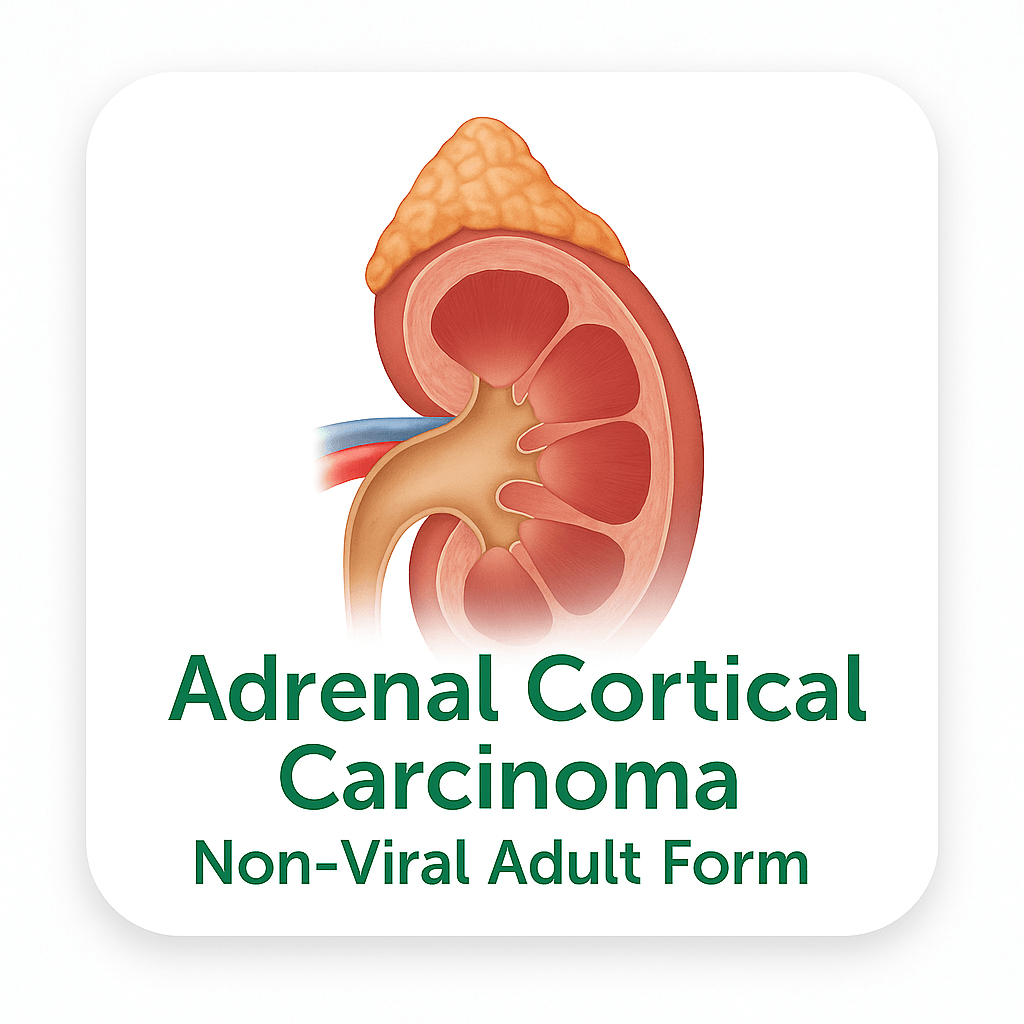
Adrenal Cortical Carcinoma – Non-Viral Adult Form
Main Grouping
Endocrine
Organ System
Adrenal Cortex
Cell Origin
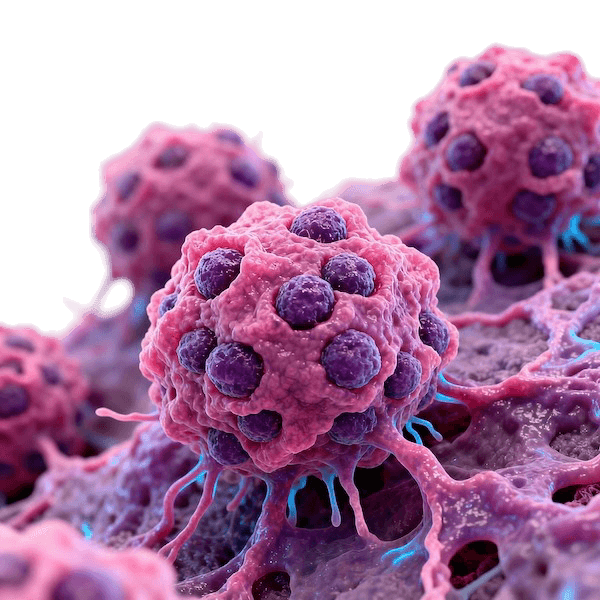
Adrenocortical cells
Pathways Affected
Adrenal cortical carcinoma centers on several interconnected biochemical pathways. Wnt/beta-catenin signaling is one of the strongest ACC pathways because CTNNB1 mutations and beta-catenin activation are repeatedly documented in ACC genomic studies. When beta-catenin escapes normal destruction-complex regulation, it moves into the nucleus and drives transcriptional programs that support proliferation, adrenal cortical dedifferentiation, and tumor growth. The p53 tumor suppressor pathway is also central because TP53 disruption weakens DNA damage response, apoptosis, genomic stability, and cell-cycle checkpoint control. This connects directly to high chromosomal instability and aggressive molecular subgroups.
IGF2 and IGF-1 signaling are highly relevant because ACC frequently shows IGF2 overexpression, which activates IGF1R-linked PI3K-AKT-mTOR and MAPK/ERK signaling. These pathways support protein synthesis, glucose use, steroidogenic cell survival, proliferation, and resistance to apoptosis. PI3K-AKT-mTOR signaling connects ACC growth biology to nutrient sensing, ribosome activity, and mitochondrial metabolism. MAPK/ERK signaling connects growth factor signals to proliferation and migration. Angiogenesis through VEGF signaling is important because aggressive ACC requires vascular supply to support tumor expansion. Apoptosis regulation is altered through changes in caspase signaling, BCL-family balance, p53 function, and microRNA-related regulation.
Steroidogenic signaling is uniquely important because ACC arises from adrenal cortical cells. Enzymes and regulators involved in cortisol,androgen,estrogen,and aldosterone synthesis remain part of the tumor biology. Oxidative stress and glutathione defense are also central because steroid-producing cells use mitochondria and cytochrome P450 enzymes heavily, creating a high need for redox balance. Nrf2 antioxidant response, glutathione defense, detoxification phase II, DNA repair, cell-cycle checkpoints, and ferroptosis are therefore useful pathway links for mapping plant chemistry to ACC biology.
Description
Adrenal cortical carcinoma is a rare malignant tumor of the adrenal cortex, the steroid-producing outer layer of the adrenal gland. Adult ACC is biologically distinct from benign adrenal adenoma because it shows invasive growth, high proliferative activity, broad chromosomal instability, altered steroidogenic signaling, and recurrent driver alterations affecting TP53,CTNNB1,Wnt/beta-catenin signaling,IGF2 expression,cell-cycle control,chromatin regulation,apoptosis,angiogenesis,metabolism, and DNA repair. The adrenal cortex normally produces glucocorticoids,mineralocorticoids,and adrenal androgens through tightly regulated steroidogenic pathways; ACC develops when cortical cells acquire molecular changes that allow uncontrolled growth, resistance to apoptosis, abnormal hormone production, and invasion beyond the adrenal capsule.
Large genomic studies of ACC identify recurrent alterations in TP53 and CTNNB1, frequent activation of Wnt/beta-catenin signaling, high IGF2 expression, copy-number alteration, DNA methylation subgroups, telomere maintenance changes, and cell-cycle pathway disruption. ACC often separates into more indolent and aggressive molecular groups based on methylation pattern, mitotic rate, Ki-67 expression, chromosome instability, and pathway activation. The adult form is not defined by infectious biology in this template; the focus here is adrenal cortical cell biology, steroidogenesis, genomic instability, Wnt/beta-catenin signaling, IGF2 growth signaling, p53 tumor suppressor disruption, oxidative stress, mitochondrial metabolism, angiogenesis, and apoptosis regulation.
ACC can be hormonally functional or nonfunctional. Functional tumors may produce cortisol,androgens,estrogens,or aldosterone, reflecting continued adrenal cortical steroidogenic capacity even within malignant tissue. Nonfunctional tumors may present through mass effect or imaging discovery. The tumor commonly arises as a large adrenal mass and may spread to liver,lung,bone,peritoneum,or lymph nodes. Published ACC research emphasizes that prognosis is tied to tumor stage, completeness of removal, mitotic activity, Ki-67 index, hormone secretion pattern, and molecular subtype.
The database entry for this cancer emphasizes real biochemical mechanisms: Wnt/beta-catenin signaling, IGF2/IGF-1 pathway activation, PI3K-AKT-mTOR signaling, p53 pathway disruption, apoptosis control, angiogenesis, steroidogenic enzyme regulation, mitochondrial oxidative stress, glutathione defense, MAPK/ERK signaling, NF-kB inflammatory signaling, and DNA repair. Whole-food plant compounds are mapped only where published research supports mechanistic relevance in ACC models or adrenal carcinoma cell-line systems, including curcumin reducing ACC growth and migration, EGCG inducing apoptosis in human adrenal NCI-H295 cancer cells, quercetin-rich onion extracts altering cell-cycle dynamics and apoptosis in ACC cell lines, and broader plant natural compound reviews focused specifically on adrenocortical tumors.
Plant-Based Description
A whole-food plant-based P53 standard for this entry focuses on foods that supply fiber,polyphenols,flavonoids,carotenoids,isothiocyanate precursors,organosulfur compounds,magnesium,potassium,selenium,zinc,vitamin C,vitamin E,vitamin B9,vitamin B6,vitamin A precursors,and vitamin K1 from foods. The plant chemistry emphasis is tied to ACC biology rather than general claims. Curcumin has published ACC-specific cell-line evidence showing reduced growth and migration in adrenocortical carcinoma models. EGCG has published evidence in human adrenal NCI-H295 cancer cells showing apoptosis-related effects. Quercetin-rich onion extracts have ACC-specific evidence in H295R and SW-13 cell models showing cell-cycle and apoptosis-related changes. Cruciferous vegetables provide glucoraphanin and related chemistry connected to Nrf2 antioxidant response and phase II detoxification, pathways relevant to steroidogenic oxidative stress and DNA protection.
Plant Chemistry Detail
Curcumin from turmeric is directly relevant to ACC because published research in adrenocortical carcinoma cells reports reduced growth and migration with metabolic pathway effects in ACC models. Curcumin is mapped here to PI3K-AKT-mTOR,NF-kB,apoptosis,autophagy,oxidative stress,and cell migration signaling. EGCG from green tea is directly relevant because a study in human adrenal NCI-H295 cancer cells reported EGCG-induced apoptosis, connecting green tea catechin chemistry to adrenal cancer cell death mechanisms. Quercetin from onions is directly relevant because quercetin-rich onion extracts were tested in H295R and SW-13 adrenocortical carcinoma cell lines, with reported effects on cell-cycle dynamics, apoptosis markers, intracellular calcium, and oxidative stress balance.
Broccoli,brussels sprouts,cauliflower,kale,watercress,and mustard greens provide glucoraphanin,sulforaphane-related isothiocyanate chemistry,indole-3-carbinol,and related cruciferous compounds that map to Nrf2 antioxidant response,glutathione defense,detoxification phase II,DNA repair,and inflammatory signaling. Garlic and garlic powder provide allicin,diallyl disulfide,diallyl trisulfide,and S-allyl-L-cysteine chemistry mapped to oxidative stress,NF-kB,apoptosis,and detoxification support. Tomatoes,carrots,red bell peppers,sweet potato,and leafy greens provide lycopene,beta-carotene,lutein,zeaxanthin,and vitamin C-linked antioxidant chemistry. Berries,pomegranate,grapes,and apples provide anthocyanins,ellagic acid,punicalagin,resveratrol,quercetin,catechins,and procyanidins that map to oxidative stress,angiogenesis,cell-cycle control,and DNA protection. Legumes,whole grains,nuts,seeds,and mushrooms provide fiber,beta-glucans,plant protein,selenium,zinc,magnesium,and amino acids needed for glutathione synthesis,collagen matrix turnover,mitochondrial enzymes,and normal tissue repair.
Nutritional Focus
Nutritional focus for this ACC entry is built around whole-food plant compounds mapped to adrenal cortical biology: turmeric for curcumin and ACC cell growth/migration signaling; green tea for EGCG and adrenal NCI-H295 apoptosis research; onions for quercetin-rich extract activity in H295R and SW-13 ACC cell models; cruciferous vegetables for glucoraphanin,sulforaphane-related Nrf2 activation,glutathione defense,and detoxification phase II; berries,pomegranate,grapes,and apples for polyphenols connected to oxidative stress,angiogenesis,and DNA protection; legumes,whole grains,nuts,seeds,and mushrooms for fiber,magnesium,zinc,selenium,plant amino acids,and beta-glucans that support normal redox balance,mitochondrial enzyme activity,glutathione synthesis,and tissue repair.
Research Notes
ACC is a rare endocrine malignancy arising from adrenal cortical steroidogenic cells. Major molecular findings include recurrent TP53 and CTNNB1 alterations, Wnt/beta-catenin activation, IGF2 overexpression, cell-cycle disruption, chromosomal instability, DNA methylation subgroups, telomere maintenance changes, and steroidogenic signaling changes. TCGA pan-genomic ACC work profiled 91 tumors and identified integrated genomic, transcriptomic, methylation, microRNA, and proteomic features separating ACC into molecular subgroups. Earlier integrated genomic work identified recurrent driver alterations including CTNNB1,TP53,CDKN2A,RB1,and MEN1. ACC cell-line studies commonly use NCI-H295,H295R,SW-13,and other adrenal carcinoma models. Curcumin ACC research reports reduced growth and migration in ACC cells. EGCG research in human adrenal NCI-H295 cancer cells reports apoptosis-related mechanisms. Quercetin-rich onion extract research tested H295R and SW-13 ACC cells and reported cell-cycle, apoptosis, calcium, and oxidative stress changes. Plant natural compound reviews focused on adrenocortical tumors summarize flavonoids,curcumin,EGCG,quercetin,and other plant compounds in ACT/ACC model systems.
Notes Visibility
show
Key Foods
Turmeric,Green Tea,Yellow Onion,Garlic,Broccoli,Kale,Brussels Sprouts,Cauliflower,Watercress,Spinach,Tomato,Carrot,Sweet Potato,Blueberry,Blackberry,Raspberry,Pomegranate,Grape,Apple,Lemon,Black Beans,Chickpeas,Green Lentils,Soybeans,Edamame,Brown Rice,Oats,Quinoa,Black Rice,Walnut,Almond,Brazil Nut,Flax Seeds,Pumpkin Seeds,Chia Seeds,Hemp Seeds,Sesame Seeds,Shiitake,Maitake,Cremini,Portobello,Lion’s Mane,Ginger,Black Pepper,Parsley,Rosemary,Oregano, Leek,Avocado,Artichoke,Radish,Tangerine, Red Onion
Linked Nutrients
vitamin-c,vitamin-e,vitamin-b9,vitamin-b6,vitamin-a,vitamin-k1,vitamin-b3,magnesium,zinc,selenium,potassium,calcium,iron,manganese,copper,curcumin,egcg,quercetin,sulforaphane,glucoraphanin,indole-3-carbinol,allicin,resveratrol,lycopene,beta-carotene,lutein,zeaxanthin,ellagic-acid,punicalagin,dietary-fiber,beta-glucans,plant-ala-omega3
Last Updated
2025-10-13 10:32:44