
ID
91
Cancer Name
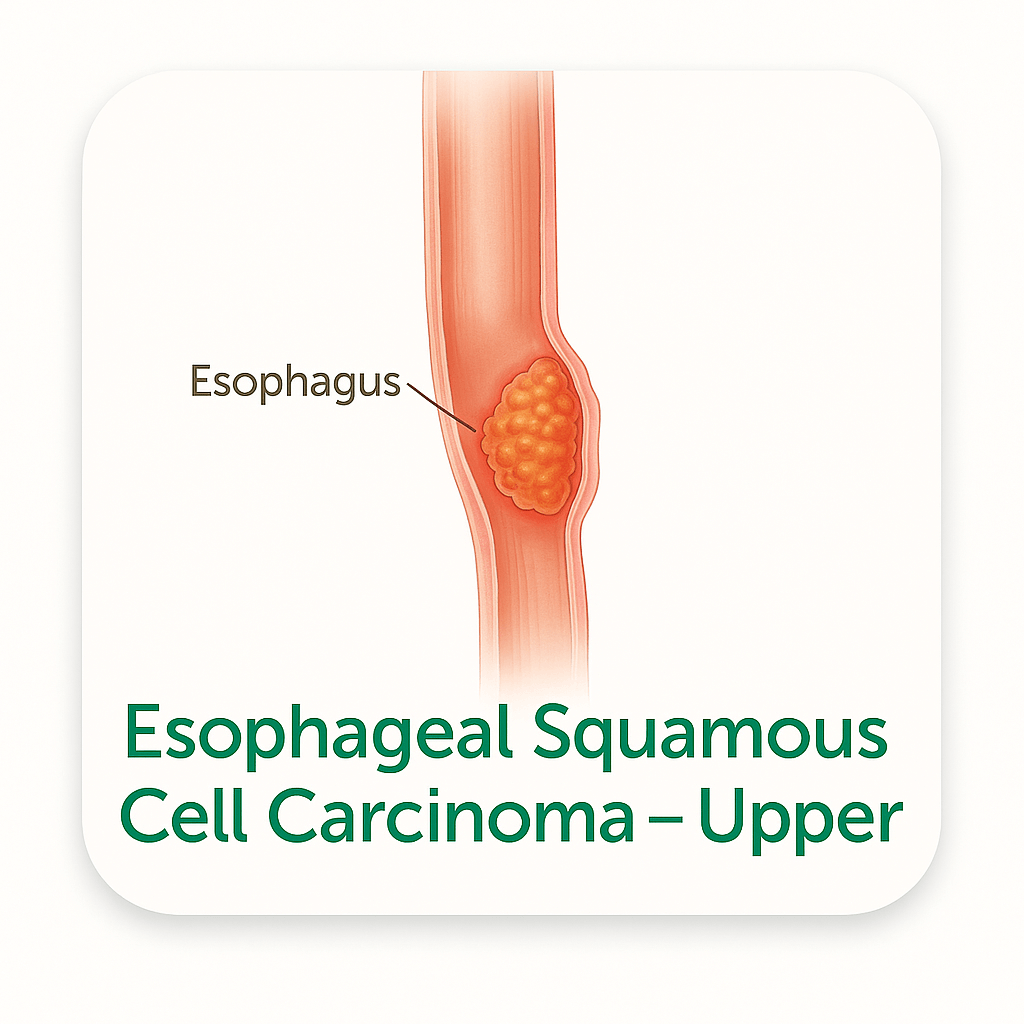
Esophageal Squamous Cell Carcinoma – Upper
Main Grouping
Digestive
Organ System
Esophagus
Cell Origin
Squamous epithelial cells
Pathways Affected
Upper ESCC involves dysregulation across multiple interconnected molecular pathways. The p53 tumor suppressor pathway is disrupted in the majority of ESCC cases through somatic TP53 mutation, eliminating DNA-damage checkpoints and enabling replication of cells with accumulated genomic errors. The PI3K-Akt pathway is frequently hyperactivated via genomic amplification or upstream receptor tyrosine kinase overexpression, including EGFR, driving pro-survival and pro-proliferative outputs. mTORC1 and mTORC2 signaling downstream of Akt promotes protein synthesis, ribosome biogenesis, and metabolic reprogramming essential to tumor growth. The MAPK/ERK pathway receives persistent mitogenic input from EGFR and mutated RAS-related effectors, fueling cell proliferation and suppression of apoptosis. JAK-STAT pathway activation, particularly STAT3, sustains expression of anti-apoptotic proteins including Bcl-2 and Bcl-xL. NF-κB signaling is constitutively active in ESCC, linking inflammatory signals to transcriptional programs that upregulate survival genes and cytokine production. TGF-β/SMAD signaling promotes epithelial-mesenchymal transition, enabling invasion and metastasis. Wnt/β-catenin pathway activation drives cancer stem cell maintenance and tumor recurrence. Notch and Hedgehog signaling pathways contribute to cancer stem cell propagation in ESCC. Apoptosis pathway components including caspase-3, -8, and -9, and the Bcl-2 family regulators are disrupted, blocking programmed cell death. The Nrf2 antioxidant response pathway is upregulated in response to oxidative stress within the tumor microenvironment. Angiogenesis via VEGF signaling promotes tumor vascularization and metastatic dissemination. The EMT signaling pathway mediates the loss of epithelial cell polarity and gain of migratory, invasive capacity. DNA repair pathways including nucleotide excision repair and mismatch repair show functional defects in ESCC, accumulating carcinogen-induced mutations. Glycolysis (the Warburg effect) and alterations in the TCA cycle constitute the metabolic reprogramming signature of aggressive ESCC subtypes. The cell cycle checkpoint machinery, including CDK4/6-CCND1 complexes, CDKN2A silencing, and RB1 loss, drives unconstrained proliferative cycling in upper ESCC cells.
Description
Esophageal Squamous Cell Carcinoma of the upper esophagus (upper ESCC) originates in the stratified squamous epithelium lining the cervical and upper thoracic portions of the esophagus, a region spanning from the cricopharyngeus muscle to approximately 20 centimeters from the incisors. This anatomical zone is closely related to the trachea, recurrent laryngeal nerves, and cervical lymph node chains, which contributes to the aggressive local spread characteristic of tumors at this site. Upper ESCC represents a subset of the broader ESCC histotype, which globally accounts for approximately 90 percent of all esophageal cancer cases and dominates incidence figures across East Asia, Central Asia, sub-Saharan Africa, and parts of South America. The Cancer Genome Atlas and large multi-omics profiling studies have established that ESCC is defined by frequent somatic mutations in TP53, CDKN2A, RB1, NOTCH1, and FAT1, alongside genomic amplification of CCND1 (cyclin D1) and CDK6, driving uncontrolled entry into and progression through the cell cycle.
At the molecular level, upper ESCC is characterized by constitutive activation of EGFR and PI3K-Akt-mTOR signaling, hyperactivation of the JAK-STAT3 axis, and persistent NF-κB pathway activity that suppresses apoptosis and promotes survival under genotoxic stress. Epithelial-mesenchymal transition (EMT) driven by TGF-β and Wnt/β-catenin dysregulation facilitates local invasion and lymphovascular permeation. Metabolic reprogramming, particularly the Warburg effect via enhanced glycolysis and upregulation of glycolytic enzymes, provides energy to rapidly proliferating tumor cells and distinguishes aggressive ESCC molecular subtypes with the worst clinical outcomes. Dysregulation of the Notch, Hedgehog, and Hippo signaling pathways has also been documented in ESCC, contributing to cancer stem cell maintenance and resistance to cell death.
Risk factors for upper ESCC are well-documented and include tobacco use, heavy alcohol consumption, ingestion of very hot beverages, low dietary intake of fresh fruits and vegetables, and nutritional deficiencies in key micronutrients found abundantly in whole plant foods. Epidemiological studies across high-incidence regions consistently demonstrate an inverse relationship between consumption of plant-based diets rich in carotenoids, polyphenols, dietary fiber, folate, and antioxidant phytochemicals and the incidence of ESCC. These phytochemicals exert documented effects on multiple tumor-relevant molecular pathways including apoptosis induction, cell cycle arrest, inhibition of angiogenesis, modulation of the NF-κB and MAPK/ERK cascades, activation of the Nrf2 antioxidant response, and interference with STAT3 phosphorylation. The five-year survival rate for esophageal squamous cell carcinoma remains below 20 percent in most populations, making primary dietary and lifestyle-based risk reduction a research priority. Published data from large cohort studies and case-control investigations consistently support that whole plant food consumption, particularly high intakes of green and cruciferous vegetables, allium vegetables, legumes, berries, citrus fruits, and green tea, is associated with measurably reduced risk and improved outcomes in esophageal squamous cell populations.
Plant-Based Description
Whole plant foods supply structurally diverse phytochemicals that engage the molecular vulnerabilities of ESCC at multiple nodes. Green tea polyphenols, particularly EGCG, suppress EGFR phosphorylation and STAT3 signaling in ESCC cell lines and reduce tumor xenograft growth. Curcumin from turmeric inhibits NF-κB and STAT3 pathways, induces apoptosis in ESCC cells, and disrupts cancer stem cell sphere formation. Sulforaphane and related isothiocyanates from cruciferous vegetables activate the Nrf2 pathway and induce caspase-mediated apoptosis in ESCC cell models. Allicin and organosulfur compounds from garlic and allium vegetables suppress ESCC proliferation. Dietary fiber from whole grains, legumes, fruits, and vegetables supports gut microbiome diversity and short-chain fatty acid production, which modulate systemic immune and metabolic pathways relevant to esophageal cancer risk. Ellagic acid from berries, pomegranate, and walnuts exerts cell cycle arrest and anti-angiogenic effects through multiple pathway interactions documented in gastrointestinal cancer models.
Plant Chemistry Detail
The phytochemical landscape relevant to upper ESCC is broad and mechanistically well-characterized. Epigallocatechin-3-gallate (EGCG) from green tea inhibits EGFR phosphorylation via oxidative inactivation of the receptor, reduces ERK1/2 and COX-2 expression in ESCC tissue specimens, and induces apoptosis with increased Bax/Bcl-2 ratio and caspase-3 activation in Eca109 and Te-1 esophageal squamous carcinoma cell lines. Curcumin from turmeric suppresses JAK2-STAT3 signaling in ESCC cells, inhibits NF-κB-mediated transcription, disrupts CD44/ALDH1A1-positive cancer stem cell sphere formation, and reduces Wnt/Notch/STAT pathway activity. Sulforaphane from cruciferous vegetables (broccoli, kale, Brussels sprouts) activates the Nrf2-antioxidant response element pathway, induces caspase-9-dependent apoptosis in ECa109 and EC9706 ESCC lines, and blocks Akt/mTOR signaling when combined with mTOR pathway inhibitors. Ellagic acid from pomegranate, raspberries, blackberries, and strawberries induces cell cycle arrest and inhibits VEGF-mediated angiogenesis, also reducing MAPK and NF-κB activity in gastrointestinal carcinoma models. Quercetin from apples, onions, and capers inhibits multiple kinase targets including PI3K and EGFR-downstream signaling. Allicin and diallyl disulfide from garlic suppress ESCC proliferation through ROS-mediated and mitochondrial apoptosis pathways. Ferulic acid from whole grains suppresses oxidative stress and inflammation relevant to esophageal mucosal injury. Beta-carotene and other carotenoids from orange and dark-green vegetables maintain mucosal epithelial integrity and are inversely associated with esophageal cancer risk in multiple epidemiological studies.
Nutritional Focus
A plant-based dietary pattern for upper ESCC risk reduction emphasizes high consumption of dark leafy greens (kale, spinach, collards, watercress), cruciferous vegetables (broccoli, Brussels sprouts, bok choy, mustard greens), allium vegetables (garlic, onions, leeks, scallions), berries rich in anthocyanins and ellagic acid (blueberries, raspberries, strawberries, blackberries, pomegranate), citrus fruits for vitamin C and flavonoids, whole grains for fiber and ferulic acid, legumes for protein and folate, and green tea for EGCG polyphenols. These food groups collectively provide the phytochemicals, antioxidant micronutrients, dietary fiber, and anti-inflammatory compounds with the greatest mechanistic and epidemiological support in ESCC research. Adequate dietary fiber supports microbiome diversity and short-chain fatty acid production, maintaining immune and mucosal barrier function in the gastrointestinal tract.
Research Notes
Large-scale genomic studies have established TP53, CDKN2A, NOTCH1, RB1, and FAT1 as the most frequently mutated driver genes in ESCC, with CCND1 and EGFR as commonly amplified oncogenes. Multi-omics profiling has identified three molecular subtypes of ESCC with distinct metabolic profiles: a lipid-metabolism subtype, an amino acid-metabolism subtype, and an energy/glycolysis-dominant subtype with the poorest prognosis. Single-cell RNA sequencing studies of upper versus lower ESCC endothelial cells have shown location-specific differences in PI3K-AKT, TGF-beta, and Rap1 signaling, supporting differential therapeutic target identification by anatomical location. EGCG has been shown to reduce phosphorylated EGFR levels by 32–85 percent and suppress xenograft tumor growth in ESCC-derived models. Curcumin inhibits STAT3 phosphorylation, disrupts cancer stem cell sphere formation in TE-7 and TE-10 ESCC lines, and potentiates radiation-induced apoptosis via NF-κB pathway suppression. Sulforaphane induces caspase-9-dependent apoptosis in ECa109 and EC9706 ESCC cells and activates the Nrf2 pathway. Epidemiological meta-analyses have documented significantly lower ESCC risk associated with regular green tea consumption. Cruciferous vegetable intake is inversely associated with esophageal cancer risk in case-control studies spanning multiple international populations.
Notes Visibility
Key Foods
Green tea, broccoli, kale, garlic, turmeric, black pepper, ginger, Brussels sprouts, spinach, watercress, blueberries, strawberries, raspberries, pomegranate, tomato, flaxseeds, chia seeds, walnuts, brown lentils, chickpeas, brown rice, oats, shiitake mushrooms, maitake mushrooms, lion's mane mushrooms, oregano, rosemary, Leek,Avocado,Artichoke,Tangerine, Red Onion
Linked Nutrients
Vitamin C (ascorbic acid) from citrus fruits, berries, and broccoli inhibits the formation of N-nitroso compounds in the esophageal lumen, compounds that are directly implicated in ESCC carcinogenesis in high-incidence populations. Folate (Vitamin B9) from dark leafy greens and legumes is required for one-carbon metabolism and DNA methylation fidelity, with folate deficiency associated with elevated ESCC risk in multiple epidemiological analyses. Vitamin A and beta-carotene from orange and dark-green vegetables support squamous epithelial differentiation and mucosal maintenance. Vitamin E from nuts, seeds, and whole grains provides lipid-soluble antioxidant protection to esophageal mucosal membranes under oxidative stress. Selenium from Brazil nuts, whole grains, and legumes is a cofactor of glutathione peroxidase and thioredoxin reductase, enzymes central to cellular redox homeostasis and protection against DNA oxidative damage. Zinc from legumes, seeds, and whole grains is required for p53 protein stability and DNA repair enzyme function. Magnesium supports DNA repair enzyme activity and nucleotide synthesis.
Last Updated
2025-10-13 10:35:00

