
ID
92
Cancer Name
Bladder Squamous Cell Carcinoma
Main Grouping
Urinary
Organ System
Bladder
Cell Origin
Squamous epithelial cells
Pathways Affected
Bladder SCC involves multiple intersecting oncogenic signaling pathways documented in primary molecular studies. The p53 tumor suppressor pathway is disrupted in the majority of cases through TP53 mutation, abolishing cell cycle checkpoint arrest and apoptosis induction downstream of DNA damage. The PI3K-Akt pathway is activated via PIK3CA mutations and loss of PTEN, promoting cell survival, proliferation, and resistance to apoptosis through downstream mTORC1 and mTORC2 signaling. EGFR overexpression drives MAPK/ERK and PI3K/Akt cascades, stimulating tumor cell proliferation, migration, and angiogenesis via VEGF and MMP upregulation. NF-κB signaling, enriched in gene set analyses of SCC tumors via TNF-alpha/NF-κB pathway enrichment and CHUK (IKKa) inactivating mutations, sustains pro-survival and pro-inflammatory transcription. Epithelial-Mesenchymal Transition (EMT) is upregulated, supported by elevated matrix metalloproteinases and oncostatin M receptor (OSMR) expression, driving invasion and metastasis. The Hippo signaling pathway is implicated through YAP activation, identified in WES and transcriptome studies of pure SCC. mTORC1 signaling is enriched in squamous differentiation samples within TCGA data. The hypoxia (HIF-1α) response pathway coordinates angiogenesis via VEGF signaling under hypoxic tumor conditions. The DNA repair pathway involving mismatch repair and nucleotide excision repair is compromised, compounding genomic instability. Autophagy and apoptosis pathways exhibit enrichment in SCC transcriptome analysis. The Nrf2 antioxidant response pathway and glutathione defense system are relevant to redox homeostasis under chronic inflammatory conditions. The cell cycle checkpoint pathway is disrupted through CDKN2A/p16 deletion or mutation, enabling unchecked S-phase entry. The FGFR signaling pathway shows FGFR3 alterations in non-schistosomal SCC. Chronic inflammatory signaling involving NLRP3 inflammasome and TLR signaling contributes to the inflammatory tumor microenvironment characterizing this cancer.
Description
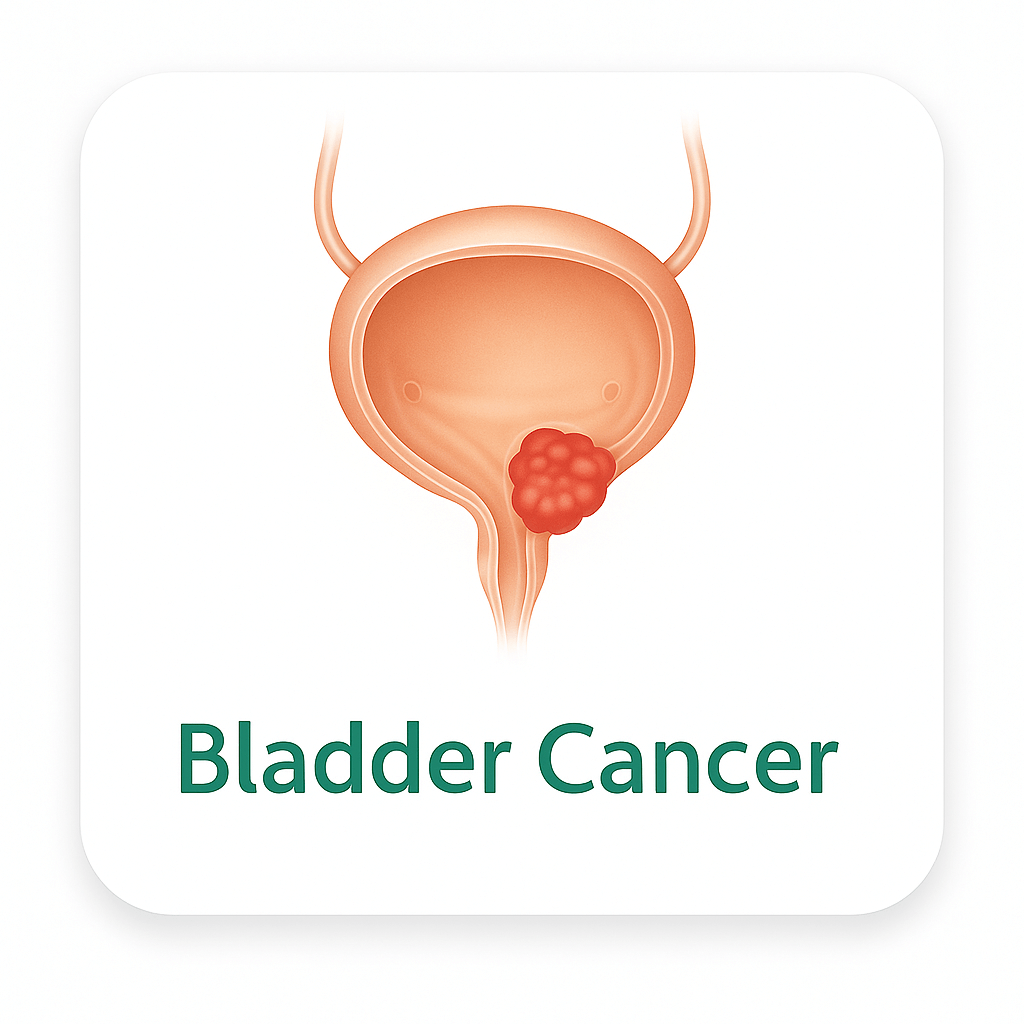
Bladder Squamous Cell Carcinoma (SCC) is a malignant epithelial neoplasm arising from the urothelium of the urinary bladder that demonstrates a pure squamous cell phenotype, entirely devoid of conventional urothelial carcinoma components. It accounts for approximately 2–7% of all bladder cancers in industrialized nations, rising to as high as 30–75% in regions endemic for Schistosoma haematobium infection, including parts of Egypt, Sudan, and sub-Saharan Africa. In non-endemic western settings, bladder SCC is strongly associated with chronic bladder irritation arising from long-term indwelling catheterization, recurrent urinary tract infections, bladder stones, and prolonged inflammatory conditions of the bladder mucosa.
The tumor typically presents at an advanced stage, commonly exhibiting a sessile, nodular, or ulcerating morphology on cystoscopy, most frequently arising at the lateral walls and trigone of the bladder. The predominant presenting symptom is gross hematuria, and bacteriuria is present in approximately 50% of affected patients. Patients with obstructive or irritative urinary symptoms tend to be diagnosed at earlier stages. The disease most commonly manifests in individuals in their sixth and seventh decades of life, with a slight male predominance in non-schistosomal cases.
At the histopathological level, the tumor shows pure squamous morphology, including intercellular bridges, individual cell keratinization, and keratin pearl formation. Immunohistochemically, TRIM29 and MAC387 are positive in both pure SCC and urothelial carcinoma with squamous differentiation. EGFR is expressed in approximately 67% of bladder cancers with squamous differentiation. Vitamin D receptor nuclear expression has been documented in bladder SCC and correlates with clinicopathological parameters such as tumor stage.
Genomic characterization has identified frequent mutations in TP53, PIK3CA, FBXW7, CDKN2A, FAT1, TERT, PTEN, CREBBP, and FGFR3, as well as copy number gains in MYC, BIRC3, EGFR, PD-L1 (CD274), CCND1, OSMR, and RICTOR. TP53 is the most commonly mutated gene, identified in up to 64% of pure SCC cases. FAT1 mutations or deletions are found in up to 45% of pure SCC, with loss of 4q35 involving FAT1 in nearly all WES-analyzed samples. Chromosomal gains in 5p and 7p are the most recurrent copy number alterations, with gains in 5p involving OSMR and RICTOR.
The overall prognosis of bladder SCC is poor relative to transitional cell carcinoma, with a median overall survival of approximately 12.5 months in non-schistosomal muscle-invasive cases at the time of diagnosis. Resistance to cisplatin-based chemotherapy is a hallmark feature, underscoring the need for alternative intervention and dietary research strategies grounded in whole-food plant-based nutrition science.
Plant-Based Description
Research into plant-based dietary components relevant to bladder SCC focuses on phytochemicals with documented activity against the molecular targets dysregulated in this cancer. Cruciferous vegetables are a primary research focus due to their sulforaphane and indole-3-carbinol content, which modulate Nrf2, p53, and NF-κB pathways. Allium vegetables provide organosulfur compounds including allicin and diallyl disulfide that activate caspase cascades and phase II detoxification enzymes. Tomatoes and lycopene-rich foods supply the most potent carotenoid antioxidant identified in cancer research, documented to induce apoptosis and inhibit angiogenesis and metastasis. Green tea catechins, particularly EGCG, suppress PI3K/Akt, NF-κB, and MMP-9 expression in bladder cancer cell lines. Curcumin from turmeric inhibits bladder cancer cell proliferation and migration through G2/M arrest and suppression of Bcl-2. Quercetin from fruits and vegetables activates AMPK signaling to induce bladder cancer cell apoptosis. Legumes, whole grains, and seeds contribute folate, fiber, and phytoestrogenic lignans supporting DNA methylation fidelity and immune regulation.
Plant Chemistry Detail
The molecular chemistry underlying plant compound activity in bladder SCC research encompasses multiple compound classes. Sulforaphane, an isothiocyanate derived from glucoraphanin hydrolysis in cruciferous vegetables, activates Nrf2-mediated antioxidant response elements, induces p53 upregulation, and downregulates Bcl-2 via mitochondrial apoptotic pathway activation including cytochrome c release, caspase-9 and caspase-3 activation, and PARP cleavage. Allicin and diallyl disulfide from garlic induce caspase-3, -8, and -9 activation, increase Bax:Bcl-2 ratio, upregulate p53 via Ser15 phosphorylation, activate Nrf2/ARE with GST and NQO1 induction, and modulate PI3K/Akt/mTOR and MAPK/ERK/mTOR pathways. EGCG from green tea inhibits PI3K/Akt activation, suppresses NF-κB-mediated MMP-9 expression, downregulates N-cadherin and EMT markers, activates caspase-3 and PARP, and reduces tumor volume in xenograft models. Curcumin from turmeric promotes G2/M cell cycle arrest, downregulates Bcl-2 and Survivin, upregulates Bax and p53, and suppresses MMP expression in bladder cancer cells. Quercetin activates AMPK signaling, reduces p-P70S6K expression, inhibits BIU-87 bladder cancer cell proliferation, and promotes apoptosis. Lycopene, the acyclic carotene in tomatoes and watermelon, scavenges singlet oxygen and free radicals, upregulates antioxidant response elements, induces apoptosis, inhibits angiogenesis, and reduces metastasis formation across multiple cancer models.
Nutritional Focus
Research on bladder SCC nutritional priorities centers on antioxidant load, anti-inflammatory phytochemical density, and dietary fiber intake. High intake of cruciferous vegetables provides sulforaphane and indole-3-carbinol that activate Nrf2-mediated detoxification and modulate p53 and NF-κB pathways. Lycopene-dense foods such as tomatoes and watermelon supply the most potent carotenoid singlet oxygen quencher with documented anti-angiogenic and pro-apoptotic properties in bladder cancer models. EGCG from brewed green tea suppresses PI3K/Akt and NF-κB pathways in multiple bladder cancer cell line studies. Curcumin from ground turmeric demonstrates dose-dependent inhibition of bladder cancer cell growth in vitro and in vivo. Dietary selenium from plant-based sources supports glutathione peroxidase activity. Whole grains, legumes, and seeds supply folate for DNA methylation fidelity. Fiber from diverse plant foods supports gut microbiome-mediated short-chain fatty acid production with documented immune-modulating relevance.
Research Notes
Bladder SCC is the most common non-urothelial variant of bladder cancer globally, accounting for up to 75% of bladder cancers in Schistosoma haematobium endemic nations. TP53 mutation is the most frequently identified somatic alteration, present in 57–64% of tumors across molecular studies. FAT1 mutation or deletion is identified in up to 45% of pure SCC cases and represents a recurrent, near-universal genomic event when combined with deletion analysis. EGFR overexpression is documented in approximately 67% of bladder cancers with squamous differentiation, establishing it as a key molecular target. NF-κB pathway enrichment via TNF-alpha/NF-κB gene sets and CHUK inactivating mutations is documented in transcriptome and WES studies of pure SCC. EMT, OSMR, and YAP/Hippo signaling are prominently upregulated in pure SCC transcriptome analysis. PI3K/Akt pathway activation via PIK3CA mutation and PTEN loss is documented in both schistosomal and non-schistosomal SCC. EGCG has been demonstrated in multiple studies to inhibit bladder cancer cell growth, migration, and invasion through NF-κB, PI3K/Akt, and MAPK/ERK pathway suppression. Curcumin inhibits bladder cancer cell proliferation and induces G2/M arrest with apoptosis via Bcl-2 downregulation and p53 upregulation in T24 and 5637 cell lines. Quercetin activates AMPK signaling to induce apoptosis in bladder cancer cell lines. Allicin from garlic induces caspase-mediated apoptosis in cancer cells with Bax upregulation and Bcl-2 downregulation. Lycopene demonstrates multitarget anti-cancer activity including induction of apoptosis, suppression of angiogenesis, inhibition of metastasis, and upregulation of antioxidant response elements. Tumor-infiltrating lymphocytes (CD3+, CD8+, CD20+) are documented as independent predictors of improved survival in pure bladder SCC, highlighting the immune microenvironment as a research target.
Notes Visibility
show
Key Foods
Broccoli, kale, Brussels sprouts, tomato, garlic, green tea (brewed), turmeric, black pepper, ginger, blueberry, pomegranate, watermelon, flax seeds, chia seeds, pumpkin seeds, sunflower seeds, walnuts, almonds, brown lentils, black beans, chickpeas, brown rice, quinoa, maitake mushroom, shiitake mushroom, spinach, collard greens, sweet potato, carrot, beets, parsley, oregano, rosemary, thyme, Leek,Avocado,Artichoke,Tangerine, Red Onion
Linked Nutrients
Folate (vitamin B9), Vitamin C, Vitamin E, Vitamin A (as beta-carotene), Selenium, Zinc, Magnesium, Potassium, Calcium, Iron, Manganese, Copper, Vitamin K1, Vitamin B6, Vitamin B1, Vitamin B2, Vitamin B3, Vitamin B5, Dietary fiber, Lignans, Phytosterols, Omega-3 fatty acids (ALA from flax and chia)
Last Updated
2025-10-13 10:35:00

