
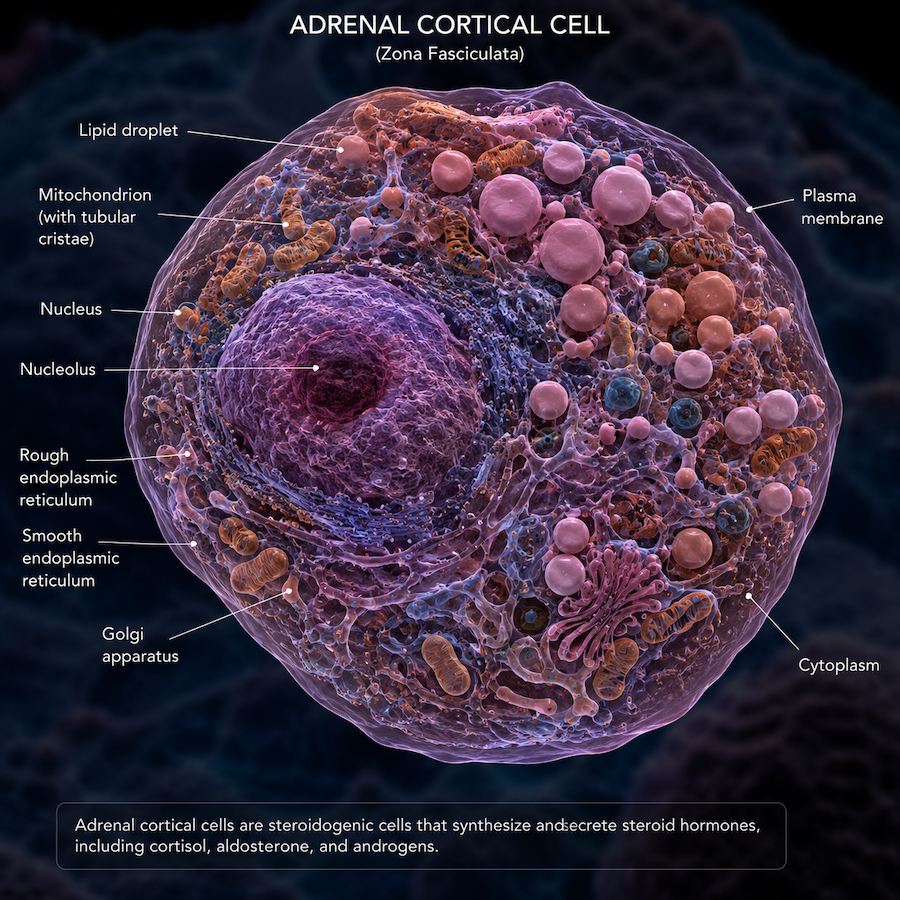
Adrenal cortical cells produce steroid hormones that regulate metabolism, electrolyte balance, blood pressure, and stress adaptation.
Adrenal cortical cells are specialized endocrine cells located within the outer region of the adrenal gland. They are responsible for producing steroid hormones that help regulate metabolism, electrolyte balance, blood pressure, energy availability, and adaptation to physical and environmental stress. The adrenal cortex is divided into distinct zones, each containing adrenal cortical cells with specific hormone producing functions. These cells synthesize glucocorticoids, mineralocorticoids, and adrenal androgens through tightly regulated biochemical pathways involving cholesterol metabolism, mitochondrial activity, and enzyme mediated steroidogenesis.
One of the most important functions of adrenal cortical cells is the production of cortisol. Cortisol participates in glucose regulation, protein metabolism, lipid mobilization, immune signaling, and circadian physiology. Adrenal cortical cells also produce aldosterone, a hormone that helps regulate sodium retention, potassium balance, fluid volume, and blood pressure control. Additional steroid hormones produced by these cells contribute to endocrine signaling throughout the body.
Adrenal cortical cells contain abundant mitochondria and smooth endoplasmic reticulum because steroid hormone production requires extensive enzymatic processing. Cholesterol serves as the starting substrate for steroid synthesis. Multiple enzymes convert cholesterol into intermediate compounds that eventually become cortisol, aldosterone, and other steroid hormones. These biochemical reactions require adequate micronutrient support, antioxidant protection, cellular energy production, and healthy mitochondrial function.
Vitamin C is highly concentrated within adrenal tissue and participates in hormone related biochemical reactions and antioxidant defense. Magnesium supports hundreds of enzymatic reactions involved in cellular metabolism and energy transfer. Folate, zinc, selenium, vitamin B6, tyrosine, and phenylalanine support cellular maintenance, signaling pathways, and enzyme activity. Whole plant foods including oranges, kiwi, red bell peppers, broccoli, spinach, lentils, black beans, oats, almonds, and pumpkin seeds provide many nutrients associated with endocrine tissue support.
Adrenal cortical cells are influenced by adrenocorticotropic hormone released from the pituitary gland. This signaling pathway helps regulate cortisol production and coordinates endocrine responses with changing physiological demands. Because steroid hormone production involves oxidation reactions, adrenal cortical cells require strong antioxidant systems to maintain cellular integrity during hormone synthesis.
Polyphenols, flavonoids, carotenoids, vitamins, minerals, and fiber rich foods support antioxidant defense pathways that help maintain healthy cellular function. Nutritional patterns emphasizing diverse plant foods provide compounds that support mitochondrial activity, cellular repair, and balanced endocrine physiology.
Adrenal cortical cells are central regulators of metabolic adaptation, fluid balance, and endocrine communication. Their ability to convert cholesterol into biologically active steroid hormones allows the body to respond to changing energy needs, maintain blood pressure regulation, and coordinate multiple physiological systems.
Adrenal cortical cells require vitamin C, magnesium, B vitamins, amino acids, and antioxidant nutrients that support hormone synthesis and cellular resilience.

