
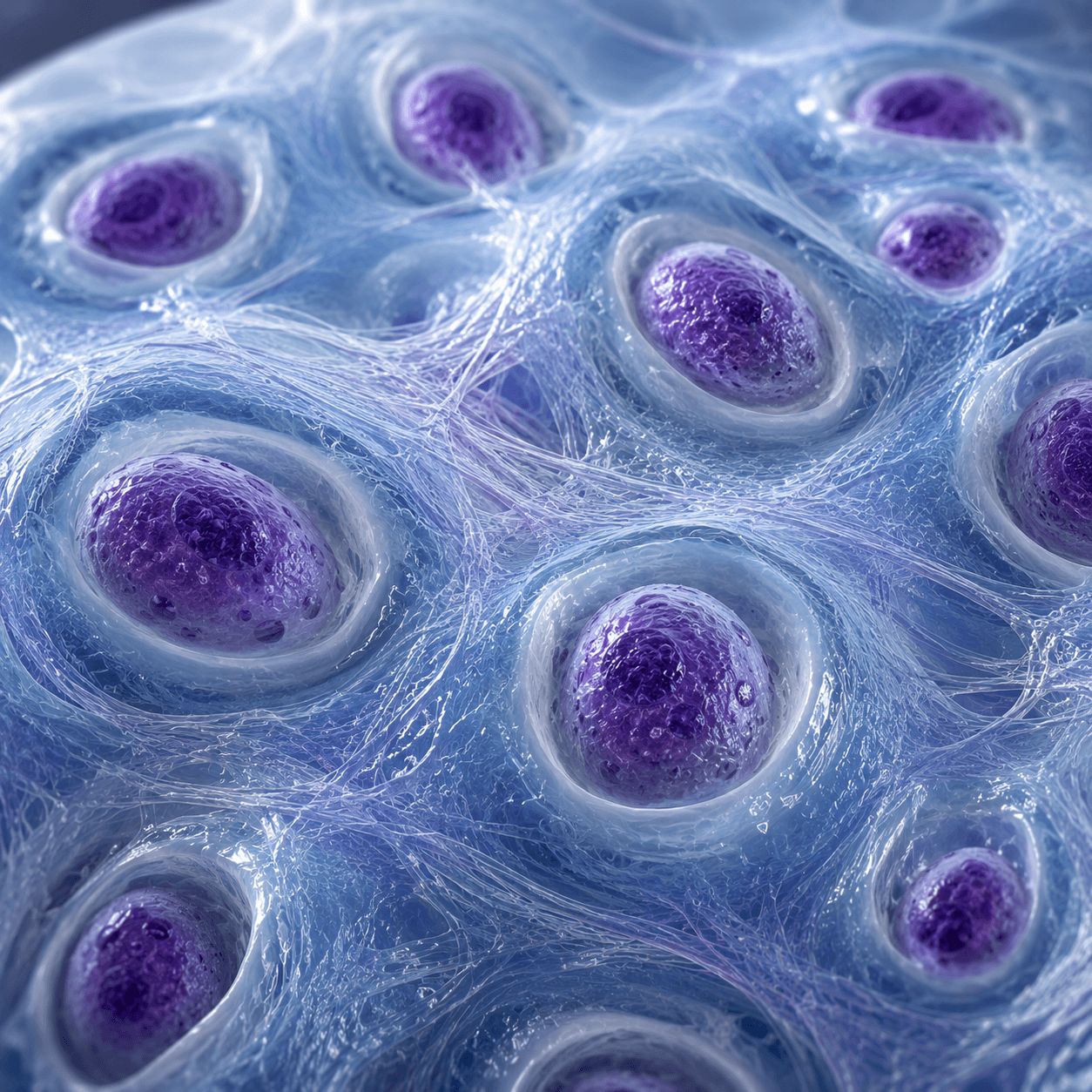
Chondrocytes are the primary cellular components of cartilage and are responsible for producing, maintaining, and remodeling the extracellular matrix that gives cartilage its unique structural properties. These specialized cells support flexibility, shock absorption, and smooth joint movement throughout the body. Chondrocytes are found in articular cartilage, growth plates, intervertebral discs, and other cartilaginous structures.
The primary function of chondrocytes is synthesis of cartilage matrix components, including collagen fibers and proteoglycans. These molecules create a resilient tissue capable of resisting compression while maintaining flexibility. The matrix produced by chondrocytes allows joints to move smoothly and absorb mechanical forces generated during daily activities.
Unlike many tissues, cartilage contains no direct blood supply. As a result, chondrocytes must function within a relatively low-oxygen environment and rely upon diffusion for nutrient delivery. This unique environment contributes to the limited regenerative capacity of cartilage compared with other tissues.
Chondrocytes continuously monitor and maintain the composition of cartilage matrix. Through production of structural proteins and regulatory molecules, they help preserve tissue integrity and adapt cartilage to changing mechanical demands. Proper chondrocyte function is essential for maintaining healthy joints and connective tissues.
Healthy chondrocyte activity depends upon collagen synthesis pathways, extracellular matrix production, oxidative stress regulation, inflammatory balance, and cellular signaling mechanisms. Vitamin C supports collagen formation. Manganese, copper, zinc, and magnesium contribute to enzymatic processes associated with connective tissue maintenance. Amino acids including glycine, proline, and lysine are important structural components of collagen.
Foods associated with chondrocyte support include oranges, kiwi, broccoli, red bell peppers, kale, blueberries, strawberries, almonds, black beans, and lentils. These foods provide antioxidants, vitamins, minerals, fiber, and phytochemicals including anthocyanins, quercetin, and sulforaphane.
Key enzymes include lysyl oxidase, superoxide dismutase, and catalase, which support matrix stability and cellular protection. Growth hormone and IGF-1 contribute to regulation of cartilage growth and maintenance.
As the principal cells responsible for cartilage integrity, chondrocytes support joint function, connective tissue resilience, shock absorption, and skeletal flexibility. Their health depends upon adequate nutrient availability, collagen synthesis, antioxidant protection, and maintenance of extracellular matrix homeostasis.
Chondrocytes depend on collagen-supporting nutrients, antioxidants, and anti-inflammatory phytochemicals to maintain healthy cartilage tissue.

