
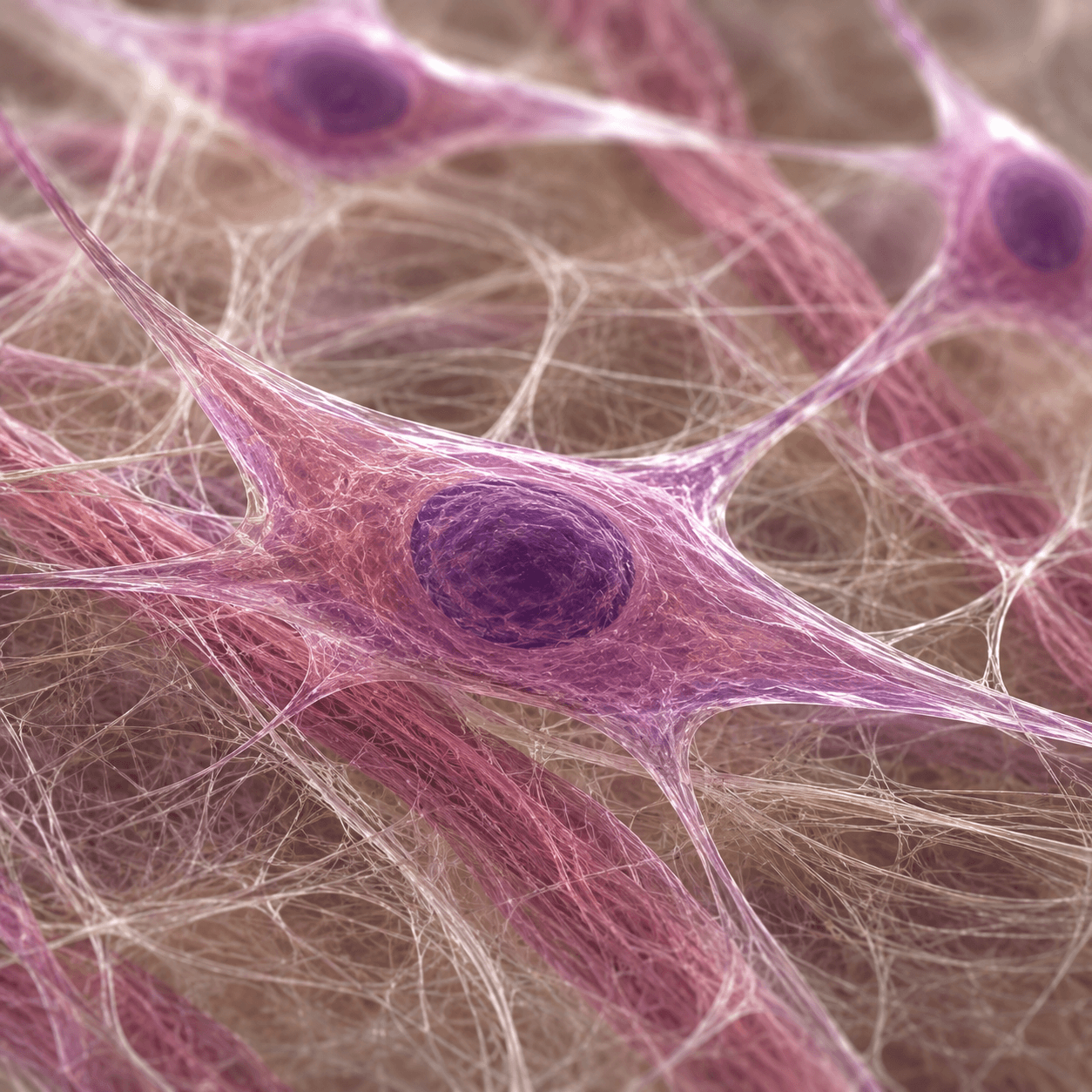
Dermal fibroblasts are specialized connective tissue cells located within the dermis of the skin. These cells are responsible for producing and maintaining the extracellular matrix that provides structural support, strength, elasticity, and resilience to skin and connective tissues. Fibroblasts are among the most important cells involved in tissue repair, wound healing, and maintenance of skin architecture.
The primary function of dermal fibroblasts is synthesis of collagen, elastin, glycosaminoglycans, and other extracellular matrix components. Collagen provides tensile strength, while elastin contributes flexibility and elasticity. Together these structural proteins help maintain the integrity of skin and support resistance to mechanical stress.
Fibroblasts continuously monitor and remodel connective tissue. In healthy tissue they maintain extracellular matrix turnover, replacing damaged proteins and supporting structural stability. During injury, fibroblasts become activated and migrate into damaged areas where they produce new matrix proteins necessary for tissue repair.
Dermal fibroblasts play a central role in wound healing. Following injury they contribute to formation of granulation tissue, collagen deposition, extracellular matrix remodeling, and restoration of tissue integrity. These processes are coordinated through extensive communication with immune cells, epithelial cells, and vascular tissues.
Healthy fibroblast activity depends upon pathways involved in collagen synthesis, wound healing, extracellular matrix production, cellular growth, and oxidative stress regulation. Vitamin C serves as a critical cofactor for collagen production. Copper, zinc, manganese, and magnesium support enzymatic functions associated with connective tissue maintenance. Amino acids including glycine, proline, and lysine provide structural building blocks for collagen formation.
Foods associated with fibroblast support include oranges, kiwi, red bell peppers, broccoli, kale, almonds, lentils, black beans, strawberries, and blueberries. These foods provide vitamins, minerals, antioxidants, fiber, and phytochemicals that support connective tissue metabolism.
Important enzymes include lysyl oxidase and prolyl hydroxylase, which participate directly in collagen formation and stabilization. Antioxidant enzymes such as superoxide dismutase help protect fibroblasts from oxidative damage. Hormonal influences include growth hormone and IGF-1, which contribute to tissue growth and repair.
As the principal connective tissue-producing cells of the skin, dermal fibroblasts maintain extracellular matrix integrity, support wound healing, regulate tissue remodeling, and preserve skin structure. Their function depends upon collagen synthesis, nutrient availability, antioxidant protection, and coordinated cellular communication.
Fibroblasts are essential for tissue repair and require nutrients involved in collagen formation, antioxidant protection, and cellular growth.

