
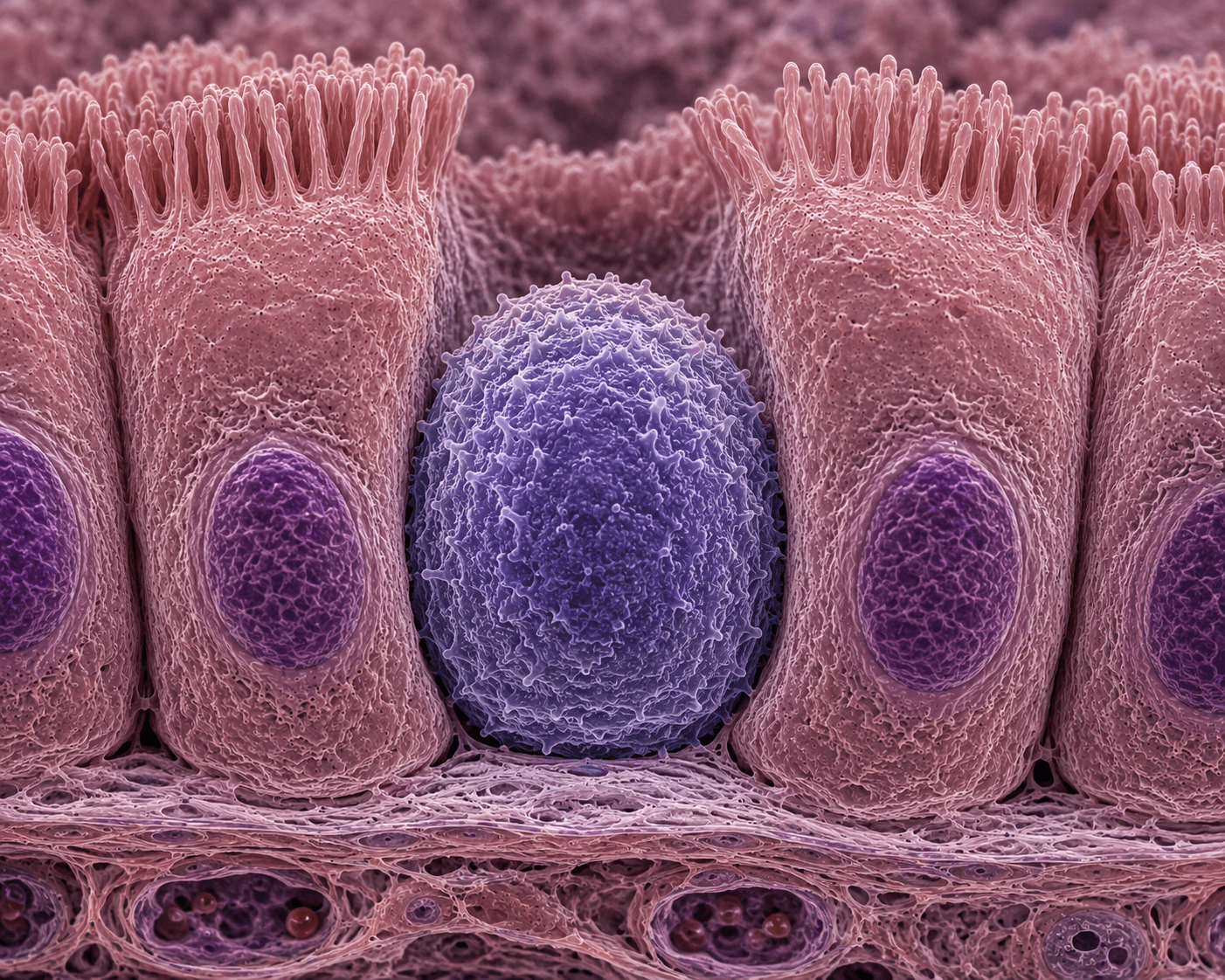
Intestinal stem cells continuously regenerate the intestinal lining and produce all major epithelial cell types.
Intestinal stem cells are multipotent regenerative cells located at the base of intestinal crypts within the small intestine. These cells are responsible for generating all major intestinal epithelial cell types, allowing continuous renewal of the digestive tract lining throughout life. Because the intestinal epithelium experiences constant exposure to food, microbes, digestive enzymes, and mechanical stress, ongoing regeneration is essential for maintaining digestive health.
The intestinal lining undergoes one of the most rapid turnover rates in the human body. New epithelial cells are continuously generated from intestinal stem cells and migrate upward along the villi before eventually being shed. This process ensures maintenance of barrier integrity, nutrient absorption capacity, immune interactions, and tissue repair.
Intestinal stem cells give rise to enterocytes, goblet cells, Paneth cells, enteroendocrine cells, and additional specialized epithelial populations. Through controlled differentiation pathways, they help preserve the diverse cellular architecture required for normal digestive function.
These cells depend heavily on signals received from neighboring Paneth cells, microbial metabolites, growth factors, and local nutrient availability. Wnt signaling, cellular energy pathways, DNA repair mechanisms, and cell cycle regulation all contribute to maintenance of stem cell populations and proper tissue renewal.
Healthy intestinal stem cell activity requires adequate folate for DNA synthesis, zinc for cellular growth and repair, magnesium for enzymatic reactions, vitamin C for antioxidant protection, and dietary fiber that supports microbial production of beneficial short-chain fatty acids. Foods including lentils, black beans, oats, barley, broccoli, apples, blueberries, garlic, onions, and ground flaxseed provide nutrients and compounds associated with intestinal renewal.
Intestinal stem cells participate in Wnt signaling, DNA repair, cell cycle regulation, butyrate metabolism, epithelial regeneration, and oxidative stress response pathways. Fiber-derived microbial metabolites such as butyrate provide important signals that influence stem cell behavior and intestinal health.
Through continuous regeneration of the intestinal lining, intestinal stem cells help preserve nutrient absorption, barrier integrity, immune function, and digestive resilience. Their activity supports one of the most dynamic and rapidly renewing tissues in the human body.
These cells are responsible for maintaining the intestinal epithelial population.
SUMMARY OF CELL SUPPORTnnThis cell strongly benefits from:n• Folate-supported DNA synthesisn• Fiber-derived butyraten• Antioxidant protectionn• Cellular renewal supportn• Gut microbiome metabolites

