
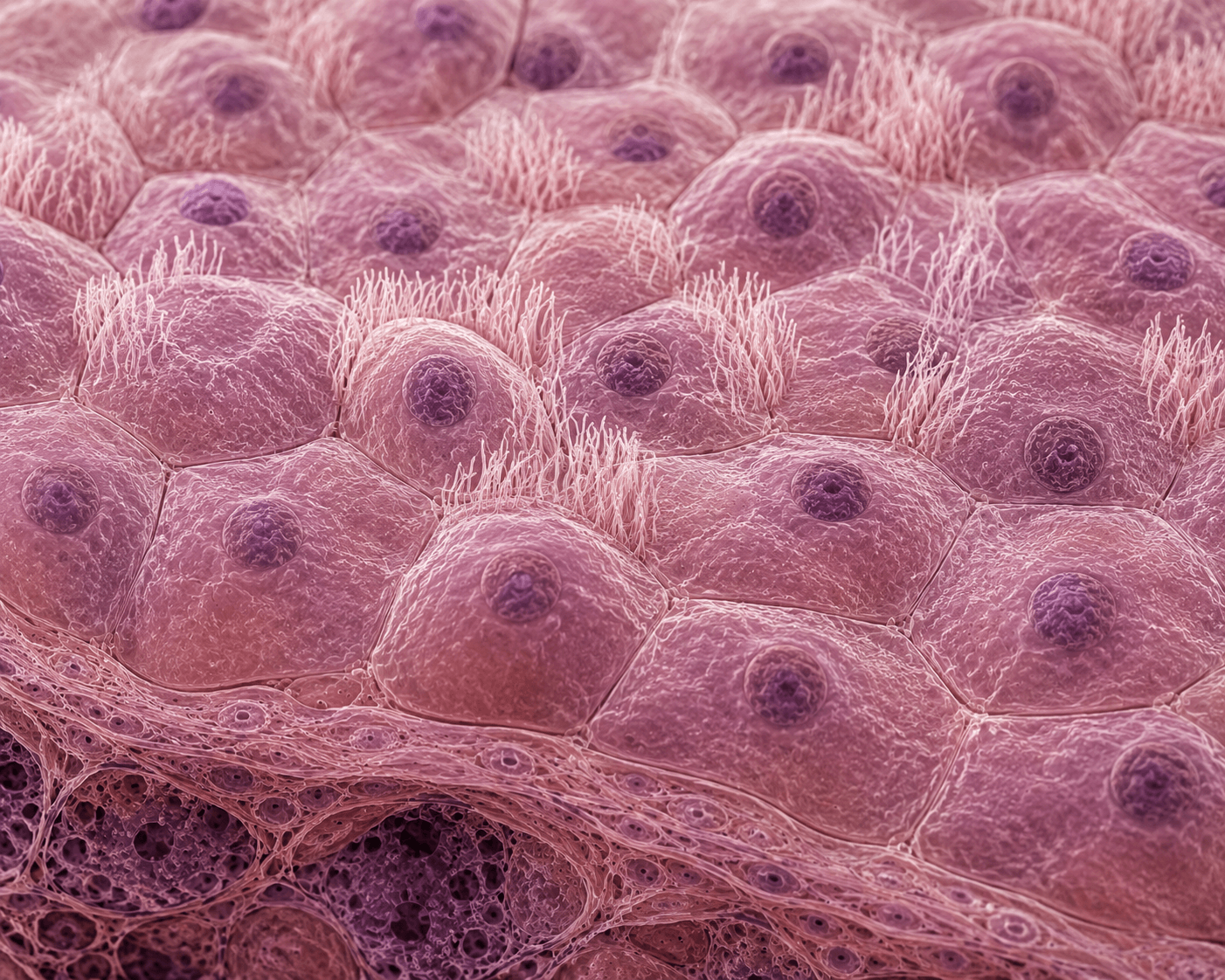
Lung epithelial cells form the respiratory barrier and support airway protection, immune communication, and gas exchange.
Lung epithelial cells form the protective lining of the respiratory tract and create a critical barrier between the external environment and internal tissues. These cells line the airways, bronchi, bronchioles, and alveolar structures of the lungs. Their functions include barrier protection, immune communication, gas exchange support, fluid regulation, and maintenance of respiratory tissue integrity.
Several specialized epithelial cell types exist within the respiratory system. Airway epithelial cells help trap and remove inhaled particles through mucus production and coordinated ciliary movement. Alveolar epithelial cells participate in gas exchange and surfactant related functions. Together these cell populations create a highly organized respiratory surface capable of protecting tissues while supporting oxygen and carbon dioxide exchange.
Lung epithelial cells are continuously exposed to airborne particles, environmental oxidants, microorganisms, and mechanical stress associated with breathing. Because of this exposure, they require strong antioxidant systems, DNA repair mechanisms, membrane integrity, and controlled inflammatory responses. Cellular defense pathways help preserve tissue function despite ongoing environmental challenges.
Vitamin C supports antioxidant protection and collagen related tissue maintenance. Vitamin E contributes to membrane stability. Selenium, zinc, magnesium, and carotenoid compounds participate in cellular defense systems. Plant foods including broccoli, kale, carrots, sweet potatoes, oranges, kiwi, blueberries, green tea, garlic, and onions provide nutrients and phytochemicals associated with respiratory cellular support.
Cruciferous vegetables contain compounds that support antioxidant response pathways. Carotenoid rich vegetables provide pigments involved in cellular protection. Berries contribute anthocyanins and flavonoids that support redox balance. Garlic and onions contain sulfur compounds associated with cellular defense mechanisms. Green tea provides polyphenols that participate in antioxidant signaling networks.
Lung epithelial cells communicate extensively with immune cells located within respiratory tissues. These interactions help coordinate defense responses, barrier repair, and tissue maintenance. Adequate nutrient intake supports many of the signaling pathways involved in respiratory resilience and epithelial renewal.
As the primary cellular barrier of the respiratory system, lung epithelial cells help protect internal tissues while supporting efficient gas exchange. Their dependence on antioxidant protection, DNA maintenance, membrane stability, and cellular communication highlights their importance in maintaining healthy respiratory function.
These cells are exposed to environmental oxidants and require antioxidant nutrients, DNA repair support, and anti-inflammatory phytochemicals.

