
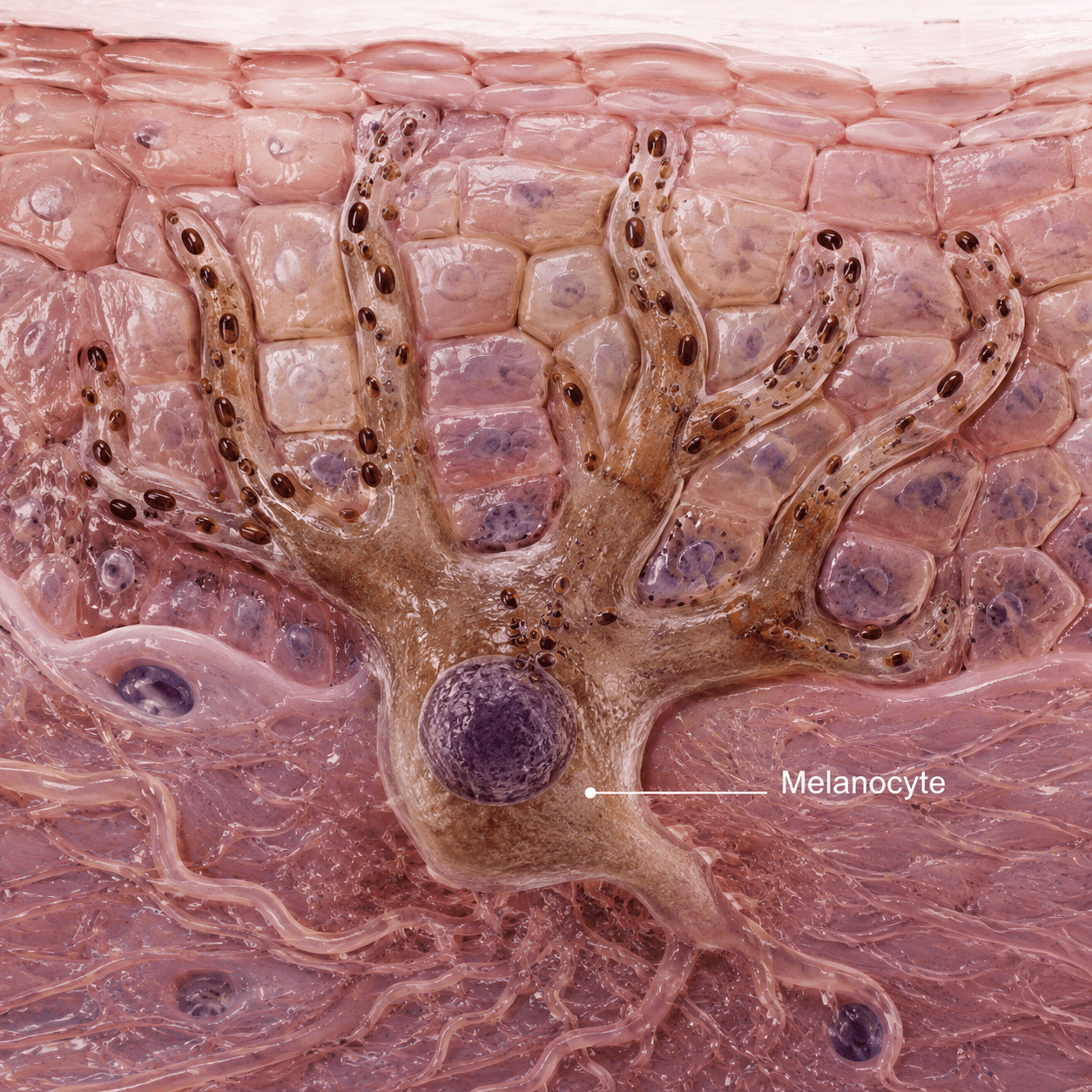
Melanocytes are specialized pigment-producing cells located primarily within the basal layer of the epidermis. Their primary function is the synthesis of melanin, a biological pigment that helps protect skin cells from ultraviolet radiation and contributes to the color of skin, hair, and eyes. Melanocytes play a critical role in cellular protection by helping reduce DNA damage caused by environmental light exposure.
Melanin production occurs within specialized intracellular structures known as melanosomes. These organelles synthesize, store, and transport pigment molecules that are subsequently distributed to neighboring keratinocytes. By transferring melanin throughout the epidermis, melanocytes help create a protective shield that absorbs and disperses ultraviolet radiation before it can damage cellular DNA.
Melanocytes originate from neural crest cells during embryonic development and migrate to the skin, hair follicles, eyes, and certain internal tissues. Although they represent a relatively small percentage of epidermal cells, their influence on tissue protection is substantial. Proper melanocyte function contributes to maintenance of genomic stability within skin tissues exposed to sunlight.
Healthy melanocyte activity depends upon pathways involved in melanin synthesis, oxidative stress regulation, DNA repair, cellular signaling, and antioxidant defense. Melanin production requires the amino acid tyrosine as a substrate and depends on enzymatic reactions that utilize copper and other micronutrients. Because pigment synthesis generates reactive oxygen species, melanocytes rely heavily upon antioxidant protection systems.
Nutrients associated with melanocyte support include copper, zinc, selenium, vitamin C, vitamin E, folate, tyrosine, and phenylalanine. These nutrients participate in pigment production, cellular protection, antioxidant defense, and DNA maintenance. Foods commonly associated with melanocyte support include blueberries, blackberries, strawberries, oranges, kiwi, spinach, kale, almonds, sunflower seeds, and black beans.
Important phytochemicals associated with melanocyte health include anthocyanins, quercetin, and lutein. These compounds contribute antioxidant activity and help support cellular defense systems. Enzymes including tyrosinase, superoxide dismutase, and catalase participate in melanin production and oxidative stress regulation.
Hormonal influences include melanocyte-stimulating hormone, which helps regulate pigment production and melanocyte activity. Additional signaling pathways coordinate responses to environmental light exposure and cellular stress.
As the primary pigment-producing cells of the body, melanocytes contribute to skin protection, pigmentation, and defense against ultraviolet-induced cellular injury. Their function depends upon coordinated nutrient availability, enzymatic activity, antioxidant systems, and cellular signaling pathways that help maintain tissue integrity and genomic stability.
Melanocytes rely on antioxidant systems, copper-dependent enzymes, and nutrients supporting cellular protection from oxidative stress.

