
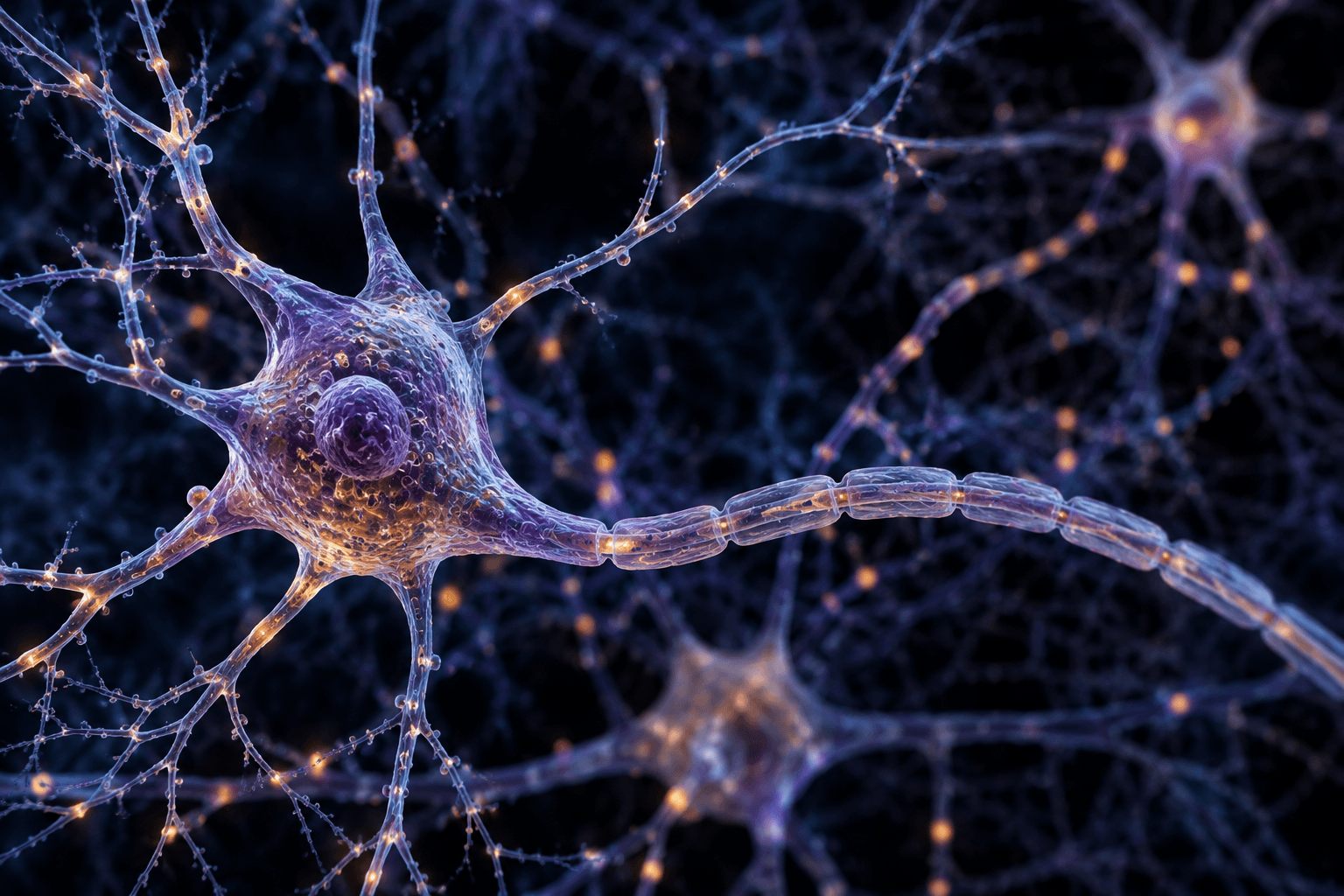
Neurons are specialized excitable cells that form the foundation of the nervous system. These cells transmit electrical and chemical signals throughout the brain, spinal cord, and peripheral nerves, allowing communication between tissues, coordination of movement, processing of sensory information, regulation of organ systems, memory formation, learning, and cognition. Neurons are among the most complex and highly specialized cells in the human body.
A typical neuron contains dendrites that receive information, a cell body that processes signals, and an axon that transmits electrical impulses to other neurons or target tissues. Communication occurs through synapses where neurotransmitters carry information between cells. Through billions of interconnected neurons, the nervous system creates highly sophisticated networks responsible for perception, behavior, and physiological regulation.
Neurons require enormous amounts of energy to maintain ion gradients, generate action potentials, synthesize neurotransmitters, and support synaptic plasticity. Although the brain represents only a small percentage of body mass, neuronal tissue consumes a substantial portion of total energy production. Efficient mitochondrial function is therefore essential for neuronal health.
Neurons depend upon pathways involving neurotransmitter synthesis, mitochondrial respiration, oxidative stress regulation, synaptic plasticity, autophagy, and one-carbon metabolism. Magnesium contributes to electrical stability and neurotransmission. Potassium supports membrane potential maintenance. Folate and vitamin B6 participate in neurotransmitter pathways. Vitamin C and vitamin E contribute antioxidant protection. Iron supports oxygen utilization and metabolic function. Amino acids including tryptophan, tyrosine, glutamate, and glycine serve as neurotransmitter precursors or signaling molecules.
Foods associated with neuronal support include walnuts, ground flaxseed, chia seeds, blueberries, strawberries, spinach, lentils, oats, broccoli, and green tea. These foods provide antioxidants, minerals, fiber, and phytochemicals including anthocyanins, quercetin, catechins, lutein, and zeaxanthin.
Neurons rely on enzymes including choline acetyltransferase, monoamine oxidase, superoxide dismutase, catalase, and glutathione peroxidase. Support for antioxidant systems is important because neurons are particularly vulnerable to oxidative stress due to their high metabolic activity.
As the principal signaling cells of the nervous system, neurons enable communication throughout the body and support thought, memory, sensation, movement, and autonomic regulation. Their health depends on continuous energy production, cellular protection, nutrient availability, and maintenance of complex signaling networks.
Neurons need steady energy production, membrane-supporting nutrients, B vitamins, magnesium, potassium, antioxidant phytochemicals, and amino acids used in neurotransmitter pathways.

