
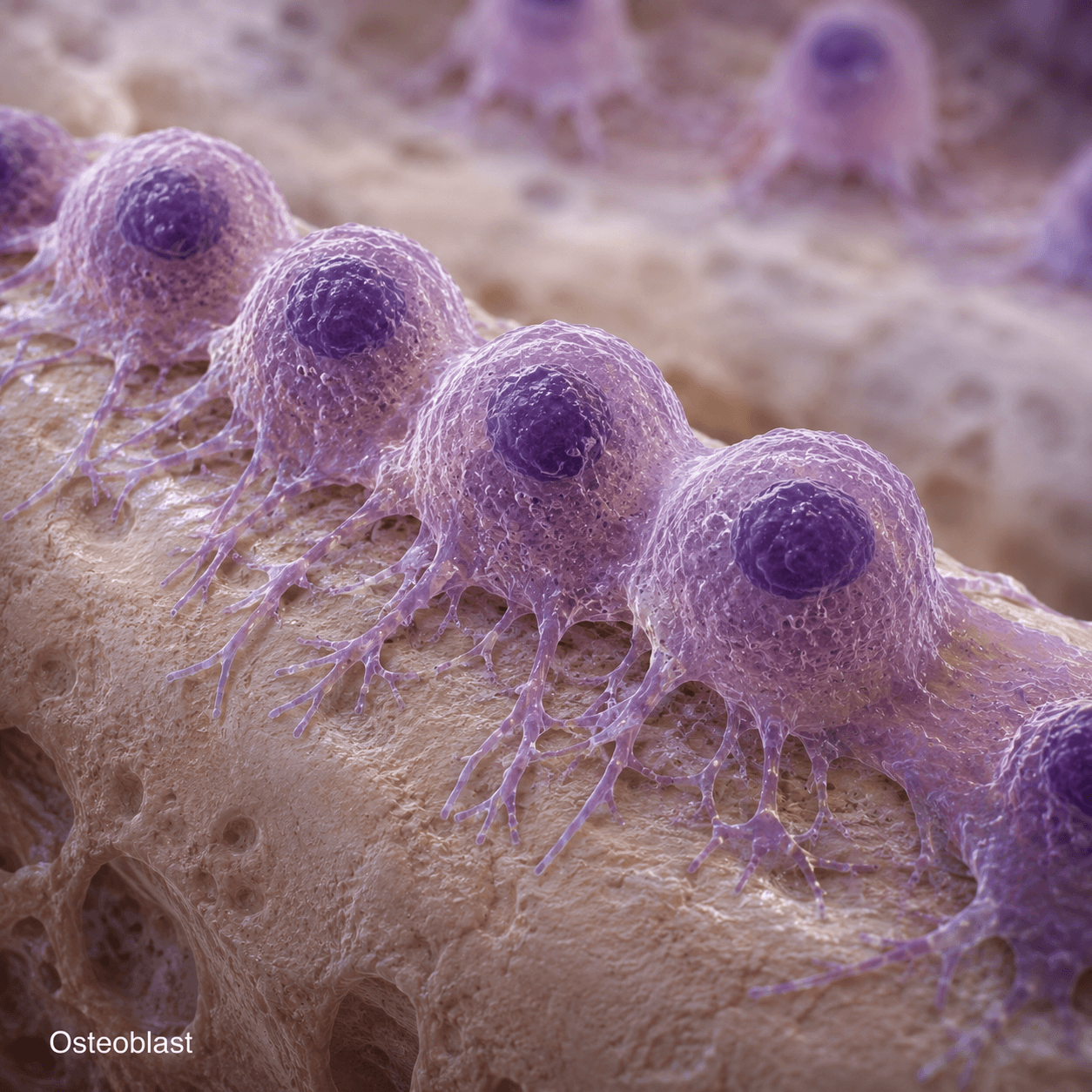
Osteoblasts are specialized bone-forming cells responsible for producing new bone tissue throughout life. These cells synthesize the organic matrix of bone, known as osteoid, and direct the mineralization process that gives bone its strength and structural integrity. Osteoblasts play critical roles during skeletal development, fracture repair, growth, and ongoing bone remodeling.
The primary function of osteoblasts is production of extracellular matrix proteins, particularly type I collagen, which forms the structural framework of bone. Osteoblasts also secrete proteins involved in mineral deposition, cellular signaling, and regulation of bone remodeling. Once sufficient matrix has been produced, calcium and phosphorus are deposited into the tissue, creating the hardened mineralized structure characteristic of healthy bone.
Bone remodeling is a continuous process involving coordinated interactions between osteoblasts and osteoclasts. Osteoblasts generate new bone while osteoclasts remove old or damaged tissue. This balance allows the skeleton to adapt to mechanical stress, maintain mineral homeostasis, and repair microdamage accumulated during daily activity.
Osteoblasts are metabolically active cells rich in rough endoplasmic reticulum, Golgi apparatus, mitochondria, and protein-synthesizing machinery. Because collagen production and mineralization require significant biochemical activity, these cells depend upon adequate nutrient availability and efficient cellular metabolism.
Healthy osteoblast function depends upon pathways involved in bone mineralization, collagen synthesis, Wnt signaling, osteoblast differentiation, and oxidative stress regulation. Calcium, magnesium, phosphorus, zinc, copper, and manganese contribute to mineralization and enzymatic processes. Vitamin C supports collagen formation. Vitamin K participates in bone protein activation. Amino acids including lysine, proline, and glycine contribute to collagen synthesis and extracellular matrix formation.
Foods associated with osteoblast support include kale, collard greens, broccoli, white beans, chickpeas, sesame seeds, oranges, kiwi, almonds, and figs. These foods provide minerals, vitamins, fiber, and phytochemicals including quercetin, kaempferol, lignans, and isoflavones.
Osteoblasts rely on enzymes such as alkaline phosphatase and lysyl oxidase, which support mineral deposition and collagen cross-linking. Hormonal influences including parathyroid hormone, calcitonin, estrogen, and IGF-1 help regulate osteoblast activity.
As the primary bone-forming cells of the skeleton, osteoblasts are essential for maintaining bone strength, skeletal architecture, fracture repair, and mineral homeostasis. Their function depends upon coordinated cellular signaling, nutrient sufficiency, collagen synthesis, and proper regulation of bone remodeling processes.
Osteoblasts require minerals, vitamin-dependent pathways, amino acids, and plant-derived compounds that support collagen production and healthy bone formation.

