
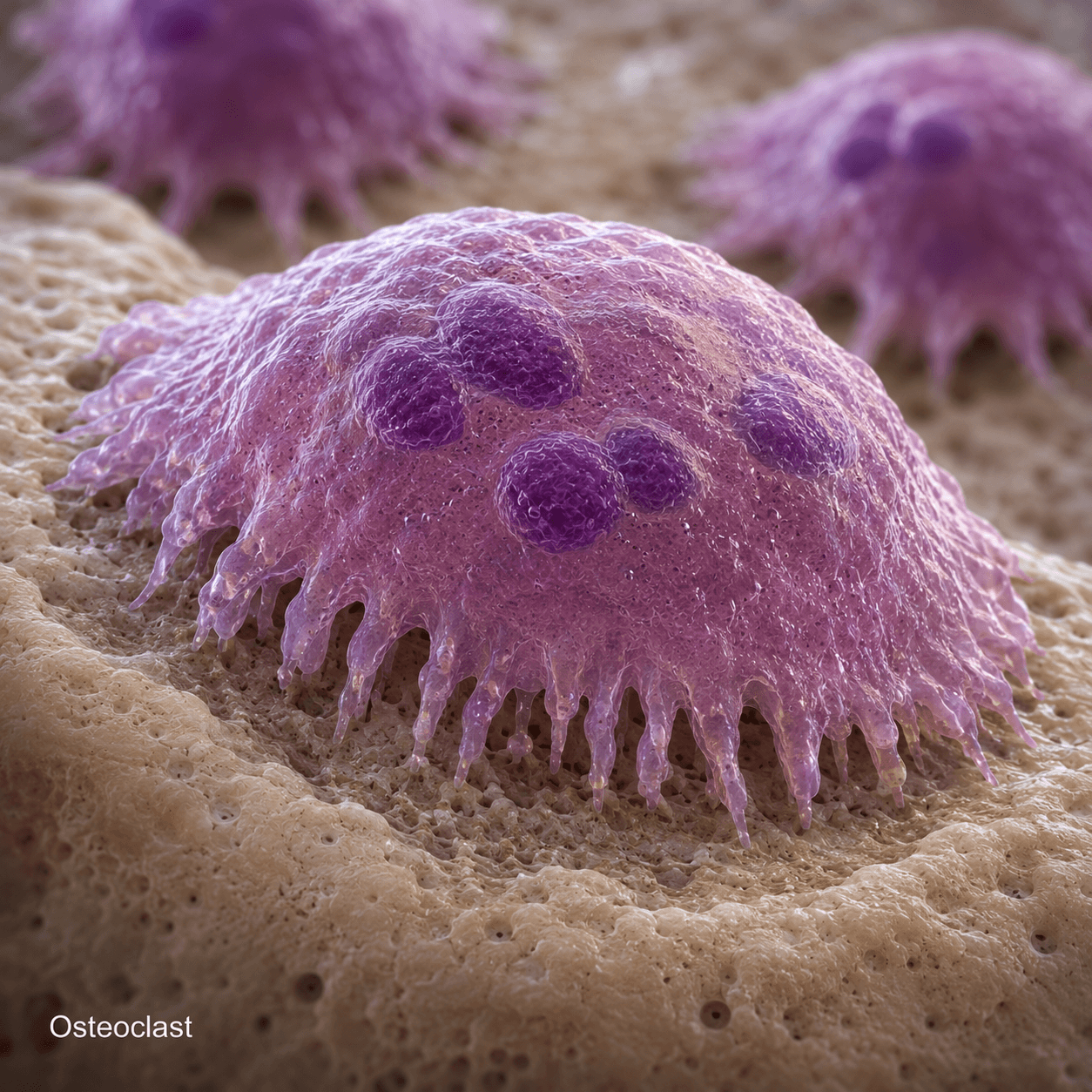
Osteoclasts are specialized bone-resorbing cells responsible for removal of aged, damaged, or unnecessary bone tissue. These large multinucleated cells play a central role in skeletal remodeling by breaking down mineralized bone and releasing minerals back into circulation. Together with osteoblasts, osteoclasts maintain skeletal renewal, structural integrity, and mineral balance throughout life.
The primary function of osteoclasts is bone resorption. These cells attach to the bone surface and create a sealed compartment where acids and enzymes are released. This localized environment dissolves mineral components and breaks down organic matrix proteins, allowing old bone tissue to be removed efficiently.
Bone resorption is essential for skeletal health because bone is continuously subjected to mechanical stress, microdamage, and structural adaptation. Without osteoclast activity, damaged tissue would accumulate and skeletal remodeling would become impaired. Proper balance between osteoclast-mediated resorption and osteoblast-mediated formation allows maintenance of healthy bone architecture.
Osteoclasts originate from hematopoietic precursor cells related to immune cell lineages. Their activity is influenced by numerous signaling molecules, inflammatory mediators, hormones, and growth factors. Regulation of osteoclast activity is tightly controlled because excessive bone resorption can weaken skeletal tissue, whereas insufficient activity may impair remodeling.
Healthy osteoclast function depends upon pathways involved in bone remodeling, inflammatory regulation, oxidative stress responses, mineral metabolism, and cellular signaling. Calcium, magnesium, zinc, copper, and manganese support enzymatic and cellular functions. Vitamin C contributes to connective tissue maintenance. Antioxidant systems help regulate cellular stress generated during resorptive activity.
Foods associated with osteoclast support include broccoli, kale, oranges, kiwi, black beans, lentils, almonds, sesame seeds, blueberries, and strawberries. These foods provide minerals, antioxidants, fiber, and phytochemicals including anthocyanins, quercetin, and kaempferol.
Important osteoclast enzymes include cathepsin K and carbonic anhydrase, which contribute directly to bone matrix breakdown and mineral dissolution. Hormonal influences include parathyroid hormone, calcitonin, and estrogen, which help regulate remodeling activity.
As essential participants in skeletal renewal, osteoclasts remove aged bone tissue, support mineral recycling, and contribute to structural adaptation. Their function is necessary for healthy remodeling cycles that preserve skeletal strength, flexibility, and long-term integrity.
Balanced osteoclast activity is important for skeletal health and is influenced by inflammatory signals, mineral balance, and antioxidant defenses.

