
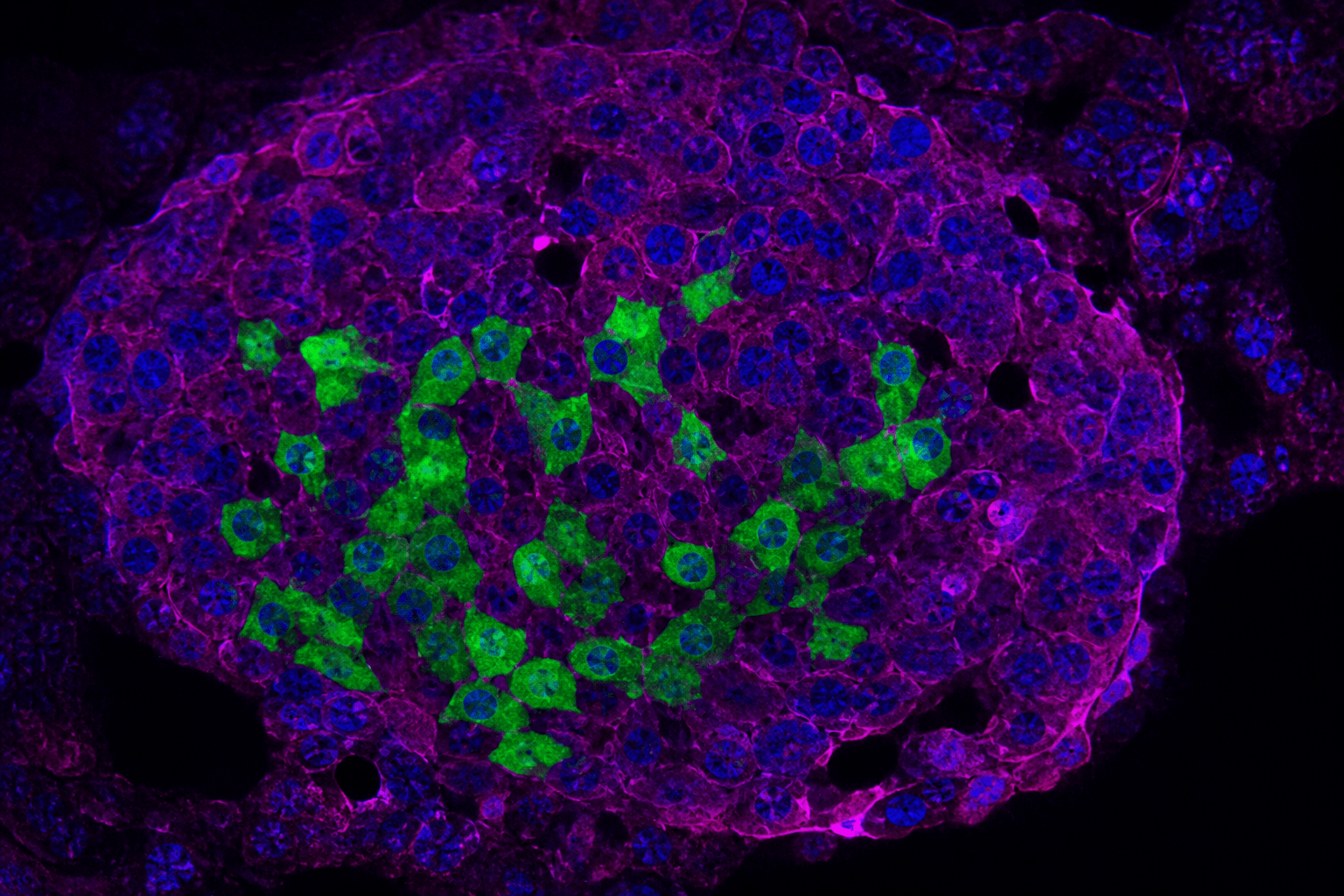
Pancreatic alpha cells produce glucagon and help maintain blood glucose levels during fasting and energy demand.
Pancreatic alpha cells are endocrine cells located within the islets of Langerhans of the pancreas. Their primary function is the production and secretion of glucagon, a hormone that plays a central role in maintaining blood glucose concentrations during fasting, physical activity, and periods of increased energy demand. Alpha cells work closely with pancreatic beta cells and other endocrine cell populations to maintain metabolic balance and energy availability throughout the body.
When blood glucose levels decline, alpha cells respond by releasing glucagon into the circulation. Glucagon signals the liver to mobilize stored glycogen and increase glucose production through gluconeogenesis. These actions help maintain a stable supply of glucose for tissues that depend heavily on glucose metabolism, including the brain and nervous system.
Alpha cells continuously monitor metabolic signals including glucose concentrations, amino acid availability, neural inputs, and hormonal signals. Through these sensing mechanisms they help coordinate adaptive responses that preserve energy balance. Their function is closely integrated with insulin signaling, allowing precise regulation of nutrient utilization and storage.
Healthy alpha cell function depends on mitochondrial activity, cellular signaling pathways, antioxidant defense systems, and nutrient availability. Magnesium supports cellular metabolism and enzyme activity. Zinc contributes to endocrine function and cellular maintenance. Chromium participates in glucose-related metabolic pathways. Folate and vitamin C support cellular protection and renewal. Foods including lentils, black beans, oats, broccoli, spinach, blueberries, apples, oranges, kiwi, and walnuts provide nutrients associated with metabolic support.
Alpha cells participate in pathways involving glucose homeostasis, mitochondrial function, oxidative stress regulation, and endocrine communication. Because hormone secretion requires continuous energy production, these cells depend on efficient ATP generation and intracellular signaling networks.
Polyphenols, flavonoids, fiber, vitamins, and minerals found in plant foods support many of the pathways involved in endocrine cell maintenance. Fiber-rich dietary patterns also contribute to healthy metabolic signaling and glucose regulation throughout the body.
Pancreatic alpha cells serve as important regulators of energy availability. Through glucagon secretion and coordination with other endocrine cells, they help maintain blood glucose stability and support metabolic adaptation during changing nutritional conditions.
Alpha cells participate in glucose regulation and require nutrients supporting cellular metabolism and antioxidant defense.

