
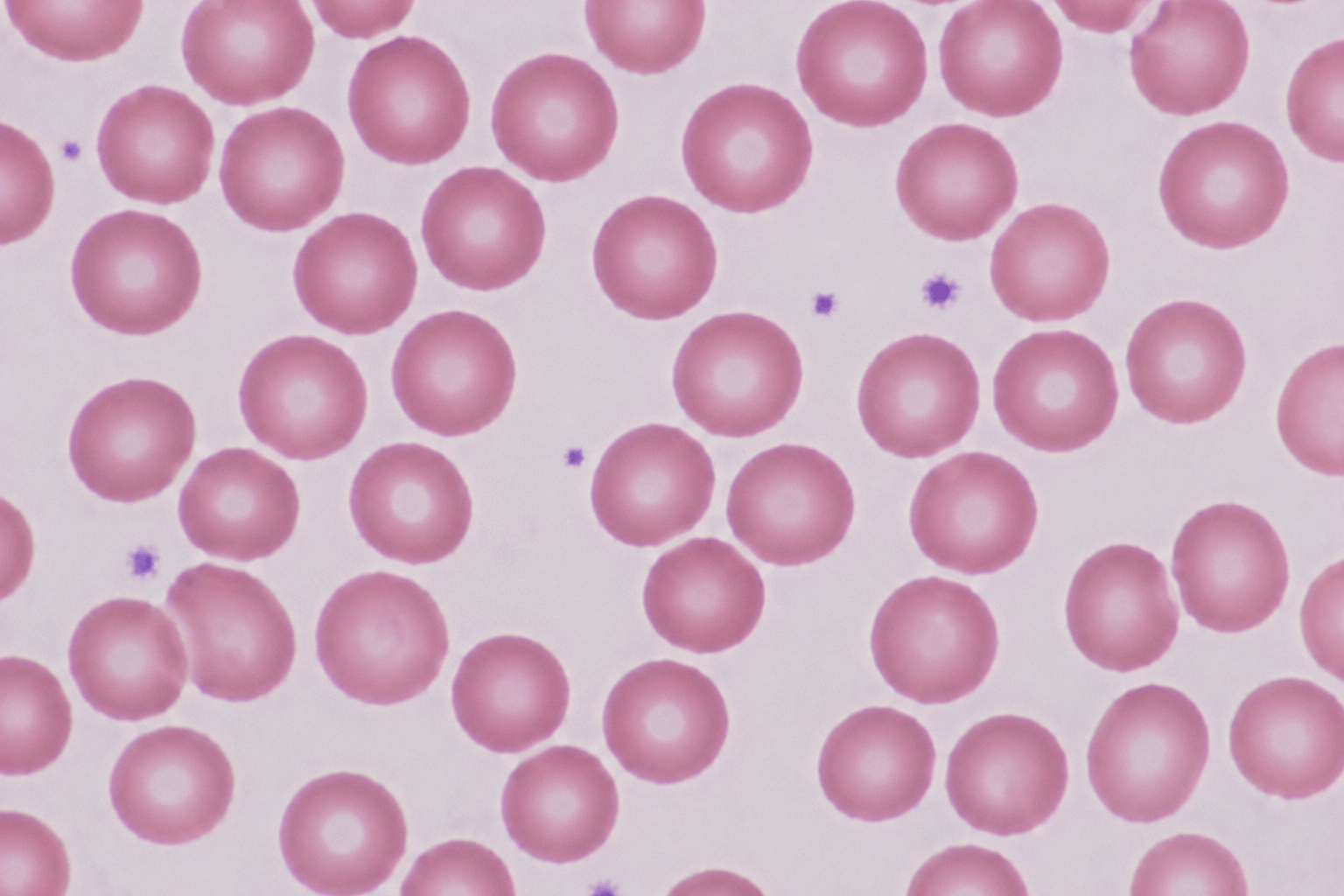
Red blood cells carry oxygen from the lungs to tissues and help return carbon dioxide for removal.
Red blood cells, also called erythrocytes, are specialized blood cells responsible for transporting oxygen from the lungs to tissues and helping return carbon dioxide to the lungs for removal. They are the most abundant cells in human blood and are essential for supporting cellular energy production throughout the body. Their main functional protein is hemoglobin, an iron containing molecule that binds oxygen and gives red blood cells their red color.
Mature red blood cells have a biconcave disc shape. This shape increases surface area, supports efficient gas exchange, and allows the cell to bend as it moves through narrow capillaries. Mature red blood cells do not contain a nucleus or mitochondria. The absence of these structures creates more internal space for hemoglobin and helps preserve transported oxygen for other tissues. Because they lack mitochondria, red blood cells generate their own energy through glycolysis.
Red blood cells are produced in the bone marrow through a process called erythropoiesis. This process is regulated mainly by erythropoietin, a hormone produced largely by the kidneys in response to oxygen demand. Red blood cell production requires iron for heme, folate for DNA synthesis during early cell development, vitamin B6 for heme synthesis, copper for iron handling, and amino acids such as glycine and histidine for hemoglobin structure.
Hemoglobin binds oxygen in the lungs where oxygen concentration is high and releases oxygen in tissues where oxygen concentration is lower. Red blood cells also help transport carbon dioxide back to the lungs, much of it converted into bicarbonate. Through this work, red blood cells support oxygen delivery, acid base balance, brain function, muscle activity, temperature regulation, and whole body energy metabolism.
Nutrition strongly influences red blood cell formation and function. Iron rich legumes, leafy greens, seeds, and whole grains provide non heme iron. Vitamin C rich foods such as oranges and kiwi help improve non heme iron absorption when eaten with iron containing plant foods. Lentils, black beans, chickpeas, spinach, kale, pumpkin seeds, sesame seeds, oats, oranges, and kiwi provide key nutrients that support hemoglobin formation and red blood cell production.
Red blood cells circulate for about 120 days. During this time, they are exposed to oxygen related stress and must maintain membrane flexibility. Antioxidant systems, adequate minerals, and balanced nutrient intake help preserve red blood cell integrity until aged cells are removed by the spleen and liver.
Red blood cells connect breathing with cellular energy. Their ability to deliver oxygen, support carbon dioxide transport, and maintain circulation based gas exchange makes them essential for every organ system.
Red blood cells depend on iron, folate, vitamin B6, copper, and amino acids required for hemoglobin synthesis and oxygen delivery.

