
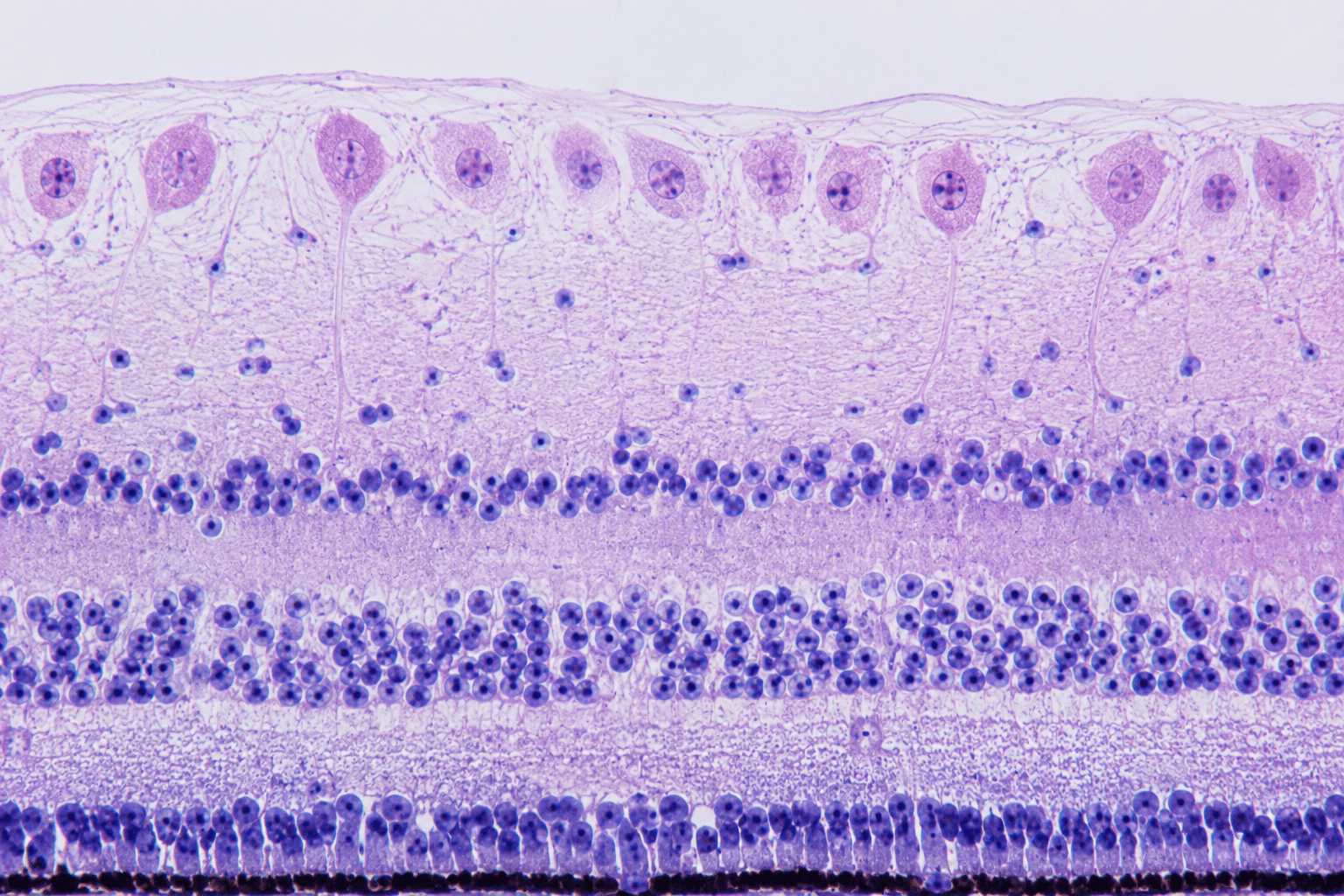
Retinal ganglion cells transmit visual information from the retina to the brain through the optic nerve.
Retinal ganglion cells are specialized neurons located within the retina that serve as the primary communication link between the eye and the brain. These cells collect visual information processed by retinal circuits and transmit electrical signals through the optic nerve to visual centers within the brain. Every image perceived by the visual system ultimately depends on the successful transmission of information through retinal ganglion cells.
Unlike photoreceptors that detect light directly, retinal ganglion cells integrate signals received from bipolar cells, amacrine cells, and other retinal neurons. They process contrast, movement, brightness, and spatial information before sending highly organized electrical impulses toward the brain. This processing contributes significantly to visual perception and interpretation.
Retinal ganglion cells possess long axons that converge to form the optic nerve. Because of their extensive energy requirements, these neurons depend heavily upon mitochondrial ATP production and efficient cellular metabolism. Their continuous electrical activity requires stable membrane function, antioxidant protection, and nutrient availability.
The health of retinal ganglion cells depends upon nutrients involved in neuronal signaling, mitochondrial support, and antioxidant defense. Lutein and zeaxanthin accumulate within visual tissues and are associated with retinal health. Vitamin C and vitamin E contribute antioxidant protection. Magnesium and zinc participate in enzymatic and cellular signaling functions. Foods including kale, spinach, collard greens, broccoli, oranges, kiwi, blueberries, blackberries, walnuts, and flaxseed provide nutrients associated with visual system support.
Retinal ganglion cells participate in pathways involving mitochondrial function, oxidative stress responses, neuroprotection, cellular signaling, and visual information transmission. Because these neurons are long-lived and highly active, protection from cumulative oxidative stress is important for maintaining function over time.
Polyphenols, carotenoids, vitamins, and minerals found in colorful plant foods contribute compounds associated with cellular defense systems within visual tissues. Whole-food dietary patterns rich in leafy greens and deeply colored fruits provide many nutrients linked to retinal health.
Retinal ganglion cells are essential for vision. Through transmission of visual signals from the retina to the brain, they make visual perception possible and support continuous interpretation of the surrounding environment.
These cells are essential for vision and require mitochondrial and antioxidant support.
SUMMARY OF CELL SUPPORTnnThis cell strongly benefits from:n• Lutein and zeaxanthin-rich greensn• Antioxidant protectionn• Mitochondrial supportn• Polyphenol-rich berriesn• Zinc-supported retinal function

