
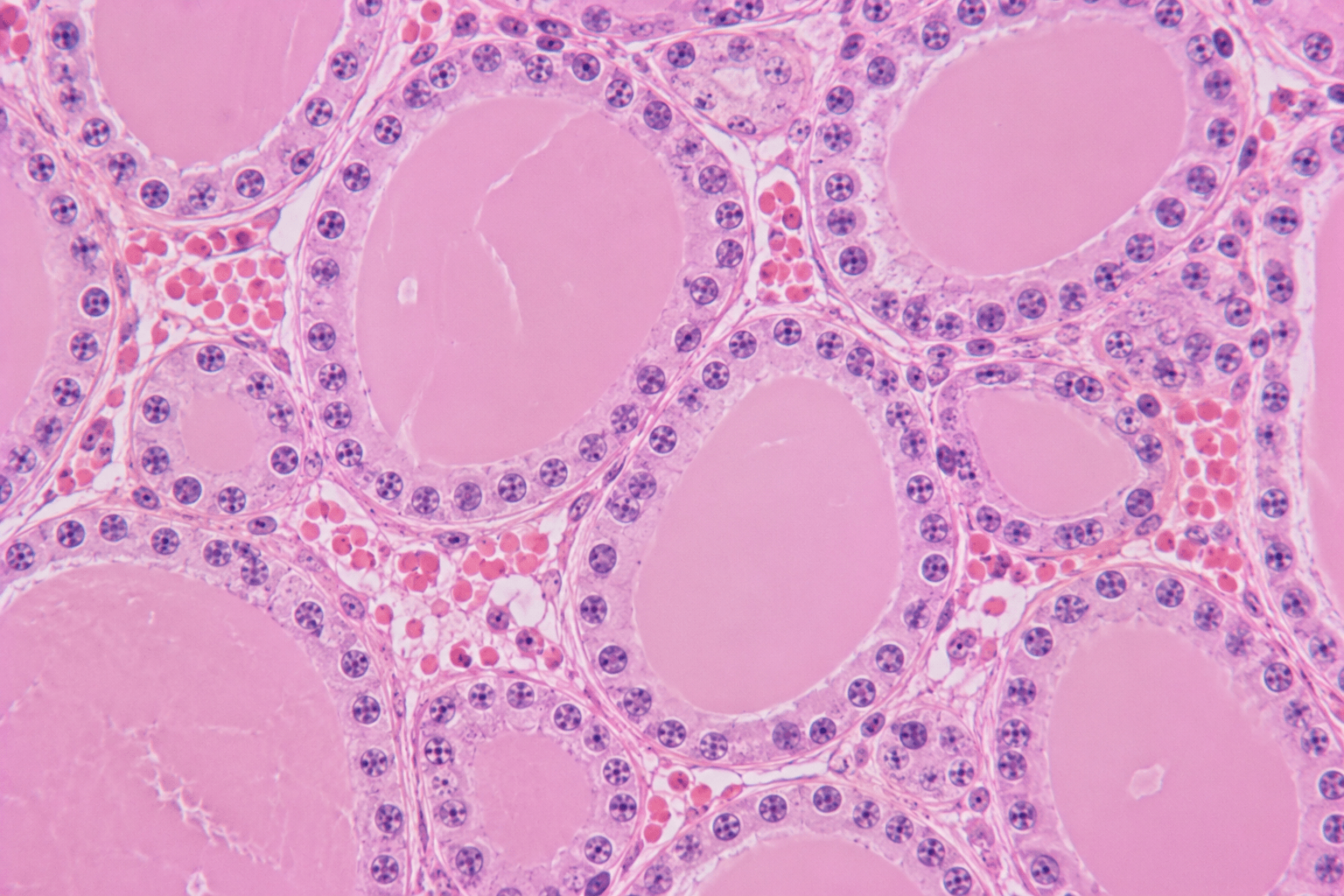
Thyroid follicular cells produce thyroid hormones that regulate metabolism, growth, energy use, and temperature balance.
Thyroid follicular cells are endocrine epithelial cells that synthesize, store, and release thyroid hormones. They form spherical structures called follicles within the thyroid gland. Each follicle surrounds a central space filled with thyroglobulin rich colloid, where thyroid hormone precursors are stored. These cells are responsible for producing thyroxine and triiodothyronine, hormones that regulate metabolic rate, growth, temperature balance, nervous system development, and energy use throughout the body.
Thyroid follicular cells concentrate iodine from the bloodstream and attach it to tyrosine residues within thyroglobulin. This process requires thyroid peroxidase and hydrogen peroxide controlled reactions. After hormone precursors are formed and stored in colloid, thyroid stimulating hormone signals follicular cells to take up thyroglobulin, process it, and release active thyroid hormones into circulation. These hormones then influence nearly every organ system by regulating gene expression and mitochondrial activity.
Because thyroid hormone production involves oxidation chemistry, follicular cells require strong antioxidant protection. Selenium is important because it supports glutathione peroxidase and deiodinase enzymes involved in thyroid hormone metabolism and redox control. Zinc and iron contribute to enzyme function and hormone related pathways. Tyrosine and phenylalanine provide amino acid support for hormone structure. Vitamin C, folate, and other plant nutrients support cellular protection and tissue maintenance.
Plant based nutritional support for thyroid follicular cells includes mineral rich legumes, seeds, greens, fruits, and whole grains. Foods such as white beans, lentils, spinach, broccoli, oranges, kiwi, pumpkin seeds, oats, cranberries, and potatoes provide supportive nutrients including iron, zinc, vitamin C, folate, and amino acid precursors. Sea vegetables can contain iodine, but iodine content varies widely, so accurate intake requires careful food selection and consistency.
Thyroid follicular cells respond to signals from the hypothalamic pituitary thyroid axis. Thyroid stimulating hormone regulates iodine uptake, thyroglobulin processing, and hormone release. Energy status, micronutrient availability, oxidative stress, and inflammatory signaling can influence thyroid cell function. Balanced nutrient intake is important because both insufficient and excessive mineral exposure can affect hormone production.
Polyphenols, vitamin rich fruits, legumes, cruciferous vegetables, and whole grains provide compounds involved in antioxidant response and metabolic stability. Cruciferous vegetables are nutrient dense and can be part of a balanced diet when iodine intake is adequate.
Thyroid follicular cells are central regulators of body metabolism. Their ability to produce thyroid hormones depends on iodine handling, tyrosine chemistry, selenium supported antioxidant protection, enzyme activity, and coordinated endocrine signaling.
Thyroid follicular cells require iodine, selenium, zinc, tyrosine, and antioxidant nutrients that support hormone synthesis and glandular health.

